


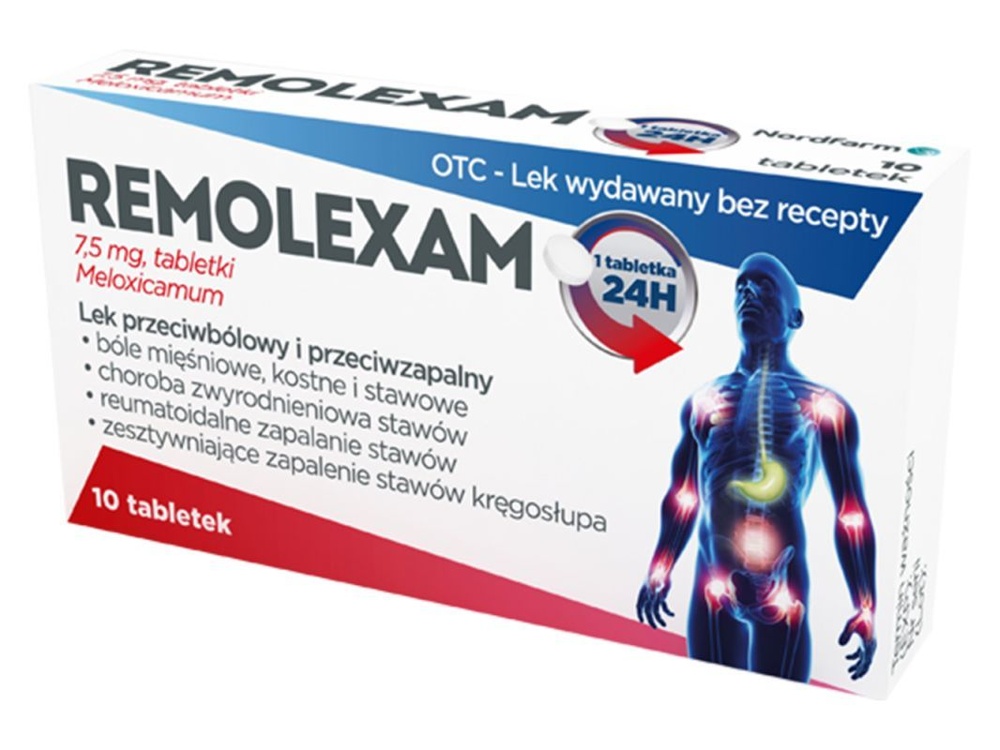
Remolexam
Ask a doctor about a prescription for Remolexam




How to use Remolexam
Leaflet accompanying the packaging: patient information
Remolexam, 7.5 mg, tablets
Meloxicam
You should carefully read the contents of the leaflet before using the medicine, as it contains important information for the patient.
This medicine should always be used exactly as described in the patient leaflet or as directed by your doctor or pharmacist.
- You should keep this leaflet, so you can read it again if you need to.
- If you need advice or additional information, you should consult a pharmacist.
- If the patient experiences any side effects, including any possible side effects not listed in the leaflet, they should tell their doctor or pharmacist. See section 4.
- If after 7 days there is no improvement or the patient feels worse, they should contact their doctor.
Table of contents of the leaflet:
- 1. What is Remolexam and what is it used for
- 2. Important information before taking Remolexam
- 3. How to take Remolexam
- 4. Possible side effects
- 5. How to store Remolexam
- 6. Contents of the packaging and other information
1. What is Remolexam and what is it used for
Remolexam contains the active substance meloxicam. Meloxicam belongs to a group of medicines called nonsteroidal anti-inflammatory drugs (NSAIDs). Meloxicam is used to reduce inflammation and pain in the joints and muscles.
Remolexam is used for the short-term treatment of symptoms associated with exacerbation of degenerative joint disease, such as rheumatoid arthritis or ankylosing spondylitis, also known as Bechterew's disease (a type of arthritis that causes pain and stiffness in the spine area).
2. Important information before taking Remolexam
When not to take Remolexam:
- if the patient is allergic to meloxicam or any of the other ingredients of this medicine (listed in section 6);
- if the patient is allergic to acetylsalicylic acid or other nonsteroidal anti-inflammatory drugs (NSAIDs), i.e. if the patient has ever experienced any of the following symptoms after taking these medicines:
- -wheezing, feeling of chest tightness, shortness of breath (asthma),
- -nasal congestion due to swelling of the nasal mucosa (nasal polyps),
- -skin rash or hives,
- -sudden swelling of the skin or mucous membranes, such as swelling around the eyes, face, lips, mouth or throat, which may make breathing difficult (angioedema);
- if the patient has had gastrointestinal bleeding or perforation after taking NSAIDs;
- if the patient currently has (or has had two or more episodes of) peptic ulcer (stomach or duodenal ulcer) or gastrointestinal bleeding;
- if the patient has severe liver dysfunction;
- if the patient has severe kidney disease that does not require dialysis;
- if the patient has recently had bleeding in the brain;
- if the patient has had any other bleeding;
- if the patient has severe heart disease;
- in pregnant women in the last three months of pregnancy;
- in children and adolescents under 16 years of age.
If the patient is unsure whether any of the above points apply to them, they should consult their doctor.
Warnings and precautions
Before starting Remolexam, the patient should discuss it with their doctor or pharmacist in the following cases:
- if the patient has ever had esophagitis, gastritis or any other gastrointestinal disease (e.g. Crohn's disease or ulcerative colitis);
- if the patient has high blood pressure (hypertension);
- if the patient is elderly; there is an increased risk of side effects in elderly patients, so the doctor may reduce the dose and closely monitor heart, liver, and kidney function during treatment;
- if the patient has heart, liver, or kidney disease;
- if the patient has decreased blood volume (hypovolemia), which may occur in the case of significant blood loss or burns, surgery, or low fluid intake;
- if the patient has increased potassium levels in the blood;
- if the patient has ever experienced a persistent rash (drug eruption) after taking meloxicam or other oxicams (e.g. piroxicam) [circular or oval, red and swollen spots on the skin, usually recurring in the same place (in the same places), blisters, hives, and itching].
To minimize the risk of side effects, the patient should take the smallest dose for the shortest period necessary to relieve symptoms.
Remolexam is not recommended for immediate pain relief.
Remolexam may mask symptoms of infection such as fever, pain, swelling, redness.
The patient may mistakenly think they are feeling better or that the infection is not serious. If the patient suspects they have an infection, they should consult their doctor.
Skin reactions
Potentially life-threatening skin rashes (Stevens-Johnson syndrome, toxic epidermal necrolysis) have been reported with meloxicam use, initially appearing as red spots or circular patches on the torso, often with central blisters.
Additional symptoms that may be observed include ulcers in the mouth, throat, nose, genitals, and conjunctivitis (red and swollen eyes).
These potentially life-threatening skin rashes are often accompanied by flu-like symptoms.
The rash may develop into generalized blisters or skin peeling.
The highest risk of severe skin reactions occurs in the first few weeks of treatment.
In patients who have developed Stevens-Johnson syndrome or toxic epidermal necrolysis while taking meloxicam, meloxicam treatment should not be resumed.
In case of a rash or skin symptoms, the patient should immediately consult their doctor, informing them of the use of this medicine.
Cardiovascular reactions
Taking medicines like Remolexam may be associated with a small increased risk of heart attack (myocardial infarction) or stroke. This risk increases with long-term use of high doses of the medicine.
The patient should not take higher doses or longer treatment than recommended.
In case of heart problems, a history of stroke, or suspected risk of these disorders, the patient should discuss their treatment with their doctor or pharmacist. For example, when:
- the patient has high blood pressure (hypertension);
- the patient has high blood sugar levels (diabetes);
- the patient has high cholesterol levels (hypercholesterolemia);
- the patient smokes.
Children and adolescents
Remolexam should not be given to children and adolescents under 16 years of age.
Remolexam and other medicines
The patient should tell their doctor or pharmacist about all medicines they are currently taking or have recently taken, as well as any medicines they plan to take.
Remolexam may affect the action of other medicines. There are several medicines that should not be taken with Remolexam. In some cases, the dose of other medicines may need to be modified during Remolexam treatment.
The patient should inform their doctor or pharmacist especially if they are taking or receiving any of the following medicines:
- acetylsalicylic acid or other nonsteroidal anti-inflammatory drugs (NSAIDs);
- anticoagulants;
- medicines that dissolve blood clots (thrombolytic agents);
- medicines used for heart and kidney diseases;
- medicines used for hypertension;
- diuretics;
- corticosteroids (used to treat inflammatory or allergic diseases);
- certain antidepressants: selective serotonin reuptake inhibitors (SSRIs) or lithium;
- methotrexate (used to treat certain cancers, severe uncontrolled skin diseases, and active rheumatoid arthritis);
- pemetrexed (used to treat certain cancers);
- deferazirox (used to treat chronic iron overload due to repeated blood transfusions);
- cyclosporin (used after transplantation or to treat autoimmune diseases, such as severe cases of certain skin diseases, rheumatoid arthritis, or a kidney disease called nephrotic syndrome);
- tacrolimus (used after transplantation);
- cholestyramine (used to lower cholesterol levels);
- if the patient is using an intrauterine contraceptive device, commonly known as an IUD.
In case of doubts about the use of these medicines, the patient should consult their doctor or pharmacist.
Pregnancy, breastfeeding, and fertility
If the patient is pregnant or breastfeeding, thinks they may be pregnant, or plans to have a child, they should consult their doctor or pharmacist before taking this medicine.
Pregnancy
If the patient becomes pregnant while taking Remolexam, they should inform their doctor.
Remolexam should not be taken during the last 3 months of pregnancy, as it may harm the unborn child or cause problems during delivery. It may cause problems with the kidneys and heart of the unborn child. It may affect the tendency to bleed in the mother and child and may cause the delivery to be later or longer than expected.
Remolexam should not be taken during the first 6 months of pregnancy, unless it is absolutely necessary and recommended by a doctor. If treatment during this period or during attempted pregnancy is necessary, the smallest dose should be used for the shortest possible time. Remolexam taken for a period longer than a few days, starting from the 20th week of pregnancy, may cause kidney problems in the unborn child, leading to a low level of amniotic fluid surrounding the child (oligohydramnios) or narrowing of the blood vessel (ductus arteriosus) in the child's heart. If treatment for longer than a few days is necessary, the doctor may recommend additional monitoring.
Breastfeeding
Remolexam is not recommended for use in breastfeeding women.
Fertility
Remolexam may make it harder to get pregnant. The patient should inform their doctor if they plan to get pregnant or are having trouble getting pregnant.
Driving and using machines
Visual disturbances, including blurred vision, dizziness, drowsiness, feeling of spinning or loss of balance, or other central nervous system disorders may occur after taking this medicine. If these symptoms occur, the patient should not drive or operate machinery.
Remolexam contains lactose
If the patient has been diagnosed with intolerance to some sugars, they should consult their doctor before taking the medicine.
3. How to take Remolexam
This medicine should always be taken exactly as directed by the doctor or pharmacist. In case of doubts, the patient should consult their doctor or pharmacist.
The tablet should be swallowed, washed down with water or another liquid during a meal.
The recommended dose is one Remolexam 7.5 mg tablet.
The patient should not exceed the maximum dose of 7.5 mg per day.
If after 7 days there is no improvement or the patient feels worse, they should contact their doctor.
Elderly patients
The recommended dose is 7.5 mg per day.
Patients with kidney and liver disorders
The recommended dose is 7.5 mg per day.
Use in children and adolescents
Remolexam is not recommended for children and adolescents under 16 years of age.
Taking a higher dose of Remolexam than recommended
In case of taking a higher dose of Remolexam than recommended, the patient should immediately consult their doctor or go to the nearest hospital. Symptoms of overdose may include: weakness (feeling of lack of energy), drowsiness, nausea, and vomiting, abdominal pain, gastrointestinal bleeding.
In case of severe poisoning, the following symptoms may occur: high blood pressure, acute kidney failure, liver dysfunction, slow or weak breathing, loss of consciousness (coma), seizures, circulatory failure, sudden cessation of effective blood circulation, immediate allergic reactions, including anaphylaxis, and skin reactions.
Missing a dose of Remolexam
In case of missing a dose, the patient should take the next dose at the usual time. They should not take a double dose to make up for the missed dose.
In case of any further doubts about the use of the medicine, the patient should consult their doctor or pharmacist.
4. Possible side effects
Like all medicines, Remolexam can cause side effects, although not everybody gets them.
The patient should stop taking Remolexam and immediately consult their doctor or the nearest hospital if they experience:
- Any allergic reactions, which may manifest as follows:
- -skin reactions, such as itching, blisters, or peeling of the skin, which may be potentially life-threatening skin rashes (Stevens-Johnson syndrome, toxic epidermal necrolysis), soft tissue damage (mucosal lesions), or erythema multiforme; see "Warnings and precautions";
- -swelling of the skin or mucous membranes, such as swelling around the eyes, face, and lips, mouth or throat, which may make breathing difficult, swelling of the ankles or feet;
- -shortness of breath or asthma attack.
- Any symptoms of hepatitis, in particular:
- -yellowing of the skin or eyes (jaundice);
- -abdominal pain;
- -loss of appetite.
- Any symptoms of gastrointestinal disorders, in particular:
- -bleeding (causing black stools or vomiting blood);
- -gastrointestinal ulcers (causing abdominal pain). Gastrointestinal bleeding, ulcers, or perforation may sometimes have a severe course and may be life-threatening, especially in elderly patients.
Very common side effects: occurring in more than 1 in 10 patients
- indigestion,
- nausea, vomiting,
- abdominal pain,
- constipation,
- bloating,
- diarrhea.
Common side effects: occurring in 1 to 10 in 100 patients
- headaches.
Uncommon side effects: occurring in 1 to 10 in 1,000 patients
- dizziness (feeling of emptiness in the head),
- feeling of dizziness or spinning,
- drowsiness,
- anemia (reduced number of red blood cells, which may cause pale skin, weakness, and fatigue),
- high blood pressure (hypertension),
- flushing (temporary redness of the face and neck),
- fluid and sodium retention,
- increased potassium levels (hyperkalemia). This may lead to symptoms such as:
- heart rhythm disorders (arrhythmias),
- palpitations (when the patient feels their heartbeat more than usual),
- muscle weakness,
- gastritis,
- gastrointestinal bleeding,
- mouth ulcers,
- belching,
- immediate allergic reactions,
- itching,
- skin rash,
- edema caused by fluid retention, including ankle or foot swelling,
- sudden swelling of the skin or mucous membranes, such as swelling around the eyes, face, lips, mouth or throat, which may make breathing difficult (angioedema),
- abnormal liver or kidney function test results (e.g. increased liver enzyme activity, increased bilirubin, creatinine, urea levels).
Rare side effects: occurring in 1 to 10 in 10,000 patients
- mood disorders,
- nightmares,
- blood morphology disorders, including: abnormal blood smear, decreased white blood cell count (leukopenia), decreased platelet count (thrombocytopenia); these side effects may lead to increased risk of infection, bruising, or nosebleeds,
- ringing in the ears (tinnitus),
- feeling of heartbeat (palpitations),
- peptic ulcer disease,
- esophagitis,
- onset of asthma attacks (in patients allergic to aspirin or other NSAIDs),
- severe skin reactions with blisters or skin peeling (Stevens-Johnson syndrome and toxic epidermal necrolysis),
- hives,
- visual disturbances, including: blurred vision, conjunctivitis (red and swollen eyes),
- ulcerative colitis.
Very rare side effects: occurring in less than 1 in 10,000 patients
- skin reactions with blisters and erythema multiforme. Erythema multiforme is a severe allergic skin reaction causing spots, red or purple stripes or blisters on the skin. It may also occur on the lips, eyes, and other moist body parts,
- hepatitis,
- acute kidney failure, especially in patients with risk factors such as heart disease, diabetes, or kidney disease,
- perforation of the intestinal wall.
Frequency not known: frequency cannot be estimated from the available data
- confusion,
- disorientation,
- shortness of breath and skin reactions (anaphylactic/anaphylactoid reactions),
- sunlight-induced skin rashes (photosensitivity reactions),
- heart failure,
- complete loss of certain types of white blood cells (agranulocytosis), especially in patients taking medicines that may have a suppressive or destructive effect on the bone marrow (myelotoxic medicines). This may cause:
- sudden fever,
- throat pain,
- infections,
- pancreatitis.
- a characteristic skin allergic reaction, known as fixed drug eruption, usually recurring in the same place (in the same places) after re-administration of the medicine and may appear as itchy, round or oval, red and swollen spots on the skin, blisters (hives).
Taking medicines like Remolexam may be associated with a small increased risk of heart attack (myocardial infarction) or stroke, especially with long-term use of high doses of the medicine (see "Warnings and precautions").
Side effects caused by other similar medicines (NSAIDs) but not yet reported with meloxicam:
- kidney inflammation (interstitial nephritis)
- death of some kidney cells (acute tubular necrosis or renal papillary necrosis)
- presence of protein in the urine (nephrotic syndrome with proteinuria).
Reporting side effects
If the patient experiences any side effects, including any possible side effects not listed in the leaflet, they should tell their doctor or pharmacist, or nurse. Side effects can be reported directly to the Department of Drug Safety Monitoring of the Office for Registration of Medicinal Products, Medical Devices, and Biocidal Products, Al. Jerozolimskie 181C, 02-222 Warsaw, tel.: +48 22 49 21 301, fax: +48 22 49 21 309, website: https://smz.ezdrowie.gov.pl .
Side effects can also be reported to the marketing authorization holder. By reporting side effects, more information can be collected on the safety of the medicine.
5. How to store Remolexam
The medicine should be stored out of sight and reach of children.
The patient should not use this medicine after the expiry date stated on the carton after "Expiry Date (EXP):". The expiry date refers to the last day of the month.
This medicinal product does not require any special storage conditions.
The patient should not use this medicine if they notice visible signs of deterioration.
Medicines should not be disposed of via wastewater or household waste. The patient should ask their pharmacist how to dispose of medicines they no longer use. This will help protect the environment.
6. Contents of the packaging and other information
What Remolexam contains
- The active substance is meloxicam. Each tablet contains 7.5 mg of meloxicam, equivalent to 100% anhydrous substance.
- The other ingredients are: lactose monohydrate, microcrystalline cellulose, povidone K-17, sodium citrate, crospovidone (type B), colloidal anhydrous silica, magnesium stearate.
What Remolexam looks like and contents of the pack
Remolexam 7.5 mg tablets are yellow, round, flat tablets with a beveled edge and a dividing line, with a diameter of (6.0 ± 0.2) mm, height (2.4 ± 0.4) mm. Mottling of the surface is allowed.
The tablet can be divided into equal doses.
Remolexam tablets are packaged in a PVC/PVdC/Aluminum blister.
Remolexam is available in packs of 10, 20, or 30 tablets.
Not all pack sizes may be marketed.
Marketing authorization holder and importer
Marketing authorization holder:
Farmak International Sp. z o.o.
Koszykowa 65
00-667 Warsaw
Importer:
Symphar Sp. z o.o.
Chełmżyńska 249
04-458 Warsaw
Poland
This medicinal product is authorized in the Member States of the European Economic Area under the following names:
PL:
Remolexam
Date of last revision of the leaflet:
- Country of registration
- Active substance
- Prescription requiredNo
- ImporterSymphar Sp. z o.o.
- This information is for reference only and does not constitute medical advice. Always consult a licensed doctor before taking any medication. Oladoctor is not responsible for medical decisions based on this content.
- Alternatives to RemolexamDosage form: Tablets, 15 mgActive substance: meloxicamManufacturer: Zentiva, k.s.Prescription requiredDosage form: Solution, 15 mgActive substance: meloxicamManufacturer: Zentiva, k.s.Prescription required
Alternatives to Remolexam in other countries
The best alternatives with the same active ingredient and therapeutic effect.
Alternative to Remolexam in Украина
Alternative to Remolexam in Испания
Online doctors for Remolexam
Discuss dosage, side effects, interactions, contraindications, and prescription renewal for Remolexam – subject to medical assessment and local rules.

Get updates and exclusive offers
Be the first to know about new services, marketplace updates, and subscriber-only promos.

