


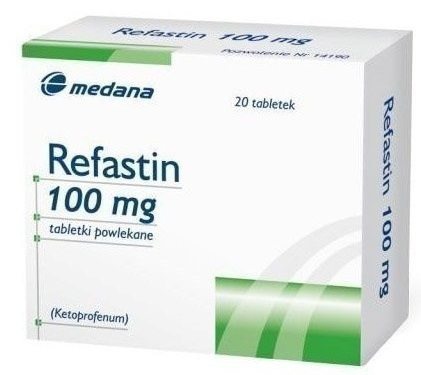
Refastin
Ask a doctor about a prescription for Refastin




How to use Refastin
Package Leaflet: Information for the Patient
Refastin, 100 mg, Coated Tablets
Ketoprofen
Read the package leaflet carefully before taking the medicine, as it contains important information for the patient.
- Keep this leaflet, so you can read it again if you need to.
- If you have any doubts, consult your doctor or pharmacist.
- This medicine has been prescribed specifically for you. Do not pass it on to others. The medicine may harm another person, even if their symptoms are the same as yours.
- If the patient experiences any side effects, including those not listed in this leaflet, they should inform their doctor or pharmacist. See section 4.
Table of Contents of the Leaflet
- 1. What is Refastin and what is it used for
- 2. Important information before taking Refastin
- 3. How to take Refastin
- 4. Possible side effects
- 5. How to store Refastin
- 6. Contents of the pack and other information
1. What is Refastin and what is it used for
Refastin contains ketoprofen, which belongs to a group of non-steroidal anti-inflammatory drugs with anti-inflammatory, analgesic, and antipyretic effects. The mechanism of action involves inhibiting prostaglandin synthesis.
Indications for Use
- Symptomatic treatment:
- rheumatic diseases, including rheumatoid arthritis and osteoarthritis;
- degenerative joint diseases with significant pain and significant impairment of patient's mobility.
- Pain of various origins with mild to moderate severity.
- Painful menstruation.
2. Important Information Before Taking Refastin
Contraindications:
- if the patient has a history of hypersensitivity reactions, such as bronchospasm, asthma, nasal mucositis, angioedema, urticaria, or other allergic reactions after taking ketoprofen, acetylsalicylic acid, or other non-steroidal anti-inflammatory drugs (NSAIDs), as severe, sometimes fatal anaphylactic reactions have been reported in such patients;
- if the patient is allergic to ketoprofen or any other component of this medicine (listed in section 6);
- if the patient has active gastric or duodenal ulcer, or has a history of gastrointestinal bleeding, ulceration, or perforation;
- if the patient has severe liver failure;
- if the patient has severe kidney failure;
- if the patient is in the third trimester of pregnancy;
- if the patient has severe heart failure;
- if the patient has a bleeding disorder.
Warnings and Precautions
Before starting treatment with Refastin, the patient should discuss it with their doctor or pharmacist.
The patient should inform the pharmacist or doctor if they have an infection - see below, section "Infections".
It is very important to take Refastin in the smallest effective dose for the shortest possible time necessary to alleviate symptoms - this will minimize the risk of gastrointestinal and cardiovascular side effects.
The patient should avoid taking ketoprofen at the same time as other NSAIDs, including selective cyclooxygenase-2 (COX-2) inhibitors and salicylates in high doses, due to the possibility of increased side effects.
In patients with asthma, chronic nasal mucositis, chronic sinusitis, nasal polyps, an asthma attack, bronchospasm, especially in individuals with hypersensitivity to acetylsalicylic acid or other NSAIDs, may occur.
Taking ketoprofen (especially in high doses) may be associated with a high risk of harmful effects on the gastrointestinal tract. With long-term therapy with NSAIDs, there is a risk of bleeding, gastric ulcer, and duodenal ulcer and perforation, which can be fatal, even without prior warning symptoms, especially in patients with a history of gastrointestinal ulcers and in the elderly.
Care should be taken when using NSAIDs in patients who have had gastrointestinal diseases (gastritis, duodenitis, ulcerative colitis, Crohn's disease), due to the possibility of exacerbating symptoms.
If gastrointestinal disorders occur, especially gastrointestinal bleeding, the medicine should be discontinued and the patient should consult a doctor. The doctor will exercise caution when prescribing ketoprofen to patients who have had stomach and intestinal disorders.
In the case of mild side effects related to the stomach, medications that protect the gastric mucosa (e.g., misoprostol) can be used.
Care should be taken in patients taking medications that may increase the risk of gastrointestinal ulcers or bleeding, such as oral corticosteroids, anticoagulant medications such as warfarin, selective serotonin reuptake inhibitors (SSRIs), or antiplatelet medications such as acetylsalicylic acid (see below, section "Refastin and other medications").
Infections
Refastin may mask the symptoms of infection, such as fever and pain. Therefore, Refastin may delay the use of appropriate infection treatment, which can lead to increased risk of complications. This has been observed in bacterial pneumonia and bacterial skin infections associated with chickenpox. If the patient is taking this medicine during an infection and the symptoms of the infection persist or worsen, they should consult their doctor immediately.
Patients with a history of hypersensitivity to sunlight or phototoxicity should be closely monitored by their doctor while taking ketoprofen.
Very rare but serious skin reactions (including exfoliative dermatitis, Stevens-Johnson syndrome, and toxic epidermal necrolysis) have been reported with the use of NSAIDs, especially at the beginning of treatment. If the first symptoms of serious skin reactions or hypersensitivity occur, such as skin rash, mucosal damage, or other hypersensitivity symptoms, the patient should stop taking the medicine and consult their doctor.
Care should be taken in patients with systemic lupus erythematosus and mixed connective tissue disease due to the increased risk of aseptic meningitis.
The use of NSAIDs may have a toxic effect on the kidneys, which can lead to interstitial nephritis, nephrotic syndrome, and kidney failure.
In elderly patients, as well as in patients with heart failure or liver dysfunction, cirrhosis, nephrotic syndrome, chronic kidney disease, and water balance disorders (e.g., dehydration due to diuretics or other causes), ketoprofen may impair kidney function, which can cause edema and increased blood urea levels.
In patients with hypertension and (or) heart failure, especially in the elderly, fluid and sodium retention may occur, leading to edema.
Special care is recommended when using ketoprofen in the elderly, especially with liver or kidney dysfunction. During long-term treatment with ketoprofen, the doctor will recommend blood morphology tests and monitoring of liver and kidney function and adjust the ketoprofen dose individually according to the patient's condition.
If vision disturbances occur, such as blurred vision, the patient should stop taking the medicine.
Taking such medications as Refastin may be associated with a small increased risk of heart attack (myocardial infarction) or stroke. This risk increases with long-term use of high doses of the medicine. The patient should not take higher doses or use the medicine for longer than recommended. If the patient has heart problems, has had a stroke, has cerebrovascular diseases, peripheral artery disease, or suspects they are at risk of these disorders (e.g., high blood pressure, diabetes, high cholesterol, smoking), they should discuss their treatment with their doctor.
Children and Adolescents
The safety of ketoprofen in children and adolescents has not been established.
The medicine should not be used in patients under 15 years of age.
Refastin and Other Medications
The patient should tell their doctor or pharmacist about all medications they are currently taking or have recently taken, as well as any medications they plan to take.
Concomitant use of ketoprofen with the following medications is not recommended:
- other pain-relieving and (or) anti-inflammatory medications (including COX-2 inhibitors), salicylates in high doses;
- anticoagulant medications (blood thinners) such as warfarin, acenocoumarol, and heparin administered parenterally;
- antiplatelet medications (medications that prevent platelet aggregation) such as clopidogrel or ticlopidine;
- lithium (a medication used to treat mental illnesses);
- methotrexate (a medication used to treat cancer and rheumatoid diseases) in doses greater than 15 mg per week.
The patient should exercise caution and consult their doctor before taking ketoprofen if they are taking:
- diuretics;
- methotrexate (in doses less than 15 mg per week);
- pentoxifylline (a medication used to treat circulation disorders);
- quinolone antibiotics;
- antihypertensive medications (beta blockers, angiotensin-converting enzyme inhibitors, angiotensin II receptor antagonists);
- thrombolytic medications (used to dissolve blood clots);
- selective serotonin reuptake inhibitors (SSRIs) (medications used to treat depression);
- probenecid (a medication used to treat gout);
- cyclosporine (a medication used to prevent organ rejection or bone marrow transplantation);
- tacrolimus (an immunosuppressive medication);
- corticosteroids (anti-inflammatory medications);
- cardiac glycosides (e.g., digoxin);
- mifepristone (a medication used in gynecology);
- zydovudine (a medication used in HIV-infected patients);
- intrauterine contraceptives - ketoprofen may reduce their effectiveness;
- oral antidiabetic medications, such as glimepiride.
Concomitant use of ketoprofen and antiplatelet medications (such as acetylsalicylic acid and non-steroidal anti-inflammatory drugs, ticlopidine, clopidogrel) and selective serotonin reuptake inhibitors increases the risk of bleeding, as does concomitant administration of anticoagulant medications (including heparin and warfarin) and thrombolytic medications.
In patients who have received combination therapy, the doctor should monitor the medication levels and perform regular tests.
Refastin with Food, Drink, and Alcohol
The medicine should be taken during meals, with a glass of water.
The medicine may enhance the effects of alcohol.
Pregnancy, Breastfeeding, and Fertility
If the patient is pregnant or breastfeeding, thinks they may be pregnant, or plans to have a child, they should consult their doctor or pharmacist before taking this medicine.
Pregnancy
The patient should not take Refastin if they are in the last 3 months of pregnancy, as it may harm the unborn child or cause problems during delivery. Refastin may cause kidney and heart problems in the unborn child. This may affect the patient's and their child's tendency to bleed and may cause delayed or prolonged labor.
The patient should not take Refastin during the first 6 months of pregnancy, unless their doctor considers it absolutely necessary. If the patient needs treatment during this period or while trying to conceive, they should use the smallest effective dose for the shortest possible time. From the 20th week of pregnancy, Refastin may cause kidney function disorders in the unborn child if taken for more than a few days. This may lead to low amniotic fluid levels or narrowing of the arterial duct in the child's heart. If treatment is required for a longer period, the doctor may recommend additional monitoring.
Breastfeeding
The medicine is not recommended during breastfeeding.
Fertility
Taking ketoprofen may have a negative effect on fertility in women and is not recommended for women who plan to become pregnant. In the case of women who have difficulty becoming pregnant or who are undergoing fertility tests, the doctor should consider discontinuing ketoprofen.
Driving and Operating Machines
If the patient experiences drowsiness, dizziness, seizures, fatigue, or vision disturbances while taking ketoprofen, they should not drive or operate machines.
Refastin Contains Lactose and Quinoline Yellow (E 104)
If the patient has been diagnosed with intolerance to some sugars, they should consult their doctor before taking the medicine.
The medicine may cause allergic reactions.
3. How to Take Refastin
This medicine should always be taken as directed by the doctor. If the patient has any doubts, they should consult their doctor or pharmacist.
The medicine should be taken orally. The tablets should be taken during meals, with a glass of water.
The tablet should be swallowed whole, without chewing.
The patient should take the smallest effective dose for the shortest possible time necessary to alleviate symptoms and minimize the risk of side effects. If the patient has an infection and the symptoms (such as fever and pain) persist or worsen, they should consult their doctor immediately (see section 2).
Recommended dose
Adults
In long-term symptomatic treatment: 1 or 2 tablets per day, i.e., 100 mg or 200 mg per day in one or two divided doses.
In short-term symptomatic treatment of acute conditions: 3 tablets per day, i.e., 300 mg per day in three divided doses.
Children and Adolescents
The safety of ketoprofen in children and adolescents has not been established.
The medicine should not be used in patients under 15 years of age.
Overdose of Refastin
If the patient has taken more than the recommended dose, they should immediately consult their doctor or pharmacist.
Symptoms observed after ketoprofen overdose include: lethargy, headache, drowsiness, nausea, vomiting, diarrhea, abdominal pain, disorientation, excitement, coma, dizziness, tinnitus, fainting, seizures, hypotension, breathing difficulties, gastrointestinal bleeding. In the case of overdose with high doses of ketoprofen, acute kidney failure and liver damage may occur.
In the event of an overdose, the patient should stop taking the medicine and consult their doctor immediately. The medical staff will take appropriate action.
Missed Dose of Refastin
The patient should not take a double dose to make up for a missed dose.
The patient should return to the dosage schedule prescribed by their doctor.
If the patient has any further doubts about taking this medicine, they should consult their doctor or pharmacist.
4. Possible Side Effects
Like all medicines, Refastin can cause side effects, although not everybody gets them.
The most common side effects are related to the gastrointestinal system. Especially in the elderly, gastric ulcers, perforation of the gastrointestinal tract, or gastrointestinal bleeding may occur, sometimes with fatal outcomes.
Side effects are listed according to their frequency:
- Frequent (may occur in less than 1 in 10 people):
- indigestion, nausea, abdominal pain, vomiting.
Infrequent (may occur in less than 1 in 100 people):
- headache, dizziness, drowsiness, constipation, diarrhea, bloating, gastritis, rash, itching, fatigue, edema.
Rare (may occur in less than 1 in 1,000 people):
- changes in blood test results (hemorrhagic anemia, bleeding anemia, leukopenia with possible agranulocytosis), anaphylactic reactions (including anaphylactic shock), paresthesia (tingling, burning, numbness in the limbs), vision disturbances such as blurred vision, tinnitus, asthma, asthmatic attacks, oral mucositis, gastric ulcer and (or) duodenal ulcer, hepatitis, increased liver enzyme activity, increased bilirubin levels in the blood related to hepatitis, weight gain.
Very rare (may occur in less than 1 in 10,000 people):
- pancreatitis.
Frequency not known (frequency cannot be estimated from available data):
- changes in blood test results (agranulocytosis, thrombocytopenia, neutropenia), bone marrow suppression, mood disorders, seizures, taste disturbances, depression, confusion, hallucinations, vertigo of labyrinthine origin, malaise, optic neuritis, heart failure, vasodilation, hypertension, bronchospasm (especially in patients with known hypersensitivity to acetylsalicylic acid and other NSAIDs), nasal mucositis, dyspnea, non-specific allergic reactions, dyspnea, exacerbation of ulcerative colitis and Crohn's disease, gastrointestinal bleeding and perforation (sometimes fatal, especially in the elderly), abdominal pain, black stools, hematemesis, liver function disorders, jaundice, hypersensitivity to light, redness, hair loss, urticaria, blistering skin diseases (including toxic epidermal necrolysis and Stevens-Johnson syndrome), purpura, angioedema, acute kidney failure (especially in patients with pre-existing kidney function disorders and (or) dehydration), interstitial nephritis, nephrotic syndrome, abnormal kidney function test results, taste disturbances. Cases of aseptic meningitis (especially in patients with systemic lupus erythematosus and mixed connective tissue disease) with symptoms such as neck stiffness, headache, nausea, vomiting, fever, or disorientation.
Clinical trials and epidemiological data suggest that taking some NSAIDs (especially long-term and in high doses) is associated with a small increased risk of arterial thrombosis (e.g., heart attack or stroke).
In any case of serious side effects, the patient should stop taking Refastin immediately.
Reporting Side Effects
If the patient experiences any side effects, including those not listed in this leaflet, they should inform their doctor or pharmacist. Side effects can be reported directly to the Department of Drug Safety Monitoring of the Office for Registration of Medicinal Products, Medical Devices, and Biocidal Products
Al. Jerozolimskie 181C
02-222 Warsaw
Phone: +48 22 49 21 301
Fax: +48 22 49 21 309
Website: https://smz.ezdrowie.gov.pl
Side effects can also be reported to the marketing authorization holder.
Reporting side effects will help gather more information on the safety of the medicine.
5. How to Store Refastin
The medicine should be stored out of sight and reach of children.
Do not store above 25°C. Protect from light and moisture.
Do not use this medicine after the expiry date stated on the packaging. The expiry date refers to the last day of the month.
The inscription on the packaging after the abbreviation EXP means the expiry date, and after the abbreviation Lot/LOT means the batch number.
Medicines should not be disposed of via wastewater or household waste. The patient should ask their pharmacist how to dispose of unused medicines. This will help protect the environment.
6. Contents of the Pack and Other Information
What Refastin Contains
- The active substance of the medicine is ketoprofen. Each coated tablet contains 100 mg of ketoprofen.
- Other ingredients are:
- tablet core - microcrystalline cellulose, crospovidone, colloidal anhydrous silica, magnesium stearate.
- tablet coating - hypromellose, lactose monohydrate, triacetin, titanium dioxide (E 171), macrogol 3000, quinoline yellow (E 104), iron oxide yellow (E 172), iron oxide red (E 172).
What Refastin Looks Like and Contents of the Pack
20 tablets or 30 tablets in Aluminum/PVDC blisters, in a cardboard box.
Marketing Authorization Holder
Zakłady Farmaceutyczne POLPHARMA S.A.
ul. Pelplińska 19, 83-200 Starogard Gdański
phone: +48 22 364 61 01
Manufacturer
Zakłady Farmaceutyczne POLPHARMA S.A.
Medana Branch in Sieradz
ul. Władysława Łokietka 10, 98-200 Sieradz
Zakłady Farmaceutyczne POLPHARMA S.A.
Production Plant in Nowa Dęba
ul. Metalowca 2
39-460 Nowa Dęba
Date of Last Revision of the Leaflet:
- Country of registration
- Active substance
- Prescription requiredYes
- Manufacturer
- ImporterZakłady Farmaceutyczne POLPHARMA S.A. Oddział Medana w Sieradzu Zakłady Farmaceutyczne POLPHARMA S.A. Oddział Produkcyjny w Nowej Dębie
- This information is for reference only and does not constitute medical advice. Always consult a licensed doctor before taking any medication. Oladoctor is not responsible for medical decisions based on this content.
- Alternatives to RefastinDosage form: Tablets, 150 mgActive substance: ketoprofenManufacturer: Famar Lyon Opella Healthcare International SASPrescription requiredDosage form: Capsules, 200 mgActive substance: ketoprofenPrescription requiredDosage form: Granulate, 50 mgActive substance: ketoprofenManufacturer: Fine Foods & Pharmaceuticals N.T.M. S.p.APrescription not required
Alternatives to Refastin in other countries
The best alternatives with the same active ingredient and therapeutic effect.
Alternative to Refastin in Spain
Alternative to Refastin in Ukraine
Online doctors for Refastin
Discuss dosage, side effects, interactions, contraindications, and prescription renewal for Refastin – subject to medical assessment and local rules.

Get updates and exclusive offers
Be the first to know about new services, marketplace updates, and subscriber-only promos.

