


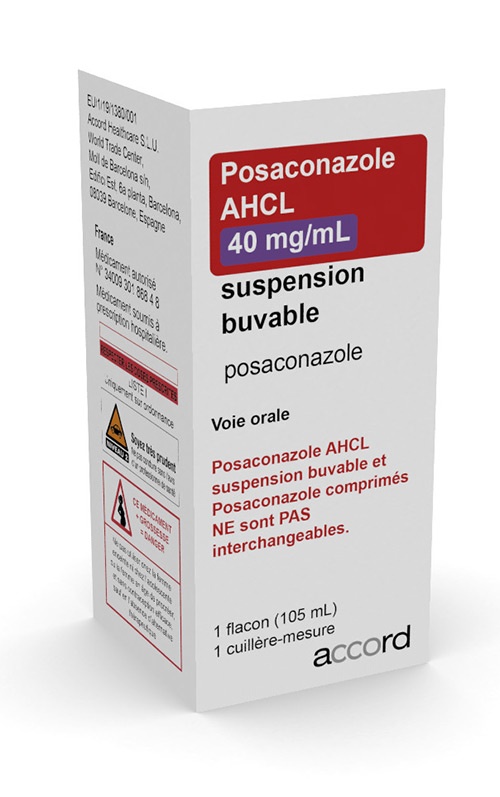
Posaconazole Accord
Ask a doctor about a prescription for Posaconazole Accord




How to use Posaconazole Accord
Leaflet accompanying the packaging: information for the user
Posaconazole Accord, 300 mg, concentrate for solution for infusion
Posaconazole
You should carefully read the contents of the leaflet before using the medicine, as it contains important information for the patient.
- You should keep this leaflet, so that you can read it again if you need to.
- If you have any doubts, you should consult a doctor, pharmacist, or nurse.
- This medicine has been prescribed specifically for you. Do not pass it on to others. The medicine may harm them, even if their symptoms are the same as yours.
- If the patient experiences any side effects, including any side effects not listed in this leaflet, they should tell their doctor, pharmacist, or nurse. See section 4.
Table of contents of the leaflet
- 1. What is Posaconazole Accord and what is it used for
- 2. Important information before using Posaconazole Accord
- 3. How to use Posaconazole Accord
- 4. Possible side effects
- 5. How to store Posaconazole Accord
- 6. Contents of the packaging and other information
1. What is Posaconazole Accord and what is it used for
Posaconazole Accord contains the active substance posaconazole, which belongs to a group of antifungal medicines. Posaconazole Accord is used to prevent and treat many types of fungal infections.
Posaconazole Accord works by killing or inhibiting the growth of fungi that can cause infections in humans.
Posaconazole Accord may be used in adults to treat fungal infections caused by fungi of the genus Aspergillus.
Posaconazole Accord may be used in adults and children aged 2 years and above to treat the following fungal infections:
- infections caused by species of the genus Aspergillusthat do not respond to antifungal medicines, amphotericin B, or itraconazole, or when treatment with these medicines must be discontinued;
- infections caused by species of the genus Fusariumthat do not respond to amphotericin B, or when treatment with amphotericin B must be discontinued;
- infections caused by fungi, known as chromoblastomycosis and mycetoma, that do not respond to treatment with itraconazole or when treatment with itraconazole must be discontinued;
- infections caused by fungi known as Coccidioidesthat do not respond to one or more of the following medicines - amphotericin B, itraconazole, or fluconazole, or when treatment with these medicines must be discontinued.
Posaconazole Accord may also be used to prevent fungal infections in adults and children aged 2 years and above who are at high risk of developing such infections, for example:
- in patients whose immune system is weakened due to chemotherapy for acute myeloid leukemia or myelodysplastic syndrome;
- in patients taking high-dose immunosuppressive therapy after hematopoietic stem cell transplantation.
2. Important information before using Posaconazole Accord
When not to use Posaconazole Accord:
Posaconazole Accord should not be used if any of the above situations apply to the patient. In case of doubts before using Posaconazole Accord, the patient should consult a doctor or pharmacist.
Warnings and precautions
Before starting to take Posaconazole Accord, the patient should discuss it with their doctor, pharmacist, or nurse:
During treatment, the patient should avoid exposure to the sun. It is essential to cover exposed skin areas with protective clothing and use a sunscreen with a high sun protection factor (SPF), as the skin may be more sensitive to ultraviolet (UV) radiation.
If any of the above situations apply to the patient (and in case of doubts), before using Posaconazole Accord, the patient should consult a doctor, pharmacist, or nurse.
Children
Posaconazole Accord should not be given to children under 2 years of age.
Posaconazole Accord and other medicines
The patient should tell their doctor or pharmacist about all medicines they are currently taking or have recently taken, as well as any medicines they plan to take.
Do not use Posaconazole Accord if the patient is taking any of the following medicines:
- terfenadine (used to treat allergies),
- astemizole (used to treat allergies),
- cisapride (used to treat stomach disorders),
- pimozide (used to treat symptoms of Tourette's syndrome and mental illness),
- halofantrine (used to treat malaria),
- quinidine (used to treat heart rhythm disturbances).
Posaconazole Accord may increase the levels of the following medicines in the blood, which can lead to serious changes in heart rhythm:
- any medicines containing ergot alkaloids, such as ergotamine or dihydroergotamine, used to treat migraine headaches. Posaconazole Accord may increase the levels of these medicines in the blood, which can lead to significant restriction of blood flow to the fingers or toes and consequent damage;
- statins, such as simvastatin, atorvastatin, or lovastatin, used to lower high cholesterol levels;
- venetoclax used in the initial treatment of a certain type of cancer called chronic lymphocytic leukemia (CLL).
Do not use Posaconazole Accord if any of the above situations apply to the patient. In case of doubts before taking Posaconazole Accord, the patient should consult a doctor or pharmacist.
Pregnancy and breastfeeding
If the patient is pregnant or thinks she may be pregnant, she should inform her doctor before starting to use Posaconazole Accord.
Posaconazole Accord should not be used during pregnancy, unless the doctor recommends it.
Women of childbearing age should use effective contraception while using Posaconazole Accord. If the patient becomes pregnant while using Posaconazole Accord, she should immediately inform her doctor.
Posaconazole Accord should not be used during breastfeeding, as small amounts of the medicine may pass into breast milk.
Driving and using machines
While taking Posaconazole Accord, the patient may experience symptoms such as dizziness, drowsiness, or blurred vision, which may have a negative impact on the ability to drive vehicles, use tools, or operate machines. In such cases, the patient should not drive vehicles, use any tools, or operate any machines and should consult a doctor.
Posaconazole Accord contains sodium
The maximum recommended daily dose of this medicine contains 930 mg of sodium (found in salt). This corresponds to 47% of the maximum recommended daily intake of sodium in the diet for adults. If Posaconazole Accord is taken more frequently than once a day for a longer period, patients, especially those on a low-sodium diet, should consult a doctor or pharmacist.
Posaconazole Accord contains cyclodextrins (sulfobutyl ether beta-cyclodextrin sodium (SBECD))
This medicine contains 6680 mg of cyclodextrin in each vial, which is equivalent to 95.43 mg/kg per day.
3. How to use Posaconazole Accord
This medicine should always be used exactly as prescribed by the doctor or pharmacist. In case of doubts, the patient should consult a doctor or pharmacist.
The recommended dose for adults is 300 mg twice a day on the first day, and then 300 mg once a day.
The recommended dose for children aged 2 to 18 years is 6 mg/kg body weight up to a maximum of 300 mg twice a day on the first day, and then 6 mg/kg body weight up to a maximum of 300 mg once a day.
Posaconazole Accord concentrate for solution for infusion will be diluted by a pharmacist or nurse to the appropriate concentration.
Posaconazole Accord concentrate for solution for infusion will always be prepared and administered to the patient by a healthcare professional.
The patient will receive Posaconazole Accord:
- through a plastic tube inserted into a vein (intravenous infusion),
- usually over a period of about 90 minutes.
The duration of treatment may depend on the type of infection the patient has or how long the patient's immune system is not working properly and may be adjusted by the doctor. The patient should not change the dose they are taking or change the treatment schedule without consulting a doctor.
Missing a dose of Posaconazole Accord
Since this medicine will be administered to the patient under close medical supervision, it is unlikely that a dose will be missed. However, if the patient thinks they may have missed a dose, they should inform their doctor or pharmacist.
If the treatment with Posaconazole Accord is discontinued by the doctor, the patient should not experience any effects.
In case of any further doubts about using this medicine, the patient should consult a doctor, pharmacist, or nurse.
4. Possible side effects
Like all medicines, Posaconazole Accord can cause side effects, although not everybody gets them.
Severe side effects
The patient should immediately inform their doctor, pharmacist, or nurse if they experience any of the following severe side effects, as they may need urgent medical attention:
- nausea or vomiting, diarrhea;
- symptoms of liver failure - these include yellowing of the skin or whites of the eyes, dark urine, or pale stools, unexplained nausea, stomach upset, loss of appetite, unusual fatigue or weakness, elevated liver enzyme levels in blood tests;
- allergic reaction.
Other side effects
If the patient experiences any of the following side effects, they should tell their doctor, pharmacist, or nurse.
Common: may affect up to 1 in 10 people
- change in electrolyte levels in the blood, as shown in blood tests - this can cause symptoms such as confusion or weakness;
- abnormal sensation in the skin, including numbness, tingling, itching, gooseflesh, prickling, or burning;
- swelling, redness, and tenderness along the vein where the medicine was administered;
- headache;
- low potassium levels in the blood, as shown in blood tests;
- low magnesium levels in the blood, as shown in blood tests;
- high blood pressure;
- loss of appetite, stomach pain, or stomach upset, gas, dry mouth, taste disturbances;
- heartburn (a burning sensation in the chest that may spread to the throat);
- reduced neutrophil count, a type of white blood cell (neutropenia), which can increase the risk of infections;
- fever;
- feeling weak, dizzy, tired, or sleepy;
- rash;
- itching;
- constipation;
- discomfort in the anus.
Uncommon: may affect up to 1 in 100 people
- anemia - symptoms include headaches, feeling tired or dizzy, shortness of breath, or pale skin, and low hemoglobin levels in blood tests;
- reduced platelet count, as shown in blood tests, which can lead to bleeding;
- reduced white blood cell count, as shown in blood tests, which can increase the risk of infections;
- increased eosinophil count, a type of white blood cell (eosinophilia), which can be associated with inflammation;
- vasculitis;
- heart rhythm disturbances;
- seizures;
- nerve damage (neuropathy);
- abnormal heart rhythm, as shown in an ECG, palpitations, slow or fast heart rate, high or low blood pressure;
- low blood pressure;
- pancreatitis, which can cause severe stomach pain;
- splenic infarction (a condition where the spleen does not receive enough blood), which can cause severe stomach pain;
- severe kidney problems - symptoms include decreased or increased urine output, or changes in urine color;
- high creatinine levels in the blood, as shown in blood tests;
- cough, hiccups;
- nosebleeds;
- sharp and severe chest pain that occurs when breathing in (pleuritic pain);
- enlarged lymph nodes (lymphadenopathy);
- numbness or tingling;
- tremors;
- high or low blood sugar levels;
- blurred vision, sensitivity to light;
- hair loss (alopecia);
- mouth ulcers;
- chills, general feeling of being unwell;
- pain, back pain, or neck pain, arm or leg pain;
- fluid retention (edema);
- menstrual disorders (abnormal vaginal bleeding);
- difficulty sleeping (insomnia);
- loss of speech or speech disturbances;
- mouth swelling;
- vivid dreams or sleep problems;
- coordination or balance problems;
- mucosal inflammation;
- stuffy nose;
- breathing difficulties;
- chest discomfort;
- bloating;
- mild to severe nausea, vomiting, abdominal cramps, and diarrhea, usually caused by a virus, stomach pain;
- belching;
- restlessness;
- pain or inflammation at the injection site.
Rare: may affect up to 1 in 1,000 people
- pneumonia - symptoms include shortness of breath and coughing up discolored sputum;
- high blood pressure in the blood vessels of the lungs (pulmonary hypertension), which can lead to severe lung and heart damage;
- blood disorders, such as abnormal blood clotting or prolonged bleeding;
- severe allergic reactions, including widespread blistering and peeling of the skin;
- psychiatric disorders, such as hearing voices or seeing things that are not there;
- fainting;
- problems with thinking or speaking, sudden, uncontrolled movements of the limbs, especially the arms;
- stroke - symptoms include pain, weakness, numbness, or tingling of the limbs;
- appearance of a defect or blind spot in the field of vision;
- heart failure or heart attack, which can lead to cardiac arrest and death, heart rhythm disturbances that can cause sudden death;
- presence of blood clots in the deep veins of the legs (deep vein thrombosis) - symptoms include severe pain or swelling of the legs;
- presence of blood clots in the lungs (pulmonary embolism) - symptoms include shortness of breath or chest pain when breathing;
- bleeding from the stomach or intestines - symptoms include vomiting blood or black stools;
- intestinal obstruction, especially of the small intestine. Obstruction prevents the movement of intestinal contents into the large intestine. Symptoms include bloating, vomiting, severe constipation, loss of appetite, and intestinal cramps;
- hemolytic-uremic syndrome, in which red blood cells are broken down (hemolysis). This can be accompanied by kidney failure;
- pancytopenia, a reduction in the number of all blood cells (white blood cells, red blood cells, and platelets) shown in blood tests;
- large purple spots under the skin (thrombocytopenic purpura);
- facial or tongue swelling;
- depression;
- double vision;
- chest pain;
- adrenal disorders, which can cause weakness, fatigue, loss of appetite, changes in skin color;
- pituitary disorders, which can cause decreased levels of certain hormones in the blood that affect the function of male or female reproductive organs;
- hearing problems;
- pseudoaldosteronism, which can cause high blood pressure with low potassium levels (as shown in blood tests).
Frequency not known: frequency cannot be estimated from the available data
- some patients have also reported feeling disoriented after taking posaconazole.
- skin redness
The patient should contact their doctor, pharmacist, or nurse if they experience any of the above side effects.
Reporting side effects
If side effects occur, including any side effects not listed in this leaflet, the patient should tell their doctor or pharmacist. Side effects can be reported directly to the Department of Drug Safety Monitoring, Office for Registration of Medicinal Products, Medical Devices, and Biocidal Products, Al. Jerozolimskie 181C, 02-222 Warsaw, tel.: +48 22 49 21 301, fax: +48 22 49 21 309, website: https://smz.ezdrowie.gov.pl
Side effects can also be reported to the marketing authorization holder.
Reporting side effects will help to gather more information on the safety of this medicine.
5. How to store Posaconazole Accord
- The medicine should be stored out of the sight and reach of children.
- Do not use this medicine after the expiry date stated on the label. The expiry date refers to the last day of the month stated.
- Store in a refrigerator (2°C - 8°C).
- Chemical and physical stability has been demonstrated for 24 hours at 2°C - 8°C.
- From a microbiological point of view, the product should be used immediately after preparation. If the solution is not used immediately, it can be stored for a maximum of 24 hours at a temperature of 2°C - 8°C, provided that the solution has been prepared in controlled and aseptic conditions.
- Medicines should not be disposed of via wastewater or household waste. The patient should ask their pharmacist how to dispose of medicines that are no longer needed. This will help protect the environment.
6. Contents of the packaging and other information
What Posaconazole Accord contains
The active substance is posaconazole. One vial contains 300 mg of posaconazole.
The other ingredients are sulfobutyl ether beta-cyclodextrin sodium (see section 2), disodium edetate, hydrochloric acid, and sodium hydroxide (to adjust pH), water for injections.
What Posaconazole Accord looks like and contents of the pack
Posaconazole Accord is a concentrate for solution for infusion, which is a clear, colorless to yellow solution, and is free from visible particles.
The color variation of the solution within this range does not affect the quality of the product.
Posaconazole Accord is available in a 20 ml vial, for single use, closed with a rubber stopper and an aluminum seal with a blue cap.
Marketing authorization holder and importer
Marketing authorization holder
Accord Healthcare Polska Sp. z o.o.
ul. Taśmowa 7
02-677 Warsaw
Tel: +48 22 577 28 00
Importer
Pharmadox Healthcare Ltd.
KW20A Kordin Industrial Park
Paola, PLA 3000
Malta
This medicinal product is authorized in the Member States of the European Economic Area under the following names:
Netherlands:
Posaconazol Accordpharma
Czech Republic:
Posaconazole Accord
Hungary:
Posaconazol Accord
Poland:
Posaconazole Accord
Romania:
Posaconazol Accord Laboratories 300 mg concentrate pentru soluție perfuzabilă
Date of last revision of the leaflet: October 2024
-----------------------------------------------------------------------------------------------------------------
The following information is intended for healthcare professionals only:
Instructions for the administration of Posaconazole Accord, 300 mg, concentrate for solution for infusion
- The vial of Posaconazole Accord should be removed from the refrigerator and allowed to reach room temperature.
- Depending on the final concentration to be achieved (not less than 1 mg/ml and not more than 2 mg/ml), maintaining aseptic conditions, 16.7 ml of posaconazole should be transferred to an infusion bag (or infusion bottle) containing a compatible diluent (see below) in a volume of 150 ml to 283 ml.
- Administer through a central venous line or a peripherally inserted central catheter (PICC) in a slow intravenous infusion over approximately 90 minutes.
- Posaconazole Accord concentrate for solution for infusion should not be administered by rapid intravenous injection.
- If a central venous line is not available, a single infusion of a volume that allows a dilution of approximately 2 mg/ml can be administered through a peripheral venous line. When administered through a peripheral venous line, the infusion should last approximately 30 minutes.
Note: In clinical trials, multiple infusions administered through the same peripheral vein led to reactions at the infusion site (see section 4.8).
- Posaconazole Accord is intended for single use.
The following medicines can be administered in infusion at the same time as Posaconazole Accord concentrate for solution for infusion through the same intravenous line (or cannula):
Amikacin sulfate
Caspofungin
Ciprofloxacin
Daptomycin
Dobutamine hydrochloride
Famotidine
Filgrastim
Gentamicin sulfate
Hydromorphone hydrochloride
Levofloxacin
Lorazepam
Meropenem
Micafungin
Morphine sulfate
Norepinephrine bitartrate
Potassium chloride
Vancomycin hydrochloride
Medicines not listed above should not be administered at the same time as Posaconazole Accord through the same intravenous line (or cannula).
Before administration, Posaconazole Accord concentrate for solution for infusion should be visually inspected for particulate matter. The solution for infusion of Posaconazole Accord may be colorless or have a pale yellow color. The color variation of the solution within this range does not affect the quality of the product.
Any unused product or waste material should be disposed of in accordance with local requirements.
Posaconazole Accord concentrate for solution for infusion should not be diluted with:
Ringer's solution with lactate
5% glucose solution with Ringer's solution and lactate
4.2% sodium bicarbonate solution
This medicine should not be mixed with other medicines, except for those listed below:
5% glucose solution in water
0.9% sodium chloride solution
0.45% sodium chloride solution
5% glucose solution and 0.45% sodium chloride solution
5% glucose solution and 0.9% sodium chloride solution
5% glucose solution with 20 mEq KCl
- Country of registration
- Active substance
- Prescription requiredYes
- ImporterPharmadox Healthcare Ltd.
- This information is for reference only and does not constitute medical advice. Always consult a licensed doctor before taking any medication. Oladoctor is not responsible for medical decisions based on this content.
- Alternatives to Posaconazole AccordDosage form: Tablets, 100 mgActive substance: posaconazoleManufacturer: Delorbis Pharmaceuticals Ltd. Salutas Pharma GmbHPrescription requiredDosage form: Tablets, 100 mgActive substance: posaconazoleManufacturer: Heumann Pharma GmbH & Co. Generica KGPrescription requiredDosage form: Suspension, 40 mg/mlActive substance: posaconazolePrescription required
Alternatives to Posaconazole Accord in other countries
The best alternatives with the same active ingredient and therapeutic effect.
Alternative to Posaconazole Accord in Spain
Alternative to Posaconazole Accord in Ukraine
Online doctors for Posaconazole Accord
Discuss dosage, side effects, interactions, contraindications, and prescription renewal for Posaconazole Accord – subject to medical assessment and local rules.





Get updates and exclusive offers
Be the first to know about new services, marketplace updates, and subscriber-only promos.

