


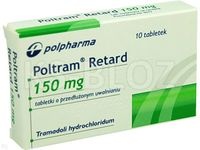
Poltram Retard 150
Ask a doctor about a prescription for Poltram Retard 150




How to use Poltram Retard 150
Leaflet accompanying the packaging: patient information
Poltram Retard 100, 100 mg, prolonged-release tablets
Poltram Retard 150, 150 mg, prolonged-release tablets
Poltram Retard 200, 200 mg, prolonged-release tablets
Tramadol hydrochloride
You should carefully read the contents of the leaflet before taking the medicine, as it contains important information for the patient.
- You should keep this leaflet, so you can read it again if you need to.
- If you have any doubts, you should consult a doctor or pharmacist.
- This medicine has been prescribed specifically for you. Do not pass it on to others. The medicine may harm another person, even if their symptoms are the same as yours.
- If the patient experiences any side effects, including any side effects not listed in this leaflet, they should tell their doctor or pharmacist. See section 4.
Table of contents of the leaflet
- 1. What is Poltram Retard and what is it used for
- 2. Important information before taking Poltram Retard
- 3. How to take Poltram Retard
- 4. Possible side effects
- 5. How to store Poltram Retard
- 6. Contents of the packaging and other information
1. What is Poltram Retard and what is it used for
Poltram Retard is a pain-relieving medicine that acts on the central nervous system (brain and spinal cord).
The indication for use of the medicine is moderate to severe pain.
The medicine is intended for use in adults and adolescents over 14 years of age.
2. Important information before taking Poltram Retard
When not to take Poltram Retard:
- if the patient is allergic to tramadol, other opioid pain-relieving medicines, or any of the other ingredients of this medicine (listed in section 6);
- in case of acute alcohol intoxication, sleeping pills, pain-relieving medicines, or psychotropic substances (medicines that affect mood or feelings);
- if the patient is taking MAO inhibitors (antidepressant medicines, selegiline used in Parkinson's disease) or has taken them within 14 days prior to treatment with Poltram Retard;
- if the patient has epilepsy that is not adequately controlled by medicines;
- in children under 14 years of age, with a body weight of less than 50 kg;
- if the patient is addicted to drugs;
- in withdrawal syndrome.
Warnings and precautions
Before starting treatment with Poltram Retard, the patient should discuss it with their doctor or pharmacist:
- if the patient is addicted to strong pain-relieving medicines acting on the central nervous system (opioids);
- if the patient has had a head injury or is in shock (characterized by a drop in blood pressure, paleness, rapid breathing, cold sweats, weakness, and
fainting) or if the patient has consciousness disorders of unknown origin;
- if the patient has respiratory disorders or respiratory center disorders;
- if the patient has increased intracranial pressure;
- if the patient has increased sensitivity to opioids;
- if the patient has epilepsy or has had seizures of cerebral origin in the past. The risk of seizures increases after exceeding the recommended daily dose (400 mg). Additionally, tramadol may increase the risk of seizures in patients taking other medicines that lower the seizure threshold. Such patients may be treated with tramadol only if other pain management is ineffective.
- if the patient has a tendency to abuse medicines and drug dependence, and in cases where therapy is long-term. In such cases, treatment with the medicine should be carried out under close medical supervision.
- if the patient has depression and is taking antidepressant medicines, as some of them may interact with tramadol (see "Poltram Retard and other medicines"). After taking tramadol in combination with certain antidepressant medicines or tramadol alone, there is a small risk of developing so-called serotonin syndrome. If the patient experiences any symptoms of this severe syndrome, they should immediately consult a doctor (see section 4 "Possible side effects").
- if the patient has liver or kidney failure. In cases of long-term treatment of such patients with Poltram Retard, it is recommended to monitor the concentration of the medicine in the blood.
- if the patient is taking sedatives, anxiolytics, neuroleptics, muscle relaxants, antidepressants, and other medicines acting depressively on the central nervous system. Taking medicines containing tramadol in high doses, alone or in combination with other medicines acting depressively on the central nervous system, including alcohol, may cause fatal drug dependence. Do not take doses higher than those recommended by the doctor.
Care should be taken in patients with respiratory depression, as well as when using other medicines acting depressively on the central nervous system or significantly exceeding the recommended doses, as respiratory depression cannot be ruled out in these cases (see section 2 "Poltram Retard and other medicines").
Sleep apnea
Poltram Retard may cause sleep apnea, such as sleep apnea (pauses in breathing during sleep) and hypoxemia (low oxygen level in the blood). Symptoms may include pauses in breathing during sleep, nighttime awakenings due to shortness of breath, difficulty maintaining sleep, or excessive daytime sleepiness. If the patient or another person notices these symptoms, they should contact a doctor. The doctor may consider reducing the dose.
If the patient experiences any of the following symptoms while taking Poltram Retard, they should tell their doctor or pharmacist:
- excessive fatigue, loss of appetite, severe abdominal pain, nausea, vomiting, or low blood pressure. This may indicate that the patient has adrenal insufficiency (low cortisol levels). If such symptoms occur, the patient should contact a doctor, who will decide whether the patient needs hormone replacement.
Tolerance, dependence, and addiction
This medicine contains tramadol, which is an opioid medicine. Repeated use of opioids can lead to decreased effectiveness of the medicine (the patient's body gets used to the medicine, which is called tolerance). Repeated use of Poltram Retard may also lead to dependence, abuse, and addiction, which can cause life-threatening overdose. The risk of these side effects may increase with the dose and duration of treatment.
Dependence or addiction can cause the patient to lose control over the amount of medicine taken or the frequency of taking it.
The risk of dependence on Poltram Retard may vary from person to person. A higher risk of dependence on Poltram Retard may apply to persons in the following situations:
- the patient or someone in their family has ever abused or been dependent on alcohol, prescription medicines, or illegal drugs ("addiction");
- the patient is a smoker or uses nicotine products;
- the patient has ever had mood problems (depression, anxiety, or personality disorders) or has been treated by a psychiatrist for other mental illnesses.
If the patient notices any of the following symptoms while taking Poltram Retard, it may indicate dependence or addiction.
- Need to take the medicine for a longer period than recommended by the doctor.
- Need to take a higher dose than recommended.
- The patient is taking the medicine for reasons other than those for which it was prescribed, such as "to calm down" or "to sleep better".
- The patient has made repeated, unsuccessful attempts to stop or control the use of the medicine.
- After stopping the medicine, the patient feels unwell, and after taking it again, they feel better ("withdrawal effects"). If the patient notices any of these symptoms, they should consult a doctor to discuss the best treatment option, including when to stop taking the medicine and how to do it safely (see section 3, subsection "Stopping Poltram Retard").
Tramadol should not be used for substitution therapy in patients addicted to opioids, as it does not eliminate the symptoms that occur after morphine withdrawal.
Tramadol is converted in the liver by an enzyme. In some patients, there is a certain variant of this enzyme, which can have different effects. In some patients, pain relief may not be sufficient, and in others, the risk of serious side effects may be higher. The patient should stop taking the medicine and immediately consult a doctor if they experience any of the following side effects (due to tramadol toxicity): slow breathing or shallow breathing, confusion, drowsiness, pinpoint pupils, nausea, or vomiting, constipation, loss of appetite.
Children and adolescents
Do not use the medicine in children and adolescents under 14 years of age, with a body weight of less than 50 kg.
Use after surgical procedures in children
Cautious use of tramadol in children for postoperative pain relief; the patient should be closely monitored for signs of tramadol toxicity (see above), including respiratory depression.
Use in children with respiratory disorders
Tramadol is not recommended for use in children with respiratory disorders, as the symptoms of tramadol toxicity (see above) may be exacerbated in them.
Poltram Retard and other medicines
The patient should tell their doctor or pharmacist about all medicines they are currently taking or have recently taken, as well as any medicines they plan to take.
Poltram Retard should not be used at the same time as MAO inhibitors (medicines whose active substances are: isocarboxazid, iproniazid, tranylcypromine, clorgyline, selegiline, moclobemide) - see section "When not to take Poltram Retard".
It is not recommended to use Poltram Retard at the same time as the following medicines:
- carbamazepine (usually used to treat epilepsy or severe facial pain called trigeminal neuralgia);
- buprenorphine, nalbuphine, pentazocine (pain-relieving medicines from the opioid group). The pain-relieving effect may be reduced.
- gabapentin or pregabalin (used to treat epilepsy or pain caused by nerve damage (neuropathic pain)).
The risk of side effects is higher if the following medicines are taken at the same time:
- certain antidepressant medicines - Poltram Retard may interact with them and cause serotonin syndrome (see section 4 "Possible side effects").
- sedatives, sleeping pills, other pain-relieving medicines, such as morphine or codeine (which also has a cough-suppressing effect), baclofen (a muscle relaxant), blood pressure-lowering medicines, antidepressant medicines, or medicines used for allergies. Drowsiness or a feeling of fainting may occur. If such symptoms occur, the patient should tell their doctor.
- other medicines that may cause seizures (convulsions), such as certain antidepressant or antipsychotic medicines, bupropion, mirtazapine, tetrahydrocannabinol. The risk of seizures may increase if the patient takes Poltram Retard at the same time as these medicines. The doctor should inform the patient whether Poltram Retard is suitable for them.
- coumarin derivatives, e.g., warfarin (used to thin the blood). The effect of these medicines may be disrupted, and bleeding may occur. Any prolonged or unexpected bleeding should be reported to the doctor immediately.
- medicines acting depressively on the central nervous system and alcohol. The effectiveness of Poltram Retard may be disrupted if the following medicines are taken at the same time:
- ondansetron (a medicine used to treat nausea and vomiting);
- ketokonazole or erythromycin (medicines used to combat infections).
Poltram Retard with alcohol
Alcohol should not be consumed during treatment.
Pregnancy and breastfeeding
If the patient is pregnant or breastfeeding, thinks they may be pregnant, or plans to have a child, they should consult a doctor or pharmacist before taking this medicine.
Poltram Retard should not be used during pregnancy and breastfeeding.
Breastfeeding
Tramadol is excreted into breast milk. Therefore, during breastfeeding, Poltram Retard should not be taken more than once, or if Poltram Retard has been taken more than once, breastfeeding should be stopped.
Driving and using machines
The medicine may prolong the reaction time, even when used in recommended doses, especially when used at the same time as other psychotropic medicines.
The patient should not drive vehicles or operate machines while taking the medicine.
3. How to take Poltram Retard
This medicine should always be taken exactly as prescribed by the doctor or pharmacist. In case of doubts, the patient should consult a doctor or pharmacist.
Before starting treatment and regularly during treatment, the doctor will discuss with the patient what to expect from taking Poltram Retard, when and for how long to take it, when to contact the doctor, and when to stop taking it (see also section 2).
The dose should be adjusted according to the severity of the pain and the patient's individual response to treatment. The patient should take the smallest dose that effectively relieves the pain.
Children and adolescents
Do not use the medicine in children and adolescents under 14 years of age, with a body weight of less than 50 kg.
Adults and adolescents over 14 years of age, with a body weight of more than 50 kg
The usual initial dose is 50 mg or 100 mg of tramadol twice a day, in the morning and evening. If a lower initial dose than 100 mg is necessary, another medicinal product containing tramadol hydrochloride should be used. If the pain-relieving effect is insufficient, the dose can be gradually increased to 150 mg or 200 mg of tramadol twice a day. The principle of selecting the lowest effective pain-relieving dose should be followed. The dose is usually not higher than 400 mg per day, in divided doses. The tablets should be swallowed whole, without chewing or crushing. The medicine should be taken with a small amount of liquid; it can be taken regardless of meals, preferably in the morning and evening.
Elderly patients
In patients over 75 years of age, the elimination of tramadol from the body may be delayed. In these patients, the doctor may recommend prolonging the time interval between doses.
Patients with renal or hepatic impairment
Poltram Retard should not be taken in case of severe hepatic or renal impairment.
In case of mild or moderate impairment, the doctor may recommend prolonging the time interval between doses.
Duration of treatment
The medicine should not be taken for longer than absolutely necessary. In long-term pain treatment, the doctor should periodically check the patient's condition to assess whether and at what dose the treatment should be continued (if necessary, breaks in treatment should be made) (see section 2 "Warnings and precautions").
In patients with a tendency to abuse medicines and drug dependence, treatment with tramadol should be short-term and under close medical supervision (see section 2 "Warnings and precautions").
Taking a higher dose of Poltram Retard than recommended
In case of accidental, single intake of a double dose of the medicine, medical intervention is usually not necessary. The patient should continue taking the medicine in the dose determined by the doctor and at the same time intervals.
In case of taking a higher dose of the medicine, the patient should contact a doctor as soon as possible.
Symptoms of overdose are: impaired consciousness up to coma (a state of deep unconsciousness), seizures, drop in blood pressure, rapid heartbeat (tachycardia), pinpoint pupils, slow breathing up to cessation of breathing, and inhibition of intestinal peristalsis.
Missing a dose of Poltram Retard
If a dose is missed, the medicine should be taken as soon as possible. If it is already time for the next dose, the missed dose should not be taken. A double dose should not be taken to make up for the missed dose.
Stopping Poltram Retard
The medicine should not be stopped abruptly without the doctor's recommendation. If the patient wants to stop taking the medicine, they should discuss it with their doctor, especially if the medicine has been taken for a long time.
The doctor will advise when and how to stop taking the medicine; this may involve gradually reducing the dose to minimize the risk of side effects (withdrawal effects).
If the patient has any further doubts about taking this medicine, they should consult a doctor or pharmacist.
4. Possible side effects
Like all medicines, this medicine can cause side effects, although not everybody gets them.
If any of the following serious side effects occur, the patient should immediately inform their doctor or go to the emergency department of the nearest hospital:
anaphylactic shock (a life-threatening sudden drop in blood pressure due to an allergic reaction, characterized by dizziness, disorientation, and fainting) - occurs rarely.
allergic reactions (occur rarely; shortness of breath, feeling of pressure in the chest due to bronchospasm, wheezing, angioedema, whose symptoms are skin and mucous membrane swelling, e.g., throat or tongue swelling, and difficulty breathing and (or) itching, rash, hives - occur not very often).
cardiovascular collapse, whose symptom is, among other things, fainting (occurs not very often);
slower than normal heartbeat (occurs rarely).
slow breathing, shortness of breath up to complete cessation (occur rarely), worsening of asthma, although a causal relationship has not been established.
urinary disorders, urinary retention (occurs rarely).
dependence.
withdrawal symptoms: agitation, anxiety, fear, nervousness, insomnia, restlessness, tremors, and gastrointestinal disorders. See also section 3.
The following side effects may occur during treatment with the medicine:
Very common (occur in more than 1 in 10 patients)
Nausea, dizziness.
Common (occur in less than 1 in 10 patients)
Headaches, drowsiness, fatigue, vomiting, constipation, dry mouth, excessive sweating.
Uncommon (occur in less than 1 in 100 patients)
Disorders of heart and circulatory system function (palpitations, rapid heartbeat, decreased blood pressure when changing position), belching, feeling of fullness in the abdominal cavity, diarrhea.
Rare (occur in less than 1 in 1000 patients)
Increased blood pressure, disorders of appetite, feeling of burning or tingling in the limbs without apparent cause (paresthesia), tremors, muscle weakness, involuntary muscle contractions, coordination disorders, slow breathing, shortness of breath, seizures, hallucinations, anxiety, disorientation, sleep disorders, and nightmares.
After taking Poltram Retard, psychiatric disorders may occur. Their severity and type may vary (depending on the patient's personality and treatment duration). These may include, for example, mood disorders (usually excitement, sometimes irritability), changes in activity (usually decreased, sometimes increased), excessive fatigue, and decreased sensory and cognitive perception (changes in sensations and recognition, which can lead to incorrect assessment of the situation).
Frequency not known (cannot be estimated from available data)
Flushing of the face, hot flashes, speech disorders, dilated pupils, swelling, hiccups, serotonin syndrome, whose symptoms may include changes in mental state (e.g., agitation, hallucinations, coma), as well as other symptoms, such as fever, rapid heartbeat, unstable blood pressure, involuntary muscle contractions, muscle stiffness, lack of coordination, and (or) gastrointestinal symptoms (e.g., nausea, vomiting, diarrhea) (see section 2, Important information before taking Poltram Retard).
Side effects that may occur after sudden withdrawal of the medicine are the same as those after withdrawal of other opioids: agitation, anxiety, fear, nervousness, insomnia, restlessness, tremors, and gastrointestinal disorders.
Other side effects that have rarely occurred after withdrawal of tramadol include panic attacks, severe anxiety, hallucinations, paresthesia, ringing in the ears, and other symptoms from the central nervous system (e.g., disorientation, delusions, depersonalization, derealization, paranoia).
Reporting side effects
If side effects occur, including any side effects not listed in this leaflet, the patient should tell their doctor or pharmacist. Side effects can be reported directly to the Department of Drug Safety Monitoring of the Office for Registration of Medicinal Products, Medical Devices, and Biocidal Products
Al. Jerozolimskie 181C
02-222 Warsaw
Phone: +48 22 49 21 301
Fax: +48 22 49 21 309
Website: https://smz.ezdrowie.gov.pl
Side effects can also be reported to the marketing authorization holder.
Reporting side effects will help gather more information on the safety of the medicine.
5. How to store Poltram Retard
Store in the original packaging to protect from moisture.
The medicine should be kept out of sight and reach of children.
This medicine should be stored in a closed and secure place, inaccessible to other persons. It can cause serious harm and be fatal to persons for whom it has not been prescribed.
Do not use this medicine after the expiry date stated on the packaging. The expiry date refers to the last day of the month.
The inscription on the packaging after the abbreviation EXP means the expiry date, and after the abbreviation Lot/LOT, it means the batch number.
Medicines should not be disposed of via wastewater or household waste. The patient should ask their pharmacist how to dispose of medicines that are no longer needed. This will help protect the environment.
6. Contents of the packaging and other information
What Poltram Retard contains
- The active substance of the medicine is tramadol hydrochloride. Each prolonged-release tablet contains 100 mg or 150 mg or 200 mg of tramadol hydrochloride.
- The other ingredients are: calcium hydrogen phosphate dihydrate, hydroxypropyl cellulose, colloidal silica anhydrous, magnesium stearate.
What Poltram Retard looks like and contents of the packaging
Poltram Retard 100: white, round, biconvex prolonged-release tablets.
Poltram Retard 150: white, oblong prolonged-release tablets.
Poltram Retard 200: white, oblong prolonged-release tablets.
Packaging contains 10, 30, or 50 tablets in blisters.
Not all pack sizes may be marketed.
Marketing authorization holder and manufacturer
Marketing authorization holder
Zakłady Farmaceutyczne POLPHARMA S.A.
ul. Pelplińska 19, 83-200 Starogard Gdański
phone: +48 22 364 61 01
Manufacturer
Zakłady Farmaceutyczne POLPHARMA S.A.
ul. Pelplińska 19, 83-200 Starogard Gdański
Medochemie Ltd., Facility A - Z, Mich. Erakleous
Ayios Athanassios Industrial Area
Limassol, Cyprus
Date of last revision of the leaflet:
- Country of registration
- Active substance
- Prescription requiredYes
- Manufacturer
- ImporterMedochemie Ltd., Facility A-Z Zakłady Farmaceutyczne POLPHARMA S.A.
- This information is for reference only and does not constitute medical advice. Always consult a licensed doctor before taking any medication. Oladoctor is not responsible for medical decisions based on this content.
- Alternatives to Poltram Retard 150Dosage form: Solution, 50 mg/mlActive substance: tramadolManufacturer: Zakłady Farmaceutyczne POLPHARMA S.A.Prescription requiredDosage form: Solution, 50 mg/mlActive substance: tramadolManufacturer: Zakłady Farmaceutyczne POLPHARMA S.A.Prescription requiredDosage form: Tablets, 100 mgActive substance: tramadolPrescription required
Alternatives to Poltram Retard 150 in other countries
The best alternatives with the same active ingredient and therapeutic effect.
Alternative to Poltram Retard 150 in Spain
Alternative to Poltram Retard 150 in Ukraine
Online doctors for Poltram Retard 150
Discuss dosage, side effects, interactions, contraindications, and prescription renewal for Poltram Retard 150 – subject to medical assessment and local rules.









Get updates and exclusive offers
Be the first to know about new services, marketplace updates, and subscriber-only promos.

