


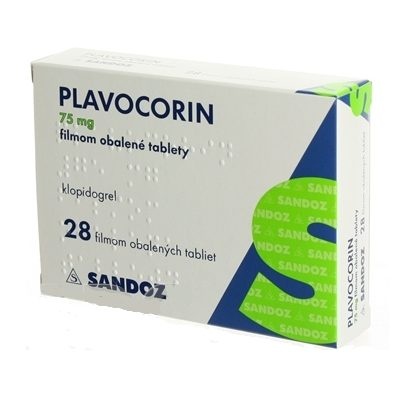
Plavocorin
Ask a doctor about a prescription for Plavocorin




How to use Plavocorin
Leaflet accompanying the packaging: patient information
Plavocorin, 75 mg, coated tablets
Clopidogrel
Read the leaflet carefully before taking the medicine, as it contains important information for the patient.
- Keep this leaflet, so you can read it again if you need to.
- If you have any doubts, consult your doctor or pharmacist.
- This medicine has been prescribed specifically for you. Do not pass it on to others. The medicine may harm another person, even if their symptoms are the same.
- If the patient experiences any side effects, including any side effects not listed in this leaflet, they should tell their doctor or pharmacist. See section 4.
Table of contents of the leaflet:
- 1. What is Plavocorin and what is it used for
- 2. Important information before taking Plavocorin
- 3. How to take Plavocorin
- 4. Possible side effects
- 5. How to store Plavocorin
- 6. Package contents and other information
1. What is Plavocorin and what is it used for
Plavocorin contains clopidogrel and belongs to a group of so-called antiplatelet agents. Platelets are very small elements that clump together during blood clotting. Antiplatelet agents prevent this clumping, thereby reducing the risk of blood clots (a process called thrombosis). Plavocorin is used in adults to prevent the formation of clots (thrombi) in atherosclerotic hardened blood vessels (arteries), which can lead to the occurrence of atherosclerotic events (such as stroke, myocardial infarction, or death). The doctor has prescribed Plavocorin to prevent blood clots and reduce the risk of these serious conditions, because:
- the patient has been diagnosed with hardened arteries (also known as atherosclerosis of blood vessels) and
- the patient has previously had a myocardial infarction, stroke, or has been diagnosed with a condition known as peripheral arterial disease, or
- the patient has had severe chest pain, known as unstable angina or myocardial infarction (heart attack). To treat this condition, the doctor may place a so-called stent in the blocked or narrowed artery to restore proper blood flow. The patient may also be taking acetylsalicylic acid (a substance found in many medications, used to relieve pain and reduce fever, as well as to prevent blood clotting), as recommended by the doctor.
- the patient has had symptoms of a stroke that have resolved quickly (also known as a transient ischemic attack) or a mild ischemic stroke. The doctor may prescribe acetylsalicylic acid according to the doctor's recommendations within the first 24 hours.
- the patient's heart beats irregularly (so-called "atrial fibrillation") and the patient cannot take medications called "oral anticoagulants" (vitamin K antagonists), which prevent the formation of new and enlargement of existing blood clots. The doctor should inform the patient that in such cases, oral anticoagulants are more effective than acetylsalicylic acid or Plavocorin taken simultaneously with acetylsalicylic acid. For patients who cannot take oral anticoagulants and are not at risk of severe bleeding, the doctor should prescribe Plavocorin with acetylsalicylic acid.
Plavocorin with acetylsalicylic acid.
2. Important information before taking Plavocorin
When not to take Plavocorin
if the patient is allergic (hypersensitive) to clopidogrel or any of the other ingredients of this medicine (listed in section 6); if the patient has a condition that is currently causing bleeding, such as a stomach ulcer or bleeding in the brain; if the patient has severe liver disease. If the patient believes that any of these conditions apply to them or has other doubts, they should consult their doctor before taking Plavocorin.
Warnings and precautions
Before starting to take Plavocorin, the patient should discuss it with their doctor if any of the following situations apply to them: if there is a risk of bleeding, such as: a condition that causes a risk of internal bleeding (e.g., stomach ulcer), a blood disorder that promotes internal bleeding (bleeding in tissues, organs, or joints), recent severe injury, recent surgery (including dental surgery), planned surgery (including dental surgery) within the next seven days, if the patient has had a blood clot in the brain (ischemic stroke) if the patient has kidney or liver disease if the patient has had an allergic reaction or reaction to any medication used to treat an existing condition if the patient has had a bleeding stroke in the past that was not caused by injury.
- condition that causes a risk of internal bleeding (e.g., stomach ulcer)
- blood disorder that promotes internal bleeding (bleeding in tissues, organs, or joints)
- recent severe injury
- recent surgery (including dental surgery)
- planned surgery (including dental surgery) within the next seven days
- if the patient has had a blood clot in the brain (ischemic stroke)
- if the patient has kidney or liver disease
- if the patient has had an allergic reaction or reaction to any medication used to treat an existing condition
- if the patient has had a bleeding stroke in the past that was not caused by injury
While taking Plavocorin: The patient should inform their doctor about planned surgery (including dental surgery). The patient should also immediately inform their doctor if they experience a condition (also known as thrombotic thrombocytopenic purpura or TTP), including fever and bruising, which can look like red pinpoint spots, and may be accompanied by unexplained, very severe fatigue, disorientation, yellowing of the skin and eyes (jaundice), see section 4 "Possible side effects". In the event of a cut or injury, stopping the bleeding may take longer than usual. This is related to the action of the medicine, which prevents blood clotting. Minor cuts and injuries, e.g., during shaving, are usually not a problem. However, if the patient is concerned about bleeding, they should contact their doctor immediately (see section 4 "Possible side effects"). The doctor may recommend blood tests.
Children and adolescents
This medicine should not be given to children, as it has no therapeutic effect in this patient group.
Plavocorin and other medicines
The patient should tell their doctor or pharmacist about all medicines they are currently taking or have recently taken, as well as any medicines they plan to take, including those that are available without a prescription. Some other medicines and Plavocorin may interact with each other. The patient should especially inform their doctor if they are taking: medications that may increase the risk of bleeding, such as oral anticoagulants (medicines used to reduce blood clotting), non-steroidal anti-inflammatory drugs used to treat pain and/or inflammatory conditions of muscles or joints, heparin or other injectable medicines used to reduce blood clotting, ticlopidine, other antiplatelet agents, selective serotonin reuptake inhibitors, including fluoxetine or fluvoxamine (medicines used to treat depression), rifampicin (a medicine used to treat severe infections), omeprazole or esomeprazole, medicines used to treat stomach disorders, fluconazole or voriconazole (medicines used to treat fungal infections), efavirenz or other antiretroviral medicines (used to treat HIV infection), carbamazepine (a medicine used to treat certain types of epilepsy), moclobemide (a medicine used to treat depression), repaglinide (an antidiabetic medicine), paclitaxel (an anticancer medicine), opioids: if the patient is being treated with clopidogrel, they should inform their doctor before the doctor prescribes any opioid medication (medicines used to treat severe pain), rosuvastatin (a medicine used to reduce cholesterol levels).
- medications that may increase the risk of bleeding, such as:
- oral anticoagulants (medicines used to reduce blood clotting),
- non-steroidal anti-inflammatory drugs used to treat pain and/or inflammatory conditions of muscles or joints,
- heparin or other injectable medicines used to reduce blood clotting,
- ticlopidine, other antiplatelet agents,
- selective serotonin reuptake inhibitors, including fluoxetine or fluvoxamine (medicines used to treat depression),
- rifampicin (a medicine used to treat severe infections),
- omeprazole or esomeprazole, medicines used to treat stomach disorders,
- fluconazole or voriconazole (medicines used to treat fungal infections),
- efavirenz or other antiretroviral medicines (used to treat HIV infection),
- carbamazepine (a medicine used to treat certain types of epilepsy),
- moclobemide (a medicine used to treat depression),
- repaglinide (an antidiabetic medicine),
- paclitaxel (an anticancer medicine),
- opioids: if the patient is being treated with clopidogrel, they should inform their doctor before the doctor prescribes any opioid medication (medicines used to treat severe pain),
- rosuvastatin (a medicine used to reduce cholesterol levels)
Patient who have had severe chest pain (unstable angina or myocardial infarction), transient ischemic attack, or mild ischemic stroke may be prescribed Plavocorin with acetylsalicylic acid, a substance found in many medications, used to relieve pain and reduce fever. Occasional intake of acetylsalicylic acid (no more than 1000 mg in 24 hours) should not usually be a problem, but long-term use in other circumstances should be discussed with the doctor.
Plavocorin with food and drink
Plavocorin can be taken with or without food.
Pregnancy and breastfeeding
The use of this medicine is not recommended during pregnancy. If the patient is pregnant, thinks she may be pregnant, or plans to have a child, she should consult her doctor or pharmacist before taking this medicine. If the patient becomes pregnant while taking Plavocorin, she should immediately consult her doctor, as the use of clopidogrel during pregnancy is not recommended. Breastfeeding should not be done while taking this medicine. If the patient is breastfeeding or plans to breastfeed, she should consult her doctor before taking this medicine. Before taking any medicine, the patient should consult her doctor or pharmacist.
Driving and using machines
It is unlikely that Plavocorin will affect the ability to drive or use machines.
3. How to take Plavocorin
This medicine should always be taken exactly as prescribed by the doctor or pharmacist. If the patient has any doubts, they should consult their doctor or pharmacist. The recommended dose, also for patients with a condition called "atrial fibrillation" (irregular heart rhythm), is one 75 mg Plavocorin tablet per day, taken orally during a meal or independently of a meal, at the same time every day. If the patient has had severe chest pain (unstable angina or myocardial infarction), the doctor may recommend taking 300 mg or 600 mg of clopidogrel (4 or 8 Plavocorin 75 mg tablets) at the start of treatment. Then, the recommended dose is1 Plavocorin 75 mg tablet per day, as described above. If the patient has had symptoms of a stroke that have resolved quickly (also known as a transient ischemic attack) or a mild ischemic stroke, the doctor may prescribe Plavocorin in a single dose of 300 mg (4 tablets of 75 mg) at the start of treatment. Then, the recommended dose is one Plavocorin 75 mg tablet per day, as described above, with acetylsalicylic acid for 3 weeks. Then, the doctor may prescribe Plavocorin as monotherapy, or acetylsalicylic acid as monotherapy. Plavocorin should be taken for as long as the doctor has prescribed.
Taking a higher dose of Plavocorin than recommended
Due to the increased risk of bleeding, the patient should contact their doctor or the nearest emergency department.
Missing a dose of Plavocorin
If the patient forgets to take a dose of Plavocorin, but remembers within 12 hours of the time they usually take it, they should take the tablet immediately, and then take the next tablet at the usual time. If the patient forgets for more than 12 hours, they should take the next single dose at the usual time. The patient should not take a double dose to make up for the missed tablet.
Stopping Plavocorin treatment
The patient should not stop treatment unless it is recommended by their doctor.
Before stopping treatment, the patient should contact their doctor or pharmacist. If the patient has any further doubts about taking this medicine, they should consult their doctor or pharmacist.
4. Possible side effects
Like all medicines, this medicine can cause side effects, although not everybody gets them.
The patient should immediately contact their doctor if they experience:
- fever, signs of infection, or a feeling of extreme fatigue. This may be caused by a rare decrease in the number of certain blood cells.
- signs of liver dysfunction, such as yellowing of the skin and/or eyes (jaundice), regardless of whether it is associated with bleeding that appears under the skin in the form of red spots and/or a state of disorientation (see section 2 "Warnings and precautions").
- swelling of the mouth or skin disorders, such as rash and itching, and the formation of blisters on the skin. These may be symptoms of an allergic reaction.
The most common side effect associated with the use of clopidogrel is bleeding.
Bleeding can occur in the form of bleeding in the stomach or intestines, bruising, hematoma (unusual bleeding or bruising under the skin), nosebleeds, blood in the urine. In rare cases, bleeding in the eye, head, lungs, or joints has also been reported.
Prolonged bleeding while taking Plavocorin
In the event of a cut or injury, stopping the bleeding may take longer than usual. This is related to the action of the medicine, which prevents blood clotting. Minor cuts and injuries, e.g., during shaving, are usually not a problem. However, if the patient is concerned about bleeding, they should contact their doctor immediately (see section 2 "Warnings and precautions").
Other side effects
Common(may affect up to 1 in 10 people):
diarrhea, abdominal pain, indigestion, or heartburn
Uncommon(may affect up to 1 in 100 people):
headache, dizziness, feeling of tingling and numbness
stomach ulcer, gastritis (possible symptoms include abdominal pain),
vomiting, nausea, constipation, excess gas in the stomach or intestines
skin rash and itching
Rare(may affect up to 1 in 1,000 people):
peripheral vertigo
breast enlargement in men
Very rare(may affect up to 1 in 10,000 people):
jaundice
severe abdominal pain with or without back pain (pancreatitis, enteritis)
fever
breathing difficulties, sometimes with cough
generalized allergic reactions (e.g., feeling of heat with sudden discomfort, leading to fainting), swelling of the mucous membrane of the mouth, blisters on the skin, skin allergies
stomatitis
decreased blood pressure
vasculitis, often with skin rash
disorientation, hallucinations
joint pain, muscle pain
changes or loss of taste
Frequency not known(frequency cannot be estimated from the available data)
hypersensitivity reactions with chest pain or abdominal pain
persistent symptoms of low blood sugar
Reporting side effects
If the patient experiences any side effects, including any side effects not listed in this leaflet, they should tell their doctor, pharmacist, or nurse. Side effects can be reported directly to the Department of Monitoring of Adverse Reactions to Medicinal Products of the Office for Registration of Medicinal Products, Medical Devices, and Biocidal Products: Al. Jerozolimskie 181C, 02-222 Warsaw, tel.: +48 22 49 21 301/fax: +48 22 49 21 309/website: https://smz.ezdrowie.gov.pl. Side effects can also be reported to the marketing authorization holder. By reporting side effects, more information can be collected on the safety of the medicine.
5. How to store Plavocorin
This medicine should be stored out of sight and reach of children. Do not use this medicine after the expiry date stated on the packaging after EXP. The expiry date refers to the last day of the month. Do not store above 25°C. Medicines should not be disposed of via wastewater or household waste. The patient should ask their pharmacist how to dispose of medicines that are no longer needed. This will help protect the environment.
6. Package contents and other information
What Plavocorin contains
- The active substance is clopidogrel. Each coated tablet contains 75 mg of clopidogrel (in the form of clopidogrel hydrogen sulfate).
- The other ingredients are: mannitol, microcrystalline cellulose (Avicel PH 112), low-substituted hydroxypropyl cellulose, hydrogenated vegetable oil. Coating:Opadry Pink 03B54942: hypromellose 6cP, titanium dioxide (E171), macrogol 400, iron oxide red (E172). Black ink S-1-17823:shellac, iron oxide black (E172), n-butyl alcohol, propylene glycol, isopropyl alcohol, and ammonium hydroxide.
What Plavocorin looks like and what the package contains
Pink, round, coated tablets with an inscription on one side and smooth on the other, with a diameter of approximately 9 mm. The coated tablets are packaged in blisters made of OPA/Aluminum/PVC/Aluminum or PVC/Aclar/Aluminum foil, in a cardboard box. The packages contain 28, 84, or 100 coated tablets. Not all package sizes may be marketed.
Marketing authorization holder and manufacturer
Marketing authorization holder Sandoz GmbH Biochemiestrasse 10 A-6250 Kundl, Austria Manufacturer Lek Pharmaceuticals d.d. Verovškova 57 1526 Ljubljana, Slovenia Lek Pharmaceuticals d.d. Trimlini 2D 9220 Lendava, Slovenia Lek S.A. ul. Domaniewska 50 C 02-672 Warsaw Salutas Pharma GmbH Otto-von-Guericke-Allee 1, 39179 Barleben, Germany S.C. Sandoz, S.R.L. Livezeni Street no 7A 540472 Targu Mures, Romania
To obtain more detailed information about the medicine and its names in other European Economic Area member states and the United Kingdom (Northern Ireland), the patient should contact:
Sandoz Polska Sp. z o.o. ul. Domaniewska 50 C 02-672 Warsaw tel. +48 22 209 70 00 Date of last revision of the leaflet:08/2023 Sandoz logo
- Country of registration
- Active substance
- Prescription requiredYes
- ImporterLek Pharmaceuticals d.d. Lek Pharmaceuticals d.d. LEK S.A. Salutas Pharma GmbH S.C. Sandoz S.R.L.
- This information is for reference only and does not constitute medical advice. Always consult a licensed doctor before taking any medication. Oladoctor is not responsible for medical decisions based on this content.
- Alternatives to PlavocorinDosage form: Tablets, 75 mgActive substance: clopidogrelManufacturer: Actavis Ltd.Prescription requiredDosage form: Tablets, 75 mgActive substance: clopidogrelPrescription not requiredDosage form: Tablets, 75 mgActive substance: clopidogrelPrescription required
Alternatives to Plavocorin in other countries
The best alternatives with the same active ingredient and therapeutic effect.
Alternative to Plavocorin in Испания
Alternative to Plavocorin in Украина
Online doctors for Plavocorin
Discuss dosage, side effects, interactions, contraindications, and prescription renewal for Plavocorin – subject to medical assessment and local rules.


Get updates and exclusive offers
Be the first to know about new services, marketplace updates, and subscriber-only promos.

