


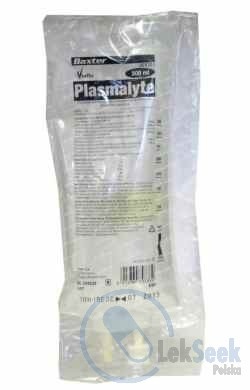
Plasmalite
Ask a doctor about a prescription for Plasmalite




How to use Plasmalite
Leaflet accompanying the packaging: information for the user
Plasmalyte, solution for infusion
Active substances: sodium chloride, potassium chloride, magnesium chloride hexahydrate, sodium acetate trihydrate and sodium gluconate
Read the leaflet carefully before using the medicine, as it contains important information for the patient.
- Keep this leaflet, you may need to read it again.
- In case of any doubts, consult a doctor or nurse.
- If the patient experiences any side effects, including any side effects not listed in this leaflet, they should inform their doctor or nurse. See section 4.
Table of contents of the leaflet
- 1. What is Plasmalyte and what is it used for
- 2. Important information before using Plasmalyte
- 3. How to use Plasmalyte
- 4. Possible side effects
- 5. How to store Plasmalyte
- 6. Package contents and other information
1. What is Plasmalyte and what is it used for
Pharmacotherapeutic group: electrolytes; ATC code: B05BB01
Plasmalyte is an aqueous solution of the following substances:
- sodium chloride;
- potassium chloride;
- magnesium chloride hexahydrate;
- sodium acetate trihydrate;
- sodium gluconate.
Sodium, potassium, magnesium, chloride, acetate, and gluconate are chemical substances found in the blood.
The Plasmalyte infusion solution is used:
- to supplement fluids, e.g.,
- in burns;
- in head trauma;
- in fractures;
- in infections;
- in peritonitis (inflammatory conditions in the abdominal cavity);
- as a source of fluids during surgical operations;
- to treat shock caused by blood loss and in other conditions requiring rapid fluid and/or blood supplementation;
- in metabolic acidosis (when the blood becomes too acidic) that is not life-threatening;
- in lactic acidosis (a type of acidosis caused by the accumulation of lactic acid in the body). Lactic acid is produced mainly in the muscles and is removed by the liver.
The Plasmalyte infusion solution can be used:
- in adult patients, elderly patients, adolescents
- in infants and young children from 28 days to 23 months of age and in children from 2 to 11 years of age.
2. Important information before using Plasmalyte
DO NOT use Plasmalyte if the patient has any of the following conditions
- high potassium levels in the blood (hyperkalemia);
- kidney failure;
- heart block (very slow heart rate);
- disorders in which the blood becomes too alkaline (metabolic or respiratory alkalosis);
- low stomach acid (hypochlorhydria);
- hypersensitivity to the active substance or any of the other ingredients of this medicine listed in section 6.
Warnings and precautions
Before starting Plasmalyte, discuss with your doctor or nurse if the patient has or has had any of the following conditions:
- heart failure;
- respiratory failure (lung disease);
- kidney failure; (in the above conditions, special monitoring measures may be necessary)
- high blood pressure (hypertension);
- fluid accumulation in the skin, especially in the ankles (peripheral edema);
- fluid accumulation in the lungs (pulmonary edema);
- high blood pressure during pregnancy (pre-eclampsia or eclampsia);
- aldosteronism (a disease that causes increased levels of a hormone called aldosterone);
- any other conditions associated with sodium retention in the body (when the body retains too much sodium), such as steroid treatment (see also "Plasmalyte and other medicines");
- a condition that may cause high levels of vasopressin, a hormone that regulates the amount of fluid in the body. Excessive vasopressin levels in the body can be caused by, for example:
- -severe illness;
- -pain;
- -surgery;
- -infection, burns, or brain disease;
- -heart, liver, kidney, or central nervous system diseases;
- -taking certain medications (see also "Plasmalyte and other medicines"). This may increase the risk of low sodium levels in the blood and cause headache, nausea, seizures, lethargy, coma, brain swelling, and death. Brain swelling increases the risk of death and brain damage. Patients at higher risk of brain swelling are:
- -children
- -women (especially of childbearing age)
- -patients with problems with cerebrospinal fluid levels, such as due to meningitis, intracranial hemorrhage, or brain damage.
- high chloride levels in the blood (hyperchloremia);
- high sodium levels in the blood (hypernatremia);
- low calcium levels in the blood (hypocalcemia);
- conditions that increase the likelihood of high potassium levels in the blood (hyperkalemia), such as:
- kidney failure,
- adrenal gland failure (a disease of the adrenal gland that affects hormones responsible for controlling the levels of chemical substances in the body),
- severe dehydration (loss of water from the body due to, for example, vomiting or diarrhea),
- widespread tissue damage (as may occur in severe burns), (in such cases, close monitoring of potassium levels in the blood is necessary).
- myasthenia gravis (a disease that causes progressive muscle weakness),
- postoperative recovery period.
During infusion, the doctor will take blood and urine samples to examine:
- the amount of fluid in the body;
- the amount of chemical substances such as sodium and potassium in the blood and urine (electrolytes in serum and urine);
- acid-base balance (blood and urine acidity).
Although Plasmalyte contains potassium, it is not enough to treat significant potassium deficiencies (very low levels in serum).
Plasmalyte contains substances that can cause metabolic alkalosis (the blood becomes too alkaline).
If repeat treatment is required, the doctor will prescribe additional types of infusion solutions to meet the need for other chemical substances and nutrients (food).
If the patient's blood is being tested for the presence of a fungus called Aspergillus,
the test may detect the presence of Aspergillus even if it is not present.
Plasmalyte and other medicines
Tell your doctor or pharmacist about all medicines you are currently taking or have recently taken, as well as any medicines you plan to take.
DO NOTtake the following medicines while taking Plasmalyte:
- potassium-sparing diuretics (tablets such as amiloride, spironolactone, triamterene, potassium canreonate);
- angiotensin-converting enzyme (ACE) inhibitors (used to treat high blood pressure);
- angiotensin II receptor blockers (used to treat high blood pressure);
- tacrolimus (used to prevent transplant rejection and treat certain skin diseases);
- cyclosporin (used to prevent transplant rejection).
These medicines can increase potassium levels in the blood, which can be life-threatening.
An increase in potassium levels in the blood is more likely in people with kidney failure.
Some medicines may affect vasopressin hormone levels. These include:
- -antidiabetic drugs (chlorpropamide)
- -cholesterol-lowering drugs (clofibrate)
- -certain anticancer drugs (vincristine, ifosfamide, cyclophosphamide)
- -selective serotonin reuptake inhibitors (used to treat depression)
- -antipsychotic drugs
- -opioids used to relieve severe pain
- -painkillers and/or anti-inflammatory drugs (also known as NSAIDs)
- -drugs that mimic or enhance the action of vasopressin, such as desmopressin (used to treat increased thirst and urine output), terlipressin (used to treat bleeding from the esophagus), and oxytocin (used to induce labor)
- -antiepileptic drugs (carbamazepine and oxcarbazepine)
- -diuretics (diuretics).
Other medicines that may interact with Plasmalyte or be affected by it:
- corticosteroids (anti-inflammatory medicines);
- carbenoxolone (an anti-inflammatory medicine used to treat stomach ulcers);
- muscle relaxants (such as tubocurarine, suxamethonium, and vecuronium). These are medicines used in surgical procedures under the control of an anesthesiologist.
- acetylcholine;
- aminoglycosides (a type of antibiotic);
- nifedipine (used to treat high blood pressure and chest pain);
- acidic drugs, such as:
- salicylates, used to treat inflammatory conditions (aspirin),
- sleeping pills (barbiturates),
- lithium (used to treat mental illnesses).
- alkaline (basic) drugs, including:
- sympathomimetics (stimulant drugs, such as ephedrine and pseudoephedrine, which are ingredients in cough and cold products),
- other stimulants (e.g., dexamphetamine, fenfluramine).
Using Plasmalyte with food and drink
Ask your doctor what you can eat and drink.
Pregnancy, breastfeeding, and fertility:
If you are pregnant or breastfeeding, think you may be pregnant, or plan to have a child, consult your doctor before using this medicine.
Plasmalyte can be used during pregnancy and breastfeeding. Your doctor will monitor electrolyte levels in your blood and fluid balance in your body.
However, before adding another medicine to the infusion solution used during pregnancy or breastfeeding, you should:
- consult your doctor;
- read the leaflet accompanying the medicine to be added.
Driving and using machines
Consult your doctor or pharmacist before driving or using machines.
3. How to use Plasmalyte
Plasmalyte is administered by a doctor or nurse. The dose of the medicine and the duration of administration are determined by the doctor. This depends on the patient's age, weight, condition, and reason for treatment. The dose used may also be influenced by other medicines being taken.
DO NOT use Plasmalyte if it contains visible particles or if the packaging is damaged in any way.
The Plasmalyte infusion solution is administered through a plastic tube connected to a needle inserted into a vein. Usually, the solution is administered through a vein in the arm. However, the doctor may order a different method of administration.
Before and during infusion, the doctor will monitor:
- the amount of fluid in the body
- blood and urine acidity
- electrolyte levels in the body (especially sodium, in patients with high vasopressin hormone levels or taking other medicines that increase the effect of vasopressin).
Any unused solution should be discarded. Partially used bags of the medicine MUST NOT be reconnected.
Using more Plasmalyte than recommended:
Administering too much of the solution (overdose) or administering it too quickly may cause:
- excessive fluid and/or sodium (salt) accumulation in tissues (edema), leading to swelling;
- a tingling sensation in the fingers and toes (paresthesia);
- muscle weakness;
- paralysis;
- irregular heartbeat (arrhythmia);
- heart block (very slow heart rate);
- heart attack (the heart stops beating; a life-threatening situation);
- confusion;
- decreased reflexes;
- shallow breathing (respiratory depression);
- nausea;
- vomiting;
- redness of the skin;
- thirst;
- low blood pressure (hypotension);
- drowsiness;
- slow heart rate (bradycardia);
- coma (loss of consciousness);
- acidosis of the blood (causing fatigue, confusion, lethargy, and rapid breathing);
- hypokalemia (lower than normal potassium levels in the blood) and metabolic alkalosis (when the blood is too alkaline) especially in patients with kidney failure;
- mood changes;
- fatigue;
- shortness of breath;
- muscle stiffness;
- muscle tremors;
- muscle cramps.
If any of the above symptoms worsen, inform your doctor immediately. In such a situation, the infusion will be discontinued and appropriate treatment will be administered depending on the symptoms.
If another medicine was added to the Plasmalyte infusion solution before the overdose occurred, that additional medicine may also cause symptoms. Read the leaflet accompanying the added medicine to learn about possible symptoms.
Stopping Plasmalyte
The decision to stop Plasmalyte will be made by your doctor.
If you have any further doubts about using this medicine, consult your doctor or nurse.
4. Possible side effects
Like all medicines, Plasmalyte can cause side effects, although not everybody gets them.
Inform your doctor or nurse immediately if you experience any of the following symptoms. These may be symptoms of a severe or life-threatening allergic reaction (hypersensitivity):
- swelling of the face, lips, and throat,
- difficulty breathing,
- skin rash,
- redness of the skin (flushing). Treatment will depend on the symptoms.
Other side effects:
- reactions related to the method of administration:
- fever (febrile reaction),
- infection at the injection site,
- burning sensation,
- local pain or reaction (redness or swelling) at the injection site,
- irritation and inflammation of the vein into which the solution is administered (phlebitis). This can cause redness, pain, or burning and itching along the vein into which the solution is administered.
- blood clots (thrombophlebitis), at the injection site, which can cause pain, swelling, or redness in the area of the clot,
- leakage of the solution into the space around the blood vessels (extravasation). This can damage tissues and lead to scarring.
- excessive fluid accumulation in the body (hyperolemia),
- seizures,
- hives,
- severe allergic reactions causing difficulty breathing or dizziness (anaphylactic reactions),
- rapid heart rate (tachycardia),
- palpitations,
- chest pain,
- discomfort in the chest,
- shallow breathing (dyspnea),
- increased breathing rate,
- redness,
- flushing,
- weakness (asthenia),
- malaise,
- hair standing on end,
- peripheral edema,
- fever,
- low sodium levels in the blood, which may be associated with hospital treatment (hospital-acquired hyponatremia) and related neurological disorders (acute hyponatremic encephalopathy). Hyponatremia can lead to irreversible brain damage and death due to brain swelling/edema (see also section 2 "Warnings and precautions").
If another medicine was added to the infusion solution, it may also cause side effects. These will depend on the medicine added. Read the leaflet accompanying the added medicine to learn about possible side effects.
Other side effects that have occurred with similar medicines:
- other hypersensitivity/reaction symptoms: low blood pressure (hypotension), wheezing, cold sweat, chills;
- hyperkalemia.
Reporting side effects
If you experience any side effects, including any side effects not listed in the leaflet, inform your doctor or nurse. Side effects can be reported directly to the Department of Adverse Reaction Monitoring of Medicinal Products, Medical Devices, and Biocidal Products
Al. Jerozolimskie 181C
02-222 Warsaw
tel.: +48 22 49 21 301
fax: +48 22 49 21 309
Website: https://smz.ezdrowie.gov.pl
Side effects can also be reported to the marketing authorization holder.
Reporting side effects will help gather more information on the safety of this medicine.
5. How to store Plasmalyte
Keep the medicine out of the sight and reach of children.
There are no special storage temperature requirements.
Do not use this medicine after the expiry date stated on the bag. The expiry date refers to the last day of the month.
Do not use this medicine if it contains visible particles or if the packaging is damaged in any way.
6. Package contents and other information
What Plasmalyte contains
The active substances are:
- sodium chloride: 5.26 g per liter
- potassium chloride: 0.37 g per liter
- magnesium chloride hexahydrate: 0.30 g per liter
- sodium acetate trihydrate: 3.68 g per liter
- sodium gluconate: 5.02 g per liter
Other ingredients are:
- water for injections
- sodium hydroxide
What Plasmalyte looks like and what the pack contains
Plasmalyte is a clear solution, free from visible particles. It is available in polyolefin-polyamide plastic bags (Viaflo).
Each bag is placed in a closed, protective, outer plastic packaging.
Sizes of bags:
- -500 ml
- -1000 ml
Bags are supplied in cardboard boxes. A cardboard box may contain:
- 1 bag of 500 ml
- 20 bags of 500 ml
- 1 bag of 1000 ml
- 10 bags of 1000 ml
- 12 bags of 1000 ml
Not all pack sizes may be marketed.
Marketing authorization holder and manufacturer
Marketing authorization holder:
Baxter Polska Sp. z o.o.
ul. Kruczkowskiego 8
00-380 Warsaw
Manufacturers:
Baxter SA
Boulevard René Branquart, 80
7860 Lessines
Belgium
Bieffe Medital S.A.
Ctra de Biescas, Senegüé
22666 Sabiñanigo (Huesca)
Spain
This medicinal product is authorized in the Member States of the European Economic Area and in the United Kingdom (Northern Ireland) under the following names:
Austria
Plasmalyt – Infusionslösung
Belgium, Luxembourg
Plasmalyte A Viaflo, solution pour perfusion
Croatia
Plasma-Lyte 148 (pH 7,4) Viaflo, otopina za infuziju
Czech Republic
Plasmalyte roztok
Cyprus
Plasma-Lyte 148 (pH 7,4) διάλυμα για έγχυση
Spain
Viaflo Plasmalyte 148 (pH 7,4), solución para perfusion
Denmark
Plasmalyte, infusionsvæske, opløsning
Finland
Plasmalyte infuusioneste, liuos
France
Plasmalyte Viaflo, solution pour perfusion
Greece
Plasma-Lyte 148 (pH 7,4) διάλυμα για έγχυση
Iceland
Plasmalyte innrennslislyf, lausn
Ireland
Plasma-Lyte 148 (pH 7.4) Solution for infusion
Italy
CrystalSol Solution for infusion
Lithuania
Plasmalyte infuzinis tirpalas
Malta
Plasma-Lyte 148 (pH 7.4) Solution for infusion
Netherlands
Plasma-Lyte 148, oplossing voor infusie
Norway
Plasmalyte infusjonsvæske, oppløsning
Poland
Plasmalyte, roztwór do infuzji
Portugal
Plasma-Lyte (ph 7,4) 148 Viaflo
Slovenia
Plaslyte raztopina za infundiranje
Slovakia
Plasmalyte infúzny roztok
Sweden
Plasmalyte infusionsvätska, lösning
United Kingdom
Plasma-Lyte 148(pH 7.4) Solution for Infusion
Date of last revision of the leaflet: December 2023
Baxter and Viaflo are trademarks of Baxter International Inc.
<--------------------------------------------------------------------------------------------------------------
Information intended for healthcare professionals only:
Method of handling and preparation
Before administration, visually inspect the solution for particulate matter and discoloration, whenever possible. Use only if the solution is clear and the container is undamaged. Do not remove the bag from the protective packaging until ready to use.
The inner bag ensures the sterility of the product.
Administer immediately after connecting the infusion set. Do not connect plastic containers in series, as this may cause air embolism due to residual air drawn from the primary container before the administration of the fluid from the secondary container is completed.
Applying additional pressure on intravenous solutions in flexible plastic containers to increase flow rate may cause air embolism if the container is not fully evacuated of residual air prior to administration.
The use of infusion sets with air-eliminating filters and an open filter vent may cause air embolism. Infusion sets with air-eliminating filters and an open filter vent should not be used with flexible plastic containers.
Administer intravenous solution using sterile equipment and aseptic technique. The infusion set should be primed with the solution before administration to prevent air from entering the system.
Additional medications can be introduced into the solution before or during administration through the medication port.
Adding medications or improper administration technique may cause febrile reactions due to the possibility of introducing pyrogens. If a side effect occurs, discontinue the infusion immediately.
Discard after single use.
Discard any unused solution.
Do not reconnect partially used bags.
1. Opening
- a. Remove the Viaflo bag from the protective packaging immediately before use.
- b. By squeezing the inner bag firmly, check for leaks. If leakage is found, discard the bag, as the contents may not be sterile.
- c. Check that the solution is clear and free from particles. If the solution is not clear and free from particles, discard it.
2. Preparation for administration
Use sterile materials during preparation and administration.
- a. Hang the bag on a stand.
- b. Remove the plastic protector from the administration port at the bottom of the bag:
- grasp the smaller wing on the neck of the port with one hand,
- grasp the larger wing on the cap with the other hand and twist,
- the cap will pop off.
- c. When connecting the infusion set, use aseptic technique.
- d. Connect the infusion set according to the manufacturer's instructions for connecting, filling, and administering the solution.
3. Methods of adding medications
Warning: Added medications may be incompatible.Before administration, check the compatibility of added medications with the solution and container. When using another medication, confirm its isotonicity before parenteral administration. It is essential to mix thoroughly and aseptically with each added medication. Solutions containing added medications should be used immediately, without storage.
Adding medications before administration
- a. Disinfect the medication port.
- b. Using a needle with a size of 19G (1.10 mm) to 22G (0.70 mm), insert the needle into the medication port and inject the medication.
- c. Mix the solution with the added medication thoroughly. For dense preparations, such as potassium chloride, gently tap the ports with the bag in an upright position and mix. Note: Do not store solutions containing added medications.
Adding medications during administration
- a. Close the infusion set clamp.
- b. Disinfect the medication port.
- c. Using a needle with a size of 19G (1.10 mm) to 22G (0.70 mm), insert the needle into the medication port and inject the medication.
- d. Remove the bag from the stand and/or turn it upside down.
- e. Empty both ports by gently tapping, holding the bag upside down.
- f. Mix the solution with the medication thoroughly.
- g. Hang the bag in its original position, reopen the clamp, and continue administration.
- 4. Shelf life after first opening: use the product immediately after opening.
Shelf life during use, after reconstitution with additives:
Before use, determine the chemical and physical stability of each added medication in the pH of Plasmalyte in the Viaflo container.
From a microbiological point of view, the diluted medication should be used immediately. If the solution is not used immediately, the user is responsible for the storage time and conditions, and storage should not exceed 24 hours at a temperature of 2 to 8°C, unless reconstitution of the medication was performed under controlled and validated aseptic conditions.
5. Incompatibility of added medications
When adding medications to the Plasmalyte solution, use aseptic technique. Mix thoroughly with each added medication. Do not store solutions containing added medications.
Before adding a medication to the solution in the Viaflo container, assess the possibility of incompatibility.
Read the instructions for the medication to be added to the solution.
Before adding a substance or medication, check if it is soluble and/or stable in water and if the pH range of the Plasmalyte solution is suitable (pH 6.5 – 8.0). After addition, check for any change in color and/or the formation of a precipitate, insoluble complexes, or crystals.
Do not use additives known to be incompatible.
Baxter and Viaflo are trademarks of Baxter International Inc.
- Country of registration
- Prescription requiredYes
- Manufacturer
- ImporterBaxter S.A. Bieff Medital S.A.
- This information is for reference only and does not constitute medical advice. Always consult a licensed doctor before taking any medication. Oladoctor is not responsible for medical decisions based on this content.
- Alternatives to PlasmaliteDosage form: Solution, -Active substance: electrolytes with carbohydratesManufacturer: Fresenius Kabi Polska Sp. z o.o.Prescription not requiredDosage form: Solution, 95 mg/mlActive substance: electrolytesPrescription requiredDosage form: Solution, -Active substance: electrolytes with carbohydratesManufacturer: Bieffe Medital SaabinanigoPrescription required
Alternatives to Plasmalite in other countries
The best alternatives with the same active ingredient and therapeutic effect.
Alternative to Plasmalite in Hiszpania
Online doctors for Plasmalite
Discuss dosage, side effects, interactions, contraindications, and prescription renewal for Plasmalite – subject to medical assessment and local rules.









Get updates and exclusive offers
Be the first to know about new services, marketplace updates, and subscriber-only promos.

