



PENTOHEXAL 600 mg Tablets

Prescription review online
A doctor will review your case and decide whether a prescription is medically appropriate.

Talk to a doctor about this medicine
Discuss your symptoms and possible next steps in a quick online consultation.



How to use Pentohexal 600 retard
Contents of the leaflet
- Package Leaflet: Information for the Patient
- PentoHEXAL 600 Retard, 600 mg, Prolonged-Release Tablets
- What is PentoHEXAL 600 Retard and What is it Used For
- Important Information Before Taking PentoHEXAL 600 Retard
- How to Take PentoHEXAL 600 Retard
- Possible Side Effects
- How to Store PentoHEXAL 600 Retard
- Contents of the Package and Other Information
Package Leaflet: Information for the Patient
PentoHEXAL 600 Retard, 600 mg, Prolonged-Release Tablets
Pentoxifylline
Read the Package Leaflet Carefully Before Taking the Medication, as it Contains Important Information for the Patient.
- Keep this package leaflet, you may need to read it again.
- If you have any further questions, ask your doctor or pharmacist.
- This medicine has been prescribed for you only. Do not pass it on to others. It may harm them, even if their symptoms are the same as yours.
- If you experience any side effects, including those not listed in this package leaflet, please inform your doctor or pharmacist. See section 4.
Table of Contents of the Package Leaflet:
- 1. What is PentoHEXAL 600 Retard and What is it Used For
- 2. Important Information Before Taking PentoHEXAL 600 Retard
- 3. How to Take PentoHEXAL 600 Retard
- 4. Possible Side Effects
- 5. How to Store PentoHEXAL 600 Retard
- 6. Contents of the Package and Other Information

Not sure if this medicine is right for you?
Discuss your symptoms and treatment with a doctor online.
1. What is PentoHEXAL 600 Retard and What is it Used For
PentoHEXAL 600 Retard contains the active substance pentoxifylline, a medication that reduces blood viscosity, improves blood flow through peripheral vessels, and increases tissue blood supply.
The indications for use of PentoHEXAL 600 Retard are:
- peripheral circulation disorders: atherosclerosis of the lower limbs with intermittent claudication, Buerger's disease
- mild symptoms of central nervous system ischemia,
- circulatory disorders in the retina in diabetes or hypertension (if no bleeding into the retina has occurred).
2. Important Information Before Taking PentoHEXAL 600 Retard
When Not to Take PentoHEXAL 600 Retard
if you are allergic to pentoxifylline or similar substances (such as theophylline, aminophylline, caffeine) or to any of the other ingredients of this medication (listed in section 6);
if you have recently had a heart attack or stroke;
if you have had significant bleeding or have a disease associated with a high risk of bleeding (e.g. in the brain, gastrointestinal tract, or reproductive system);
if you have had bleeding into the retina;
if you have been diagnosed with a bleeding disorder;
if you have stomach or intestinal ulcers.
If bleeding into the retina occurs during treatment with PentoHEXAL 600 Retard, the medication should be discontinued immediately and a doctor consulted.
In case of any doubts, consult a doctor or pharmacist.
Warnings and Precautions
If an allergic reaction occurs, discontinue the medication and consult a doctor immediately.
Before starting treatment with PentoHEXAL 600 Retard, discuss with your doctor if you:
have heart rhythm disorders, especially irregular heartbeat, low blood pressure, coronary heart disease (also known as ischemic heart disease), or have had a heart attack in the past;
have been diagnosed with cerebral atherosclerosis;
have had surgery;
have an autoimmune disease (e.g. systemic lupus erythematosus or mixed connective tissue disease);
have an increased tendency to bleed (e.g. are taking anticoagulant medications) or have coagulation disorders - your doctor will more frequently order blood tests due to the increased risk of bleeding;
are taking antidiabetic medications (oral or insulin) or ciprofloxacin (an antibiotic) - see section "PentoHEXAL 600 Retard and Other Medications";
have kidney or liver function disorders - your doctor may then recommend a lower dose of the medication.
Since PentoHEXAL 600 Retard may cause a decrease in blood cell count, your doctor will regularly monitor your blood morphology.
Strictly follow your doctor's recommendations regarding laboratory tests.
Consult your doctor if any of the above warnings apply to you currently or have applied in the past.
PentoHEXAL 600 Retard and Other Medications
Tell your doctor or pharmacist about all medications you are currently taking, have recently taken, or plan to take.
PentoHEXAL 600 Retard and other medications may interact with each other, affecting their efficacy and the occurrence of side effects. This applies especially to medications such as:
blood pressure-lowering medications (PentoHEXAL 600 Retard may enhance their hypotensive effect);
anticoagulant medications (PentoHEXAL 600 Retard may enhance the anticoagulant effect of such medications, e.g. warfarin, acenocoumarol);
insulin and oral antidiabetic medications (PentoHEXAL 600 Retard may cause a decrease in blood sugar levels);
theophylline, a medication used in respiratory diseases (PentoHEXAL 600 Retard may increase theophylline blood levels and thus enhance its effect);
cimetidine, a medication reducing stomach acid secretion (may enhance the effect of PentoHEXAL 600 Retard);
ciprofloxacin, an antibiotic (concomitant use with PentoHEXAL 600 Retard may cause an increase in the frequency and severity of side effects).
If you are unsure whether you are taking any of these medications, consult your doctor or pharmacist.
PentoHEXAL 600 Retard with Food and Drink
PentoHEXAL 600 Retard should be taken after a meal. Swallow the tablets whole with water.
Pregnancy and Breastfeeding
If you are pregnant or breastfeeding, think you may be pregnant, or are planning to have a baby, consult your doctor before taking this medication.
Due to the lack of sufficient experience, PentoHEXAL 600 Retard should not be used during pregnancy.
Pentoxifylline passes into breast milk in small amounts. PentoHEXAL 600 Retard can be used during breastfeeding only if, in the doctor's opinion, the benefits of therapy outweigh the risks.
Driving and Operating Machines
No effects of the medication on the ability to drive and operate machines have been observed.
Before engaging in activities requiring full fitness, consult your doctor.

Started taking the medicine and have questions?
Discuss your symptoms and treatment with a doctor online.
3. How to Take PentoHEXAL 600 Retard
Always take this medication exactly as your doctor has told you. If you are unsure, ask your doctor or pharmacist.
Below are the recommended dosage and method of administration. Read the information carefully.
Usually, one tablet of PentoHEXAL 600 Retard is taken in the morning and one tablet in the evening (1200 mg of pentoxifylline per day).
In patients with kidney and/or liver function disorders, the doctor will determine the dose of the medication based on the severity of the disease symptoms and the patient's tolerance to the medication.
The duration of treatment is determined by the doctor.
Use in Children
PentoHEXAL 600 Retard should not be used in children due to the lack of data on safety and efficacy.
If you feel that the effect of the medication is too strong or too weak, consult your doctor.
Taking More than the Recommended Dose of PentoHEXAL 600 Retard
In case of taking more than the recommended dose, immediately consult a doctor or go to the nearest hospital. Take the medication packaging with you so that it is known which medication was taken.
Symptoms of overdose may include: dizziness, nausea, decreased blood pressure, rapid heartbeat, hot flashes, loss of consciousness, coma, fever, agitation, lack of reflexes, seizures, metabolic acidosis, coffee ground vomiting, and arrhythmias.
Procedure in Case of Overdose
If the overdose occurred recently, the doctor may perform gastric lavage and administer activated charcoal. The doctor may also decide to use dialysis.
No specific antidote is known in case of pentoxifylline overdose.
Missing a Dose of PentoHEXAL 600 Retard
If you forget to take a dose, do so as soon as you remember.
If it is almost time for the next dose, return to the normal dosing schedule.
Do not take a double dose to make up for the missed dose.
Stopping Treatment with PentoHEXAL 600 Retard
Your doctor will inform you how long to take PentoHEXAL 600 Retard. Do not stop treatment without consulting your doctor.
In case of any further doubts regarding the use of this medication, consult your doctor or pharmacist.
4. Possible Side Effects
Like all medications, PentoHEXAL 600 Retard can cause side effects, although not everybody gets them.
If You Experience Any of the Following Serious Side Effects, Stop Taking PentoHEXAL 600 Retard and Consult a Doctor Immediately.
Very Rare, Serious Side Effects(may occur less frequently than in 1 in 10,000 people):
low platelet count, unusual bleeding or bruising under the skin (thrombocytopenic purpura), low blood cell count (aplastic anemia)
bleeding in the brain or eye (retinal hemorrhage)
allergic reactions, sometimes very serious, including facial swelling, lip swelling, tongue swelling, and throat swelling, which can cause difficulty breathing, speaking, or swallowing (angioedema)
difficulty breathing (bronchospasm)
severe drop in blood pressure, pallor, fainting, or collapse (anaphylactic shock)
severe allergic reaction with blistering of the skin and/or mucous membranes of the lips, eyes, mouth, nasal passages, or genitals (Stevens-Johnson syndrome) or skin peeling (toxic epidermal necrolysis)
aseptic meningitis with symptoms such as headache, stiff neck, eye pain, or discomfort in bright light. In all observed cases, symptoms resolved after discontinuation of pentoxifylline.
Rare, Serious Side Effects(may occur less frequently than in 1 in 1,000 people):
bleeding in the skin and mucous membranes, stomach, intestines, urinary tract, or reproductive system
Very Rare, Serious Side Effects(may occur less frequently than in 1 in 10,000 people):
flashes of light, vision loss (retinal detachment)
Other Possible Side Effects
Common(may occur less frequently than in 1 in 10 people):
hot flashes (flushing of the face, feeling of heat)
gastrointestinal disorders (such as nausea, vomiting, bloating, discomfort, diarrhea)
Uncommon(may occur less frequently than in 1 in 100 people):
agitation, sleep disorders
headaches, dizziness, tremors
vision disorders, redness, itching, and tearing of the eyes (conjunctivitis)
irregular heartbeat, rapid heartbeat
skin hypersensitivity reactions (such as itching, redness, hives)
fever
Rare(may occur less frequently than in 1 in 1,000 people):
chest pain
breathing difficulties (dyspnea)
decreased blood pressure
peripheral edema (swelling of the limbs)
Very Rare(may occur less frequently than in 1 in 10,000 people):
tingling or numbness, seizures
increased blood pressure
itching, jaundice, dark urine, pale stools (intrahepatic cholestasis)
increased liver enzyme activity
excessive sweating
Frequency Not Known(frequency cannot be estimated from the available data):
decrease in white blood cell count
constipation
rash.
Reporting Side Effects
If you experience any side effects, including those not listed in this package leaflet, inform your doctor, pharmacist, or nurse. Side effects can be reported directly to the Department for Monitoring of Adverse Reactions to Medicinal Products of the Office for Registration of Medicinal Products, Medical Devices, and Biocidal Products: Al. Jerozolimskie 181C, 02-222 Warsaw
tel.: +48 22 49 21 301, fax: +48 22 49 21 309, website: https://smz.ezdrowie.gov.pl
Side effects can also be reported to the marketing authorization holder.
By reporting side effects, you can help provide more information on the safety of this medication.
5. How to Store PentoHEXAL 600 Retard
Store the medication out of sight and reach of children.
Do not use this medication after the expiry date stated on the packaging after EXP.
The expiry date refers to the last day of the month.
The batch number on the packaging is marked as "Lot".
No special precautions for storage are required.
Medications should not be disposed of via wastewater or household waste. Ask your pharmacist how to dispose of medications that are no longer needed. This will help protect the environment.
6. Contents of the Package and Other Information
What PentoHEXAL 600 Retard Contains
The active substance of the medication is pentoxifylline.
Each prolonged-release tablet contains 600 mg of pentoxifylline.
The other ingredients are: copovidone, hypromellose K 15 M, hypromellose K 100 M, talc, magnesium stearate.
What PentoHEXAL 600 Retard Looks Like and Contents of the Package
PentoHEXAL 600 Retard prolonged-release tablets are white, oblong, biconvex, with a score line on both sides.
PentoHEXAL 600 Retard is available in blisters of PP/Aluminum foil, in a cardboard box.
The package contains 30 tablets.
Marketing Authorization Holder
Sandoz GmbH
Biochemiestrasse 10
A-6250 Kundl, Austria
Manufacturer
Lek S.A.
ul. Domaniewska 50 C
02-672 Warsaw
Salutas Pharma GmbH
Otto-von-Guericke-Allee 1
D-39179, Barleben, Germany
To obtain more detailed information, please contact:
Sandoz Polska Sp. z o.o.
ul. Domaniewska 50 C
02-672 Warsaw
tel. +48 22 209 70 00
Date of Last Revision of the Package Leaflet:
Sandoz Logo
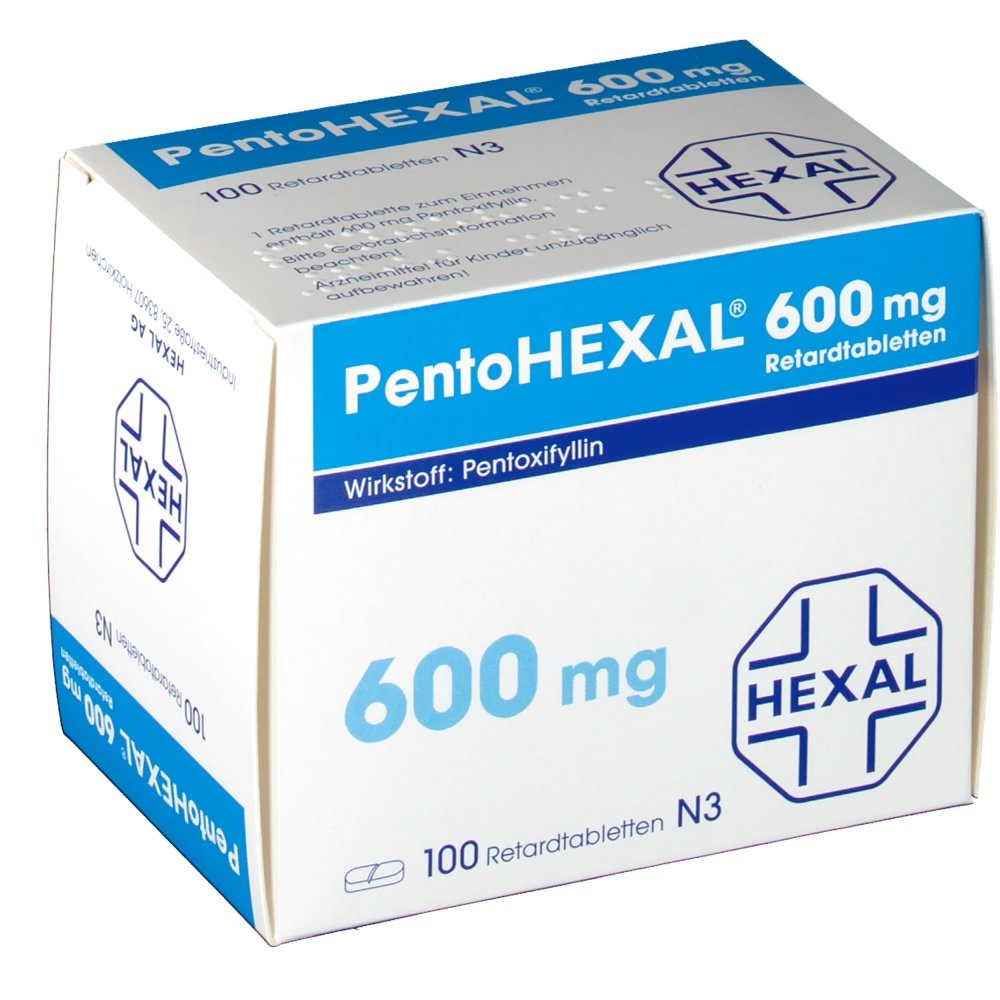
- Country of registration
- Dosage formTablets, 600 mg
- ATC codeC04AD03
- Active substance
- Prescription requiredYes
- Manufacturer
- ImporterLEK S.A. Salutas Pharma GmbH
- This information is for reference only and does not constitute medical advice. Always consult a doctor before taking any medication. Oladoctor is not responsible for medical decisions based on this content.
- Alternatives to Pentohexal 600 retardDosage form: Tablets, 400 mgActive substance: pentoxifyllinePrescription requiredDosage form: Tablets, 400 mgActive substance: pentoxifyllinePrescription requiredDosage form: Tablets, 400 mgActive substance: pentoxifyllinePrescription required
Online doctors for Pentohexal 600 retard
Discuss questions about Pentohexal 600 retard, including use, safety considerations and prescription review, subject to medical assessment and local regulations.
Get Pentohexal 600 retard Prescription Online
Fill in a 2-min form
Tell us your symptoms, history, and what medicine you're requesting.
Pick a doctor or let us assign
Choose a specialist or we'll match you with the next available doctor.
Doctor reviews your case
Usually within 30 minutes. They may ask follow-up questions via chat.
Collect from any pharmacy
Electronic prescription sent to your email — valid across Spain.
Frequently Asked Questions
Pentohexal 600 retard requires a prescription in Poland. You can check with a doctor online whether this medicine may be appropriate for your situation.
The active ingredient in Pentohexal 600 retard is pentoxifylline. This information helps identify medicines with the same composition but different brand names.
Pentohexal 600 retard is manufactured by LEK S.A. Salutas Pharma GmbH. Pharmacy brands and packaging may differ depending on the distributor.
Doctors such as Family doctors, Psychiatrists, Dermatologists, Cardiologists, Endocrinologists, Gastroenterologists, Pulmonologists, Nephrologists, Rheumatologists, Hematologists, Infectious disease physicians, Allergists, Geriatricians, Paediatricians, Oncologists may assess whether Pentohexal 600 retard is appropriate, depending on your situation and local regulations. You can book an online consultation to discuss your symptoms and possible next steps.
Spain has a well-developed healthcare infrastructure across major cities such as Madrid, Barcelona, Valencia, and Seville. Pharmacies are widely available and operate under strict regulations, ensuring access to prescribed medications.
You can buy Pentohexal 600 retard in Madrid, Barcelona, Seville, or Valencia at any local pharmacy with a valid prescription.
To obtain a prescription, you can use Oladoctor:
Other medicines with the same active substance (pentoxifylline) include Agapurin Sr 400, Agapurin Sr 400, Agapurin Sr 400. These may have different brand names or formulations but contain the same therapeutic ingredient. Always consult a doctor before switching or starting a new medicine.
