


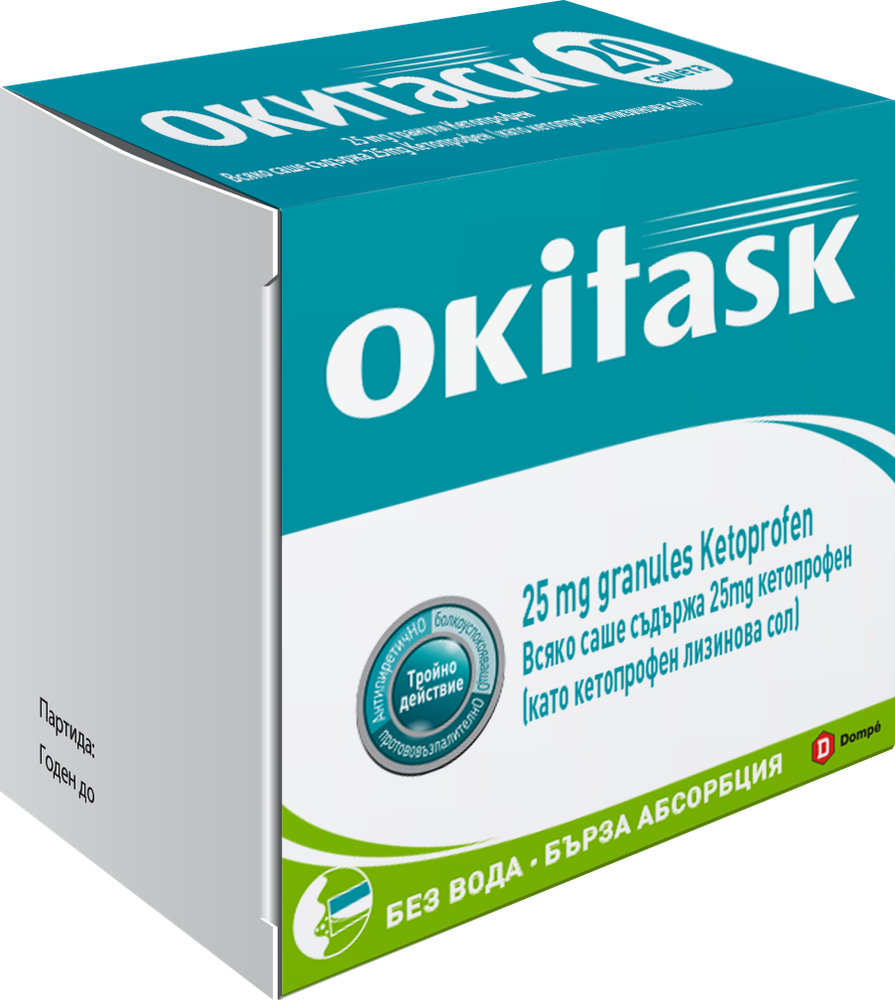
Okitask
Ask a doctor about a prescription for Okitask




How to use Okitask
Leaflet attached to the packaging: information for the user
Okitask, 25 mg, effervescent tablets
Ketoprofen
Read the leaflet carefully before taking the medicine, as it contains important information for the patient.
This medicine should always be taken exactly as described in the patient leaflet or as advised by a doctor or pharmacist.
- Keep this leaflet, you may need to read it again.
- If you need advice or additional information, consult a pharmacist.
- If you experience any side effects, including any not listed in this leaflet, tell your doctor or pharmacist. See section 4.
- If symptoms worsen or do not improve after 3 days for fever and 5 days for pain, consult a doctor.
Table of contents of the leaflet
- 1. What is Okitask and what is it used for
- 2. Important information before taking Okitask
- 3. How to take Okitask
- 4. Possible side effects
- 5. How to store Okitask
- 6. Contents of the packaging and other information
1. What is Okitask and what is it used for
The active substance of this medicine is ketoprofen lysinate, which belongs to a group of medicines called "non-steroidal anti-inflammatory drugs" (NSAIDs). These medicines relieve symptoms by changing the body's response to pain, swelling, and high temperature. Ketoprofen lysinate is a salt of ketoprofen, which is rapidly and completely absorbed by the body. It is used for the symptomatic treatment of mild to moderate pain, such as muscle and joint pain, headaches, throat pain, toothache, and menstrual pain, as well as fever in adults over 18 years of age.
If after 3 days for fever or 5 days for pain there is no improvement or the patient feels worse, consult a doctor.
2. Important information before taking Okitask
When not to take Okitask:
- if the patient is allergic(hypersensitive) to ketoprofen or any of the other ingredients of this medicine (listed in section 6)
- if the patient has asthmaor has had allergic reactions(hypersensitivity) to NSAIDs (e.g. acetylsalicylic acid, ibuprofen) in the past
- in women in the third trimester of pregnancy(from the 29th week onwards). See section 2 "Pregnancy and breastfeeding"
- if the patient has severe heart disease, in which the heart does not work as well as it should
- if the patient has or has had gastrointestinal diseasessuch as: active or recurrent peptic ulcer, gastric or intestinal ulcers, gastrointestinal bleeding, perforation of the gastrointestinal tract, any of the above conditions caused by treatment with NSAIDs, painful or disturbed digestion, which may include nausea, vomiting, heartburn, bloating, and abdominal discomfort (chronic indigestion), gastritis
- if the patient has reduced blood cell count(leukopenia or thrombocytopenia), bleedingor shows tendency to bleedingduring treatment with anticoagulant medicines
- if the patient has severe kidney or liver disease
Warnings and precautions
If the patient notices symptoms of rash, redness, and skin pain, mucous membranes, or allergic reactions after taking ketoprofen lysinate, they should stop taking the medicine and immediately consult a doctor.
If the patient notices symptoms of gastrointestinal bleeding (e.g. bright red, black, tarry stools, vomiting blood or dark particles resembling coffee grounds), they should stop taking the medicine and immediately consult a doctor.
If the patient notices symptoms of ulceration or perforation (symptoms may include severe abdominal pain, chills, nausea, vomiting, heartburn) after taking ketoprofen lysinate, they should stop taking the medicine and immediately consult a doctor.
In elderly patients, more side effects of NSAIDs may occur, especially from the stomach and intestines, which can be fatal. Elderly patients should use the product with caution.
Side effects can be limited by taking the smallest effective dose of the medicine for the shortest possible time necessary to relieve symptoms.
Taking anti-inflammatory or pain-relieving medicines, such as ketoprofen, may be associated with a small increased risk of heart attack or stroke, especially when taken in high doses for a long time. Do not take higher doses than recommended and do not prolong treatment.
If the patient has high blood pressure, heart failure, cerebrovascular disease, or is at increased risk of such diseases (e.g. if the patient has diabetes, high cholesterol, or is a smoker), they should consult a doctor or pharmacist before taking this medicine.
Consult a doctor if the patient experiences palpitations or irregular heartbeat.
Avoid taking ketoprofen lysinate with other products containing NSAIDs (e.g. ibuprofen, acetylsalicylic acid, celecoxib).
The patient should stop taking the medicine if they experience any vision disturbances, such as blurred vision.
Since ketoprofen lysinate is used to treat symptoms such as fever, it may mask more serious underlying diseases. If symptoms persist, the patient should inform their doctor.
Taking pain-relieving medicines for too long can lead to worsening of headache symptoms.
Before taking Okitask, the patient should consult a doctor or pharmacist:
- if the patient is pregnant, trying to become pregnantor breastfeeding(see section 2 "Pregnancy and breastfeeding")
- if the patient has experienced fluid retentionor edema
- if the patient has blood diseases(e.g. anemia)
- if the patient has liver diseases
- if the patient has kidney diseases
- if the patient has allergies(e.g. hay fever)
- if the patient has porphyria(a rare blood disease characterized by a change in the activity of one of the liver enzymes), as the administration of the medicine may cause an attack of the disease
- if the patient has an infection- see below, section entitled "Infections".
Infections
Okitask may mask the objective symptoms of infection, such as fever and pain. Therefore, Okitask may delay the application of appropriate infection treatment and consequently lead to an increased risk of complications. This has been observed in bacterial pneumonia and bacterial skin infections associated with chickenpox. If the patient is taking this medicine during an infection and the symptoms of the infection persist or worsen, they should immediately consult a doctor.
Children and adolescents
Do not give ketoprofen lysinate to children under 18 years of age.
Okitask and other medicines
Tell the doctor or pharmacist about all medicines the patient is taking, has recently taken, or might take, including those bought without a prescription, including herbal preparations.
Tell the doctor or pharmacist about the use of any of the following medicines:
- medicines that improve blood flow, such as anticoagulant medicines (acetylsalicylic acid, warfarin, heparin, ticlopidine, dabigatran, or clopidogrel), thrombolytic medicines (reteplase, streptokinase), vasodilators (pentoxifylline), prasugrel, coumarin derivatives
- certain antibiotics(e.g. quinolones, sulfonamides)
- medicines used after organ transplantationto prevent rejection (e.g. cyclosporine, tacrolimus)
- medicines used in certain psychiatric disorders depression(e.g. lithium, venlafaxine, and selective serotonin reuptake inhibitors (SSRIs))
- other NSAIDs(e.g. acetylsalicylic acid, ibuprofen) or paracetamol
- diuretics, such as bendroflumethiazide
- corticosteroids(steroid hormones, such as hydrocortisone or prednisolone)
- antiretroviral medicines used to treat HIV infection(e.g. ritonavir, zidovudine)
- medicines used to treat high blood pressure(e.g. ramipril, captopril, enalapril, losartan, irbesartan)
- muscle relaxants, such as baclofen
- medicines used to treat heart failureto regulate heart rhythm (e.g. digoxin, digitoxin)
- medicines used to treat diabetes(e.g. gliclazide)
- medicines used to treat cancer(e.g. erlotinib, pemetrexed, methotrexate)
- medicines used to treat gout(e.g. probenecid)
- phenytoin- an antiepileptic medicine
- penicillamine- a medicine used to treat rheumatoid arthritis
- gemeprost(a medicine used for gynecological problems)
- if the patient plans to use mifepristonefor contraception.
Okitask with alcohol
Alcohol may cause irritation of the throat, stomach, and intestines, resulting in an increased risk of bleeding and ulcers when NSAIDs are taken with alcohol.
Pregnancy and breastfeeding
Do not take this medicine during the last three months of pregnancy, as it may harm the unborn baby or cause complications during delivery. It may cause kidney and heart problems in the unborn baby. It may affect the tendency to bleeding in the mother and baby and cause delayed or prolonged delivery. Do not take ketoprofen during the first six months of pregnancy, unless absolutely necessary and as advised by a doctor. If treatment is necessary during this time or when the patient is trying to become pregnant, the smallest dose should be used for the shortest possible time. If the medicine is taken for more than a few days from the 20th week of pregnancy onwards, ketoprofen may cause kidney problems in the unborn baby, which can lead to a decrease in the amount of amniotic fluid surrounding the baby (oligohydramnios) or narrowing of the blood vessel (ductus arteriosus) in the baby's heart. If treatment is necessary for more than a few days, the doctor may recommend additional monitoring.
If the patient is pregnant or breastfeeding, thinks they may be pregnant, or plans to have a baby, they should consult a doctor or pharmacist before taking this medicine.
Driving and using machines
If after taking Okitask the patient feels drowsy, dizzy, has blurred vision, or experiences seizures, they should not drive vehicles, operate machinery, or perform other activities that require high physical and mental fitness (see section 4 "Possible side effects").
Okitask contains sodium
The medicine contains 322 mg of sodium (the main component of common salt) per tablet. This corresponds to 16% of the recommended maximum daily sodium intake for an adult.
Okitask contains sorbitol
The medicine contains 147 mg of sorbitol per tablet.
Sorbitol is a source of fructose. If the patient has previously been diagnosed with intolerance to some sugars or has previously been diagnosed with hereditary fructose intolerance - a rare genetic disease in which the patient's body does not break down fructose, the patient should consult a doctor before taking the medicine.
3. How to take Okitask
This medicine should always be taken exactly as described in the patient leaflet or as advised by a doctor or pharmacist. In case of doubt, consult a doctor or pharmacist.
Take the smallest effective dose for the shortest possible time necessary to relieve symptoms. If the symptoms of the infection (such as fever and pain) persist or worsen, consult a doctor immediately (see section 2).
The recommended dose is 1 tablet up to 3 times a day, as needed.
Wait at least 4 hours before taking the next tablet.
Do not take a higher dose than recommended.
Dissolve the tablet in a glass of water before administration.
The patient should consult a doctor or pharmacist if the symptoms persist or worsen or if new symptoms occur.
Use in children
Ketoprofen lysinate should not be used in children under 18 years of age.
Use in elderly patients
Do not take more than 1 tablet of ketoprofen lysinate per day.
Taking a higher dose of Okitask than recommended
In case of accidental ingestion of a higher dose of ketoprofen lysinate than recommended, the patient may feel drowsy or experience nausea. Consult a doctor immediately, even if the patient feels well.
Missing a dose of Okitask
Do not take a double dose of the medicine to make up for a missed dose.
If a dose of ketoprofen lysinate is missed, take it as soon as possible. Do not take a double dose instead of the missed dose, and always maintain a minimum interval of 4 hours between doses and do not exceed the maximum number of 3 tablets per day.
Stopping Okitask
The patient should stop taking the medicine as soon as they feel better. If the patient has any further doubts about taking this medicine, they should consult a doctor or pharmacist.
4. Possible side effects
Like all medicines, this medicine can cause side effects, although not everybody gets them. Side effects can be limited by taking the smallest effective dose of the medicine for the shortest possible time necessary to relieve symptoms.
Stop taking Okitask and consult a doctor immediatelyif at any time during treatment with this medicine the patient experiences:
- symptoms of gastrointestinal bleeding, such as: bright red stools, black, tarry stools, vomiting blood or dark particles resembling coffee grounds
- symptoms of rash, severe skin reactions, and blisters on the skin, mouth, and eyes
- symptoms of severe allergic reaction, such as:
- difficulty breathing or unexplained wheezing
- dizziness or rapid heartbeat
- swelling of the lips, face, throat, or tongue
- worsening of Crohn's disease or ulcerative colitis(chronic inflammatory bowel disease with symptoms of abdominal pain, diarrhea, fever, and weight loss)
Tell the doctor if the patient experiences:
- fever, sore throat, oral ulcers, headaches, vomiting, unexplained bleeding, and fatigue
- indigestion, stomach pain or abdominal pain, constipation, diarrhea, gas, or nausea, chest pain or rapid, irregular heartbeat
- kidney and liver disorders with swelling in the hands and feet.
The following are side effects of Okitask:
Common(may occur in up to 1 in 10 people)
- digestive disorders (indigestion), nausea, abdominal pain, vomiting
Uncommon(may occur in up to 1 in 100 people)
- headaches, dizziness, drowsiness
- constipation, diarrhea, gas, gastritis
- edema due to fluid retention in the body
- itching and rash
- fatigue
Rare(may occur in up to 1 in 1,000 people)
- iron deficiency (anemia) caused by bleeding
- numbness, tingling
- blurred vision
- ringing in the ears (tinnitus)
- asthma
- stomatitis
- gastric ulcer
- hepatitis, increased liver enzyme activity, yellowing of the skin or whites of the eyes (jaundice)
- weight gain
Frequency not known(cannot be estimated from the available data)
- changes in blood cell and platelet count
- allergic reactions (anaphylaxis)
- disorders of adrenal gland function
- hypertension, hot flashes (vasodilation)
- heart failure
- kidney failure, nephritis, abnormal kidney function test results
- ulcerative colitis
- worsening of gastrointestinal diseases
- dark or black stools
- vomiting blood
- stuffy nose and runny nose (rhinitis)
- throat swelling
- swelling of the deep layers of the skin (e.g. face, hands), caused by excess fluid
- breathing difficulties (dyspnea)
- headaches
- respiratory failure caused by bronchial constriction
- uncontrolled muscle contractions (seizures)
- sensitivity to sunlight or UV lamps
- taste disorders
- mood changes
- behavior changes
- hair loss
- itchy rash
- gastrointestinal bleeding; symptoms may include severe abdominal pain, chills, nausea, vomiting blood or dark particles resembling coffee grounds, heartburn, bright red or black, tarry stools
Reporting side effects
If side effects occur, including any not listed in this leaflet, tell the doctor or pharmacist. Side effects can be reported directly to the
Department of Monitoring of Adverse Reactions to Medicinal Products, Office for Registration of Medicinal Products, Medical Devices, and Biocidal Products, Al. Jerozolimskie 181C, 02-222 Warsaw, tel.: +48 22 49 21 301, fax: +48 22 49 21 309, website: https://smz.ezdrowie.gov.pl
By reporting side effects, more information can be gathered on the safety of the medicine.
Side effects can also be reported to the marketing authorization holder.
5. How to store Okitask
Keep the medicine out of the sight and reach of children.
Store in the original packaging to protect from light and moisture.
Do not use this medicine after the expiry date stated on the carton, sachet, and tube after: Expiry date (EXP)
The expiry date refers to the last day of the month stated.
Medicines should not be disposed of via wastewater or household waste. Ask a pharmacist how to dispose of medicines that are no longer needed. This will help protect the environment.
6. Contents of the packaging and other information
What Okitask contains:
- The active substance of the medicine is ketoprofen. Each tablet contains 25 mg of ketoprofen in the form of ketoprofen lysinate 40 mg.
- The other ingredients are: mannitol (E 421), sodium bicarbonate (E 500), citric acid (E 330), orange flavor, sorbitol (E 420), sodium carbonate (E 500), leucine, sodium saccharin (E 954), polysorbate 20 (E 432), simethicone emulsion 30%, colloidal anhydrous silica (E 551).
What Okitask looks like and contents of the pack
Okitask effervescent tablets are white, round, flat tablets with an orange flavor. The tablets are supplied in tubes or sachets of 8, 10, 12, 15, 16, or 20 tablets in a carton. Not all pack sizes may be marketed.
Marketing authorization holder
Dompé farmaceutici S.p.A.
Via San Martino 12
20122 Milan
Italy
Manufacturer
E-Pharma Trento S.p.A.
Frazione Ravina
Via Provina 2
38123 Trento
Italy
Date of last revision of the leaflet: June 2023
This medicinal product is authorized in the Member States of the European Economic Area under the following names:
Netherlands
Okitask 25 mg effervescent tablets
Poland
Okitask
Finland
Okitask 25 mg effervescent tablets
Hungary
Okitask 25 mg effervescent tablets
Italy
OKi dolore e febbre 25 mg Effervescent tablets
France
Okitask 25 mg Effervescent tablets
Spain
Ketoprofeno Dompe 25 mg Effervescent tablets
Portugal
Okiact 25 mg Effervescent tablets
- Country of registration
- Active substance
- Prescription requiredNo
- ImporterE-Pharma Trento S.p.A.
- This information is for reference only and does not constitute medical advice. Always consult a licensed doctor before taking any medication. Oladoctor is not responsible for medical decisions based on this content.
- Alternatives to OkitaskDosage form: Tablets, 150 mgActive substance: ketoprofenManufacturer: Famar Lyon Opella Healthcare International SASPrescription requiredDosage form: Capsules, 200 mgActive substance: ketoprofenPrescription requiredDosage form: Granulate, 50 mgActive substance: ketoprofenManufacturer: Fine Foods & Pharmaceuticals N.T.M. S.p.APrescription not required
Alternatives to Okitask in other countries
The best alternatives with the same active ingredient and therapeutic effect.
Alternative to Okitask in Hiszpania
Alternative to Okitask in Ukraina
Online doctors for Okitask
Discuss dosage, side effects, interactions, contraindications, and prescription renewal for Okitask – subject to medical assessment and local rules.

Get updates and exclusive offers
Be the first to know about new services, marketplace updates, and subscriber-only promos.

