



METYPRED 4 mg Tablets

Prescription review online
A doctor will review your case and decide whether a prescription is medically appropriate.

Talk to a doctor about this medicine
Discuss your symptoms and possible next steps in a quick online consultation.



How to use Metipred
Contents of the leaflet
- Package Leaflet: Information for the Patient
- Metypred, 4 mg, tablets
- Metypred, 16 mg, tablets
- What is Metypred and what is it used for
- Important information before taking Metypred
- When not to take Metypred
- Warnings and precautions
- Immunosuppressive action / Increased susceptibility to infections
- Effect on the immune system
- Endocrine disorders
- Metabolic and nutritional disorders
- Psychiatric disorders
- Effect on the nervous system
- Effect on the eyes
- Effect on the heart
- Effect on the vascular system
- Effect on the stomach and intestines
- Effect on the liver and bile ducts
- Effect on the musculoskeletal system
- Renal and urinary disorders
- Diagnostic tests
- Injuries, poisoning, and complications after procedures
- Other
- Use in children
- Metypred and other medicines
- Pregnancy, breastfeeding, and fertility
- Driving and using machines
- Metypred contains lactose
- How to take Metypred
- Possible side effects
- How to store Metypred
Package Leaflet: Information for the Patient
Metypred, 4 mg, tablets

Not sure if this medicine is right for you?
Discuss your symptoms and treatment with a doctor online.
Metypred, 16 mg, tablets
Methylprednisolone
Read the package leaflet carefully before taking the medicine, as it contains important information for you.
- You should keep this leaflet, you may need to read it again.
- If you have any further questions, ask your doctor or pharmacist.
- This medicine has been prescribed for you only. Do not pass it on to others. It may harm them, even if their symptoms are the same as yours.
- If you experience any side effects, including those not listed in this leaflet, please inform your doctor or pharmacist. See section 4.
Table of Contents of the Package Leaflet
- 1. What is Metypred and what is it used for
- 2. Important information before taking Metypred
- 3. How to take Metypred
- 4. Possible side effects
- 5. How to store Metypred
- 6. Contents of the pack and other information
1. What is Metypred and what is it used for
The active substance of Metypred, methylprednisolone, belongs to a group of glucocorticosteroids. Metypred is intended for oral use.
Like other glucocorticosteroids, Metypred affects, among others:
- inflammatory and immune processes (resistance),
- carbohydrate, protein, and fat metabolism,
- the circulatory system,
- the cardiovascular system,
- the central nervous system,
- skeletal muscles,
- bone tissue,
- connective tissue,
- skin and mucous membranes,
- the endocrine system,
- kidney function.
Metypred is used as symptomatic treatment, except for endocrine disorders, when it is used as substitution (replacement) treatment.
Disorders other than endocrine disorders
Rheumatic diseases
Supportive treatment for short-term use (during an episode of exacerbation or deterioration of health) in the course of:
- psoriatic arthritis;
- rheumatoid arthritis, including juvenile rheumatoid arthritis (in some cases, small doses may be required as maintenance treatment);
- ankylosing spondylitis;
- acute and subacute bursitis;
- acute non-specific tenosynovitis;
- acute gouty arthritis;
- post-traumatic degenerative joint disease;
- synovitis in degenerative joint disease;
- epicondylitis.
Systemic connective tissue diseases
During exacerbation or as maintenance treatment in the course of:
- systemic lupus erythematosus (and kidney inflammation in the course of lupus);
- polymyositis and dermatomyositis;
- acute rheumatic myocarditis;
- polymyalgia rheumatica;
- giant cell arteritis.
Dermatological diseases
- pemphigus;
- pemphigoid blistering skin disease;
- severe form of erythema multiforme (Stevens-Johnson syndrome);
- exfoliative dermatitis;
- fungoid granuloma;
- severe form of psoriasis;
- severe form of seborrheic dermatitis.
Allergic diseases
Treatment of severe allergic diseases, when other treatment methods are ineffective:
- seasonal or perennial (non-seasonal) allergic rhinitis;
- atopic disease;
- bronchial asthma;
- drug hypersensitivity reactions;
- contact dermatitis (contact eczema);
- atopic eczema.
Ophthalmic diseases
Severe acute and chronic allergic and inflammatory processes affecting the eye and its appendages, such as:
- allergic marginal corneal ulcers;
- herpes zoster ophthalmicus;
- inflammation in the anterior segment of the eye;
- diffuse choroiditis and retinal vasculitis;
- sympathetic choroiditis;
- allergic conjunctivitis;
- keratitis;
- chorioretinitis and retinitis;
- optic neuritis;
- uveitis and iridocyclitis.
Respiratory system diseases
- sarcoidosis;
- Loeffler's syndrome not responding to other medications;
- berylliosis;
- fulminant or disseminated pulmonary tuberculosis, concurrently with appropriate antitubercular chemotherapy;
- aspiration pneumonia.
Blood diseases
- idiopathic thrombocytopenic purpura in adults;
- secondary thrombocytopenia in adults;
- acquired (autoimmune) hemolytic anemia;
- erythroblastopenia in the bone marrow;
- congenital hypoplastic anemia.
Oncological diseases
Palliative treatment:
- leukemia and lymphoma in adults;
- acute leukemia in children.
Edema
- to induce diuresis (urine production) or remission of proteinuria (proteinuria) in nephrotic syndrome, without azotemia, idiopathic or in the course of lupus.
Gastrointestinal tract diseases
In the course of exacerbation:
- ulcerative colitis;
- Crohn's disease.
Nervous system diseases
- exacerbation in the course of multiple sclerosis;
- brain edema associated with the presence of a brain tumor.
Other
- organ transplantation.
Endocrine disorders
- primary or secondary adrenal cortex insufficiency (hydrocortisone or cortisone are the drugs of choice; if necessary, synthetic analogs may be used concurrently with mineralocorticosteroids; in infants and children, supplementary administration of mineralocorticosteroids is particularly important);
- congenital adrenal hyperplasia;
- non-suppurative thyroiditis;
- hypercalcemia (elevated calcium levels in the blood) in the course of cancer.
2.
Important information before taking Metypred
When not to take Metypred
In patients taking immunosuppressive doses of corticosteroids (i.e., suppressing antibody production and immune cells), live or attenuated live vaccines are contraindicated (these vaccines contain live microorganisms with weakened pathogenic properties).
Warnings and precautions
Before starting to take Metypred, discuss it with your doctor or pharmacist.
Immunosuppressive action / Increased susceptibility to infections
Metypred may increase susceptibility to infections and may mask some symptoms of infection. During its use, new infections may occur. While taking Metypred, there may be a decrease in immunity and an inability to limit local infections. Patients may experience infections with any pathogen, including viral, bacterial, fungal, protozoal, or parasitic infections, in any part of the body. These infections can be mild, but also severe, sometimes fatal. The frequency of infectious complications increases with increasing doses of corticosteroids.
Patients taking Metypred are more susceptible to infections than healthy individuals, e.g., chickenpox and measles can have a more severe course or even be fatal in children or adults with impaired immunity.
The use of live vaccines is contraindicated in patients taking immunosuppressive doses of corticosteroids.
In patients with active tuberculosis, Metypred should only be used in cases of fulminant or disseminated tuberculosis, in combination with other antitubercular medications. If it is necessary to administer Metypred to a patient with latent or suspected tuberculosis, close monitoring of the patient is required, as reactivation of the disease may occur. In these patients, during long-term corticosteroid therapy, the doctor will decide on the need for additional treatment.
Cases of Kaposi's sarcoma have been reported in patients taking corticosteroids. Discontinuation of these drugs may lead to clinical remission.
Effect on the immune system
During Metypred treatment, allergic reactions (e.g., angioedema) may occur.
In patients taking Metypred, rare cases of skin and anaphylactic and (or) anaphylactoid reactions have been reported. Before administering Metypred, the doctor will take appropriate precautions, especially if the patient has a history of allergic reactions to any medication.
Endocrine disorders
If a patient undergoing Metypred treatment experiences severe stress, the doctor may recommend increasing the dose of rapidly acting corticosteroids before, during, and after the stressful situation.
During Metypred treatment, adrenal insufficiency may occur, which may persist for several months after discontinuation of treatment. You should inform your doctor about any stressful situations that occur during this period. The doctor will consider initiating hormone therapy. The doctor may also decide to gradually reduce the dose of Metypred.
Sudden discontinuation of Metypred may cause acute adrenal insufficiency, leading to death.
After sudden discontinuation of Metypred treatment, a "steroid withdrawal syndrome" may also occur, which appears to be unrelated to adrenal insufficiency. This syndrome includes symptoms such as loss of appetite, nausea, vomiting, lethargy, headache, fever, joint pain, skin peeling, muscle pain, weight loss, and (or) hypotension. It is believed that these effects result from the sudden change in Metypred concentration rather than its low concentration.
Patients with Cushing's syndrome should not take Metypred, as it may cause or exacerbate Cushing's syndrome.
Metypred may have a stronger effect in patients with hypothyroidism.
You should immediately consult a doctor if you have hyperthyroidism and experience weakness or muscle pain, cramps, and stiffness while taking Metypred. These may be symptoms of a condition called thyrotoxic periodic paralysis, which can occur in patients with hyperthyroidism treated with Metypred. Additional treatment may be necessary to alleviate this condition.
Metabolic and nutritional disorders
Metypred may increase blood glucose levels and exacerbate existing diabetes.
Patients taking Metypred for a long time may be more likely to develop diabetes.
Psychiatric disorders
During Metypred treatment and after its discontinuation, psychiatric disorders may occur.
They usually occur within a few days or weeks of starting Metypred treatment. Most of them resolve after dose reduction or discontinuation of Metypred. Patients and their caregivers should consult a doctor if the patient experiences psychiatric symptoms, especially if they suspect depressive mood or suicidal thoughts.
Patients and their caregivers should be particularly attentive to psychiatric disorders that may occur during treatment, immediately after dose reduction, or after discontinuation of Metypred.
Effect on the nervous system
Metypred should be used with caution in patients with seizure disorders.
Metypred is effective in accelerating the resolution of severe exacerbations of multiple sclerosis, but its effect on the final outcome of the natural course of the disease has not been confirmed.
In patients with myasthenia, the doctor will exercise caution when using Metypred.
There have been reports of exophthalmos in patients taking Metypred, usually with long-term use of high doses.
Effect on the eyes
Caution should be exercised in patients with ocular herpes or herpes zoster, with symptoms from the eyeball, as Metypred treatment may increase the risk of corneal perforation.
In patients taking Metypred for a long time, posterior subcapsular cataract and nuclear cataract (especially in children) may develop, as well as exophthalmos or increased intraocular pressure, which can lead to glaucoma with potential optic nerve damage. Patients taking Metypred may also be more likely to develop secondary fungal or viral eye infections.
Metypred treatment is associated with an increased risk of central serous chorioretinopathy, which can lead to retinal detachment.
If a patient experiences blurred vision or other visual disturbances, they should contact a doctor.
Effect on the heart
Metypred has an unfavorable effect on the cardiovascular system, including dyslipidemia (abnormal serum lipid levels) and hypertension, so patients with existing cardiovascular risk factors may be at increased risk of cardiovascular effects when taking high doses and long-term Metypred treatment. In these patients, the doctor will exercise caution when using Metypred and may recommend monitoring the cardiovascular system. The doctor may recommend using Metypred in a low dose and an alternate-day regimen, as this may reduce the frequency of Metypred treatment complications.
In patients with congestive heart failure, Metypred treatment should be used with caution and only when necessary.
Effect on the vascular system
During Metypred treatment, thrombosis, including venous thromboembolism, has been reported. Therefore, caution should be exercised in patients with thromboembolic disorders or those who may be prone to them.
In patients with hypertension, Metypred treatment should be used with caution.
Effect on the stomach and intestines
High doses of Metypred may cause acute pancreatitis. Metypred may mask symptoms of peptic ulcer disease, so perforations or bleeding may occur without accompanying severe pain. Metypred treatment may mask peritonitis or other symptoms related to gastrointestinal disorders, such as perforation, obstruction, or pancreatitis. In combination with non-steroidal anti-inflammatory drugs (NSAIDs), the risk of developing peptic ulcer disease of the stomach and intestines increases.
In patients with non-specific ulcerative colitis, Metypred should be used with caution if there is a risk of perforation, abscess, or other form of purulent infection, diverticulitis, recent intestinal anastomosis, or active or latent peptic ulcer disease.
Effect on the liver and bile ducts
Rare cases of liver and bile duct disorders have been reported, most of which resolved after discontinuation of treatment. Therefore, monitoring is necessary.
In patients with liver cirrhosis, the effect of Metypred may be increased.
Effect on the musculoskeletal system
During high-dose Metypred treatment, acute myopathy may occur, most commonly in patients with neuromuscular transmission disorders (e.g., myasthenia) or patients taking muscle relaxants (e.g., pancuronium). Elevated creatine kinase levels may also occur. Recovery after discontinuation of Metypred treatment may take time and may last from several weeks to years.
In patients taking high doses of Metypred for a long time, osteoporosis may occur.
Renal and urinary disorders
Before starting Metypred treatment, discuss it with your doctor or pharmacist if you have scleroderma (an autoimmune disorder also known as systemic sclerosis), as doses of at least 15 mg per day may increase the risk of developing a serious complication called scleroderma renal crisis. The symptoms of scleroderma renal crisis include elevated blood pressure and decreased urine production. The attending physician may recommend regular blood pressure and urine output checks.
Metypred should be used with caution in patients with renal insufficiency.
Diagnostic tests
Moderate to high doses of Metypred may increase blood pressure, sodium and water retention, and potassium excretion. Therefore, the doctor may recommend restricting salt intake in the diet and supplementing potassium. All glucocorticosteroids, including Metypred, increase calcium excretion.
Injuries, poisoning, and complications after procedures
Metypred should not be used to treat traumatic brain injury.
Other
The complications of glucocorticosteroid therapy depend on the dose and duration of treatment. The doctor will decide on the dosage and duration of treatment individually for each patient.
The doctor will decide on the use of the smallest effective dose necessary to achieve control of symptoms. Dose reduction should be gradual.
Patients should be cautious when taking aspirin and non-steroidal anti-inflammatory drugs (NSAIDs) with Metypred.
After Metypred administration, a crisis in the course of pheochromocytoma has been reported, sometimes fatal. The doctor will decide on the use of Metypred only after careful assessment of the risk-benefit ratio in patients suspected of having or diagnosed with pheochromocytoma.
During corticosteroid therapy for cancer treatment, tumor lysis syndrome may occur. You should inform your doctor if you have cancer and experience symptoms of tumor lysis syndrome, such as muscle cramps, weakness, confusion, irregular heartbeat, vision loss, or shortness of breath.
Use in children
Infants and children who are undergoing long-term Metypred treatment should be closely monitored for growth and development.
In children undergoing long-term Metypred treatment, divided daily doses may lead to growth inhibition. The doctor should limit this type of treatment to the most severe indications. Adverse effects can be avoided or minimized by using an intermittent treatment regimen.
Infants and children undergoing long-term Metypred treatment are particularly susceptible to increased intracranial pressure.
High doses of Metypred may cause pancreatitis in children.
After Metypred administration in premature infants, hypertrophic cardiomyopathy (thickening of the heart muscle) may develop. The doctor will perform appropriate tests and monitor heart function and structure.
Metypred and other medicines
Tell your doctor about all medicines you are taking now or have recently taken, as well as any medicines you plan to take, including those available without a prescription.
Metypred may affect the action of other medicines, and some medicines may enhance the effect of Metypred. The doctor may need to monitor your condition closely when taking such medicines. It may be necessary to adjust the dose of Metypred when used concurrently with the following medicines:
- antibacterial agents: isoniazid
- antitubercular antibiotic: rifampicin
- anticoagulant medications (oral). Concurrent use with Metypred may decrease or increase the effect of anticoagulant medications. Coagulation tests should be monitored to ensure adequate anticoagulant effect
- antiepileptic drugs: carbamazepine, phenobarbital, phenytoin
- anticholinergic agents: blocking neuromuscular transmission. During concurrent use of high doses of Metypred and anticholinergic agents, e.g., muscle relaxants, reports of acute myopathy have been made. Muscle relaxants, e.g., pancuronium, vecuronium: Metypred may partially inhibit the neuromuscular blockade caused by muscle relaxants
- anticholinesterases: Metypred may reduce the effect of anticholinesterases in patients with myasthenia
- antidiabetic agents: in diabetic patients, it may be necessary to adjust the dose of antidiabetic agents, as Metypred may increase blood glucose levels
- antiemetic agents: aprepitant, fosaprepitant
- antifungal agents: itraconazole, ketoconazole
- certain HIV medications: indinavir, ritonavir, cobicistat
- calcium channel blocker: diltiazem
- oral contraceptives: ethinyl estradiol/norethindrone
- grapefruit juice
- immunosuppressive agent: cyclosporine. When cyclosporine and Metypred are used concurrently, there is mutual inhibition of metabolism, which may increase the concentration of one or both drugs in the blood. Consequently, there is a possibility that the risk of adverse effects associated with taking one of the drugs may increase during concurrent administration. Seizures have been reported during concurrent use
- immunosuppressive agents: cyclophosphamide, tacrolimus
- macrolide antibacterial agents: clarithromycin, erythromycin, troleandomycin
- non-steroidal anti-inflammatory drugs (NSAIDs): high doses of aspirin (acetylsalicylic acid) may increase the frequency of gastrointestinal bleeding and ulceration
- potassium-lowering agents. When Metypred is used concurrently with potassium-lowering agents (e.g., diuretics), patients should be monitored for the development of hypokalemia (a condition where the potassium ion concentration in the blood is below laboratory norms). Concurrent use of Metypred with amphotericin B, xanthines, or beta2 agonists increases the risk of hypokalemia
- aromatase inhibitor: aminoglutethimide.
Pregnancy, breastfeeding, and fertility
If you are pregnant or breastfeeding, think you may be pregnant, or plan to have a child, consult your doctor or pharmacist before taking this medicine.
Before taking this medicine in pregnant or breastfeeding women, or women of childbearing age, the potential benefits of corticosteroid treatment for the mother should be weighed against the potential risks of adverse effects on the fetus or breastfed child.
In some animal studies, it has been shown that corticosteroids administered to pregnant mothers in high doses may cause fetal developmental abnormalities.
Metypred should only be used in pregnant women when absolutely necessary.
If it is necessary to discontinue chronic Metypred treatment during pregnancy, it should be done gradually. In some situations (e.g., replacement therapy for adrenal insufficiency), treatment may need to be continued or even the dose increased. Children born to mothers who took Metypred during pregnancy should be closely monitored and examined for adrenal insufficiency.
The effect of Metypred on the course of labor is unknown.
In infants born to mothers who took Metypred for a long time during pregnancy, cataract development has been observed.
Metypred passes into breast milk, so it should not be used in breastfeeding women.
Animal studies have shown that Metypred has a detrimental effect on fertility.
Driving and using machines
The effect of Metypred on the ability to drive and use machines has not been evaluated.
During Metypred treatment, adverse effects such as dizziness, visual disturbances, and fatigue are possible. If such symptoms occur, patients should not drive or operate machines.
Metypred contains lactose
One 4 mg tablet contains 70 mg of lactose monohydrate, and one 16 mg tablet contains 131 mg of lactose monohydrate. If you have previously been diagnosed with intolerance to some sugars, you should consult your doctor before taking this medicine.

Started taking the medicine and have questions?
Discuss your symptoms and treatment with a doctor online.
3. How to take Metypred
Always take this medicine exactly as your doctor has told you. If you are not sure, ask your doctor or pharmacist.
Take orally.
The tablet can be divided into equal doses.
The doctor will decide on the initial dose, which may range from 4 mg to 48 mg of methylprednisolone per day, depending on the disease. In the case of milder diseases, smaller doses are usually used, but in some patients, higher doses may be necessary. High-dose treatment is used in cases of: multiple sclerosis (200 mg per day), brain edema (200-1000 mg per day), and organ transplantation (up to 7 mg/kg body weight per day). If there is no clinical improvement, the doctor will decide to discontinue Metypred treatment and use another treatment. In case of need to discontinue long-term treatment, it is recommended to gradually reduce the dose.
If clinical improvement is achieved, the doctor will establish a maintenance dose by gradually reducing the initial dose at appropriate intervals until the smallest dose that maintains the beneficial clinical effect is reached. The dose should be constantly monitored. In case of remission or exacerbation of the disease, individual patient response to treatment, or stressful situations, the doctor may decide to modify the dose. In patients exposed to stress, it may be necessary to increase the dose of Metypred during the stressful situation.
The dose is variable and must be determined individually, depending on the type of disease and individual patient response.
Intermittent treatment regimen
The doctor may decide to use an intermittent treatment regimen: administering a double daily dose every other day in the morning. The purpose of this treatment regimen is to ensure the beneficial effect of corticosteroids while minimizing some adverse effects, such as:
Taking a higher dose of Metypred than recommended
If you have taken too much Metypred, contact your doctor or pharmacist immediately. There are no clinical symptoms of acute Metypred overdose. There is no specific antidote in case of Metypred overdose. In such cases, supportive and symptomatic treatment is used. Chronic overdose leads to typical symptoms of Cushing's syndrome. Dialysis is an effective method of removing Metypred from the body.
Missing a dose of Metypred
Do not take a double dose of Metypred to make up for a missed dose.
If you have any further questions about taking this medicine, ask your doctor or pharmacist.
4. Possible side effects
Like all medicines, Metypred can cause side effects, although not everybody gets them.
If you experience any of the following symptoms, contact your doctor or go to the nearest hospital immediately:
Frequency not known (frequency cannot be estimated from available data)
- opportunistic infections (infections characteristic of individuals with reduced immunity), infections, peritonitis
- leukocytosis (increased white blood cell count)
- hypersensitivity reactions, anaphylactic reactions - a type of immediate allergic reaction after re-exposure to an allergen, anaphylactoid reactions - an immediate reaction involving the entire body that can occur after the first contact with the drug
- Cushing's syndrome, suppression of the hypothalamic-pituitary-adrenal axis, "steroid withdrawal syndrome"
- metabolic acidosis, lipomatosis, sodium retention, fluid retention, hypokalemic alkalosis, dyslipidemia, impaired glucose tolerance, increased insulin requirements or oral hypoglycemic agents in diabetic patients, fat accumulation in certain parts of the body, increased appetite (which can lead to weight gain)
- affective disorders (including depressive mood, euphoric mood, emotional instability, drug dependence, suicidal thoughts), psychotic disorders (including manic excitement, delusions, hallucinations, and schizophrenia), psychotic behavior,
mental disorders, personality changes, confusion, anxiety, mood changes, abnormal behavior, insomnia, irritability
- increased intracranial pressure (with papilledema [benign intracranial hypertension]), seizures, amnesia, cognitive function disorders, dizziness, headache
- central serous chorioretinopathy (retinal and choroidal disorders), posterior subcapsular cataract, glaucoma, exophthalmos, rarely - blurred vision
- vertigo of labyrinthine origin
- congestive heart failure (in patients with increased risk)
- increased blood coagulability, hypertension, hypotension, feeling of heat and skin flushing (hot flashes)
- pulmonary embolism, hiccups
- peptic ulcers (with possible subsequent perforation and bleeding), intestinal perforation, gastrointestinal bleeding, pancreatitis, esophagitis, esophageal ulcer, abdominal distension, abdominal pain, diarrhea, dyspepsia, nausea
- increased liver enzyme activity (increased alanine aminotransferase and aspartate aminotransferase activity)
- angioedema, excessive hair growth, petechiae, ecchymosis, skin atrophy, flushing, excessive sweating, striae, rash, pruritus, urticaria, acne
- muscle weakness, muscle pain, myopathy (muscle disease), muscle atrophy, osteoporosis, bone necrosis, pathological fractures, neuropathic arthropathy, arthralgia, growth inhibition
- menstrual irregularities
- scleroderma renal crisis in patients with scleroderma (an autoimmune disorder also known as systemic sclerosis). The symptoms of scleroderma renal crisis include elevated blood pressure and decreased urine production
- wound healing disorders, peripheral edema, fatigue, malaise
- increased intraocular pressure, impaired glucose tolerance, hypokalemia (potassium ion concentration in the blood below laboratory norms), increased urine calcium levels, increased alkaline phosphatase activity in the blood, increased urea levels in the blood, suppression of skin test responses
- vertebral compression fractures, tendon rupture. Peritonitis may be the first symptom of gastrointestinal disorders, such as perforation, obstruction, or pancreatitis.
Reporting side effects
If you experience any side effects, including those not listed in this leaflet, please inform your doctor or pharmacist. Side effects can be reported directly to the marketing authorization holder or to the Department of Drug Safety Monitoring of the Office for Registration of Medicinal Products, Medical Devices, and Biocidal Products: Al. Jerozolimskie 181C, 02-222 Warsaw, tel.: 22 49 21 301, fax: 22 49 21 309, website: https://smz.ezdrowie.gov.pl
Side effects can also be reported to the representative of the marketing authorization holder.
By reporting side effects, you can help provide more information on the safety of this medicine.
5. How to store Metypred
Keep this medicine out of the sight and reach of children.
Do not use this medicine after the expiry date which is stated on the carton and blister after EXP. The expiry date refers to the last day of that month.
Store in a temperature below 25°C.
Medicines should not be disposed of via wastewater or household waste. Ask your pharmacist how to dispose of medicines no longer required. These measures will help protect the environment.
6.
Contents of the pack and other information
What Metypred contains
One Metypred 4 mg tablet contains
active substance: 4 mg methylprednisolone;
excipients: lactose monohydrate (70 mg), cornstarch, gelatin, magnesium stearate, talc.
One Metypred 16 mg tablet contains
active substance: 16 mg methylprednisolone;
excipients: lactose monohydrate (131 mg), cornstarch, gelatin, magnesium stearate, talc.
What Metypred looks like and contents of the pack
4 mg: White or almost white, round, flat tablets with a dividing line, 7 mm in diameter.
16 mg: White or almost white, round, flat tablets with a dividing line, 9 mm in diameter, marked "ORN 346" on one side.
Available packs: 30 or 100 tablets
Marketing authorization holder and manufacturer
Marketing authorization holder:
Orion Corporation
Orionintie 1
02200 Espoo
Finland
Manufacturer:
Orion Corporation
Orionintie 1
02200 Espoo
Finland
Orion Corporation
Orion Pharma
Joensuunkatu 7
FI-24100 Salo
Finland
For more detailed information on this medicine, please contact the local representative of the marketing authorization holder:
Orion Pharma Poland Sp. z o.o.
[email protected]
Date of last revision of the leaflet:
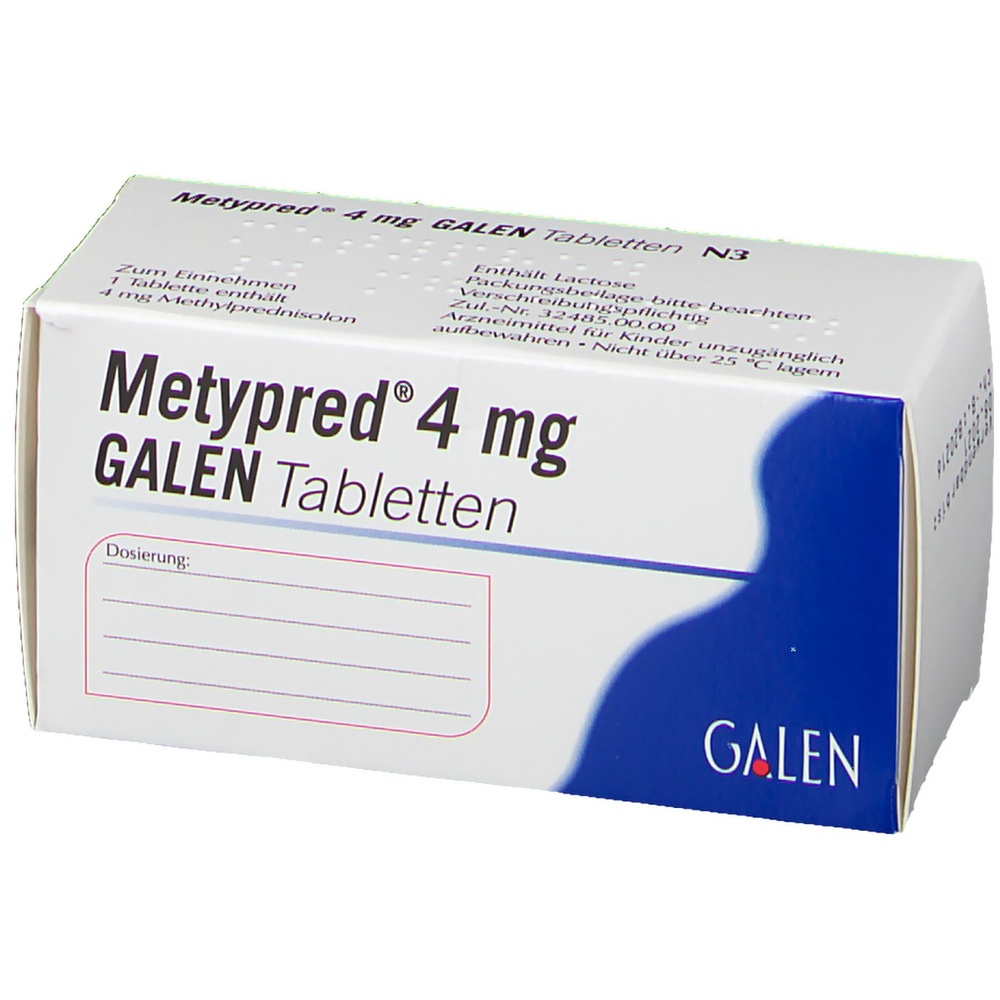
- Country of registration
- Dosage formTablets, 4 mg
- ATC codeH02AB04
- Active substance
- Prescription requiredYes
- Manufacturer
- ImporterOrion Corporation Orion Corporation Orion Pharma
- This information is for reference only and does not constitute medical advice. Always consult a doctor before taking any medication. Oladoctor is not responsible for medical decisions based on this content.
- Alternatives to MetipredDosage form: Suspension, (40 mg + 10 mg)/mlActive substance: methylprednisoloneManufacturer: Pfizer Manufacturing Belgium NVPrescription requiredDosage form: Suspension, 40 mg/mlActive substance: methylprednisoloneManufacturer: Pfizer Manufacturing Belgium NVPrescription requiredDosage form: Tablets, 4 mgActive substance: methylprednisoloneManufacturer: Pfizer Italia S.r.l.Prescription required
Online doctors for Metipred
Discuss questions about Metipred, including use, safety considerations and prescription review, subject to medical assessment and local regulations.


Get Metipred Prescription Online
Fill in a 2-min form
Tell us your symptoms, history, and what medicine you're requesting.
Pick a doctor or let us assign
Choose a specialist or we'll match you with the next available doctor.
Doctor reviews your case
Usually within 30 minutes. They may ask follow-up questions via chat.
Collect from any pharmacy
Electronic prescription sent to your email — valid across Spain.
Frequently Asked Questions
Metipred requires a prescription in Poland. You can check with a doctor online whether this medicine may be appropriate for your situation.
The active ingredient in Metipred is methylprednisolone. This information helps identify medicines with the same composition but different brand names.
Metipred is manufactured by Orion Corporation Orion Corporation Orion Pharma. Pharmacy brands and packaging may differ depending on the distributor.
Doctors such as Family doctors, Psychiatrists, Dermatologists, Cardiologists, Endocrinologists, Gastroenterologists, Pulmonologists, Nephrologists, Rheumatologists, Hematologists, Infectious disease physicians, Allergists, Geriatricians, Paediatricians, Oncologists may assess whether Metipred is appropriate, depending on your situation and local regulations. You can book an online consultation to discuss your symptoms and possible next steps.
Spain has a well-developed healthcare infrastructure across major cities such as Madrid, Barcelona, Valencia, and Seville. Pharmacies are widely available and operate under strict regulations, ensuring access to prescribed medications.
You can buy Metipred in Madrid, Barcelona, Seville, or Valencia at any local pharmacy with a valid prescription.
To obtain a prescription, you can use Oladoctor:
Other medicines with the same active substance (methylprednisolone) include Depo-medrol z Lidokainom, Depo-medrol, Medrol. These may have different brand names or formulations but contain the same therapeutic ingredient. Always consult a doctor before switching or starting a new medicine.
