



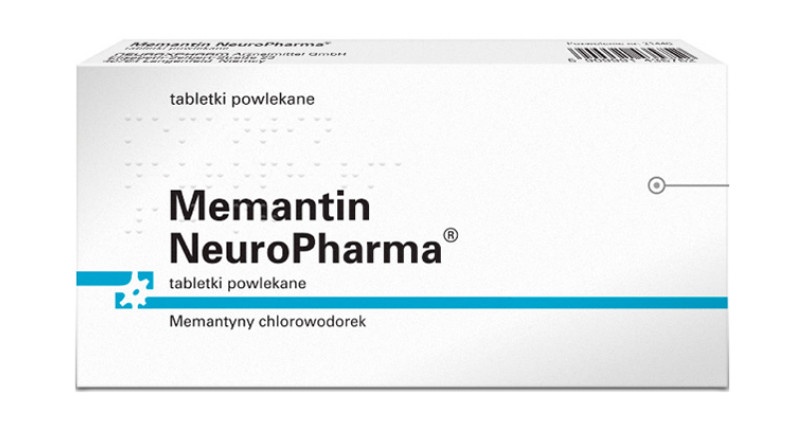
MEMANTIN 10 mg Tablets

Prescription review online
A doctor will review your case and decide whether a prescription is medically appropriate.

Talk to a doctor about this medicine
Discuss your symptoms and possible next steps in a quick online consultation.



How to use Memantin Neuropharma
Contents of the leaflet
- Leaflet attached to the packaging: information for the user
- Memantin NeuroPharma, 10 mg, coated tablets
- What is Memantin NeuroPharma and what is it used for
- Important information before using Memantin NeuroPharma
- How to use Memantin NeuroPharma
- Possible side effects
- How to store Memantin NeuroPharma
- Contents of the packaging and other information
Leaflet attached to the packaging: information for the user
Memantin NeuroPharma, 10 mg, coated tablets
Memantine hydrochloride
You should carefully read the contents of the leaflet before using the medicine, as it contains important information for the patient.
- You should keep this leaflet, so that you can read it again if you need to.
- If you have any doubts, you should consult a doctor or pharmacist.
- This medicine has been prescribed specifically for you. Do not pass it on to others. The medicine may harm another person, even if their symptoms are the same.
- If the patient experiences any side effects, including any side effects not listed in this leaflet, they should tell their doctor or pharmacist. See section 4.
Table of contents of the leaflet:
- 1. What is Memantin NeuroPharma and what is it used for
- 2. Important information before using Memantin NeuroPharma
- 3. How to use Memantin NeuroPharma
- 4. Possible side effects
- 5. How to store Memantin NeuroPharma
- 6. Contents of the packaging and other information

Not sure if this medicine is right for you?
Discuss your symptoms and treatment with a doctor online.
1. What is Memantin NeuroPharma and what is it used for
How Memantin NeuroPharma works
Memantin NeuroPharma contains the active substance memantine hydrochloride. It belongs to the group of anti-dementia medicines.
Memory loss in Alzheimer's disease is caused by disturbances in the transmission of nerve impulses that carry information in the brain. In the brain, there are so-called N-methyl-D-aspartate (NMDA) receptors that are involved in the transmission of nerve signals important for the learning process and for memory processes. Memantin NeuroPharma belongs to a group of medicines called NMDA receptor antagonists. Memantin NeuroPharma, by affecting NMDA receptors, improves the transmission of nerve impulses and memory.
What Memantin NeuroPharma is used for
Memantin NeuroPharma is used to treat patients with moderate to severe Alzheimer's disease.
2. Important information before using Memantin NeuroPharma
When not to use Memantin NeuroPharma
Warnings and precautions
Before starting treatment with Memantin NeuroPharma, you should discuss it with your doctor or pharmacist:
- in the case of patients who have had seizures in the past;
- in the case of patients who have recently had a heart attack (myocardial infarction) or suffer from congestive heart failure or uncontrolled hypertension (high blood pressure).
In these situations, treatment with Memantin NeuroPharma should be carried out under close medical supervision, and the doctor should regularly assess the effects of the treatment.
When administering memantine to patients with kidney problems, the doctor should closely monitor kidney function and, if necessary, adjust the dosage of the medicine.
You should avoid taking medicines such as amantadine (for the treatment of Parkinson's disease), ketamine (a substance usually used as an anesthetic), dextromethorphan (usually used to treat cough), and other NMDA receptor antagonist medicines.
Children and adolescents
Memantin NeuroPharma is not recommended for children and adolescents under 18 years of age.
Memantin NeuroPharma and other medicines
You should tell your doctor or pharmacist about all medicines that you are taking, or have recently taken, and about medicines that you plan to take.
In particular, taking Memantin NeuroPharma may cause changes in the action and require modification of the dosage of the following medicines:
- amantadine, ketamine, dextromethorphan;
- dantrolene, baclofen;
- cimetidine, ranitidine, procainamide, quinidine, quinine, nicotine;
- hydrochlorothiazide (and all combination medicines containing hydrochlorothiazide);
- anticholinergic agents (substances usually used to treat movement disorders or intestinal cramps);
- antiepileptic medicines (substances used to prevent and stop seizures);
- barbiturates (substances mainly used as sleep aids);
- dopaminergic agonists (substances such as L-dopa, bromocriptine);
- neuroleptics (substances used to treat mental disorders);
- oral anticoagulants.
In the event of hospitalization, you should inform your doctor that you are taking Memantin NeuroPharma.
Taking Memantin NeuroPharma with food and drink
You should inform your doctor if you have recently changed or plan to change your diet (e.g., switch from a normal diet to a strict vegetarian diet) or if you have been diagnosed with renal tubular acidosis (RTA, excessive concentration of acidic substances in the blood due to kidney dysfunction) or severe urinary tract infections (structures through which urine flows). In these cases, it may be necessary for your doctor to modify the dosage of the medicine.
Pregnancy and breastfeeding
If you are pregnant or breastfeeding, think you may be pregnant, or plan to have a child, you should consult your doctor or pharmacist before using this medicine.
Pregnancy
Memantine is not recommended for pregnant women.
Breastfeeding
Women taking Memantin NeuroPharma should not breastfeed.
Driving and using machines
Your doctor should inform you whether your illness allows you to drive and use machines safely. Memantin NeuroPharma may also affect your reaction speed, making it inadvisable to drive or use machines.
Memantin NeuroPharma contains lactose
If you have an intolerance to some sugars, you should consult your doctor before using this medicine.

Started taking the medicine and have questions?
Discuss your symptoms and treatment with a doctor online.
3. How to use Memantin NeuroPharma
This medicine should always be used as directed by your doctor. If you are unsure, you should consult your doctor or pharmacist.
Dosage
The recommended dose of Memantin NeuroPharma for adults and the elderly is 20 mg per day.
In order to reduce the risk of side effects, this dose is achieved gradually, according to the following treatment schedule.
Initially, the patient starts treatment with a dose of 5 mg once a day. This dose will be increased by 5 mg every week until the recommended maintenance dose of 20 mg once a day is reached, which should be achieved at the beginning of the 4th week of treatment.
Dosage in patients with kidney problems
In patients with impaired kidney function, the doctor will determine the appropriate dosage of the medicine.
In such cases, it is necessary to continuously monitor kidney function at specified time intervals, as directed by the doctor.
Method of administration
Memantin NeuroPharma should be taken orally, once a day. To ensure the treatment is effective, the medicine should be taken regularly every day at the same time. The tablets should be swallowed with water. This medicine can be taken with or without food.
Duration of treatment
Treatment should be continued for as long as it is effective. The doctor should regularly assess the course of treatment.
Using a higher dose of Memantin NeuroPharma than recommended
Generally, taking too much Memantin NeuroPharma does not pose a risk to health.
In such cases, the intensified side effects described in section 4 "Possible side effects" may occur.
In the event of significant overdose of Memantin NeuroPharma, you should contact your doctor or another doctor, as it may be necessary to implement appropriate procedures.
Missing a dose of Memantin NeuroPharma
If the patient forgets to take the medicine, they should take the next dose of Memantin NeuroPharma at the usual time.
You should not take a double dose to make up for the missed dose.
If you have any further doubts about using this medicine, you should consult your doctor or pharmacist.
4. Possible side effects
Like all medicines, Memantin NeuroPharma can cause side effects, although not everybody gets them.
Generally, the observed side effects are mild to moderate.
Common (may affect up to 1 in 10 people):
- Headache, drowsiness, constipation, elevated liver enzyme levels, dizziness, balance disorders, shallow breathing, high blood pressure, and hypersensitivity to the medicine.
Uncommon (may affect up to 1 in 100 people):
- Fatigue, fungal infections, confusion, hallucinations, vomiting, abnormal gait, heart failure, and venous thromboembolism (thrombosis/embolism).
Rare (may affect up to 1 in 10,000 people):
- Seizures.
Unknown (frequency cannot be estimated from the available data):
- Pancreatitis, hepatitis, and psychotic reactions.
Alzheimer's disease is associated with depression, suicidal thoughts, and suicide. Such cases have been reported in patients treated with Memantin NeuroPharma.
Reporting side effects
If you experience any side effects, including any side effects not listed in the leaflet, you should tell your doctor or pharmacist. Side effects can be reported directly to the Department of Monitoring of Adverse Reactions to Medicinal Products, Office for Registration of Medicinal Products, Medical Devices, and Biocidal Products, Al. Jerozolimskie 181C, 02-222 Warsaw, Tel.: +48 22 49 21 301, Fax: +48 22 49 21 309, website: https://smz.ezdrowie.gov.pl.
By reporting side effects, you can help provide more information on the safety of this medicine.
Side effects can also be reported to the marketing authorization holder.
5. How to store Memantin NeuroPharma
The medicine should be stored out of sight and reach of children.
Do not use this medicine after the expiry date stated on the carton and blister after "EXP". The expiry date refers to the last day of the month.
There are no special precautions for storage of the medicinal product.
Medicines should not be disposed of via wastewater or household waste. You should ask your pharmacist how to dispose of medicines that are no longer needed. This will help protect the environment.
6. Contents of the packaging and other information
What Memantin NeuroPharma contains
The active substance is memantine hydrochloride.
Each coated tablet contains 10 mg of memantine hydrochloride, equivalent to 8.31 mg of memantine.
The other ingredients are: lactose monohydrate, magnesium stearate, microcrystalline cellulose, talc, silica colloidal anhydrous, hypromellose, macrogol 4000, titanium dioxide (E 171).
What Memantin NeuroPharma looks like and contents of the pack
Memantin NeuroPharma 10 mg coated tablets are white or almost white, round, biconvex, coated tablets with a dividing line on one side. The length of the tablet is 9 mm. The tablet can be divided into two equal doses.
Memantin NeuroPharma coated tablets 10 mg
The coated tablets are packaged in blisters. Memantin NeuroPharma is available in packs containing 7, 25, 28, 30, 42, 50, 56, 98, or 100 coated tablets.
Hospital pack: 420 coated tablets (bulk pack).
Not all pack sizes may be marketed.
Marketing authorization holder and manufacturer
neuraxpharm Arzneimittel GmbH
Elisabeth-Selbert-Str. 23
40764 Langenfeld
Germany
Manufacturer
Laboratorios Lesvi, S.L.
Avda. Barcelona 69
08970 Sant Joan Despí (Barcelona)
Spain
To obtain more detailed information, you should contact the representative of the marketing authorization holder in Poland:
Neuraxpharm Polska sp. z o.o.
ul. Domaniewska 37
02-672 Warsaw
[email protected]
Date of last revision of the leaflet:
- Country of registration
- Dosage formTablets, 10 mg
- ATC codeN06DX01
- Active substance
- Prescription requiredYes
- Manufacturer
- ImporterLaboratorios Lesvi S.L. neuraxpharm Arzneimittel GmbH
- This information is for reference only and does not constitute medical advice. Always consult a doctor before taking any medication. Oladoctor is not responsible for medical decisions based on this content.
- Alternatives to Memantin NeuropharmaDosage form: Tablets, 10 mgActive substance: memantinePrescription requiredDosage form: Tablets, 20 mgActive substance: memantinePrescription requiredDosage form: Tablets, 10 mgActive substance: memantineManufacturer: Biofarm Sp. z o.o. Phytopharm Klęka S.A.Prescription required
Online doctors for Memantin Neuropharma
Discuss questions about Memantin Neuropharma, including use, safety considerations and prescription review, subject to medical assessment and local regulations.









Get Memantin Neuropharma Prescription Online
Fill in a 2-min form
Tell us your symptoms, history, and what medicine you're requesting.
Pick a doctor or let us assign
Choose a specialist or we'll match you with the next available doctor.
Doctor reviews your case
Usually within 30 minutes. They may ask follow-up questions via chat.
Collect from any pharmacy
Electronic prescription sent to your email — valid across Spain.
Frequently Asked Questions
Memantin Neuropharma requires a prescription in Poland. You can check with a doctor online whether this medicine may be appropriate for your situation.
The active ingredient in Memantin Neuropharma is memantine. This information helps identify medicines with the same composition but different brand names.
Memantin Neuropharma is manufactured by Laboratorios Lesvi S.L. neuraxpharm Arzneimittel GmbH. Pharmacy brands and packaging may differ depending on the distributor.
Doctors such as Family doctors, Psychiatrists, Dermatologists, Cardiologists, Endocrinologists, Gastroenterologists, Pulmonologists, Nephrologists, Rheumatologists, Hematologists, Infectious disease physicians, Allergists, Geriatricians, Paediatricians, Oncologists may assess whether Memantin Neuropharma is appropriate, depending on your situation and local regulations. You can book an online consultation to discuss your symptoms and possible next steps.
Spain has a well-developed healthcare infrastructure across major cities such as Madrid, Barcelona, Valencia, and Seville. Pharmacies are widely available and operate under strict regulations, ensuring access to prescribed medications.
You can buy Memantin Neuropharma in Madrid, Barcelona, Seville, or Valencia at any local pharmacy with a valid prescription.
To obtain a prescription, you can use Oladoctor:
Other medicines with the same active substance (memantine) include Auromemo, Auromemo, Biomentin. These may have different brand names or formulations but contain the same therapeutic ingredient. Always consult a doctor before switching or starting a new medicine.
