



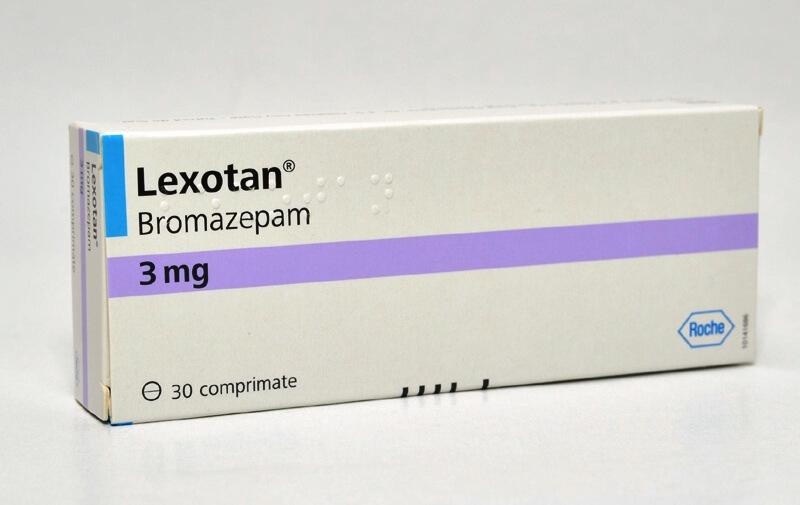
LEXOTAN 3 mg Tablets

Prescription review online
A doctor will review your case and decide whether a prescription is medically appropriate.

Talk to a doctor about this medicine
Discuss your symptoms and possible next steps in a quick online consultation.



How to use Lexotan
Contents of the leaflet
- Leaflet accompanying the packaging: patient information
- Lexotan, 3 mg, tablets
- Lexotan, 6 mg, tablets
- What is Lexotan and what is it used for
- Important information before taking Lexotan
- How to take Lexotan
- Possible side effects
- How to store Lexotan
- Contents of the packaging and other information
Leaflet accompanying the packaging: patient information
Lexotan, 3 mg, tablets

Not sure if this medicine is right for you?
Discuss your symptoms and treatment with a doctor online.
Lexotan, 6 mg, tablets
Bromazepam
Read the leaflet carefully before taking the medicine, as it contains important information for the patient.
- Keep this leaflet, you may need to read it again.
- In case of any doubts, consult a doctor or pharmacist.
- This medicine has been prescribed specifically for you. Do not pass it on to others. The medicine may harm another person, even if their symptoms are the same.
- If the patient experiences any side effects, including any side effects not listed in this leaflet, they should inform their doctor or pharmacist. See section 4.
Table of contents of the leaflet
- 1. What is Lexotan and what is it used for
- 2. Important information before taking Lexotan
- 3. How to take Lexotan
- 4. Possible side effects
- 5. How to store Lexotan
- 6. Contents of the packaging and other information
1. What is Lexotan and what is it used for
Lexotan contains bromazepam, which is an anxiolytic medicine belonging to the benzodiazepine group.
Lexotan is indicated for the treatment of anxiety disorders, including generalized anxiety disorders, and for the treatment of autonomic dysfunction, such as skin symptoms, gastrointestinal symptoms, cardiovascular symptoms, and genitourinary symptoms.
Lexotan is also indicated for the treatment of anxiety states occurring in the course of chronic organic diseases of the central nervous system, post-traumatic stress disorders with anxiety symptoms, and adjustment disorders.
- generalized anxiety disorders
- autonomic dysfunction, such as skin symptoms, gastrointestinal symptoms, cardiovascular symptoms, and genitourinary symptoms
- anxiety states occurring in the course of chronic organic diseases of the central nervous system
- post-traumatic stress disorders with anxiety symptoms
- adjustment disorders

Started taking the medicine and have questions?
Discuss your symptoms and treatment with a doctor online.
2. Important information before taking Lexotan
When not to take Lexotan
- if the patient is allergic to benzodiazepines or any other component of the medicine (listed in section 6)
- if the patient has severe respiratory failure
- if the patient has severe liver failure (benzodiazepines are not recommended for patients with severe liver failure due to the risk of brain damage)
- if the patient has myasthenia gravis
- if the patient has sleep apnea syndrome
Warnings and precautions
The patient should be under medical supervision throughout the treatment period - at the beginning of treatment to determine the minimum effective dose and the frequency of administration, and during treatment to prevent overdose.
Amnesia
Benzodiazepines may cause anterograde amnesia. This condition occurs most often a few hours after taking the medicine. To reduce the risk of anterograde amnesia, the patient should have uninterrupted sleep for several hours. The effect of anterograde amnesia may be associated with abnormal behavior.
Psychological reactions
When taking benzodiazepines, reactions such as anxiety, agitation, irritability, aggression, fear, false beliefs about the environment or one's own state, outbursts of anger, nightmares, hallucinations, psychosis, abnormal behavior, and other undesirable behaviors may occur. If such symptoms occur, the patient should immediately contact their doctor.
These symptoms may be more likely to occur in children and the elderly.
Duration of treatment
The duration of treatment is limited (not exceeding 8-12 weeks), and the dose of the medicine should be gradually reduced under medical supervision. During the withdrawal of the medicine, a rebound phenomenon may occur (see section 3, "Discontinuation of Lexotan").
Consumption of alcohol or use of medicines that depress the activity of the central nervous system
During treatment with Lexotan, the patient should not drink alcohol or take medicines that depress the activity of the central nervous system.
Alcohol may enhance the effect of Lexotan and cause severe sedation, as well as respiratory or circulatory depression, which may lead to coma or death.
Tolerance
In the case of repeated administration of Lexotan over a long period, the medicine's effectiveness may decrease.
During treatment with benzodiazepines, if the medicine is replaced with a benzodiazepine with a significantly shorter half-life, withdrawal symptoms may occur.
Benzodiazepines should not be used as the only medicine in the treatment of depression or anxiety states associated with depression (in these cases, there may be a higher risk of suicidal tendencies).
Benzodiazepines should not be used as the first-line treatment for psychotic disorders.
During treatment, due to the muscle relaxant effect, there is a risk of falls and hip fractures, especially in older patients when getting up at night.
History of alcohol, drug, or substance abuse
The medicine should be used with special caution, strictly according to the doctor's instructions.
Dependence on the medicine
Taking benzodiazepines, including Lexotan, or similarly acting medicines, may lead to the development of physical and psychological dependence on these medicines. The risk of dependence increases with the dose and duration of treatment. The risk is also higher for patients who have abused alcohol, drugs, or substances, and for patients with personality disorders.
Special warnings for certain patient groups
Patients with chronic respiratory failure should be monitored closely due to the risk of respiratory depression.
Patients with mild or moderate liver failure should be treated with caution.
Benzodiazepines should not be given to children without careful evaluation of the need for their use; the duration of treatment should be as short as possible, and the dose should be individualized for each patient.
For older patients, the medicine should be administered in reduced doses.
Pregnancy and breastfeeding
Before taking any medicine, consult a doctor or pharmacist.
Pregnancy
The safety of bromazepam use in pregnant women has not been established. Although there are no clinical data on the occurrence of congenital malformations in the fetus due to the use of benzodiazepines in the first trimester of pregnancy, some epidemiological studies have shown an increased risk of cleft palate.
Therefore, bromazepam should not be used during pregnancy, unless in exceptional cases and with strict adherence to the dosing schedule.
The patient should contact their doctor about stopping treatment if they plan to become pregnant or suspect they are pregnant.
Administration of bromazepam in the third trimester of pregnancy and during childbirth is allowed only in exceptional cases, as it may cause adverse effects in newborns, such as hypothermia, decreased muscle tone, and moderate respiratory depression or apnea. Additionally, withdrawal symptoms have been observed in newborns, manifested by excessive irritability, anxiety, and tremors.
In children of mothers who have taken benzodiazepines for a long time in the last period of pregnancy, physical dependence on the medicine and the risk of withdrawal symptoms after birth may occur.
Breastfeeding
Benzodiazepines pass into breast milk, so breastfeeding women should not take Lexotan.
Driving and operating machinery
Do not drive vehicles or operate machinery, as Lexotan may cause excessive sedation and amnesia, disrupt concentration and muscle function. In case of sleep deprivation, the likelihood of decreased alertness may increase. This effect may be enhanced, especially if the patient has consumed alcohol.
Lexotan and other medicines
Tell your doctor about all medicines you are currently taking or have recently taken, as well as any medicines you plan to take.
Taking Lexotan with other medicines that depress the activity of the central nervous system (such as antidepressants, sedatives, narcotic analgesics, neuroleptics, anxiolytics, anticonvulsants, sedatives, antihistamines with sedative effects, and anesthetics) and alcohol may enhance the sedative effect of the medicine and increase its impact on the respiratory and circulatory systems.
In the case of narcotic analgesics, a state of euphoria may occur, leading to an increased risk of psychological dependence.
Substances that inhibit the activity of certain liver enzymes may affect benzodiazepines that are metabolized by these enzymes. Concurrent administration of Lexotan with cimetidine, fluvoxamine, or (probably) propranolol may cause its stronger or prolonged effect.
Lexotan contains lactose.If the patient has previously been diagnosed with intolerance to some sugars, they should consult their doctor before taking Lexotan.
3. How to take Lexotan
This medicine should always be taken according to the doctor's instructions. In case of doubts, consult a doctor.
In each case, Lexotan should be taken under medical supervision.
Usual dose:
Average doses for outpatients: 1.5 mg to 3 mg, three times a day.
Severe cases, especially in hospital treatment: 6 mg to 12 mg, two or three times a day.
The doctor should treat the given dosing as general guidelines and individualize the dose for each patient. Outpatient treatment should start with small doses, gradually increasing them to the optimal size. Treatment should be as short as possible.
The patient should regularly visit their doctor to assess the need for continued treatment, especially in situations where no symptoms of the disease are observed. The total duration of therapy should not exceed 8 to 12 weeks, including the period of gradual withdrawal of the medicine.
In some cases, therapy may last longer, provided that a specialized assessment of the patient's condition is performed by the doctor.
Older patients and patients with liver function disorders require smaller doses.
If the patient feels that the effect of Lexotan is too strong or too weak, they should consult their doctor.
Taking a higher dose of Lexotan than recommended
In case of taking a higher dose of Lexotan than recommended, the patient should immediately consult their doctor.
The doctor will decide on further action.
Common symptoms of benzodiazepine overdose include: drowsiness, coordination disorders, speech disorders, and nystagmus.
Overdose of Lexotan is rarely life-threatening if the medicine is taken alone. However, it may lead to loss of reflexes, apnea, decreased blood pressure, circulatory and respiratory depression, and coma. Coma, if it occurs, usually lasts several hours but may recur and worsen, especially in older patients. Symptoms of respiratory depression are more severe in patients with underlying respiratory diseases.
Benzodiazepines enhance the effect of other central nervous system depressants (including alcohol).
Missing a dose of Lexotan
Do not take a double dose to make up for a missed dose.
Discontinuation of Lexotan
In case of physical dependence, after stopping treatment, withdrawal symptoms (withdrawal syndrome) may occur.
These may include: headaches, diarrhea, muscle pain, increased anxiety, tension, restlessness, disorientation, and irritability. In severe cases, the following symptoms may occur: impaired perception of reality (derealization), impaired sense of one's own identity (depersonalization), hypersensitivity to sounds, feeling of numbness and tingling in the limbs, hypersensitivity to light, noise, and touch, hallucinations, or seizures.
After discontinuation of the medicine, a rebound phenomenon may occur - a transient syndrome in which the symptoms that were the reason for taking Lexotan recur in an intensified form. Other reactions, such as mood changes, anxiety, or sleep disorders and restlessness, may also occur.
Since the risk of withdrawal syndrome and rebound phenomenon is higher in case of abrupt discontinuation of treatment, it is recommended to gradually reduce the dose of Lexotan.
In case of any further doubts related to the use of this medicine, consult a doctor.
4. Possible side effects
Like all medicines, Lexotan can cause side effects, although not everybody gets them.
The following side effects have been reported with an unknown frequency (cannot be estimated from the available data):
- hypersensitivity (allergy), anaphylactic shock, angioedema
- confusion, disorientation, emotional disorders, and mood disorders - mainly at the beginning and usually resolving during treatment
- libido disorders
- drug dependence, drug abuse, withdrawal syndrome
- depression
- paradoxical reactions such as anxiety, agitation, irritability, aggression, delusions, anger, nightmares, hallucinations, psychosis, abnormal behavior, nervousness, anxiety, abnormal dreams, excessive activity, and other behavioral disorders - more likely to occur in children and older patients
- anterograde amnesia
- memory impairment
- drowsiness, headaches, dizziness, impaired alertness, coordination disorders, and balance disorders - mainly at the beginning and usually resolving during treatment
- double vision - mainly at the beginning and usually resolving during treatment
- heart failure, including cardiac arrest
- decreased depth and frequency of breathing
- nausea, vomiting - mainly at the beginning and usually resolving during treatment
- constipation
- rash, itching, urticaria
- muscle weakness - mainly at the beginning and usually resolving during treatment
- urinary retention
- fatigue - mainly at the beginning and usually resolving during treatment
- falls, fractures - the risk increases in patients taking sedatives (including alcoholic beverages) and in older patients
Dependence:
Long-term use of the medicine (even in therapeutic doses) may lead to the development of physical and psychological dependence on the medicine, and discontinuation of treatment - to the occurrence of withdrawal symptoms or rebound anxiety (exacerbation of disease symptoms - see "Discontinuation of Lexotan").
There have been reports of benzodiazepine abuse .
Reporting side effects
If any side effects occur, including any side effects not listed in the leaflet, the patient should inform their doctor or pharmacist.
Side effects can be reported directly to the Department of Monitoring of Adverse Reactions to Medicinal Products, Urząd Rejestracji Produktów Leczniczych, Wyrobów Medycznych i Produktów Biobójczych, Al. Jerozolimskie 181C, 02-222 Warszawa, tel.: +48 22 49 21 301, fax: +48 22 49 21 309, website: https://smz.ezdrowie.gov.pl
Side effects can also be reported to the marketing authorization holder.
Reporting side effects will help gather more information on the safety of the medicine.
5. How to store Lexotan
Keep the medicine out of the reach and sight of children.
Store the medicine at a temperature below 30°C.
Do not use the medicine after the expiry date stated on the packaging.
The expiry date refers to the last day of the given month.
Medicines should not be disposed of via wastewater or household waste. Ask your pharmacist how to dispose of medicines that are no longer needed. This will help protect the environment.
6. Contents of the packaging and other information
What Lexotan contains
- The active substance of the medicine is bromazepam (Bromazepamum). One tablet contains 3 mg or 6 mg of bromazepam.
- Other ingredients are: microcrystalline cellulose, magnesium stearate, talc, and: 3 mg tablets: lactose monohydrate (94.4 mg in 1 tablet), iron oxide red; 6 mg tablets: lactose monohydrate (90.85 mg in 1 tablet), aluminum lake of indigo carmine, iron oxide yellow.
What Lexotan looks like and what the packaging contains
Lexotan is available in tablet form.
The packaging contains 30 tablets of 3 mg or 6 mg, in blisters, placed in a cardboard box.
Marketing authorization holder and manufacturer
Marketing authorization holder:
CHEPLAPHARM Arzneimittel GmbH
Ziegelhof 24
17489 Greifswald
Germany
Manufacturer:
Aesica Pharmaceuticals GmbH
Alfred-Nobel-Straße 10
40789 Monheim am Rhein
Germany
Delpharm Milano S.r.l.
Via Carnevale, 1
20054, Segrate (MI)
Italy
Date of last revision of the leaflet: April 2024
- Country of registration
- Dosage formTablets, 3 mg
- ATC codeN05BA08
- Active substance
- Prescription requiredNo
- Manufacturer
- ImporterAesica Pharmaceuticals GmbH Delpharm Milano S.r.l.
- This information is for reference only and does not constitute medical advice. Always consult a doctor before taking any medication. Oladoctor is not responsible for medical decisions based on this content.
- Alternatives to LexotanDosage form: Capsules, 3 mgActive substance: bromazepamPrescription requiredDosage form: Capsules, 6 mgActive substance: bromazepamPrescription not requiredDosage form: Tablets, 6 mgActive substance: bromazepamManufacturer: Delpharm Milano S.r.l.Prescription not required
Online doctors for Lexotan
Discuss questions about Lexotan, including use, safety considerations and prescription review, subject to medical assessment and local regulations.







Get Lexotan Prescription Online
Fill in a 2-min form
Tell us your symptoms, history, and what medicine you're requesting.
Pick a doctor or let us assign
Choose a specialist or we'll match you with the next available doctor.
Doctor reviews your case
Usually within 30 minutes. They may ask follow-up questions via chat.
Collect from any pharmacy
Electronic prescription sent to your email — valid across Spain.
Frequently Asked Questions
Lexotan does not require a prescription in Poland. You can check with a doctor online whether this medicine may be appropriate for your situation.
The active ingredient in Lexotan is bromazepam. This information helps identify medicines with the same composition but different brand names.
Lexotan is manufactured by Delpharm Milano S.r.l.. Pharmacy brands and packaging may differ depending on the distributor.
Doctors such as Family doctors, Psychiatrists, Dermatologists, Cardiologists, Endocrinologists, Gastroenterologists, Pulmonologists, Nephrologists, Rheumatologists, Hematologists, Infectious disease physicians, Allergists, Geriatricians, Paediatricians, Oncologists may assess whether Lexotan is appropriate, depending on your situation and local regulations. You can book an online consultation to discuss your symptoms and possible next steps.
Spain has a well-developed healthcare infrastructure across major cities such as Madrid, Barcelona, Valencia, and Seville. Pharmacies are widely available and operate under strict regulations, ensuring access to prescribed medications.
You can buy Lexotan in Madrid, Barcelona, Seville, or Valencia at any local pharmacy with a valid prescription.
To obtain a prescription, you can use Oladoctor:
Other medicines with the same active substance (bromazepam) include Bromox, Bromox, Lexotan. These may have different brand names or formulations but contain the same therapeutic ingredient. Always consult a doctor before switching or starting a new medicine.
