


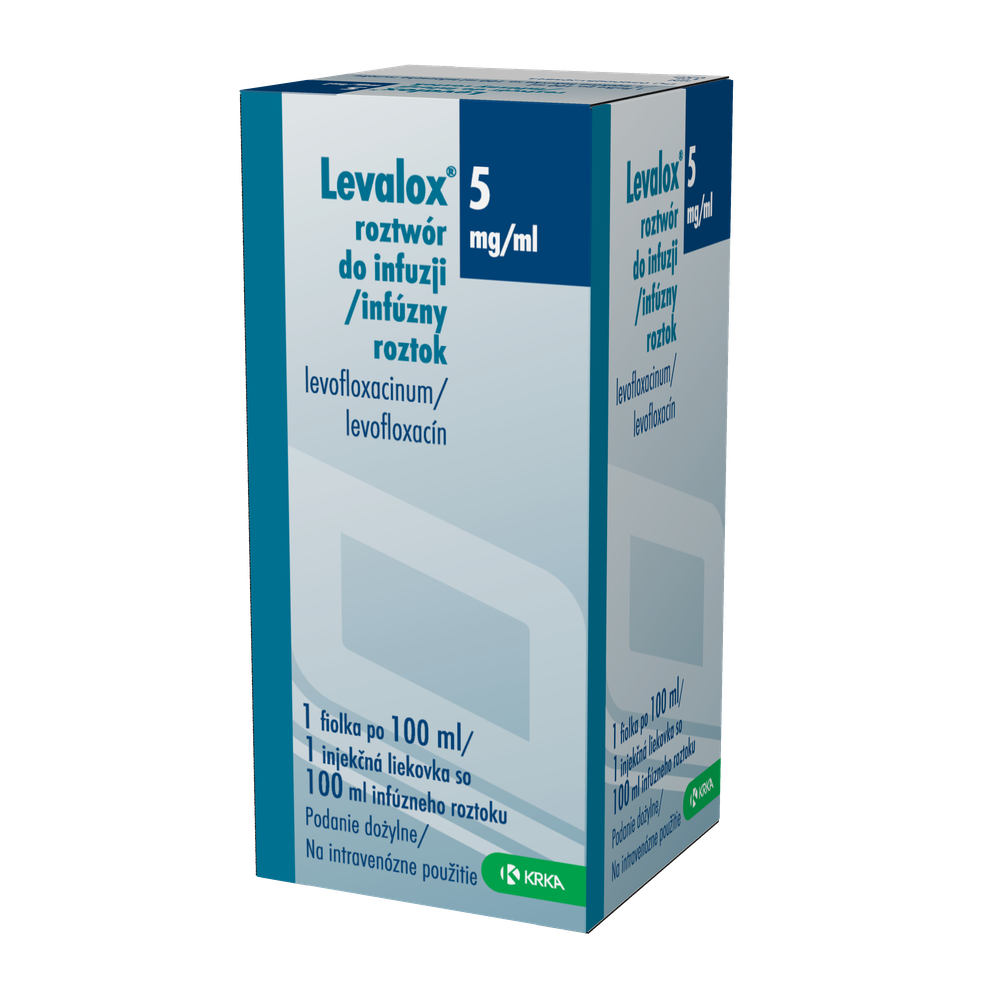
Levalox
Ask a doctor about a prescription for Levalox




How to use Levalox
Package Leaflet: Information for the User
Levalox, 5 mg/ml, Solution for Infusion
Levofloxacin
Read the package leaflet carefully before using the medicine, as it contains important information for the patient.
- Keep this package leaflet, as you may need to read it again.
- If you have any doubts, consult your doctor, pharmacist, or nurse.
- This medicine has been prescribed specifically for you. Do not pass it on to others. The medicine may harm another person, even if their symptoms are the same as yours.
- If you experience any side effects, including those not listed in this package leaflet, inform your doctor, pharmacist, or nurse. See section 4.
Table of Contents of the Package Leaflet
- 1. What is Levalox and what is it used for
- 2. Important information before using Levalox
- 3. How to use Levalox
- 4. Possible side effects
- 5. How to store Levalox
- 6. Contents of the pack and other information
1. What is Levalox and what is it used for
The name of this medicine is Levalox. Levalox solution for infusion contains the active substance levofloxacin, which belongs to a group of medicines called antibiotics. Levofloxacin is a "quinolone" antibiotic. It works by killing the bacteria that cause infections in the body.
Levalox solution for infusion can be used to treat the following bacterial infections:
- lung infections, in patients with pneumonia,
- urinary tract infections, including kidney or bladder infections,
- prostate infections, in cases of chronic infection,
- skin and soft tissue infections, including muscle infections. This is sometimes referred to as "soft tissue" infections.
In some cases, Levalox solution for infusion may be used to prevent a lung disease called anthrax, which can occur after contact with anthrax bacteria or to treat this disease.
2. Important information before using Levalox
When not to use Levalox and consult a doctor:
- If the patient is allergic to levofloxacin, any other quinolone antibiotic, such as moxifloxacin, ciprofloxacin, or ofloxacin, or any of the other ingredients of this medicine (listed in section 6).
- Symptoms of an allergic reaction include: rash, difficulty swallowing or breathing, swelling of the lips, face, throat, or tongue.
- If the patient has ever had epilepsy.
- If the patient has ever had tendon problems, such as tendonitis, related to treatment with quinolone antibiotics. A tendon is a cord that connects muscles to bones.
- If the medicine has been prescribed for a child or adolescent during growth.
- If the patient is pregnant, may become pregnant, or suspects she is pregnant.
- If the patient is breastfeeding.
Do not use this medicine if any of the above conditions apply to the patient. If in doubt, consult a doctor, nurse, or pharmacist before starting treatment with Levalox.
Warnings and precautions
Before starting treatment with Levalox, discuss with your doctor, pharmacist, or nurse if the patient:
- is 60 years or older,
- takes corticosteroids, sometimes called steroids (see "Levalox and other medicines"),
- has had a transplant,
- has ever had seizures (epileptic fit),
- has had a brain injury due to stroke or other brain damage,
- has kidney problems,
- has a condition called "glucose-6-phosphate dehydrogenase deficiency"; the patient may be more prone to developing serious blood disorders when taking this medicine,
- has ever had mental health problems,
- has ever had heart problems: caution should be exercised when taking this medicine if the patient has a congenital prolongation of the QT interval (visible on an ECG, i.e., an electrical activity test of the heart) or if there is a family history of this condition, if the patient has electrolyte disturbances in the blood (especially low potassium or magnesium levels), if the patient has a slow heart rate (bradycardia), if the patient has impaired heart function (heart failure), if the patient has had a heart attack (myocardial infarction), or if the patient is a woman or an elderly person or is taking other medicines that cause abnormal changes in the ECG (see "Levalox and other medicines"),
- has nerve damage (peripheral neuropathy),
- has an enlarged blood vessel (aortic aneurysm or large peripheral arterial aneurysm),
- has had an aortic dissection (tear in the aortic wall),
- has a heart valve problem,
- has a family history of aortic aneurysm or aortic dissection or congenital heart valve problems, or other risk factors or conditions (e.g., Marfan syndrome, Ehlers-Danlos syndrome, Turner syndrome, Sjögren's syndrome (an autoimmune inflammatory disease) or vascular diseases such as Takayasu arteritis, giant cell arteritis, Behcet's disease, hypertension, or confirmed atherosclerosis),
- has diabetes,
- has ever had liver problems,
- has myasthenia gravis,
- has ever had a severe skin rash or skin peeling and blistering after taking levofloxacin.
Before taking this medicine
Do not take antibacterial medicines containing fluoroquinolones or quinolones, including Levalox, if the patient has ever experienced a severe side effect while taking a quinolone or fluoroquinolone. In such cases, inform the doctor as soon as possible.
During treatment with this medicine
If the patient experiences sudden, severe stomach, back, or chest pain, which may be a sign of an aortic aneurysm or aortic dissection, they should immediately go to the emergency department. The risk of these changes may be higher in patients treated with systemic corticosteroids.
If the patient experiences sudden shortness of breath, especially when lying down, or notices swelling of the ankles, feet, or abdomen, or palpitations (feeling of rapid or irregular heartbeat), they should immediately consult a doctor.
If the patient experiences sudden, involuntary muscle contractions, muscle tremors, or muscle cramps, they should immediately consult a doctor, as these may be symptoms of myoclonus. The doctor may decide to discontinue levofloxacin treatment and initiate appropriate treatment.
If the patient experiences nausea, general malaise, discomfort, or severe and persistent pain or worsening pain in the abdominal area, or vomiting, they should immediately consult a doctor, as these may be symptoms of pancreatitis (acute pancreatitis).
Rarely, this medicine may cause severe, long-lasting, and potentially irreversible side effects. These have been reported with fluoroquinolone and quinolone antibacterial medicines, including Levalox. Some of these side effects include:
- tendon pain, muscle pain, and joint pain in the upper and lower limbs,
- difficulty walking,
- abnormal sensations, such as tingling, burning, prickling, numbness, or pain (paresthesia),
- sensory disturbances, including vision, taste, and smell and hearing disturbances,
- depression, memory impairment, severe fatigue, and severe sleep disturbances.
If the patient experiences any of these side effects after taking Levalox, they should immediately consult a doctor before continuing treatment. The patient and doctor will decide whether to continue treatment, also considering antibiotics from another group.
Severe skin reactions
Severe skin reactions have been reported with levofloxacin, including Stevens-Johnson syndrome (SJS), toxic epidermal necrolysis (TEN), and drug reaction with eosinophilia and systemic symptoms (DRESS).
- SJS or TEN may initially appear as red, target-like, or circular patches, often with blisters in the center on the torso. They may also cause mouth ulcers, throat ulcers, nose ulcers, genital ulcers, and eye ulcers (red and swollen eyes). These severe skin rashes are often preceded by fever and flu-like symptoms. The rashes can lead to widespread skin peeling, which can be life-threatening or cause death.
- In DRESS syndrome, flu-like symptoms and a rash on the face appear first, followed by a widespread rash with high fever, elevated liver enzymes, and eosinophilia (an increased number of white blood cells) and swollen lymph nodes. If a severe rash or any of these skin symptoms occur, the patient should discontinue levofloxacin treatment and consult a doctor or seek immediate medical attention.
If the patient is unsure whether any of the above conditions apply to them, they should consult a doctor, nurse, or pharmacist before starting treatment with Levalox.
Children and Adolescents
Levalox is contraindicated in children and adolescents.
Levalox and Other Medicines
Tell the doctor or pharmacist about all medicines the patient is currently taking or has recently taken, as well as any medicines the patient plans to take. This is because Levalox may affect the action of other medicines, and other medicines may affect the action of Levalox.
In Particular, Inform the Doctor If the Patient Is Taking Any of the Following Medicines, as the Risk of Side Effects May Increase When Taking These Medicines with Levalox:
- corticosteroids, sometimes called steroids, used in inflammatory conditions; the patient may be more prone to tendonitis and tendon rupture,
- warfarin, used to thin the blood; the patient may be more prone to bleeding; the doctor may order regular blood tests to check blood clotting,
- theophylline, used in breathing problems; the patient may be more prone to seizures (epileptic fits) when taking Levalox,
- non-steroidal anti-inflammatory medicines (NSAIDs), used in pain and inflammatory conditions, such as acetylsalicylic acid, ibuprofen, fenbufen, ketoprofen, indomethacin; the patient may be more prone to seizures (epileptic fits) when taking Levalox,
- cyclosporine, used after organ transplantation; the patient may be more prone to cyclosporine side effects,
- medicines that affect heart rhythm; these include anti-arrhythmic medicines (such as quinidine, hydroquinidine, disopyramide, sotalol, dofetilide, ibutilide, and amiodarone), antidepressants (such as tricyclic antidepressants, e.g., amitriptyline and imipramine), antipsychotic medicines, and antibacterial medicines (macrolide antibiotics, e.g., erythromycin, azithromycin, and clarithromycin),
- probenecid, used in gout, and cimetidine, used in stomach ulcers and heartburn; caution should be exercised when taking any of these medicines with Levalox; the doctor may recommend a lower dose if the patient has kidney problems.
Tests for Opioids in Urine
The results of tests for detecting strong painkillers called opioids in urine may be false positives in patients taking Levalox. If the doctor has ordered a urine test, the patient should inform the doctor that they are taking Levalox.
Tuberculosis Tests
This medicine may cause false-negative results in some laboratory tests used to detect the bacteria that cause tuberculosis.
Pregnancy and Breastfeeding
Do not use this medicine if the patient:
- is pregnant, may become pregnant, or suspects she is pregnant,
- is breastfeeding.
Driving and Using Machines
After taking this medicine, the patient may experience side effects, including dizziness, drowsiness, feeling of spinning (vertigo), or vision disturbances. Some of these side effects may impair the patient's ability to concentrate and react. In such cases, the patient should not drive vehicles or perform any work that requires attention.
Levalox Contains Sodium
This medicine contains 354.20 mg of sodium (the main component of common salt) per 100 ml of solution. This corresponds to 17.7% of the maximum recommended daily intake of sodium in the diet for adults.
3. How to Use Levalox
Always use this medicine exactly as the doctor or pharmacist has told the patient. If the patient is unsure, they should consult a doctor or pharmacist.
How Levalox Solution for Infusion Is Administered
- Levalox solution for infusion is intended for use in hospitals.
- The medicine will be administered to the patient by a doctor or nurse via injection. The injection will be given into one of the patient's veins and will take some time (this is called intravenous infusion).
- Levalox solution for infusion in a dose of 250 mg is administered over 30 minutes or longer.
- Levalox solution for infusion in a dose of 500 mg is administered over 60 minutes or longer.
- The doctor will closely monitor the patient's pulse and blood pressure, as very rapid heartbeat and temporary decreases in blood pressure are possible side effects that have been observed during infusion of similar antibiotics. If the patient's blood pressure drops significantly during infusion, the infusion should be stopped immediately.
What Dose of Levalox Is Administered
If the patient is unsure why they are receiving Levalox or has any questions about the dose of Levalox, they should consult a doctor, nurse, or pharmacist.
- The doctor will decide what dose of Levalox the patient should receive.
- The dose depends on the type and severity of the infection.
- The duration of treatment depends on the severity of the infection.
Adults and Elderly Patients
Indication Dosage Regimen
Pneumonia
500 mg once or twice daily
Urinary tract infections, including kidney and bladder infections
500 mg once daily
Prostate infections
500 mg once daily
Skin and soft tissue infections, including muscle infections
500 mg once or twice daily
Adults and Elderly Patients with Renal Impairment
The doctor may recommend a lower dose.
Children and Adolescents
Levalox is contraindicated in children and adolescents.
Sun Protection
During treatment with this medicine and for 2 days after finishing treatment, the patient should avoid direct sunlight, as their skin will be more sensitive to the sun, which can cause sunburn, tingling, and large blisters on the skin if the patient does not take the following precautions:
- use sunscreens with a high UV protection factor,
- always wear a hat and clothing that covers the arms and legs,
- avoid sunbathing.
Overdose of Levalox
It is unlikely that the doctor or nurse will administer too much Levalox. The doctor or nurse will monitor the patient's progress and check which medicine the patient is receiving. If the patient is unsure why they are receiving a dose of Levalox, they should always ask.
If the patient receives too much Levalox, they may experience the following symptoms: seizures (epileptic fits), confusion, dizziness, disturbances of consciousness, muscle tremors, and heart disturbances leading to irregular heartbeat, as well as nausea.
Missing a Dose of Levalox
The doctor or nurse will receive instructions on when and how to administer the medicine to the patient. It is unlikely that the patient will receive the medicine in any way other than as prescribed. If the patient thinks they have missed a dose, they should inform the doctor or nurse.
Stopping Treatment with Levalox
The doctor or nurse will continue to administer Levalox, even if the patient feels better. If treatment is stopped too early, the infection may return, the patient's condition may worsen, or the bacteria may become resistant to the medicine. After a few days of treatment with the solution for infusion, the doctor may decide to switch to tablets to complete the prescribed treatment course.
If the patient has any further doubts about using this medicine, they should consult a doctor or pharmacist.
4. Possible Side Effects
Like all medicines, Levalox can cause side effects, although not everybody gets them.
If the Patient Experiences Any of the Following Side Effects, They Should Stop Using Levalox and Immediately Consult a Doctor or Nurse:
Very Rare:may affect up to 1 in 10,000 people
- Allergic reaction. Symptoms may include: rash, difficulty swallowing or breathing, swelling of the lips, face, throat, or tongue.
Stop Using Levalox and Immediately Consult a Doctor or Nurse If the Patient Experiences Any of the Following Side Effects - Immediate Treatment May Be Necessary:
Rare:may affect up to 1 in 1,000 people
- Watery diarrhea, which may contain blood, may occur with stomach cramps and high fever. These may be symptoms of serious intestinal problems.
- Pain and inflammation of tendons or ligaments, which can lead to rupture. This most commonly affects the Achilles tendon.
- Seizures (epileptic fits).
- Seeing or hearing things that are not there (hallucinations, paranoia).
- Feeling depressed, mentally disturbed, anxious (agitated), having strange dreams or nightmares.
- Widespread rash, high fever, elevated liver enzymes, abnormal blood count (eosinophilia), swollen lymph nodes, and other organs. This is also known as DRESS or drug hypersensitivity syndrome. See also section 2.
- Syndrome associated with abnormal water excretion and low sodium levels (SIADH).
- Low blood sugar levels (hypoglycemia) or low blood sugar levels leading to coma (hypoglycemic coma). This is important in patients with diabetes.
Very Rare:may affect up to 1 in 10,000 people
- Burning, tingling, pain, or numbness. These may be symptoms of a condition called "neuropathy".
Frequency Not Known:frequency cannot be estimated from the available data
- Severe skin rashes, including Stevens-Johnson syndrome and toxic epidermal necrolysis. These can appear as red, target-like, or circular patches, often with blisters in the center on the torso, skin peeling, mouth ulcers, throat ulcers, nose ulcers, genital ulcers, and eye ulcers, and may be preceded by fever and flu-like symptoms. See also section 2.
- Loss of appetite, yellowing of the skin and whites of the eyes, dark urine, itching, liver tenderness (abdominal tenderness). These may be symptoms of liver problems, including liver damage that can lead to death.
- Changes in opinion and thoughts (psychotic reactions) with a risk of suicidal thoughts or attempts.
- Nausea, general malaise, discomfort, or pain in the abdominal area, or vomiting. These may be symptoms of pancreatitis (acute pancreatitis). See section 2.
If the patient experiences any vision disturbances or eye changes while taking Levalox, they should immediately consult an ophthalmologist.
The administration of quinolone and fluoroquinolone antibiotics, in some cases regardless of existing risk factors, has very rarely caused long-lasting (lasting for months or years) or permanent drug side effects, such as tendonitis, tendon rupture, joint pain, limb pain, walking difficulties, abnormal sensations (such as tingling, burning, prickling, numbness, or pain), neuropathy, fatigue, memory impairment, and mental health effects (which may include sleep disturbances, anxiety, panic attacks, depression, and suicidal thoughts) and hearing, vision, taste, and smell disturbances.
Patients taking fluoroquinolones have reported cases of aortic aneurysm and aortic dissection, as well as aortic valve regurgitation, which can be fatal. See also section 2.
Consult a Doctor If Any of the Following Side Effects Worsen or Last Longer Than a Few Days:
Common:may affect up to 1 in 10 people
- Sleep disturbances
- Headache, dizziness
- Nausea, vomiting, and diarrhea
- Increased activity of some liver enzymes in the blood
- Infusion site reactions
- Phlebitis
Uncommon:may affect up to 1 in 100 people
- Changes in the number of other bacteria or fungi, fungal infections, which may require treatment
- Changes in the number of white blood cells shown in the results of some blood tests (leukopenia, eosinophilia)
- Anxiety, confusion, nervousness, drowsiness, tremors, feeling of spinning (vertigo)
- Shortness of breath (dyspnea)
- Changes in taste, loss of appetite, stomach upset or indigestion, abdominal pain, bloating with gas or constipation
- Itching and skin rash, severe itching or hives, excessive sweating
- Joint or muscle pain
- Abnormal blood test results due to liver (elevated bilirubin) or kidney (elevated creatinine) problems
- General weakness
Rare:may affect up to 1 in 1,000 people
- Increased tendency to bruise and bleed due to a decrease in platelet count (thrombocytopenia)
- Low white blood cell count (neutropenia)
- Excessive immune response (hypersensitivity)
- Feeling of tingling in hands and feet (paresthesia)
- Hearing (tinnitus) or vision (blurred vision) problems
- Abnormal rapid heartbeat (tachycardia) or low blood pressure (hypotension)
- Muscle weakness. This is important in patients with myasthenia gravis (a rare nervous system disease)
- Changes in kidney function and sometimes kidney failure, which can be caused by an allergic reaction in the kidneys called interstitial nephritis
- Fever
- Sharply defined, red, blistering patches, which develop within hours of taking levofloxacin. They usually recur in the same location on the skin or mucous membranes when levofloxacin is administered again.
- Memory disturbances
Frequency Not Known:frequency cannot be estimated from the available data
- Decreased red blood cell count (anemia): this can cause pallor or yellowing of the skin due to damage to red blood cells; decreased count of all types of blood cells (pancytopenia)
- Cessation of new blood cell production by the bone marrow, which can cause fatigue, decreased ability to fight infections, and uncontrolled bleeding (bone marrow failure)
- Fever, sore throat, and general malaise, which do not go away; this may be caused by a low white blood cell count (agranulocytosis)
- Circulatory collapse (anaphylactic shock-like reaction)
- High blood sugar levels (hyperglycemia) or low blood sugar levels leading to coma (hypoglycemic coma); this is important in patients with diabetes
- Changes in smell, loss of smell or taste (olfactory or taste hallucinations, anosmia, ageusia)
- Feeling of intense excitement, agitation, or enthusiasm (mania)
- Difficulty moving or walking (dyskinesia, extrapyramidal disorders)
- Transient loss of consciousness or fainting (syncope)
- Transient loss of vision, eye inflammation
- Hearing or vision disturbances
- Abnormal heart rhythm, life-threatening irregular heartbeat, including QT interval prolongation (visible on an ECG, i.e., an electrical activity test of the heart), heart stoppage
- Breathing difficulties or wheezing (bronchospasm)
- Lung allergic reactions
- Pancreatitis
- Hepatitis
- Increased sensitivity of the skin to sunlight and ultraviolet radiation (photosensitivity), skin discoloration (hyperpigmentation)
- Vasculitis (inflammation of blood vessels) due to an allergic reaction
- Mouth ulcers (stomatitis)
- Muscle rupture or breakdown (rhabdomyolysis)
- Joint inflammation (arthritis)
- Pain, including back, chest, and limb pain
- Sudden, involuntary muscle contractions, muscle tremors, and muscle cramps (myoclonus)
- Porphyria attacks in patients with porphyria (a very rare metabolic disease)
- Persistent headache with blurred vision (benign intracranial hypertension)
Reporting Side Effects
If the patient experiences any side effects, including those not listed in the package leaflet, they should inform their doctor, pharmacist, or nurse. Side effects can be reported directly to the Department of Drug Safety Monitoring of the Office for Registration of Medicinal Products, Medical Devices, and Biocidal Products:
Jerozolimskie Avenue 181C, 02-222 Warsaw
Phone: +48 22 49 21 301
Fax: +48 22 49 21 309
Website: https://smz.ezdrowie.gov.pl
Side effects can also be reported to the marketing authorization holder.
By reporting side effects, more information can be gathered on the safety of this medicine.
5. How to Store Levalox
Keep this medicine out of the sight and reach of children.
Do not use this medicine after the expiry date, which is stated on the packaging after "EXP". The expiry date refers to the last day of that month.
The batch number is stated on the packaging after "Lot".
After the first opening of the vial: the solution should be used immediately (within 3 hours)
Store in the original packaging to protect from light.
No special precautions for storage temperature are necessary.
Medicines should not be disposed of via wastewater or household waste. Ask the pharmacist how to dispose of medicines that are no longer needed. This will help protect the environment.
6. Contents of the Pack and Other Information
What Levalox Contains
- The active substance is levofloxacin. 1 ml of solution for infusion contains 5 mg of levofloxacin in the form of levofloxacin hemihydrate. 100 ml of solution for infusion contains 500 mg of levofloxacin in the form of levofloxacin hemihydrate. The other ingredients are sodium chloride, hydrochloric acid (for pH adjustment), and water for injections. See section 2 "Levalox contains sodium".
What Levalox Looks Like and Contents of the Pack
Clear, greenish-yellow solution
pH: 4.5 - 5.1
Osmolality: 282 mOsmol/kg - 322 mOsmol/kg
Each vial contains 100 ml of solution for infusion.
Pack sizes: 1, 5, and 10 vials, in a cardboard box.
Not all pack sizes may be marketed.
Marketing Authorization Holder
KRKA, d. d., Novo mesto, Šmarješka cesta 6, 8501 Novo mesto, Slovenia
Manufacturer
KRKA, d. d., Novo mesto, Šmarješka cesta 6, 8501 Novo mesto, Slovenia
This medicine is authorized in the Member States of the European Economic Area under the following names:
| Bulgaria, Croatia, Lithuania, Romania, Slovakia | Levalox |
| Estonia, Hungary | Levnibiot |
| Slovenia | Leviaben |
Inspect the solution before use. It can only be used if it is clear, greenish-yellow, and free of particles.
As with all medicines, any unused solution should be disposed of in accordance with local requirements.
Incompatibilities
Do not mix Levalox with heparin or alkaline solutions (e.g., sodium bicarbonate).
Do not mix Levalox with other medicines, except for those listed below.
Mixing with Other Infusion Solutions
Levalox solution for infusion is compatible with the following infusion solutions:
- 0.9% sodium chloride solution,
- 5% glucose solution for injection,
- 2.5% glucose solution in Ringer's solution,
- combined solutions for parenteral nutrition (amino acids, glucose, electrolytes).
The chemical and physical compatibility of Levalox solution for infusion with the above solutions has been demonstrated at room temperature, for 4 hours.
Information for Healthcare Professionals:
Administration
Levalox solution for infusion is administered as a slow intravenous infusion once or twice daily.
Intravenous infusion of 250 mg should be administered over at least 30 minutes or over at least 60 minutes for intravenous infusion of 500 mg.
The dose depends on the type and severity of the infection and the susceptibility of the presumed causative organism.
After initial treatment with Levalox solution for infusion, treatment can be continued with the oral form of Levalox, as described in the Summary of Product Characteristics for Levalox film-coated tablets, and depending on the patient's condition. Due to the bioequivalence of the intravenous and oral forms, the same doses can be used.
Special Precautions for Disposal and Preparation of the Medicinal Product
Levalox solution for infusion should be used immediately (within 3 hours) after the vial is first opened to avoid microbial contamination.
During infusion, protection from light is not necessary.
This medicine is for single use only.
- Country of registration
- Active substance
- Prescription requiredNo
- Manufacturer
- ImporterKrka, d.d., Novo mesto
- This information is for reference only and does not constitute medical advice. Always consult a licensed doctor before taking any medication. Oladoctor is not responsible for medical decisions based on this content.
- Alternatives to LevaloxDosage form: Tablets, 250 mgActive substance: levofloxacinManufacturer: Krka, d.d., Novo mestoPrescription requiredDosage form: Tablets, 500 mgActive substance: levofloxacinManufacturer: Krka, d.d., Novo mestoPrescription requiredDosage form: Tablets, 500 mgActive substance: levofloxacinManufacturer: Mako Pharma Sp. z o.o.Prescription required

Alternatives to Levalox in other countries
The best alternatives with the same active ingredient and therapeutic effect.
Alternative to Levalox in Hiszpania
Alternative to Levalox in Ukraina
Online doctors for Levalox
Discuss dosage, side effects, interactions, contraindications, and prescription renewal for Levalox – subject to medical assessment and local rules.









Get updates and exclusive offers
Be the first to know about new services, marketplace updates, and subscriber-only promos.

