


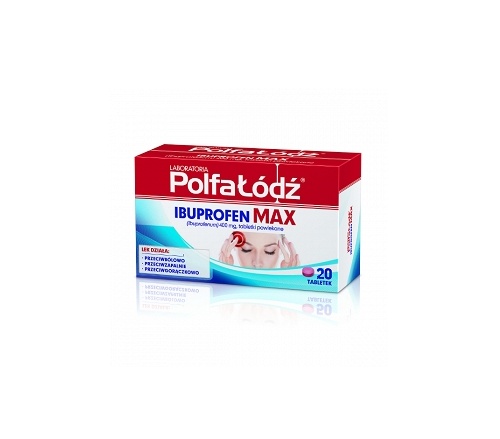
Laboratoria Polfavodi Ibuprofen Max
Ask a doctor about a prescription for Laboratoria Polfavodi Ibuprofen Max




How to use Laboratoria Polfavodi Ibuprofen Max
Leaflet attached to the packaging: patient information
Laboratoria PolfaŁódź Ibuprofen MAX, 400 mg, film-coated tablets
Ibuprofen
Read the leaflet carefully before taking the medicine, as it contains important information for the patient.
This medicine should always be taken exactly as described in this patient leaflet or as advised by a doctor or pharmacist.
- Keep this leaflet, you may need to read it again.
- If you need advice or additional information, consult a pharmacist.
- If the patient experiences any side effects, including any possible side effects not listed in this leaflet, they should tell their doctor, pharmacist, or nurse. See section 4.
- If there is no improvement after 3 days or if the patient feels worse, they should contact a doctor.
Table of contents of the leaflet
- 1. What is Laboratoria PolfaŁódź Ibuprofen MAX and what is it used for
- 2. Important information before taking Laboratoria PolfaŁódź Ibuprofen MAX
- 3. How to take Laboratoria PolfaŁódź Ibuprofen MAX
- 4. Possible side effects
- 5. How to store Laboratoria PolfaŁódź Ibuprofen MAX
- 6. Contents of the pack and other information
1. What is Laboratoria PolfaŁódź Ibuprofen MAX and what is it used for
Ibuprofen belongs to a group of medicines called nonsteroidal anti-inflammatory drugs (NSAIDs), with a therapeutic effect: anti-inflammatory, analgesic, and antipyretic. Laboratoria PolfaŁódź Ibuprofen MAX is used in the following cases: pain of various origins of mild to moderate severity (headaches, including tension headaches and migraines, toothaches, neuralgia, muscle, joint, and bone pain, pain accompanying flu and colds), fever of various origins (including in the course of flu, colds, or other infectious diseases), painful menstruation.
2. Important information before taking Laboratoria PolfaŁódź Ibuprofen MAX
When not to take Laboratoria PolfaŁódź Ibuprofen MAX
if the patient is allergic to ibuprofen or any of the other ingredients of this medicine (listed in section 6), if the patient is allergic to NSAIDs, including acetylsalicylic acid or other substances; a history of aspirin-induced asthma, angioedema (a skin and mucous membrane disease characterized by swelling), bronchospasm, rhinitis (runny nose), or urticaria associated with the use of acetylsalicylic acid or other NSAIDs, if the patient has severe renal and/or hepatic impairment, in the case of active peptic ulcer disease of the stomach and/or duodenum, perforation, or bleeding, also occurring after the use of NSAIDs, in severe heart failure (Class IV according to NYHA), if the patient has severe hypertension, if the patient has a history of cerebrovascular bleeding or other active bleeding, if the patient has unexplained blood disorders, if the patient has severe dehydration (caused by vomiting, diarrhea, or insufficient hydration), in the case of hemorrhagic diathesis (a tendency to bleed in the skin and mucous membranes, nose, gastrointestinal tract) and the use of anticoagulant medications, in the case of concurrent use of other NSAIDs, including COX-2 inhibitors, in the last three months of pregnancy, in children and adolescents with a body weight below 40 kg (under 12 years of age).
Warnings and precautions
Before starting treatment with Laboratoria PolfaŁódź Ibuprofen MAX, the patient should discuss it with their doctor or pharmacist. Particular caution should be exercised: in patients with impaired liver and/or kidney function and cardiovascular system; in patients with impaired kidney function, effective doses should be used, as small as possible, with simultaneous monitoring of their function, in patients with asthma or allergies - taking the medicine may cause bronchospasm, in patients who have experienced hay fever, nasal polyps, and chronic obstructive pulmonary disease, due to the increased risk of allergic reactions; allergic reactions may manifest as asthma attacks (so-called analgesic asthma), in patients with systemic lupus erythematosus and mixed connective tissue disease.
- there is an increased risk of developing aseptic meningitis, during chickenpox - it is recommended to avoid taking Laboratoria PolfaŁódź Ibuprofen MAX, in patients with hereditary blood disorders (intermittent porphyria), in patients with a history of gastrointestinal disease (ulcerative colitis, Crohn's disease) - it may lead to exacerbation of symptoms, in patients with cardiac arrhythmias, hypertension, myocardial infarction, or heart failure in their medical history - it may lead to fluid retention in the body due to worsening kidney function, in patients taking anticoagulant medications and with blood coagulation disorders.
- ibuprofen may prolong bleeding time, in patients with disorders of red blood cell formation, in patients with diabetes, immediately after major surgery.
Children and adolescents
In dehydrated children and adolescents, there is a risk of kidney function disorder. In patients over 65 years of age, there is a greater risk of side effects than in younger patients. During long-term use of the medicine, especially in patients with a history of gastrointestinal diseases, particularly in patients over 65 years of age, there is a risk of gastrointestinal bleeding, ulceration, or perforation. If any unusual symptoms from the gastrointestinal tract occur, especially in the initial treatment period, the patient should stop taking the medicine and consult a doctor. Caution should be exercised when taking Laboratoria PolfaŁódź Ibuprofen MAX in patients taking other medicines that may increase the risk of gastrointestinal disorders or bleeding, such as corticosteroids or anticoagulant medications like warfarin (acenocoumarol) or antiplatelet agents like acetylsalicylic acid. Concurrent long-term use of different painkillers may lead to kidney damage with a risk of kidney failure. During long-term use of Laboratoria PolfaŁódź Ibuprofen MAX, regular monitoring of liver function, kidney function, and blood morphology is required. Skin reactions have been reported with the use of Laboratoria PolfaŁódź Ibuprofen MAX. If the following symptoms occur: any skin rash, changes in mucous membranes, blisters, or other signs of allergy, the patient should stop taking Laboratoria PolfaŁódź Ibuprofen MAX and seek medical help immediately, as these may be the first signs of a severe skin reaction. See section 4. Severe and acute hypersensitivity reactions (e.g., anaphylactic shock) are very rare. After the first symptoms of severe hypersensitivity to Laboratoria PolfaŁódź Ibuprofen MAX, treatment should be discontinued and a doctor consulted immediately. This medicine belongs to a group of medicines (NSAIDs) that may adversely affect female fertility. This effect is transient and disappears after the end of therapy. Taking anti-inflammatory/pain-relieving medicines like ibuprofen may be associated with a small increased risk of heart attack or stroke, especially when used in high doses. The patient should not exceed the recommended dose and duration of treatment. Before taking Laboratoria PolfaŁódź Ibuprofen MAX, the patient should discuss their treatment with a doctor or pharmacist if:
- the patient has heart disease, such as heart failure, angina pectoris (chest pain), has had a heart attack, coronary artery bypass grafting, has peripheral arterial disease (poor blood circulation in the legs due to narrowing or blockage of arteries), or has had a stroke (including a mini-stroke or transient ischemic attack - TIA),
- the patient has high blood pressure, diabetes, high cholesterol levels, has a family history of heart disease or stroke, or smokes,
- the patient has an infection - see below, the section entitled "Infections".
Infections Laboratoria PolfaŁódź Ibuprofen MAX may mask the symptoms of infection, such as fever and pain. Therefore, Laboratoria PolfaŁódź Ibuprofen MAX may delay the use of appropriate infection treatment and lead to an increased risk of complications. This has been observed in bacterial pneumonia and bacterial skin infections associated with chickenpox. If the patient is taking this medicine during an infection and the symptoms of the infection persist or worsen, they should consult a doctor immediately. During long-term use of painkillers, a headache may occur, which should not be treated by increasing the dose of the medicine. The patient should stop taking the medicine and consult a doctor if, despite taking Laboratoria PolfaŁódź Ibuprofen MAX, they frequently experience headaches. Taking the medicine in the smallest effective dose for the shortest period necessary to relieve symptoms reduces the risk of side effects. Laboratoria PolfaŁódź Ibuprofen MAX, as an over-the-counter product, is recommended for short-term use, although it does not exclude use on a doctor's advice. If new or worsening symptoms occur, the patient should consult a doctor or pharmacist.
Laboratoria PolfaŁódź Ibuprofen MAX and other medicines
The patient should tell their doctor or pharmacist about all medicines they are currently taking or have recently taken, as well as any medicines they plan to take. Laboratoria PolfaŁódź Ibuprofen MAX may affect the action of other medicines or other medicines may affect the action of Laboratoria PolfaŁódź Ibuprofen MAX. Laboratoria PolfaŁódź Ibuprofen MAX should be used with caution in combination with:
- acetylsalicylic acid, other nonsteroidal anti-inflammatory drugs, including selective cyclooxygenase-2 inhibitors, or glucocorticosteroids; taking these medicines concurrently with ibuprofen may increase the risk of adverse effects on the gastrointestinal tract,
- blood pressure-lowering medicines (ACE inhibitors, such as captopril, beta-adrenergic blockers, such as atenolol, angiotensin II receptor antagonists, such as losartan) and diuretics: ibuprofen (like other NSAIDs) may weaken the effect of these medicines,
- potassium-sparing diuretics: there is a risk of increased potassium levels in the blood,
- anticoagulant medicines (i.e., blood thinners/preventing blood clots, such as aspirin/acetylsalicylic acid, warfarin, ticlopidine): limited clinical data indicate that NSAIDs may increase the effect of anticoagulant medicines,
- lithium: there is evidence of a potential increase in lithium levels in the blood serum during concurrent use of ibuprofen (like other NSAIDs),
- methotrexate: there is a risk of increased methotrexate levels in the blood serum during concurrent use of ibuprofen (like other NSAIDs),
- phenytoin: there is a risk of increased phenytoin levels in the blood serum during concurrent use of ibuprofen (like other NSAIDs),
- digitalis glycosides (e.g., digoxin): due to the possibility of increased digoxin effect,
- selective serotonin reuptake inhibitors (SSRIs): due to the possibility of increased risk of gastrointestinal bleeding,
- aminoglycosides: ibuprofen may slow down the elimination of aminoglycosides from the body, increasing their toxic effect,
- tacrolimus, cyclosporin: there is a risk of kidney damage,
- cholestyramine: cholestyramine taken concurrently with ibuprofen reduces its absorption - a minimum 2-hour interval should be maintained,
- probenecid or sulfinpyrazone: due to the possibility of delayed ibuprofen elimination,
- quinolone antibiotics: due to the increased risk of seizures,
- sulfonylurea derivatives: due to the possibility of interaction,
- zydovudine: there is evidence of increased risk of joint bleeding and hematomas in patients with hemophilia, HIV-positive, taking zidovudine and ibuprofen concurrently,
- with mifepristone - NSAIDs should not be used within 8-12 days after mifepristone administration, as they may weaken its effect.
Also, some other medicines may be affected or have an effect on treatment with Laboratoria PolfaŁódź Ibuprofen MAX. Therefore, before taking Laboratoria PolfaŁódź Ibuprofen MAX with other medicines, the patient should always consult a doctor or pharmacist.
Laboratoria PolfaŁódź Ibuprofen MAX with food, drink, and alcohol
Tablets should be swallowed whole, with a glass of water. In patients with gastrointestinal disorders, it is recommended to take Laboratoria PolfaŁódź Ibuprofen MAX during meals. The patient should avoid consuming alcohol, as it may increase the adverse effects of Laboratoria PolfaŁódź Ibuprofen MAX, especially on the gastrointestinal tract and central nervous system.
Pregnancy, breastfeeding, and fertility
If the patient is pregnant or breastfeeding, thinks they may be pregnant, or plans to have a child, they should consult a doctor or pharmacist before taking this medicine. The patient should not take Laboratoria PolfaŁódź Ibuprofen MAX during the last 3 months of pregnancy, as it may harm the unborn child or adversely affect the course of labor. Taking ibuprofen during the last three months of pregnancy may lead to kidney and heart disease in the unborn child. It may also cause a tendency to bleed in the mother and her child and lead to delayed or prolonged labor. The patient should not take this medicine during the first 6 months of pregnancy, unless it is absolutely necessary and advised by a doctor. If treatment with ibuprofen is required during this period or when trying to conceive, the patient should use the lowest dose for the shortest possible time. Taking Laboratoria PolfaŁódź Ibuprofen MAX after the 20th week of pregnancy, for a period longer than a few days, may cause kidney disorders in the unborn child and subsequently lead to low amniotic fluid levels (oligohydramnios) or narrowing of the ductus arteriosus in the baby's heart. If treatment is required for a longer period, the doctor may recommend additional monitoring. This medicine passes into breast milk, but it can be used during breastfeeding if taken in the recommended dose and for the shortest possible time. This medicine belongs to a group of medicines (NSAIDs) that may affect female fertility. The use of this medicine is not recommended in women trying to conceive. This effect is transient and disappears after the end of therapy.
Driving and using machines
Essentially, ibuprofen has no influence or has a negligible influence on the ability to drive and use machines. However, due to the possibility of side effects such as fatigue, drowsiness, dizziness (reported as frequent) and vision disturbances (reported as uncommon), the ability to drive and use machines may be impaired in individual cases. This effect may be enhanced by concurrent alcohol consumption. Laboratoria PolfaŁódź Ibuprofen MAX contains lactose.If the patient has previously been diagnosed with intolerance to some sugars, they should consult a doctor before taking the medicine. Laboratoria PolfaŁódź Ibuprofen MAX contains cochineal red (E 124) and azorubine (E 122)- the medicine may cause allergic reactions. The medicine contains less than 1 mmol (23 mg) of sodium per dose, i.e., the medicine is considered "sodium-free".
3. How to take Laboratoria PolfaŁódź Ibuprofen MAX
This medicine should always be taken exactly as described in this patient leaflet or as advised by a doctor or pharmacist. In case of doubt, the patient should consult a doctor or pharmacist. The patient should use the smallest effective dose for the shortest period necessary to relieve symptoms. If the symptoms of an infection (such as fever and pain) persist or worsen, the patient should consult a doctor immediately (see section 2). The occurrence of side effects can be minimized by using the smallest effective dose for the shortest period necessary to control symptoms. Adults and adolescents (from 12 years of age) with a body weight of 40 kg and above: The initial dose of ibuprofen is 400 mg (1 tablet). If necessary, an additional dose of 400 mg of ibuprofen (1 tablet) can be taken. The interval between consecutive doses should be determined according to the symptoms and taking into account the maximum recommended daily dose. It should not be less than 6 hours. Within 24 hours, the total dose of ibuprofen should not exceed 1200 mg (3 tablets). The dosage for migraine headache is 400 mg (1 tablet) as a single dose, and if necessary, 400 mg (1 tablet) every 4-6 hours. The maximum daily dose of ibuprofen should not exceed 1200 mg (3 tablets). The patient should limit the use of the medicine to a maximum of two or three days a week. Administration is oral. Tablets should be swallowed whole, with a glass of water. In patients with gastrointestinal disorders, it is recommended to take Laboratoria PolfaŁódź Ibuprofen MAX during meals. The medicine should not be used in patients with a body weight below 40 kg. The medicine should not be used in patients under 12 years of age. Patients over 65 years of age should always consult a doctor before starting treatment with Laboratoria PolfaŁódź Ibuprofen MAX, due to the higher likelihood of side effects. The doctor will recommend the appropriate use of the medicine. Impaired liver and kidney function: if the patient has impaired kidney or liver function, they should always consult a doctor before taking Laboratoria PolfaŁódź Ibuprofen MAX. The doctor will recommend the appropriate use of the medicine. If the patient feels that the effect of the medicine is too strong or too weak, they should consult a doctor.
Overdose of Laboratoria PolfaŁódź Ibuprofen MAX
In case of overdose, the patient should immediately consult a doctor or pharmacist. If the patient has taken a higher dose of Laboratoria PolfaŁódź Ibuprofen MAX than recommended or if a child has accidentally taken the medicine, they should always consult a doctor or go to the nearest hospital to get an opinion on possible health risks and advice on what to do. Symptoms may include nausea, stomach pain, vomiting (which may contain blood), headaches, ringing in the ears, disorientation, and nystagmus. After taking a large dose, drowsiness, chest pain, palpitations, loss of consciousness, seizures (mainly in children), weakness, and dizziness may occur. Other symptoms may include tinnitus, headache, diarrhea, and gastrointestinal bleeding. In severe cases of overdose, there may also be periodic excitement, disorientation, coma, kidney failure, liver damage. In patients with asthma, the disease may worsen.
Missed dose of Laboratoria PolfaŁódź Ibuprofen MAX
The patient should not take a double dose to make up for a missed dose.
Stopping treatment with Laboratoria PolfaŁódź Ibuprofen MAX
In case of further doubts about taking this medicine, the patient should consult a doctor or pharmacist.
4. Possible side effects
Like all medicines, this medicine can cause side effects, although not everybody gets them. With NSAID treatment, edema, hypertension, and heart failure have been reported. Taking medicines containing ibuprofen may be associated with a small increased risk of heart attack (myocardial infarction) or stroke. The risk increases when using high doses of the medicine and when using the medicine for a long period. Uncommon side effects (in less than 1 in 100 people):
- rash,
- indigestion, stomach pain, nausea,
- headaches,
- vision disturbances,
- urticaria and itching.
Rare side effects (in less than 1 in 1,000 people):
- diarrhea, bloating, constipation, vomiting, gastritis,
- depression, disorientation, hallucinations, insomnia,
- dizziness, excitement, irritability, and fatigue,
- toxic optic neuropathy,
- tinnitus,
- decreased hemoglobin and hematocrit values, inhibited platelet aggregation, prolonged bleeding time, decreased serum calcium levels, increased serum uric acid levels.
Very rare side effects (in less than 1 in 10,000 people):
- blood count disorders (anemia, leukopenia - decreased white blood cell count, thrombocytopenia - decreased platelet count, pancytopenia - deficiency of all normal blood cells: red, white, and platelets, agranulocytosis - absence of a certain type of white blood cell - granulocytes),
- liver function disorders, especially during long-term use,
- erythema multiforme, Stevens-Johnson syndrome (a severe, life-threatening type of allergic reaction), toxic epidermal necrolysis,
- black stools, bloody vomiting, ulcerative stomatitis, exacerbation of ulcerative colitis and Crohn's disease. Peptic ulcer disease of the stomach and/or duodenum, gastrointestinal bleeding, and perforation, especially in patients over 65 years of age,
- aseptic meningitis,
- edema, dysuria (discomfort when urinating), decreased urine output, kidney failure, renal papillary necrosis, increased sodium levels in the blood, potassium retention,
- severe hypersensitivity reactions such as facial edema, tongue and laryngeal edema, dyspnea, tachycardia (rapid heart rate), hypotension (sudden decrease in blood pressure), shock; exacerbation of asthma and bronchospasm.
- in patients with existing autoimmune diseases (systemic lupus erythematosus, mixed connective tissue disease) during ibuprofen treatment, single cases of symptoms have been reported, such as neck stiffness, headache, nausea, vomiting, fever, disorientation,
- edema, hypertension, heart failure associated with the use of NSAIDs in high doses,
- hypertension.
Side effects with unknown frequency (frequency cannot be estimated from available data):
- severe skin reactions known as DRESS syndrome may occur. The symptoms of DRESS syndrome include: skin rash, fever, lymph node swelling, and an increased number of eosinophils (a type of white blood cell).
- a red scaly rash with thickening under the skin and blisters, usually located in skin folds, on the torso, and upper limbs, with fever occurring at the beginning of treatment (acute generalized exanthematous pustulosis). If such symptoms occur, the patient should stop taking Laboratoria PolfaŁódź Ibuprofen MAX and seek medical help immediately. See also section 2.
- the skin becomes sensitive to light.
Reporting side effects
If side effects occur, including any side effects not listed in this leaflet, the patient should tell their doctor, pharmacist, or nurse. Side effects can be reported directly to the Department of Drug Safety Monitoring of the Office for Registration of Medicinal Products, Medical Devices, and Biocidal Products: Al. Jerozolimskie 181C, 02-222 Warsaw, Tel.: +48 22 49 21 301, Fax: +48 22 49 21 309, Website: https://smz.ezdrowie.gov.pl. Side effects can also be reported to the marketing authorization holder. By reporting side effects, it is possible to gather more information on the safety of the medicine.
5. How to store Laboratoria PolfaŁódź Ibuprofen MAX
Do not store above 25°C. Store in the original packaging. The medicine should be kept out of the sight and reach of children. Do not use this medicine after the expiry date (EXP) stated on the blister and carton. The expiry date (EXP) refers to the last day of the month stated. Do not use this medicine if the blister is damaged. Medicines should not be disposed of via wastewater or household waste. The patient should ask their pharmacist how to dispose of medicines that are no longer needed. This will help protect the environment.
6. Contents of the pack and other information
What Laboratoria PolfaŁódź Ibuprofen MAX contains
- The active substance of the medicine is ibuprofen (Ibuprofenum). Each film-coated tablet contains: 400 mg of ibuprofen.
- Other ingredients (excipients) are: Tablet core: microcrystalline cellulose, lactose monohydrate, maize starch, sodium croscarmellose, povidone K30, talc, dimethicone, anhydrous colloidal silica. Tablet coating Opadry 03F240028 Pink: talc, hypromellose, macrogol 6000, cochineal red (E 124), titanium dioxide (E 171), azorubine (E 122).
What Laboratoria PolfaŁódź Ibuprofen MAX looks like and contents of the pack
Film-coated tablet The tablets are shiny, purple, biconvex, and round, with the marking "R-06" embossed on one side, packaged in blisters, in a cardboard box. One blister contains 10 tablets. Pack sizes: 10 tablets - 1 blister of 10, 20 tablets - 2 blisters of 10, 30 tablets - 3 blisters of 10, 40 tablets - 4 blisters of 10, 50 tablets - 5 blisters of 10, 60 tablets - 6 blisters of 10. Not all pack sizes may be marketed.
Marketing authorization holder
URGO Sp. z o.o. Al. Jerozolimskie 142 B 02-305 Warsaw tel: 22 616 33 48
Importer
Wörwag Pharma Operations Spółka z ograniczoną odpowiedzialnością ul. gen. Mariana Langiewicza 58 95-050 Konstantynów Łódzki
Date of last revision of the leaflet:
- Country of registration
- Active substance
- Prescription requiredNo
- ImporterWoerwag Pharma Operations Sp. z o.o.
- This information is for reference only and does not constitute medical advice. Always consult a licensed doctor before taking any medication. Oladoctor is not responsible for medical decisions based on this content.
- Alternatives to Laboratoria Polfavodi Ibuprofen MaxDosage form: Suspension, 40 mg/mlActive substance: ibuprofenManufacturer: Laboratorios Basi - Industria Farmaceutica, S.A.Prescription not requiredDosage form: Tablets, 400 mgActive substance: ibuprofenPrescription not requiredDosage form: Tablets, 600 mgActive substance: ibuprofenManufacturer: Aristo Pharma GmbHPrescription required

Alternatives to Laboratoria Polfavodi Ibuprofen Max in other countries
The best alternatives with the same active ingredient and therapeutic effect.
Alternative to Laboratoria Polfavodi Ibuprofen Max in Іспанія
Alternative to Laboratoria Polfavodi Ibuprofen Max in Україна
Online doctors for Laboratoria Polfavodi Ibuprofen Max
Discuss dosage, side effects, interactions, contraindications, and prescription renewal for Laboratoria Polfavodi Ibuprofen Max – subject to medical assessment and local rules.

Get updates and exclusive offers
Be the first to know about new services, marketplace updates, and subscriber-only promos.

