


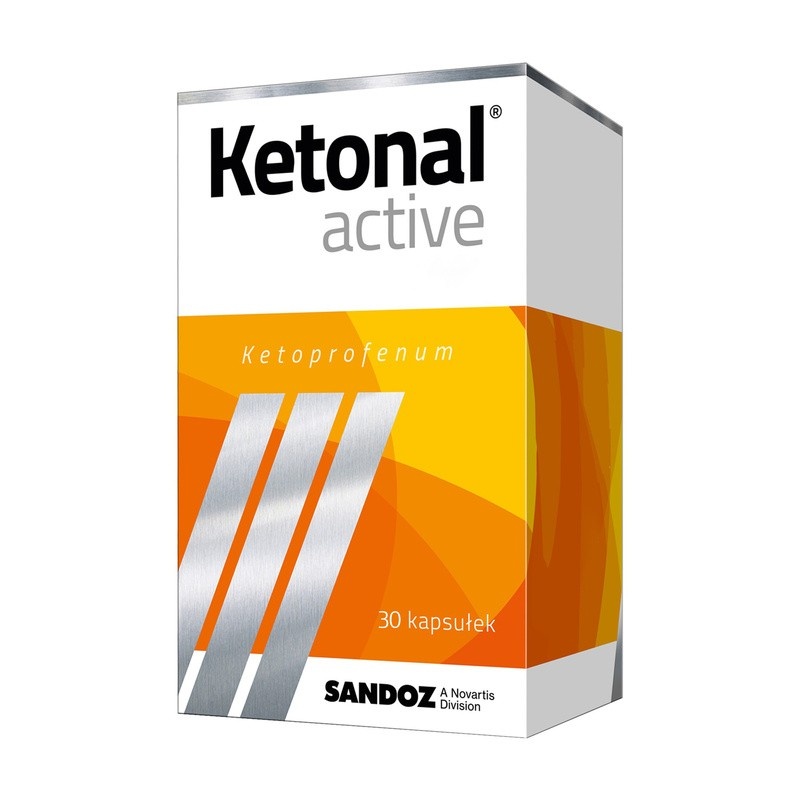
Ketonal Active
Ask a doctor about a prescription for Ketonal Active




How to use Ketonal Active
Leaflet attached to the packaging: patient information
Ketonal Active, 50 mg, hard capsules
Ketoprofen
Read the leaflet carefully before taking the medicine, as it contains important information for the patient.
This medicine should always be taken exactly as described in this patient leaflet or as directed by a doctor or pharmacist.
- This leaflet should be kept in case it needs to be read again.
- If advice or additional information is needed, a pharmacist should be consulted.
- If the patient experiences any side effects, including any possible side effects not listed in this leaflet, they should tell their doctor or pharmacist. See section 4.
- If there is no improvement or the patient feels worse after 5 days, they should contact their doctor.
Table of contents of the leaflet
- 1. What is Ketonal Active and what is it used for
- 2. Important information before taking Ketonal Active
- 3. How to take Ketonal Active
- 4. Possible side effects
- 5. How to store Ketonal Active
- 6. Contents of the packaging and other information
1. What is Ketonal Active and what is it used for
Ketonal Active capsules contain the active substance ketoprofen, an anti-inflammatory, antipyretic, and analgesic (belonging to the group of nonsteroidal anti-inflammatory drugs (NSAIDs).
- NSAIDs).
Ketonal Active is used for short-term, symptomatic treatment of acute pain of mild or moderate intensity, such as:
- muscle pain,
- bone and joint pain,
- headache,
- toothache,
- painful menstruation,
- pain caused by sprains and strains.
2. Important information before taking Ketonal Active
When not to take Ketonal Active:
if the patient is allergic to ketoprofen or any of the other ingredients of this medicine (listed in section 6);
if the patient has experienced shortness of breath, asthma, swelling of the nasal mucosa, or skin reaction (manifested by skin swelling or itching rash) or other types of allergic reactions after taking ketoprofen or similar-acting medicines (such as acetylsalicylic acid or other nonsteroidal anti-inflammatory drugs, so-called NSAIDs);
if the patient has:
- severe heart failure,
- severe kidney failure,
- severe liver failure,
- tendency to bleeding,
- active stomach or duodenal ulcer or has had a history of gastrointestinal bleeding, ulceration, or perforation; if the patient is in the third trimester of pregnancy (see below "Pregnancy, breastfeeding, and fertility").
The medicine should not be used in children under 15 years of age.
Warnings and precautions
Before taking Ketonal Active, the patient should discuss it with their doctor or pharmacist if:
the patient has had gastrointestinal diseases in the past (there is a risk of exacerbating the course of ulcerative colitis or Crohn's disease, manifested by, among other things, chronic diarrhea);
the patient has asthma or nasal mucosa inflammation (rhinitis, nasal congestion, sneezing), chronic sinusitis, or nasal polyps;
the patient has or has had heart, kidney, or liver disease;
the patient has or has had high blood pressure (hypertension);
- the patient has peripheral artery disease (circulatory disorders in the legs or feet caused by narrowing or blockage of arteries) or cerebral vessels; the patient has diabetes or high cholesterol; the patient has an infection - see below, the section entitled "Infections". the patient smokes; the patient is elderly (over 65 years old).
Nonsteroidal anti-inflammatory drugs (NSAIDs) may cause gastrointestinal bleeding, ulcers, or perforation - perforation of the stomach or intestine wall (with possible fatal outcome), which can occur at any time during treatment, even without warning signs or severe gastrointestinal events in the past.
The risk of bleeding, ulcers, or perforation in the gastrointestinal tract is higher during the use of high doses of NSAIDs, in patients with a history of ulcer disease, especially if complicated by bleeding or perforation (see "When not to take Ketonal Active"), and in the elderly.
If the patient experiences any gastrointestinal symptoms (especially at the beginning of treatment) while taking Ketonal Active, they should immediately consult their doctor.
Taking such medicines as Ketonal Active may be associated with a small increased risk of heart attack or stroke. This risk increases with long-term use of high doses of the medicine.
During the use of nonsteroidal anti-inflammatory drugs (NSAIDs), especially at the beginning of treatment, very rare but serious skin reactions (some with a possible fatal outcome) may occur, including exfoliative dermatitis, Stevens-Johnson syndrome, and toxic epidermal necrolysis. If the patient develops a rash, mucosal lesions, or any signs of hypersensitivity, they should stop taking the medicine and consult their doctor.
If the patient experiences vision disturbances (e.g., blurred vision) while taking Ketonal Active, they should stop taking the medicine and consult their doctor.
It is very important to take Ketonal Active in the smallest effective dose for the shortest time necessary to alleviate symptoms. The patient should not take higher doses or longer treatment than recommended.
Infections
Ketonal Active may mask the symptoms of an infection, such as fever and pain. Therefore, Ketonal Active may delay the use of appropriate infection treatment, which can lead to increased risk of complications. This has been observed in bacterial pneumonia and bacterial skin infections associated with chickenpox. If the patient is taking this medicine during an infection and the symptoms of the infection persist or worsen, they should immediately consult their doctor.
Children and adolescents
The medicine should not be used in patients under 15 years of age.
Ketonal Active and other medicines
The patient should tell their doctor or pharmacist about all medicines they are currently taking or have recently taken, as well as any medicines they plan to take.
The following medicines should not be taken with Ketonal Active:
other painkillers, such as nonsteroidal anti-inflammatory drugs (NSAIDs), including selective cyclooxygenase-2 inhibitors (e.g., acetylsalicylic acid, diclofenac, naproxen);
anticoagulant medicines (medicines that prevent blood clotting), such as dabigatran, apixaban, rivaroxaban, edoxaban;
antiplatelet medicines (medicines that prevent platelet aggregation);
thrombolytic medicines (medicines used to dissolve blood clots), such as acetylsalicylic acid, heparin, warfarin, clopidogrel, or ticlopidine;
nicorandil (a medicine used to treat coronary heart disease);
lithium (a medicine used to treat certain mental illnesses);
methotrexate (a medicine used, among other things, to treat cancer) in a dose greater than 15 mg per week.
Ketonal Active and other medicines may interact with each other, affecting their action and the occurrence of side effects. Therefore, the patient should always consult their doctor or pharmacist before taking Ketonal Active with other medicines, such as:
diuretics (medicines that increase urine production);
methotrexate (a medicine used, among other things, to treat cancer) in a dose less than 15 mg per week;
medicines that lower blood pressure;
medicines used to treat depression (so-called selective serotonin reuptake inhibitors, SSRIs);
corticosteroids (medicines used to treat pain, swelling, allergies, asthma, rheumatoid diseases, and skin diseases);
pentoxifylline (a medicine used to treat muscle pain due to peripheral vascular disease);
probenecid (a medicine used to treat gout and increased uric acid levels);
medicines that suppress the immune system, such as after organ transplantation (cyclosporine and tacrolimus);
antidiabetic medicines;
antiepileptic medicines;
medicines used to treat heart diseases (digitalis glycosides, beta-adrenergic blockers);
quinolone antibiotics;
tenofovir (an antiretroviral medicine used to treat HIV and chronic hepatitis B infection).
If the patient is unsure whether they are taking any of these medicines, they should consult their doctor or pharmacist.
Ketonal Active with food and drink
Ketonal Active capsules should be taken during meals, with at least half a glass of water or milk.
Pregnancy, breastfeeding, and fertility
If the patient is pregnant or breastfeeding, thinks they may be pregnant, or plans to have a child, they should consult their doctor or pharmacist before taking this medicine.
Pregnancy
Ketonal Active should not be taken if the patient is in the last 3 months of pregnancy, as it may harm the unborn child or cause complications during delivery. Ketonal Active may cause kidney and heart problems in the unborn child.
It may increase the risk of bleeding in the patient and child and cause delayed or prolonged labor.
During the first 6 months of pregnancy, Ketonal Active should not be used unless the doctor considers it absolutely necessary. If treatment is necessary during this period or while trying to conceive, the smallest dose should be used for the shortest possible time.
If Ketonal Active is taken for more than a few days from the 20th week of pregnancy, it may cause the unborn child to have narrowed blood vessels (ductus arteriosus) in the heart or kidney problems, which can lead to low levels of amniotic fluid surrounding the child (oligohydramnios). If treatment is required for a longer period, the doctor may recommend additional monitoring.
Breastfeeding
It is not known whether ketoprofen passes into breast milk. Women who are breastfeeding should not take Ketonal Active.
Fertility
Ketonal Active may make it difficult to conceive. If the patient plans to conceive, has problems conceiving, or is undergoing fertility tests, they should inform their doctor.
Driving and using machines
Ketonal Active may cause dizziness, drowsiness, vision disturbances, and seizures in some patients. If these symptoms occur, the patient should not drive or operate machinery.
Ketonal Active contains lactose
If the patient has been diagnosed with intolerance to some sugars, they should consult their doctor before taking the medicine.
3. How to take Ketonal Active
This medicine should always be taken exactly as described in this patient leaflet or as directed by a doctor or pharmacist.
In case of doubt, the patient should consult their doctor or pharmacist.
The medicine is intended for oral administration. The patient should use the smallest effective dose for the shortest time necessary to alleviate symptoms. If the symptoms of an infection (such as fever and pain) persist or worsen, the patient should immediately consult their doctor (see section 2).
Recommended dose
Adults and adolescents over 15 years of age
1 capsule 3 times a day (every 8 hours).
The capsules should be taken during meals, with at least half a glass of water or milk. The patient can also take medicines that neutralize stomach acid, which can help reduce the risk of harmful effects on the gastrointestinal tract.
Without consulting a doctor, the patient should not take the medicine for more than 5 days.
If the symptoms worsen or do not improve after 5 days, the patient should contact their doctor.
Elderly patients
In elderly patients, caution is necessary due to the increased risk of severe side effects. If the use of nonsteroidal anti-inflammatory drugs is necessary, the smallest effective dose should be used.
Use in children and adolescents
The medicine should not be used in patients under 15 years of age.
Taking a higher dose of Ketonal Active than recommended
In case of taking a higher dose of the medicine than recommended, the patient should immediately consult their doctor or pharmacist.
After an overdose, the following symptoms may occur: lethargy, drowsiness, nausea, vomiting, and abdominal pain, bleeding vomiting, black stools, impaired consciousness, respiratory depression, seizures, kidney problems, and kidney failure.
In case of suspected significant overdose, the doctor may recommend gastric lavage and symptomatic and supportive treatment.
Missing a dose of Ketonal Active
The patient should not take a double dose to make up for a missed dose.
In case of any further doubts about the use of this medicine, the patient should consult their doctor or pharmacist.
4. Possible side effects
Like all medicines, Ketonal Active can cause side effects, although not everybody gets them.
Taking anti-inflammatory and analgesic medicines, such as Ketonal Active, especially in high doses and for a long time, may be associated with a small increased risk of heart attack or stroke.
In case of the following side effects, the patient should stop taking the medicine and immediately consult their doctor or the nearest hospital emergency department:
- swelling of the face, lips, or throat, causing difficulty swallowing or breathing, with wheezing or chest tightness, rapid heartbeat, decreased blood pressure (which can lead to shock), itching, and rash. These may be symptoms of a severe allergic reaction (anaphylaxis);
- asthma attack;
- burning, persistent stomach pain (which may indicate stomach or duodenal ulcer);
- vomiting blood, severe abdominal pain, or black stools (which may be signs of gastrointestinal bleeding);
- blistering, peeling of the skin, or bleeding in the skin with itching (or without), papular rash (on the lips, eyes, mouth, nose, genitals, hands, or feet) sometimes with symptoms resembling flu. These may be symptoms of serious skin reactions (such as Stevens-Johnson syndrome or toxic epidermal necrolysis);
Very common(may occur in more than 1 in 10 people):
- changes in liver function test results (increased liver function test results).
Common(may occur in less than 1 in 10 people):
- malaise, weakness (asthenia);
- indigestion, nausea, abdominal pain, vomiting.
Uncommon(may occur in less than 1 in 100 people):
- headache, dizziness, drowsiness;
- constipation, diarrhea, bloating, gastritis;
- allergic reactions, rash, itching;
- edema (fluid retention).
Rare(may occur in less than 1 in 1,000 people):
- anemia caused by bleeding or hemorrhage;
- numbness, tingling, prickling, or burning sensation of the skin (paresthesia);
- vision disturbances (blurred vision);
- tinnitus;
- asthma attack;
- stomatitis, gastric ulcer; hepatitis;
- weight gain.
Very rare(may occur in less than 1 in 10,000 people):
- enteropathy (intestinal diseases) with perforation, ulceration, or narrowing and bleeding;
- severe liver dysfunction with jaundice (yellowing of the skin or whites of the eyes) and inflammation.
Side effects with unknown frequency(frequency cannot be estimated from the available data):
- agranulocytosis (decreased or complete lack of certain white blood cells, which can increase the risk of infections);
- thrombocytopenia (decreased platelet count, which can increase the risk of bleeding and bruising);
- bone marrow suppression, hemolytic anemia (caused by excessive breakdown of red blood cells), leukopenia (decreased white blood cell count);
- anaphylactic reactions (including anaphylactic shock - see the beginning of this section);
- angioedema (sudden swelling of the face, limbs, or joints without itching or pain);
- decreased sodium levels in the blood (hyponatremia), increased potassium levels in the blood (hyperkalemia);
- confusion, mood changes;
- aseptic meningitis, taste disturbances, seizures;
- heart failure (with symptoms such as shortness of breath, difficulty breathing when lying down, swelling of the feet or ankles);
- hypertension, flushing (vasodilation), vasculitis;
- bronchospasm (especially in patients with hypersensitivity to acetylsalicylic acid and other NSAIDs), rhinitis (runny nose, itching, sneezing, or nasal congestion);
- worsening of symptoms of chronic intestinal diseases (ulcerative colitis or Crohn's disease), gastrointestinal bleeding, and perforation (see the beginning of this section), pancreatitis;
- photosensitivity, alopecia, urticaria, blistering reactions, including Stevens-Johnson syndrome and toxic epidermal necrolysis (see the beginning of this section), acute generalized exanthematous pustulosis;
- severe kidney problems (see the beginning of this section);
- fatigue. Taking such medicines as ketoprofen may be associated with a small increased risk of heart attack or stroke.
Reporting side effects
If the patient experiences any side effects, including any possible side effects not listed in this leaflet, they should tell their doctor, pharmacist, or nurse. Side effects can be reported directly to the Department of Drug Safety Monitoring of the Office for Registration of Medicinal Products, Medical Devices, and Biocidal Products: Al. Jerozolimskie 181C, 02-222 Warsaw, tel.: +48 22 49 21 301; fax: +48 22 49 21 309; website: https://smz.ezdrowie.gov.pl
Side effects can also be reported to the marketing authorization holder.
By reporting side effects, it is possible to gather more information on the safety of the medicine.
5. How to store Ketonal Active
The medicine should be stored out of sight and reach of children.
Do not use this medicine after the expiry date stated on the packaging after EXP.
The expiry date refers to the last day of the month stated.
Store in a temperature below 25°C.
Medicines should not be disposed of via wastewater or household waste. The patient should ask their pharmacist how to dispose of medicines that are no longer needed. This will help protect the environment.
6. Contents of the packaging and other information
What Ketonal Active contains
The active substance is ketoprofen. One hard capsule contains 50 mg of ketoprofen.
The other ingredients are: lactose monohydrate, magnesium stearate, colloidal silicon dioxide.
Capsule:gelatin, titanium dioxide (E 171), patent blue (E 131).
What Ketonal Active looks like and contents of the pack
Ketonal Active is a white-blue opaque capsule containing a yellowish-white powder in a granular or lumpy form.
The medicine is packed in orange glass jars with an LDPE cap, in a cardboard box.
The packaging contains 10, 20, or 30 capsules.
Marketing authorization holder
Sandoz GmbH
Biochemiestrasse 10
6250 Kundl, Austria
Manufacturer
Lek Pharmaceuticals d.d.
Verovškova 57
1526 Ljubljana, Slovenia
Lek Pharmaceuticals d.d.
Trimlini 2D
9220 Lendava, Slovenia
Sandoz Polska Sp. z o.o.
ul. Domaniewska 50 C
02-672 Warsaw
tel. +48 22 209 70 00
Date of last revision of the leaflet:11/2024
Sandoz logo
- Country of registration
- Active substance
- Prescription requiredNo
- ImporterLek Pharmaceuticals d.d. Lek Pharmaceuticals d.d.
- This information is for reference only and does not constitute medical advice. Always consult a licensed doctor before taking any medication. Oladoctor is not responsible for medical decisions based on this content.
- Alternatives to Ketonal ActiveDosage form: Tablets, 150 mgActive substance: ketoprofenManufacturer: Famar Lyon Opella Healthcare International SASPrescription requiredDosage form: Capsules, 200 mgActive substance: ketoprofenPrescription requiredDosage form: Granulate, 50 mgActive substance: ketoprofenManufacturer: Fine Foods & Pharmaceuticals N.T.M. S.p.APrescription not required
Alternatives to Ketonal Active in other countries
The best alternatives with the same active ingredient and therapeutic effect.
Alternative to Ketonal Active in Spain
Alternative to Ketonal Active in Ukraine
Online doctors for Ketonal Active
Discuss dosage, side effects, interactions, contraindications, and prescription renewal for Ketonal Active – subject to medical assessment and local rules.

Get updates and exclusive offers
Be the first to know about new services, marketplace updates, and subscriber-only promos.

