


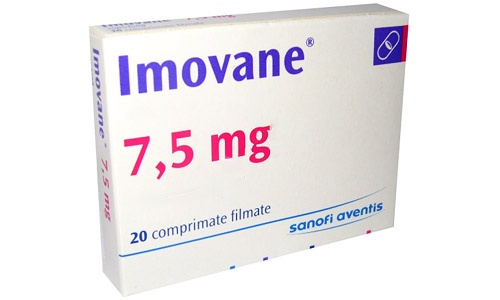
Imovane
Ask a doctor about a prescription for Imovane




How to use Imovane
Leaflet accompanying the packaging: information for the user
Warning! The leaflet should be kept. Information on the immediate packaging in a foreign language.
Imovane
7.5 mg, coated tablets
(Zopiclone)
Before taking the medicine, you should carefully read the contents of the leaflet, as it contains important information for the patient.
- The leaflet should be kept so that it can be read again if necessary.
- In case of any doubts, you should consult a doctor or pharmacist.
- This medicine has been prescribed specifically for you. Do not pass it on to others. The medicine may harm another person, even if their symptoms are the same.
- If the patient experiences any side effects, including any side effects not listed in this leaflet, they should inform their doctor, pharmacist, or nurse. See section 4.
Table of contents of the leaflet:
- 1. What is Imovane and what is it used for
- 2. Important information before taking Imovane
- 3. How to take Imovane
- 4. Possible side effects
- 5. How to store Imovane
- 6. Contents of the packaging and other information
1. What is Imovane and what is it used for
Imovane is available in the form of coated tablets and contains the active substance zopiclone.
Zopiclone belongs to the group of sedative-hypnotic drugs.
Imovane facilitates falling asleep, reduces the number of nighttime awakenings, prolongs the duration of sleep, and
improves both the quality of sleep and the feeling after waking up.
Imovane is indicated for the short-term treatment of insomnia in adults - transient, short-term, or chronic (including difficulties in falling asleep, fragmented sleep, early morning awakening).
It should not be used for a long time. Treatment should last as short as possible, as the risk of developing
dependence increases with the duration of treatment.
2. Important information before taking Imovane
When not to take Imovane:
- if the patient is allergic to zopiclone or any of the other ingredients of this medicine (listed in section 6);
- if the patient has myasthenia gravis (muscle weakness);
- in case of respiratory failure;
- in severe cases of sleep apnea syndrome;
- in severe liver failure;
- if the patient has experienced sleepwalking or other unusual behaviors (such as driving, eating, making phone calls, or having sex, etc.) while not fully awake after taking Imovane.
Warnings and precautions
In every case, before a doctor prescribes a sedative-hypnotic, they should determine, if possible, the causes of insomnia and eliminate the factors that cause it, if possible.
Since sedative-hypnotic drugs have the ability to suppress the respiratory center, caution should be exercised when prescribing zopiclone to patients with respiratory system disorders.
Psychomotor disorders
Like other sedative-hypnotic drugs, zopiclone has a central nervous system depressant effect.
The risk of psychomotor disorders, including impaired ability to drive vehicles, increases if: zopiclone is taken within 12 hours before performing activities that require attention, a higher dose of the medicine than recommended is taken, or if zopiclone is taken with other central nervous system depressants, alcohol, or other medicines that increase the concentration of zopiclone in the blood. During the use of Imovane, you should avoid engaging in activities that require significant attention or motor coordination, such as operating machines and driving vehicles after taking zopiclone, and especially within 12 hours after taking it.
Risk associated with concomitant use of opioids
Concomitant use of opioids with benzodiazepines or other sedative-hypnotic drugs, including zopiclone, may cause sedation, respiratory depression, coma, and death.
Due to these risks, concomitant prescription of opioids and benzodiazepines will be made by a doctor for patients for whom alternative treatment methods are insufficient.
If the decision is made to prescribe zopiclone concomitantly with opioids, the medicines will be prescribed in the smallest effective dose and for the shortest possible time of concomitant use.
Dependence
Taking Imovane may lead to the development of abuse and/or physical or psychological dependence.
You should inform your doctor before taking Imovane if you have ever had mental disorders, abused or been dependent on alcohol, illicit substances, or drugs.
The risk of dependence increases with the size of the dose and the duration of treatment, and it is higher when Imovane is used for more than 4 weeks. The risk of dependence is higher in patients with a history of mental disorders and/or alcohol, illicit substances, or drug abuse.
In cases where physical dependence has developed, sudden discontinuation of treatment will be accompanied by withdrawal symptoms. These may include headaches and muscle pain, increased anxiety and tension, restlessness, confusion, and irritability. In severe cases, symptoms such as derealization, depersonalization, increased hearing acuity, numbness and tingling of limbs, hypersensitivity to light, noise, and touch, hallucinations, and seizures may occur.
Withdrawal symptoms may develop within a few days after discontinuation of zopiclone. During regular use of the medicine, withdrawal symptoms may occur between doses, especially if the dose of the medicine was high.
Rebound insomnia
After discontinuation of zopiclone, transient rebound insomnia may occur, which is an exacerbation of the symptoms that led to the prescription of the sedative-hypnotic drug. Other symptoms may also occur: mood changes, anxiety, and agitation.
Due to the increased risk of rebound insomnia after sudden discontinuation of Imovane, especially after long-term use or use of high doses, it is recommended to gradually reduce the dose.
Tolerance
With repeated use of sedative-hypnotic drugs, their effect may decrease.
However, in the case of Imovane, no significant tolerance phenomenon has been observed during treatment lasting up to 4 weeks.
Anterograde amnesia
Anterograde amnesia may occur, especially if sleep is interrupted or the patient does not go to bed immediately after taking the medicine.
To reduce the risk of anterograde amnesia, patients should ensure:
- that the tablet is taken immediately before going to bed,
- that they can sleep uninterrupted throughout the night.
Psychological and paradoxical reactions
The use of sedative-hypnotic drugs, such as zopiclone, may be accompanied by reactions such as: anxiety, agitation, irritability, aggression, delusions, anger, nightmares, hallucinations, inadequate behavior, and other behavioral disorders. In such cases, treatment should be discontinued. The occurrence of such reactions is more likely in elderly patients (see section 4. Possible side effects).
Somnambulism and similar behaviors
You should inform your doctor before taking Imovane if you have experienced sleepwalking or other unusual behaviors (such as driving, eating, making phone calls, or having sex, etc.) while not fully awake after taking Imovane.
Imovane may cause sleepwalking or other unusual behaviors (such as driving while asleep, eating, making phone calls, or having sex, etc.) while the patient is not fully awake. The next morning, the patient may not remember doing anything at night. These behaviors may occur regardless of whether the patient drinks alcohol or takes other medicines that cause drowsiness in combination with Imovane. However, it seems that consuming alcohol or taking other central nervous system depressants in combination with zopiclone increases the risk of such behaviors, as does taking zopiclone in doses exceeding the maximum recommended dose. You should stop treatment immediately and consult a doctor if you experience any of the above symptoms.
Suicidal thoughts, suicide attempts, suicide, and depression
Some studies have shown an increased risk of suicidal thoughts, suicide attempts, and suicide in patients taking certain sedative-hypnotic drugs, including this medicine. However, it has not been established whether this is caused by the medicine or other factors. If you have suicidal thoughts, you should contact a doctor as soon as possible for medical advice.
As with other sedative-hypnotic or anxiolytic drugs, caution should be exercised when prescribing Imovane to patients with symptoms of depression. Such patients may exhibit suicidal tendencies, so the doctor will prescribe the smallest dose of Imovane to prevent intentional overdose. During the use of Imovane, an existing depression may be revealed. Insomnia can be a symptom of depression, so if insomnia persists, the doctor should re-examine the patient.
Children and adolescents
Zopiclone should not be used in children and adolescents under the age of 18. The safety and efficacy of zopiclone in children and adolescents under the age of 18 have not been established.
Imovane and other medicines
You should tell your doctor about all medicines you are currently taking or have recently taken, as well as any medicines you plan to take.
Contraindicated combinations
Alcohol should not be consumed concomitantly. During concomitant alcohol consumption, the sedative effect of Imovane may be enhanced. This may affect the ability to drive vehicles and operate machinery.
Combinations to be considered
Central nervous system depressants:
The sedative effect on the central nervous system may be enhanced when zopiclone is used concomitantly with antipsychotic drugs (neuroleptics), other sedative-hypnotic drugs, anxiolytic and sedative drugs, antidepressant drugs, opioid analgesics, antiepileptic drugs, general anesthetics, and antihistamines with a sedative effect.
In the case of opioid analgesics, euphoria may be enhanced, which may lead to increased psychological dependence.
When concomitantly used with medicines such as erythromycin, clarithromycin, ketoconazole, itraconazole, and ritonavir, the concentration of zopiclone in the blood may increase, and the sedative effect of Imovane may be enhanced. Medicines such as rifampicin, carbamazepine, phenobarbital, phenytoin, and St. John's wort preparations may decrease the concentration of zopiclone in the blood. During concomitant use with these medicines, the doctor may increase the dose of zopiclone.
Concomitant use of benzodiazepines and other sedative-hypnotic drugs, including zopiclone, and opioids increases the risk of sedation, respiratory depression, coma, and death due to enhanced central nervous system depressant effects.
Imovane with food and drink
The medicine should be taken immediately before going to bed or in bed, regardless of the meal.
Pregnancy and breastfeeding
Pregnancy
Imovane is not recommended during pregnancy. If you are pregnant, think you may be pregnant, or plan to have a baby, you should consult a doctor before taking this medicine.
The medicine used during pregnancy may affect the baby.
Some studies have shown an increased risk of cleft lip and palate (sometimes called "harelip") in newborns.
Decreased fetal movement and variable fetal heart rate may occur if the mother takes Imovane in the second and/or third trimester of pregnancy.
If a patient takes Imovane in late pregnancy or during labor, the baby may exhibit muscle weakness (floppy infant syndrome), decreased body temperature, difficulty sucking, and respiratory depression (respiratory depression).
If a patient regularly takes Imovane in late pregnancy, the baby may develop physical dependence, and withdrawal symptoms may occur, such as agitation or seizures. In such cases, the newborn should be closely monitored in the postnatal period.
Breastfeeding
Although zopiclone passes into breast milk in very small amounts, Imovane should not be used by breastfeeding women.
Driving and using machines
Due to its effect on the central nervous system, Imovane may have a negative impact on the ability to drive vehicles and operate machinery. The risk is increased in the following cases:
- if Imovane is taken within 12 hours before performing activities that require attention,
- if a higher dose of the medicine than recommended is taken,
- if Imovane is taken concomitantly with other central nervous system depressants, alcohol, or medicines that increase the concentration of zopiclone in the blood (see section: Warnings and precautions).
During the use of Imovane, you should avoid engaging in activities that require significant attention or motor coordination, such as operating machines and driving vehicles.
Imovane contains lactose monohydrate
Imovane contains lactose monohydrate. If you have been informed by your doctor that you have an intolerance to some sugars, you should consult a doctor before taking Imovane.
Imovane contains sodium
The medicine contains less than 1 mmol (23 mg) of sodium per tablet, which means the medicine is considered "sodium-free".
3. How to take Imovane
Imovane should be taken as directed by a doctor. In case of doubts, you should consult a doctor again.
General information
The smallest effective dose should be used. Imovane should be taken in a single dose; the medicine should not be taken again during the same night.
Treatment should last as short as possible, not longer than 4 weeks, including the period of gradual dose reduction. Only a doctor, after a thorough assessment of the patient's condition, may recommend a longer treatment period.
The medicine should be taken immediately before evening rest.
Duration of treatment:
Transient insomnia: 2-5 days.
Short-term insomnia: 2-3 weeks.
Adults:
The recommended dose of the medicine is 7.5 mg, taken orally before evening rest. This dose should not be exceeded.
Elderly patients:
In elderly patients, treatment should be started with a dose of 3.75 mg (1/2 tablet). The dose can be increased to 7.5 mg (1 tablet) only if necessary and if the patient tolerates the medicine well.
Patients with liver failure:
In patients with liver failure, treatment should be started with a dose of 3.75 mg (1/2 tablet). The dose can be increased to 7.5 mg (1 tablet).
Patients with renal failure:
Although zopiclone does not accumulate in the body in case of renal failure, it is recommended to start treatment with a dose of 3.75 mg (1/2 tablet) per day.
Patients with chronic respiratory failure:
In patients with chronic respiratory failure, treatment should be started with a dose of 3.75 mg (1/2 tablet). The dose can be increased to 7.5 mg (1 tablet).
Use in children and adolescents
Zopiclone should not be used in children and adolescents under the age of 18. The safety and efficacy of zopiclone in children and adolescents under the age of 18 have not been established.
If you feel that the effect of Imovane is too strong or too weak, you should consult a doctor.
Taking a higher dose of Imovane than recommended
A symptom of overdose is usually various degrees of central nervous system depression, from drowsiness to coma, depending on the amount of medicine taken. In mild cases, symptoms include: drowsiness, confusion, and lethargy; in more severe cases, symptoms may include: impaired motor function, decreased muscle tone, decreased blood pressure, respiratory disorders, and coma. Usually, overdose is not life-threatening. Exceptions are cases of concomitant consumption of other substances with a central nervous system depressant effect, including alcohol. Other risk factors, such as the presence of concomitant diseases or poor general condition of the patient, may contribute to the severity of symptoms. Very rarely, they can lead to death.
Treatment
Symptomatic and supportive treatment is recommended in a hospital. Attention should be paid to the function of the respiratory and cardiovascular systems. Gastric lavage is useful only if performed immediately after taking the medicine. Hemodialysis is not effective. Flumazenil may be a useful antidote.
In case of taking a higher dose of Imovane than recommended, you should immediately consult a doctor or pharmacist.
Missing a dose of Imovane
The medicine should be taken the next day at the usual time. Do not take two doses of the medicine at the same time or at short intervals.
In case of any further doubts related to the use of this medicine, you should consult a doctor.
4. Possible side effects
Like all medicines, Imovane can cause side effects, although not everybody gets them.
The following side effects may occur:
Common (may occur in up to 1 in 10 people):
- taste disorders (bitter taste), drowsiness
- dry mouth
Uncommon (may occur in up to 1 in 100 people):
- nightmares, agitation
- headache, dizziness
- nausea
- fatigue
Rare (may occur in up to 1 in 1,000 people):
- confusional state, libido disorders, irritability, aggression, hallucinations
- anterograde amnesia (memory disorders)
- shortness of breath
- rash, itching
- falls (mainly in elderly patients)
Very rare (may occur in up to 1 in 10,000 people):
- angioedema (swelling of the skin or mucous membranes), allergic reactions of the immediate type, which occur after re-exposure to the allergen, called anaphylactic reactions
- mild to moderate increase in liver enzyme activity in serum
Frequency not known (frequency cannot be estimated from the available data):
- anxiety, delusions, anger, inadequate behavior, somnambulism (sleepwalking), dependence, withdrawal symptoms
- delirium (sudden and severe change in mental state, which can cause a combination of confusion, disorientation, and/or attention deficit)
- ataxia (coordination disorders), paresthesia (tingling, numbness of the skin), cognitive function disorders, such as memory disorders, concentration disorders, speech disorders
- double vision
- respiratory disorders
- indigestion
- muscle weakness
- sleepwalking or other unusual behaviors (such as driving, eating, making phone calls, or having sex, etc.) while not fully awake
After discontinuation of Imovane, withdrawal symptoms have been reported (see section 2. Important information before taking Imovane). Withdrawal symptoms are varied and may include:
insomnia, muscle pain, anxiety, tremors, sweating, agitation, confusion (disorientation), headache, palpitations, tachycardia, delirium, nightmares, irritability. In severe cases, the following may occur: derealization (change in the perception of the surrounding world), depersonalization (feeling of loss of one's own identity), hypersensitivity to sounds, light, and touch, numbness and tingling of limbs, hallucinations. In very rare cases, seizures may occur.
Reporting side effects
If you experience any side effects, including any side effects not listed in this leaflet, you should inform your doctor, pharmacist, or nurse. Side effects can be reported directly to the Department of Monitoring of Adverse Reactions to Medicinal Products of the Office for Registration of Medicinal Products, Medical Devices, and Biocidal Products, Al. Jerozolimskie 181C, 02-222 Warsaw, tel.: +48 (22) 49 21 301, fax: +48 (22) 49 21 309, website: https://smz.ezdrowie.gov.pl.
By reporting side effects, you can help provide more information on the safety of this medicine.
5. How to store Imovane
Store at a temperature below 30°C. Store in a dry place.
The medicine should be stored out of sight and reach of children.
Do not use the medicine after the expiry date stated on the packaging. The expiry date refers to the last day of the specified month.
Medicines should not be disposed of via wastewater or household waste. You should ask your pharmacist how to dispose of medicines that are no longer needed. This will help protect the environment.
6. Contents of the packaging and other information
What Imovane contains
1 coated tablet contains the active substance: zopiclone 7.5 mg
and excipients: lactose monohydrate, calcium hydrogen phosphate dihydrate, corn starch, sodium carboxymethyl starch, magnesium stearate; coating: hypromellose, titanium dioxide (E 171).
What Imovane looks like and contents of the pack
The pack contains 20 coated tablets.
For more detailed information, you should contact the marketing authorization holder or parallel importer.
Marketing authorization holder in Greece, the country of export:
Meda Pharmaceuticals A.E.
Agiou Dimitriou 63, 174 56 Alimos, Greece
Manufacturer:
Madaus GmbH
Lütticher Straße 5, 53842 Troisdorf, Germany
Parallel importer:
Delfarma Sp. z o.o.
ul. Św. Teresy od Dzieciątka Jezus 111, 91-222 Łódź
Repackaged by:
Delfarma Sp. z o.o.
ul. Św. Teresy od Dzieciątka Jezus 111, 91-222 Łódź
License number in Greece, the country of export: 26853/29-5-2003
40004/07/09-05-2008
Parallel import license number: 119/14
Date of leaflet approval: 04.03.2024
[Information about the trademark]
- Country of registration
- Active substance
- Prescription requiredYes
- Marketing authorisation holder (MAH)Viatris Healthcare Limited
- This information is for reference only and does not constitute medical advice. Always consult a licensed doctor before taking any medication. Oladoctor is not responsible for medical decisions based on this content.
- Alternatives to ImovaneDosage form: Tablets, 7.5 mgActive substance: zopiclonePrescription requiredDosage form: Tablets, 7.5 mgActive substance: zopicloneManufacturer: Opella Healthcare International SASPrescription required
Alternatives to Imovane in other countries
The best alternatives with the same active ingredient and therapeutic effect.
Alternative to Imovane in Spain
Alternative to Imovane in Ukraine
Online doctors for Imovane
Discuss dosage, side effects, interactions, contraindications, and prescription renewal for Imovane – subject to medical assessment and local rules.







Get updates and exclusive offers
Be the first to know about new services, marketplace updates, and subscriber-only promos.

