


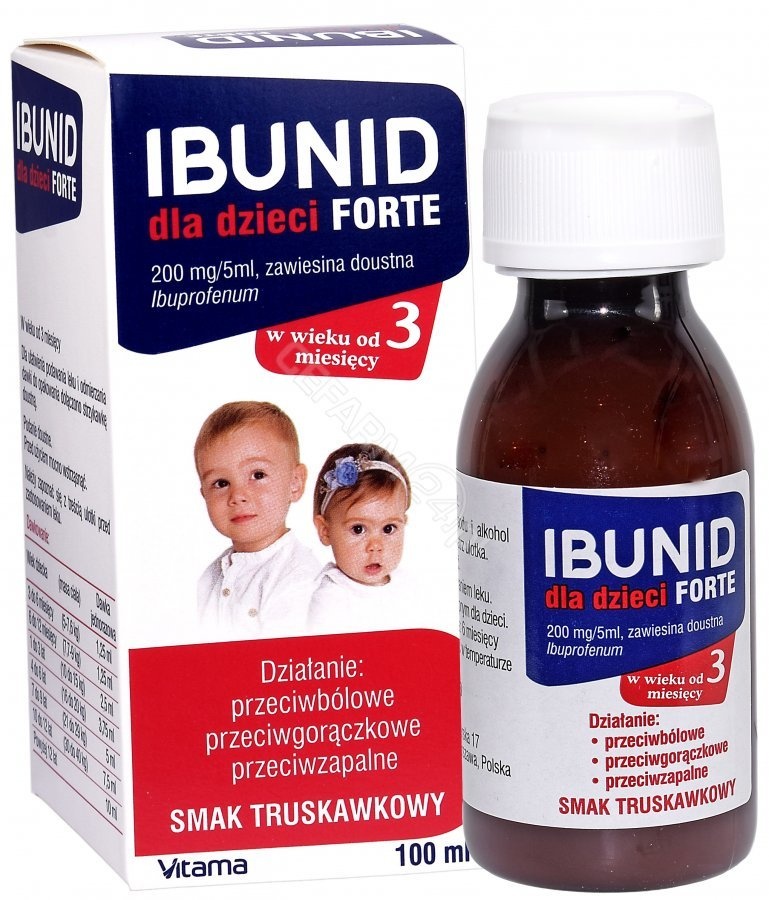
Ibunid dla dzieci Forte
Ask a doctor about a prescription for Ibunid dla dzieci Forte




How to use Ibunid dla dzieci Forte
Leaflet attached to the packaging: information for the user
Ibunid for children Forte, 200 mg/5 ml, oral suspension
Ibuprofen
You should carefully read the contents of the leaflet before using the medicine, as it contains important information for the patient.
This medicine should always be used exactly as described in this patient leaflet or as directed by your doctor or pharmacist.
- You should keep this leaflet, so you can read it again if you need to.
- If you need advice or more information, you should talk to your pharmacist.
- If you experience any side effects, including any not listed in this leaflet, you should tell your doctor or pharmacist. See section 4.
- If after 24 hours in the case of children aged 3-5 months or after 3 days in the case of children over 6 months, adolescents, and adults, there is no improvement or the patient feels worse, you should contact your doctor.
Table of contents of the leaflet
- 1. What is Ibunid for children Forte and what is it used for
- 2. Important information before using Ibunid for children Forte
- 3. How to use Ibunid for children Forte
- 4. Possible side effects
- 5. How to store Ibunid for children Forte
- 6. Contents of the packaging and other information
1. What is Ibunid for children Forte and what is it used for
5 ml of Ibunid for children Forte oral suspension contains 200 mg of ibuprofen, which belongs to the group of nonsteroidal anti-inflammatory drugs (NSAIDs). The medicine relieves symptoms such as fever, pain, and swelling.
Ibunid for children Forte is intended for use in infants and children in the following cases:
- fever of various origins (also in the course of viral infections, in the course of post-vaccination reactions),
- pains of various origins of mild to moderate severity: headaches, throat and muscle pains, e.g. in the course of viral infections; muscle, joint, and bone pains due to injuries to the musculoskeletal system (sprains, strains); pains due to injuries to soft tissues; post-operative pains; toothaches, pains after dental procedures, pains due to teething; headaches; ear pains occurring in inflammatory conditions of the middle ear.
If after 24 hours in the case of children aged 3-5 months or after 3 days in the case of children over 6 months, adolescents, and adults, there is no improvement or the patient feels worse, you should consult a doctor.
2. Important information before using Ibunid for children Forte
When not to use Ibunid for children Forte:
- if the patient is hypersensitive to ibuprofen, other nonsteroidal anti-inflammatory drugs (NSAIDs), or any of the other ingredients of this medicine (listed in section 6),
- in patients who have ever had symptoms of allergy after taking acetylsalicylic acid or other nonsteroidal anti-inflammatory drugs (NSAIDs) such as rhinitis, urticaria, or bronchial asthma, angioedema,
- in patients with bleeding disorders (ibuprofen may prolong bleeding time),
- in patients with active or recurrent gastric and/or duodenal ulcers, or recurrent gastrointestinal bleeding (defined as two or more episodes of ulceration or bleeding),
- in patients with gastrointestinal bleeding and perforation associated with previous nonsteroidal anti-inflammatory drug (NSAID) treatment,
- in patients with active bleeding and disorders of blood cell production of unknown origin (such as thrombocytopenia),
- in patients with severe liver failure,
- in patients with severe kidney failure,
- in patients with severe heart failure,
- in the third trimester of pregnancy,
- in patients with hemophilia,
- in children under 3 months of age,
- in patients with severe dehydration (caused by vomiting, diarrhea, or insufficient fluid intake).
Warnings and precautions
Before starting treatment with Ibunid for children Forte, you should discuss it with your doctor or pharmacist.
Side effects can be minimized by using the smallest effective dose for the shortest necessary period to relieve symptoms (see section 3 and the information below).
During treatment with ibuprofen, symptoms of allergic reactions to this medicine have occurred, including difficulty breathing, swelling in the face and neck (angioedema), and chest pain.
If you notice any of these symptoms, you should stop using Ibunid for children Forte immediately and contact your doctor or medical emergency services.
Severe skin reactions, such as exfoliative dermatitis, erythema multiforme, Stevens-Johnson syndrome, toxic epidermal necrolysis, and drug reaction with eosinophilia and systemic symptoms (DRESS) have been very rarely reported in association with the use of nonsteroidal anti-inflammatory drugs (NSAIDs).
If the patient experiences any symptoms related to these severe skin reactions described in section 4, you should stop using Ibunid for children Forte immediately and seek medical attention.
You should avoid concomitant use of ibuprofen and other nonsteroidal anti-inflammatory drugs (NSAIDs), including selective cyclooxygenase-2 inhibitors.
You should consult your doctor if you have previously been diagnosed with:
- systemic lupus erythematosus and mixed connective tissue disease,
- inborn errors of porphyrin metabolism (e.g. acute intermittent porphyria),
- allergic reactions after taking acetylsalicylic acid,
- gastrointestinal diseases and chronic inflammatory bowel diseases (ulcerative colitis, Crohn's disease),
- hypertension and/or heart failure,
- kidney function disorders,
- liver function disorders,
- bleeding disorders,
- active or a history of bronchial asthma or symptoms of allergic reactions in the past; after taking the medicine, bronchospasm may occur,
- taking other medicines (especially anticoagulant, diuretic, cardiac, and corticosteroid medicines),
- if the patient has an infection - see below, section entitled "Infections".
If the first symptoms of hypersensitivity appear after taking Ibunid for children Forte (e.g. anaphylactic shock), you should stop using the medicine and contact your doctor.
Taking anti-inflammatory and analgesic medicines, such as ibuprofen, may be associated with a small increased risk of heart attack or stroke, especially when used in high doses. You should not exceed the recommended dose and duration of treatment.
Before using Ibunid for children Forte, the patient should discuss the treatment with their doctor or pharmacist if:
- the patient has heart disease, such as heart failure, angina pectoris (chest pain), has had a heart attack, has had a coronary artery bypass graft, has peripheral arterial disease (poor circulation in the legs due to narrowing or blockage of the arteries), or has had any stroke (including mini-stroke or transient ischemic attack - TIA).
- the patient has high blood pressure, diabetes, high cholesterol levels, has a family history of heart disease or stroke, or smokes.
Infections
Ibunid for children Forte may mask the symptoms of infection, such as fever and pain.
As a result, Ibunid for children Forte may delay the use of appropriate infection treatment, which can lead to increased risk of complications.
This has been observed in the course of bacterial pneumonia and bacterial skin infections associated with chickenpox.
If the patient is taking this medicine during an infection and the symptoms of the infection persist or worsen, they should consult their doctor immediately.
Children and adolescents
Dehydrated children and adolescents are at risk of kidney function disorders.
Effect on the cardiovascular system and blood vessels
In some patients, nonsteroidal anti-inflammatory drugs (NSAIDs) may cause swelling and fluid retention.
Patients who experience swelling after using Ibunid for children Forte should be consulted by a doctor.
Effect on the gastrointestinal tract
There is a risk of gastrointestinal bleeding, ulceration, or perforation, which can be fatal and does not necessarily have to be preceded by warning symptoms or may occur in patients who have had such warning symptoms.
If gastrointestinal bleeding or ulceration occurs, the medicine should be stopped immediately.
Patients with a history of gastrointestinal diseases, especially the elderly (Ibunid for children Forte may also be used by adults), should inform their doctor about any unusual gastrointestinal symptoms (especially bleeding), especially during the initial treatment period.
Elderly patients
Elderly patients are at a higher risk of experiencing side effects related to the use of nonsteroidal anti-inflammatory drugs (NSAIDs), particularly gastrointestinal bleeding and ulcers, which can be fatal.
You should report any unusual gastrointestinal symptoms (especially bleeding) to your doctor, especially during the initial treatment period.
These patients should use the smallest possible dose of the medicine.
Kidney function disorders
Like other nonsteroidal anti-inflammatory drugs (NSAIDs), prolonged use of Ibunid for children Forte may cause kidney damage and other kidney disorders.
Patients with kidney function disorders, heart failure, taking diuretics, angiotensin-converting enzyme (ACE) inhibitors, and the elderly are at the highest risk of worsening kidney function.
Liver function disorders
In patients treated with Ibunid for children Forte, especially long-term, liver function should be regularly monitored.
If liver enzyme activity, bilirubin levels, or alkaline phosphatase levels increase twice the normal value, treatment should be discontinued immediately.
In such cases, ibuprofen should not be used again.
Appropriate precautions should be taken in patients with kidney, liver, or heart failure, as well as in patients with a tendency to fluid retention, as the use of nonsteroidal anti-inflammatory drugs (NSAIDs) may worsen kidney function.
In these patients, the dose of the medicine should be as small as possible, and kidney function should be monitored.
Skin reactions
Severe skin reactions, some of which are fatal, such as exfoliative dermatitis, Stevens-Johnson syndrome, and toxic epidermal necrolysis, have been very rarely reported in association with the use of nonsteroidal anti-inflammatory drugs (NSAIDs).
The greatest risk of these severe reactions occurs at the beginning of therapy, in most cases within the first month of treatment.
You should stop using Ibunid for children Forte after the first symptoms appear: skin rash, mucosal damage, or other symptoms of hypersensitivity.
In exceptional cases, chickenpox may be the source of severe and complicated skin and soft tissue infections.
Currently, it cannot be excluded that nonsteroidal anti-inflammatory drugs (NSAIDs) may affect the severity of these infections.
Therefore, it is recommended to avoid using ibuprofen in the case of chickenpox.
Other warnings
At the beginning of treatment with Ibunid for children Forte, as with other nonsteroidal anti-inflammatory drugs (NSAIDs), caution should be exercised in patients with significant dehydration.
Ibunid for children Forte, like other nonsteroidal anti-inflammatory drugs (NSAIDs), may inhibit platelet aggregation and prolong bleeding time.
Like other nonsteroidal anti-inflammatory drugs (NSAIDs), Ibunid for children Forte may mask the symptoms of infection (fever, pain, swelling).
During long-term treatment with high doses of painkillers, headaches may occur, which should not be treated with increased doses of these medicines.
Generally, habitual use of painkillers, especially in combination with other painkillers, can cause permanent kidney damage and increase the risk of kidney failure (post-analgesic nephropathy).
Special caution should be exercised in patients with bronchial asthma, as Ibunid for children Forte may cause bronchospasm in these patients.
You should avoid consuming alcohol, as it may increase the side effects of nonsteroidal anti-inflammatory drugs (NSAIDs), especially those affecting the gastrointestinal tract or central nervous system.
Ibunid for children Forte may temporarily inhibit platelet aggregation and prolong bleeding time.
Therefore, patients with bleeding disorders or those taking anticoagulant medications will be closely monitored by their doctor.
In the case of long-term treatment with ibuprofen, periodic monitoring of liver and kidney function, as well as blood cell count, is necessary, especially in patients at high risk.
Nonsteroidal anti-inflammatory drugs (NSAIDs) may cause vision disturbances (glaucoma, color vision disturbances).
In such cases, the medicine should be stopped and an ophthalmological examination should be performed.
Taking medicines like Ibunid for children Forte may be associated with a small increased risk of heart attack (myocardial infarction) or stroke.
This risk increases with long-term use of high doses of the medicine.
You should not exceed the recommended dose and duration of treatment.
If symptoms persist, worsen, or new symptoms occur, you should contact your doctor.
In the case of heart problems, a previous stroke, or suspected risk of these disorders (e.g. high blood pressure, diabetes, high cholesterol levels, smoking), you should discuss the treatment with your doctor or pharmacist.
This medicine belongs to a group of medicines (nonsteroidal anti-inflammatory drugs) that may adversely affect female fertility.
This effect is temporary and reverses after stopping treatment.
Certain anticoagulant medicines (preventing blood clots), such as acetylsalicylic acid (aspirin), warfarin, ticlopidine, antihypertensive medicines, such as ACE inhibitors, e.g. captopril, beta-blockers, e.g. atenolol, angiotensin II receptor antagonists, e.g. losartan, and certain other medicines may affect the action of Ibunid for children Forte or vice versa.
You should always consult your doctor or pharmacist before using Ibunid for children Forte with other medicines.
Ibunid for children Forte and other medicines
You should tell your doctor or pharmacist about all medicines you are currently taking or have recently taken, as well as any medicines you plan to take.
You should avoid taking Ibunid for children Forte with the following medicines:
- other nonsteroidal anti-inflammatory drugs (NSAIDs), including selective cyclooxygenase-2 inhibitors,
- acetylsalicylic acid (ASA),
- other painkillers.
Ibunid for children Forte may affect the action of other medicines or other medicines may affect the action of Ibunid for children Forte.
For example:
- blood pressure-lowering medicines (ACE inhibitors, such as captopril, beta-blockers, such as atenolol, angiotensin II receptor antagonists, such as losartan, potassium-sparing diuretics),
- cardiac glycosides (e.g. digoxin), anticoagulant medicines (e.g. aspirin - acetylsalicylic acid, warfarin, ticlopidine),
- antiplatelet and selective serotonin reuptake inhibitors (SSRIs),
- sulfonylurea,
- zydovudine,
- probenecid and sulfinpyrazone,
- baclofen,
- phenytoin,
- lithium and methotrexate,
- ritonavir,
- corticosteroids,
- cyclosporine,
- tacrolimus,
- voriconazole and fluconazole,
- cholestyramine,
- aminoglycosides,
- quinolone antibiotics.
Some other medicines may also be affected by or affect the treatment with Ibunid for children Forte.
Therefore, you should always consult your doctor or pharmacist before using Ibunid for children Forte with other medicines.
Ibunid for children Forte with food and drink
In people with sensitive gastrointestinal tracts, it is recommended to take the medicine during meals or drink it with milk.
Pregnancy and breastfeeding
If you are pregnant or breastfeeding, think you may be pregnant, or plan to have a child, you should consult your doctor or pharmacist before using this medicine.
You should not take Ibunid for children Forte during the last 3 months of pregnancy, as it may harm the unborn child or cause complications during delivery.
It may cause kidney and heart disorders in the unborn child.
Taking the medicine may affect the patient's and child's tendency to bleed and may cause late or prolonged delivery.
You should not take Ibunid for children Forte during the first 6 months of pregnancy, unless it is absolutely necessary and recommended by your doctor.
If treatment is necessary during this period or when trying to conceive, the smallest possible dose of the medicine should be used for the shortest possible time.
Ibunid for children Forte taken for a period longer than a few days, starting from the 20th week of pregnancy, may cause kidney disorders in the unborn child.
This may lead to low levels of amniotic fluid surrounding the child (oligohydramnios) or narrowing of the arterial duct (ductus arteriosus) in the child's heart.
If treatment is necessary for more than a few days, your doctor may recommend additional monitoring.
Ibuprofen may pass into breast milk in small amounts.
No cases of side effects in breastfed infants have been reported, so there is no need to stop breastfeeding during short-term treatment with ibuprofen at doses used to treat pain and fever.
Ibunid for children Forte belongs to a group of nonsteroidal anti-inflammatory drugs (NSAIDs) that may affect female fertility.
This effect is temporary and reverses after stopping treatment.
Driving and using machines
There is no data on side effects that may affect the ability to drive vehicles, operate machinery, and mental fitness.
Ibunid for children Forte contains maltitol liquid (E 965), sodium benzoate, benzyl alcohol, and sodium
Maltitol liquid (E 965)
If you have previously been diagnosed with intolerance to some sugars, you should consult your doctor before taking the medicine.
Sodium benzoate (E 211)
The medicine contains 5 mg of sodium benzoate in 5 ml of suspension.
Sodium benzoate may increase the risk of jaundice (yellowing of the skin and whites of the eyes) in newborns (up to 4 weeks of age).
Benzyl alcohol
The medicine contains 0.000826 mg of benzyl alcohol in 5 ml of suspension.
Benzyl alcohol may cause allergic reactions.
Pregnant or breastfeeding women should consult their doctor before using the medicine, as large amounts of benzyl alcohol may accumulate in their bodies and cause side effects (so-called metabolic acidosis).
Patients with liver or kidney disease should consult their doctor before using the medicine, as large amounts of benzyl alcohol may accumulate in their bodies and cause side effects (so-called metabolic acidosis).
Do not give to small children (under 3 years of age) for more than a week without consulting a doctor or pharmacist.
Sodium
The medicine contains 28.95 mg of sodium (the main component of common salt) in 5 ml of suspension.
This corresponds to approximately 1.5% of the maximum recommended daily intake of sodium in the diet for adults.
3. How to use Ibunid for children Forte
This medicine should always be used exactly as described in this patient leaflet or as directed by your doctor or pharmacist.
You should use the smallest effective dose for the shortest necessary period to relieve symptoms.
If the symptoms of the infection (such as fever and pain) persist or worsen, you should consult your doctor immediately (see section 2).
Taking the medicine in the smallest effective dose for the shortest necessary period to relieve symptoms reduces the risk of side effects (see the effect on the gastrointestinal tract and cardiovascular system).
The recommended dose of Ibunid for children Forte is:
Infants aged 3 to 6 months (with a body weight of 5-7.6 kg):3 times 1.25 ml per day (corresponding to 150 mg of ibuprofen per day)
Infants aged 6 to 12 months (with a body weight of 7.7-9 kg):3 to 4 times 1.25 ml per day (corresponding to 150-200 mg of ibuprofen per day)
Children aged 1 to 3 years (with a body weight of 10-15 kg):3 times 2.5 ml per day (corresponding to 300 mg of ibuprofen per day)
Children aged 4 to 6 years (with a body weight of 16-20 kg):3 times 3.75 ml per day (corresponding to 450 mg of ibuprofen per day)
Children aged 7 to 9 years (with a body weight of 21-29 kg):3 times 5 ml per day (corresponding to 600 mg of ibuprofen per day)
Children aged 10 to 12 years (with a body weight of 30-40 kg):3 times 7.5 ml per day (corresponding to 900 mg of ibuprofen per day)
Adults and adolescents over 12 years of age:the recommended dose for symptomatic treatment of pain and fever is 3 times 10 ml per day (corresponding to 1200 mg of ibuprofen per day), until symptoms resolve.
Elderly patients:the dose should be determined individually by the doctor.
Consideration should be given to reducing the dose.
In patients with kidney function disorders, the dose should be determined taking into account the degree of kidney function.
Doses should be administered every 6 to 8 hours.
Patients with kidney function disorders
Caution should be exercised when using the medicine in patients with kidney function disorders.
In patients with mild or moderate kidney function disorders, consideration should be given to reducing the dose of the medicine.
Ibuprofen should not be used in patients with acute kidney failure.
Patients with liver function disorders
Ibuprofen should not be used in patients with acute liver failure.
Method of administration
For oral use
Shake before use.
The medicine can be taken directly or dissolved in water or juice.
In people with sensitive gastrointestinal tracts, it is recommended to take the medicine during meals or drink it with milk.
A dosing device in the form of a 5 ml oral syringe with a scale facilitating dosing is attached to the packaging:
Instructions for use:
- 1. Before each use, shake the bottle well, making sure there is no visible sediment at the bottom.
- 2. The cap of the bottle should be unscrewed by pressing it down and turning it in the opposite direction to the clockwise direction.
- 3. To fill the dosing device, the bottle should be turned upside down and the plunger of the dosing device should be slowly moved down, drawing the suspension to the desired mark on the scale.
- 4. The bottle should be turned back to its original position and the dosing device should be carefully removed from the bottle by twisting it.
- 5. The tip of the syringe should be placed in the child's mouth and the contents of the dosing device should be slowly and carefully emptied by pressing the plunger.
- 6. After each use, the bottle should be closed with the cap, the plunger should be separated from the oral syringe, and they should be washed with warm water.
Do not exceed the recommended dose.
The medicine is intended for oral use only and for short-term use.
If symptoms persist, worsen, or new symptoms occur, you should contact your doctor.
Children under 6 months of age should only be given the medicine after consulting a doctor and on their recommendation.
The medicine is intended for use in children over 3 months of age or with a body weight over 5 kg.
Do not use the medicine for more than 3 days without consulting a doctor.
Use in children and adolescents
In the case of children aged 3 to 5 months, you should consult a doctor if symptoms worsen or do not improve after 24 hours.
In the case of children over 6 months of age and adolescents, you should consult a doctor if the medicine needs to be given for more than 3 days or if symptoms worsen.
Using a higher dose of Ibunid for children Forte than recommended
If you have taken a higher dose of Ibunid for children Forte than recommended or if a child has accidentally taken the medicine, you should always consult a doctor or go to the nearest hospital to get an opinion on the possible risk to your health and advice on what to do in such a case.
Symptoms may include nausea, stomach pain, vomiting (which may contain blood), headache, ringing in the ears, dizziness, and disorientation.
After taking high doses, drowsiness, chest pain, palpitations, loss of consciousness, seizures (mainly in children), weakness, and dizziness have occurred.
Missing a dose of Ibunid for children Forte
Do not take a double dose to make up for a missed dose.
Stopping treatment with Ibunid for children Forte
If you have any further doubts about using this medicine, you should consult your doctor or pharmacist.
4. Possible side effects
Like all medicines, this medicine can cause side effects, although not everybody gets them.
During short-term use of ibuprofen in doses available without a prescription, the following side effects have been observed.
Using ibuprofen for other indications and long-term may cause other side effects.
Frequent side effects (occurring in 1 to 10 out of 100 patients):
- fatigue.
Uncommon side effects (occurring in 1 to 10 out of 1000 patients):
- indigestion, stomach pain, nausea;
- headache;
- hives and itching;
- vision disturbances.
Rare side effects (occurring in 1 to 10 out of 10,000 patients):
- diarrhea, bloating, constipation, vomiting, gastritis;
- dizziness, insomnia, agitation, irritability, and fatigue (depression, psychotic reactions, and tinnitus have also been reported);
- edema;
- toxic optic neuropathy;
- edema.
Very rare side effects (occurring less frequently than 1 in 10,000 patients):
- tarry stools, bloody vomiting, oral ulcers, exacerbation of colitis and Crohn's disease.
- kidney function disorders, including acute kidney failure, and increased sodium levels in the blood (sodium retention);
- liver function disorders (especially during long-term use);
- blood cell count disorders (anemia, leukopenia, thrombocytopenia, pancytopenia, agranulocytosis).
- Stevens-Johnson syndrome, toxic epidermal necrolysis, and drug reaction with eosinophilia and systemic symptoms (DRESS) have been very rarely reported.
- edema, hypertension, and heart failure associated with the use of nonsteroidal anti-inflammatory drugs (NSAIDs) in high doses.
- Severe skin and soft tissue infections in the course of chickenpox.
Side effects with an unknown frequency of occurrence (frequency cannot be determined based on available data):
- skin becomes sensitive to light,
- drug reaction with eosinophilia and systemic symptoms.
- Severe skin reactions, including Stevens-Johnson syndrome, toxic epidermal necrolysis, and drug reaction with eosinophilia and systemic symptoms (DRESS), have been reported.
- Chest pain, which may be a symptom of a potentially severe allergic reaction called Kounis syndrome.
If you experience any of the following symptoms, you should stop using ibuprofen immediately and seek medical attention:
- Red, non-raised, target-like, or circular patches on the torso, often with blisters in the center, peeling of the skin, ulcers in the mouth, throat, nose, genitals, and eyes.
- Widespread rash, high body temperature, and swollen lymph nodes (DRESS syndrome).
- Red, scaly rash with nodules under the skin and blisters, with fever.
Reporting side effects
If you experience any side effects, including any not listed in this leaflet, you should tell your doctor or pharmacist.
Side effects can be reported directly to the Department of Drug Safety Monitoring of the Office for Registration of Medicinal Products, Medical Devices, and Biocidal Products:
Al. Jerozolimskie 181C
02-222 Warsaw
Phone: +48 22 49 21 301
Fax: +48 22 49 21 309
Website: https://smz.ezdrowie.gov.pl
Side effects can also be reported to the marketing authorization holder.
By reporting side effects, you can help provide more information on the safety of this medicine.
5. How to store Ibunid for children Forte
The medicine should be stored in a place invisible and inaccessible to children.
Do not use this medicine after the expiry date stated on the packaging.
Expiry date (EXP) refers to the last day of the specified month.
There are no special precautions for storing the medicine.
Shelf life after first opening the packaging: 6 months
After first opening the packaging: Do not store above 30°C.
Medicines should not be disposed of via wastewater or household waste.
You should ask your pharmacist how to dispose of medicines that are no longer needed.
This will help protect the environment.
6. Contents of the packaging and other information
What Ibunid for children Forte contains
- The active substance of the medicine is ibuprofen.
- 5 ml of the medicine contains 200 mg of ibuprofen.
- The other ingredients (excipients) are: sodium benzoate (E 211), citric acid (E 330), sodium citrate (E 331), sodium saccharin (E 954), sodium chloride, hypromellose 15 cP, xanthan gum, maltitol liquid (E 965), glycerol, thaumatin (E 957), strawberry flavor (substances identical to natural flavors, natural flavors, corn maltodextrin, triethyl citrate, propylene glycol, and benzyl alcohol), purified water.
What Ibunid for children Forte looks like and contents of the packaging
The medicine is a white or almost white, viscous suspension, free from foreign substances, with a strawberry flavor.
The packaging of the medicine consists of an orange PET bottle with a capacity of 30 ml, 100 ml, 150 ml, or 200 ml, with a HDPE cap with a child-resistant closure and a connector for the oral syringe, placed together with a 5 ml oral syringe with a scale, in a cardboard box.
Marketing authorization holder and manufacturer
Marketing authorization holder
"Polski Lek - Dystrybucja" Sp. z o.o.
ul. Chopina 10
34-100 Wadowice
Phone: +48 33 870 83 01
Manufacturer
Farmasierra Manufacturing S.L.
Ctra. Irún, Km. 26,200
San Sebastián de los Reyes, 28709 Madrid
Spain
EDEFARM, S.L.
Polígono Industrial Enchilagar del Rullo
117 Villamarchante, 46191 Valencia
Spain
Farmalider S.A.,
C/ Aragoneses, 2
28108 Alcobendas, Madrid
Spain
Date of last revision of the leaflet:
- Country of registration
- Active substance
- Prescription requiredNo
- ImporterEdefarm S.L. Farmalider S.A. Farmasierra Manufacturing, S.L.
- This information is for reference only and does not constitute medical advice. Always consult a licensed doctor before taking any medication. Oladoctor is not responsible for medical decisions based on this content.
- Alternatives to Ibunid dla dzieci ForteDosage form: Suspension, 40 mg/mlActive substance: ibuprofenManufacturer: Laboratorios Basi - Industria Farmaceutica, S.A.Prescription not requiredDosage form: Tablets, 400 mgActive substance: ibuprofenPrescription not requiredDosage form: Tablets, 600 mgActive substance: ibuprofenManufacturer: Aristo Pharma GmbHPrescription required

Alternatives to Ibunid dla dzieci Forte in other countries
The best alternatives with the same active ingredient and therapeutic effect.
Alternative to Ibunid dla dzieci Forte in Іспанія
Alternative to Ibunid dla dzieci Forte in Україна
Online doctors for Ibunid dla dzieci Forte
Discuss dosage, side effects, interactions, contraindications, and prescription renewal for Ibunid dla dzieci Forte – subject to medical assessment and local rules.

Get updates and exclusive offers
Be the first to know about new services, marketplace updates, and subscriber-only promos.

