


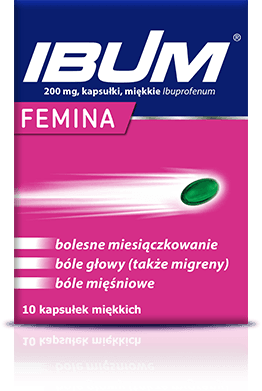
Ibum Femina
Ask a doctor about a prescription for Ibum Femina




How to use Ibum Femina
Leaflet accompanying the packaging: patient information
IBUM FEMINA
200 mg, soft capsules
Ibuprofen
Read the leaflet carefully before taking the medicine, as it contains important information for the patient.
This medicine should always be taken exactly as described in this patient leaflet or as directed by a doctor or pharmacist.
- Keep this leaflet, you may need to read it again.
- If you need advice or additional information, consult a pharmacist.
- If the patient experiences any side effects, including those not listed in this leaflet, they should tell their doctor or pharmacist. See section 4.
- If there is no improvement or the patient feels worse after 3 days, they should contact their doctor.
Table of contents of the leaflet
- 1. What is IBUM FEMINA and what is it used for
- 2. Important information before taking IBUM FEMINA
- 3. How to take IBUM FEMINA
- 4. Possible side effects
- 5. How to store IBUM FEMINA
- 6. Package contents and other information
1. What is IBUM FEMINA and what is it used for
IBUM FEMINA contains ibuprofen, a nonsteroidal anti-inflammatory drug (NSAID) with analgesic, antipyretic, and anti-inflammatory effects.
Indications
- Acute pain of various origins with mild to moderate severity:
- painful menstruation
- headaches (including migraines)
- toothaches
- muscle, joint, and bone pain
- post-traumatic pain
- neuralgia
- pain accompanying colds and flu
- ear pain occurring in middle ear inflammation
- Fever of various origins (including flu, colds, or other infectious diseases).
If there is no improvement or the patient feels worse after 3 days, they should consult their doctor.
2. Important information before taking IBUM FEMINA
When not to take IBUM FEMINA:
- if the patient is allergic to ibuprofen, other nonsteroidal anti-inflammatory drugs (NSAIDs), or any of the other ingredients of this medicine (listed in section 6),
- in patients with active or past stomach or duodenal ulcers, perforation (hole), or bleeding, also occurring after taking NSAIDs,
- in patients who have had allergic symptoms in the past when taking acetylsalicylic acid or other nonsteroidal anti-inflammatory drugs, such as runny nose, hives, shortness of breath, or asthma,
- in patients with severe dehydration (caused by vomiting, diarrhea, or insufficient fluid intake),
- when taking other NSAIDs (including COX-2 inhibitors such as celecoxib or etoricoxib),
- in case of severe liver or kidney failure,
- if the patient has severe heart failure (class IV according to NYHA),
- if there is bleeding in the brain (cerebral hemorrhage) or other bleeding,
- if there are blood clotting disorders, bleeding tendency, or unexplained blood disorders,
- if the patient is in the last 3 months of pregnancy.
Warnings and precautions
Before starting IBUM FEMINA, the patient should discuss with their doctor or pharmacist if:
- they have heart disease, such as heart failure, angina pectoris (chest pain), have had a heart attack, coronary artery bypass grafting, or have peripheral artery disease (poor blood circulation in the legs due to narrowed or blocked arteries) or have had any stroke (including mini-stroke or transient ischemic attack - TIA),
- they have high blood pressure, diabetes, high cholesterol, or a family history of heart disease or stroke, or if they smoke,
- they are taking other painkillers from the NSAID group or acetylsalicylic acid in a daily dose above 75 mg,
- they have certain skin diseases (systemic lupus erythematosus, mixed connective tissue disease),
- they have gastrointestinal diseases and chronic inflammatory bowel diseases (ulcerative colitis, Crohn's disease),
- they have high blood pressure and (or) heart function disorders,
- they have kidney function disorders,
- they have liver diseases,
- they have recently undergone major surgery,
- there is dehydration (especially in children and adolescents) due to increased risk of kidney failure,
- they currently have or have had asthma, chronic rhinitis, nasal polyps, or allergic diseases (dyspnea may occur),
- they are taking other medications that may increase the risk of stomach ulcers or bleeding, such as oral corticosteroids (e.g., prednisolone), blood thinners (e.g., acenocoumarol), selective serotonin reuptake inhibitors (antidepressants), and antiplatelet agents (such as acetylsalicylic acid).
During ibuprofen treatment, allergic reactions to this medicine have occurred, including difficulty breathing, facial and neck swelling (angioedema), chest pain. If any of these symptoms are noticed, the patient should stop taking IBUM FEMINA and immediately contact their doctor or medical emergency services. Prolonged, concurrent use of painkillers may lead to persistent, serious kidney disease. Taking anti-inflammatory/pain-relieving medications, such as ibuprofen, may be associated with a small increased risk of heart attack or stroke, especially when used in high doses. Do not exceed the recommended dose and duration of treatment. During chickenpox, the patient should avoid taking IBUM FEMINA. The patient should inform their pharmacist or doctor if:
- they have an infection - see below, section entitled "Infections".
Infections IBUM FEMINA may mask the symptoms of an infection, such as fever and pain. As a result, IBUM FEMINA may delay the use of appropriate infection treatment, which can lead to increased risk of complications. This has been observed in bacterial pneumonia and bacterial skin infections associated with chickenpox. If the patient is taking this medicine during an infection and the symptoms of the infection persist or worsen, they should consult their doctor immediately. Skin reactions Severe skin reactions have been reported with IBUM FEMINA. If the patient experiences:
- any skin rash, changes in the mucous membranes, blisters, or other signs of allergy, they should stop taking IBUM FEMINA and seek medical attention immediately, as these may be the first signs of a severe skin reaction. See section 4.
Severe skin reactions, such as exfoliative dermatitis, erythema multiforme, Stevens-Johnson syndrome, toxic epidermal necrolysis, and drug reaction with eosinophilia and systemic symptoms (DRESS), have occurred with ibuprofen. If the patient experiences any symptoms associated with these severe skin reactions described in section 4, they should stop taking IBUM FEMINA and seek medical attention immediately. If any of the above conditions apply to a child, the patient should consult their doctor before taking IBUM FEMINA. There is a risk of gastrointestinal bleeding, ulcers, or perforation, which may not be preceded by warning signs or may occur in patients who have had such warning signs. If gastrointestinal bleeding or ulcers occur, the patient should stop taking the medicine and contact their doctor. In elderly patients, there is an increased risk of adverse reactions during NSAID treatment, particularly those affecting the stomach and intestines. Patients who have previously experienced adverse reactions in the gastrointestinal tract, especially the elderly, should report any unusual abdominal symptoms (especially gastrointestinal bleeding), especially during the initial treatment phase.
Children and adolescents
Dehydrated children and adolescents are at risk of kidney function disorders.
IBUM FEMINA and other medicines
The patient should tell their doctor or pharmacist about all medicines they are taking, have recently taken, or might take:
- corticosteroids (e.g., prednisolone), as they may increase the risk of stomach ulcers or bleeding,
- other NSAIDs (including COX-2 inhibitors, such as celecoxib or etoricoxib),
- antiplatelet agents (such as acetylsalicylic acid) and selective serotonin reuptake inhibitors (antidepressants), as they increase the risk of adverse reactions in the gastrointestinal tract,
- blood pressure medications and diuretics, as NSAIDs may weaken their effects and increase the risk of kidney damage. In such cases, it is essential for the patient to drink plenty of fluids during the day,
- lithium (a medicine used for depression), as its effects may increase,
- methotrexate (a medicine used for cancer or rheumatoid arthritis), as its effects may increase,
- tacrolimus (an immunosuppressive medicine), as the risk of toxic effects on the kidneys increases,
- cyclosporin (an immunosuppressive medicine), as there is limited data on increased risk of toxic effects on the kidneys,
- zydovudine (a medicine used for AIDS), as taking IBUM FEMINA may increase the risk of bleeding into the joints or bleeding leading to swelling (in patients with hemophilia and a positive HIV antibody test),
- sulfonylurea derivatives (oral antidiabetic medicines): there may be clinical interactions between these medicines and NSAIDs. Blood sugar control is recommended,
- probenecid and sulfinpyrazone (medicines used for gout): they may delay the excretion of ibuprofen,
- digitalis glycosides, phenytoin, and lithium: ibuprofen may increase the levels of these medicines in the blood,
- quinolone antibiotics: they may increase the risk of seizures,
- cholestyramine: it may delay and reduce the absorption of NSAIDs,
- voriconazole and fluconazole (antifungal medicines): they may increase the exposure to NSAIDs,
- baclofen (a muscle relaxant): toxic effects of baclofen may occur after starting ibuprofen,
- ritonavir (a medicine used for HIV infection): ritonavir may increase the levels of NSAIDs in the blood,
- aminoglycosides (a type of antibiotic): NSAIDs may decrease the excretion of aminoglycosides,
- mifepristone: NSAIDs should not be taken within 8-12 days after mifepristone administration, as they may weaken its effects,
- calcium channel blockers: reduced antihypertensive efficacy and increased risk of gastrointestinal bleeding,
- desipramine: increased toxicity of desipramine, typical of tricyclic antidepressants,
- levofloxacin and ofloxacin: increased risk of serious central nervous system effects,
- thienopyridine derivatives: increased risk of bleeding due to additive anti-aggregatory and anticoagulant effects,
- bisphosphonates: increased risk of adverse reactions in the gastrointestinal tract.
Taking ibuprofen with herbal products such as Ginkgo biloba and Filipendula ulmaria may increase the risk of bleeding due to additive anti-aggregatory effects. Concurrent use of ibuprofen and products containing Ephedra sinica may increase the risk of gastrointestinal mucosa damage. IBUM FEMINA may affect the action of other medicines or other medicines may affect the action of IBUM FEMINA. For example:
- anticoagulant medicines (i.e., blood thinners or anti-clotting agents, such as aspirin - acetylsalicylic acid, warfarin, ticlopidine),
- blood pressure-lowering medicines (ACE inhibitors, such as captopril, beta-blockers, such as atenolol, angiotensin II receptor antagonists, such as losartan).
Other medicines may also be affected or have an effect on IBUM FEMINA treatment. Therefore, before taking IBUM FEMINA with other medicines, the patient should always consult their doctor or pharmacist.
Taking IBUM FEMINA with food and drink
Food reduces the absorption of ibuprofen from the gastrointestinal tract. When taking ibuprofen in high doses and consuming alcohol at the same time, symptoms such as fatigue and headaches may occur.
Pregnancy, breastfeeding, and fertility
If the patient is pregnant or breastfeeding, thinks they may be pregnant, or plans to have a baby, they should consult their doctor or pharmacist before taking this medicine. Pregnancy Do not take IBUM FEMINA if the patient is in the last 3 months of pregnancy, as it may harm the unborn baby or cause complications during delivery. It may cause kidney and heart problems in the unborn baby. It may increase the risk of bleeding in the patient and their baby and cause delayed or prolonged labor. During the first 6 months of pregnancy, the patient should not take this medicine unless it is absolutely necessary and prescribed by a doctor. If treatment is necessary during this period or when trying to conceive, the patient should use the smallest effective dose for the shortest possible time. From the 20th week of pregnancy, IBUM FEMINA may cause kidney problems in the unborn baby if taken for more than a few days, which may lead to decreased amniotic fluid or narrowing of the fetal ductus arteriosus. If treatment is necessary for a longer period, the doctor may recommend additional monitoring. Breastfeeding Ibuprofen passes into breast milk in small amounts. With short-term use of ibuprofen in recommended doses, harmful effects on breastfed babies seem unlikely. Fertility Ibuprofen may make it more difficult to conceive. If the patient plans to conceive or is having trouble conceiving, they should inform their doctor.
Driving and using machines
Short-term use of the medicine has no effect or negligible effect on the ability to drive and use machines. If the patient experiences blurred vision, fatigue, dizziness, or other adverse effects on the nervous system, they should not drive or operate machinery.
IBUM FEMINA contains sorbitol
The medicine contains 62.5 mg of sorbitol in each capsule. Sorbitol is a source of fructose. If the patient has previously been diagnosed with intolerance to some sugars or has a rare genetic disorder, hereditary fructose intolerance, in which the patient's body does not break down fructose, they should consult their doctor before taking this medicine or giving it to a child.
3. How to take IBUM FEMINA
This medicine should always be taken exactly as described in the patient leaflet or as directed by a doctor or pharmacist. If the patient is unsure, they should consult their doctor or pharmacist. The medicine is taken orally. The capsules should be swallowed whole with a glass of water. The capsules should not be chewed, sucked, or crushed. In patients with sensitive stomachs, it is recommended to take IBUM FEMINA with meals. The medicine should not be taken by patients with a body weight below 20 kg. The recommended dose is: Children - the maximum daily dose of ibuprofen is 20-30 mg/kg body weight, divided into 3-4 single doses. Children aged 6-9 years (body weight 20-29 kg): initial dose 1 capsule. Then, if necessary, 1 capsule every 8 hours. The maximum daily dose is 3 capsules (600 mg ibuprofen). Children aged 10-12 years (body weight 30-39 kg): initial dose 1 capsule. Then, if necessary, 1 capsule every 6 hours. The maximum daily dose is 4 capsules (800 mg ibuprofen). Adults and adolescents over 12 years (body weight over 40 kg): initial dose 1-2 capsules. Then, if necessary, 1 (200 mg) to 2 (400 mg) capsules every 4 (for 200 mg dose) to 6 hours (for 400 mg dose). The maximum daily dose is 6 capsules (1200 mg ibuprofen). The minimum interval between doses is 4-6 hours. The patient should not exceed the maximum daily dose. The patient should use the smallest effective dose for the shortest possible time. If the symptoms of an infection (such as fever and pain) persist or worsen, the patient should consult their doctor immediately (see section 2). The medicine is intended for short-term use and, if symptoms worsen or do not improve after 3 days, the patient should consult their doctor. In patients with mild to moderate kidney or liver function disorders, there is no need to reduce the dose. In elderly patients, caution is advised when taking IBUM FEMINA (see "Warnings and precautions").
Overdose of IBUM FEMINA
If the patient has taken more than the recommended dose of IBUM FEMINA or if a child has accidentally taken the medicine, they should always consult their doctor or go to the nearest hospital to get an opinion on possible health risks and advice on what to do. Symptoms may include nausea, stomach pain, vomiting (which may contain blood), headaches, ringing in the ears, disorientation, and nystagmus. After taking a large dose, drowsiness, chest pain, palpitations, loss of consciousness, seizures (mainly in children), weakness, and dizziness may occur, as well as blood in the urine, feeling cold, and breathing difficulties.
Missed dose of IBUM FEMINA
The patient should not take a double dose to make up for a missed dose. If the patient has any further doubts about taking this medicine, they should consult their doctor or pharmacist.
4. Possible side effects
Like all medicines, IBUM FEMINA can cause side effects, although not everybody gets them. The risk of side effects can be minimized by using the smallest effective dose for the shortest possible time. If side effects occur or the patient is unsure, they should stop taking the medicine and talk to their doctor as soon as possible. Elderly patients taking this medicine are at increased risk of adverse reactions. The patient should stop taking IBUM FEMINA and immediately consult their doctor if they experience:
STOP taking IBUM FEMINA and immediately consult a doctor if:
- symptoms of gastrointestinal bleeding, such as: severe stomach pain, black stools, vomiting blood or coffee grounds,
- symptoms of rare but serious allergic reactions, such as: worsening of asthma, unexplained wheezing or shortness of breath, swelling of the face, tongue, or throat, difficulty breathing, rapid heartbeat, low blood pressure leading to shock. Symptoms may occur even after the first dose. If any of these symptoms occur, the patient should immediately contact their doctor,
- symptoms of severe skin reactions, such as:
- red, non-raised, target-like, or circular patches on the torso, often with blisters in the center, peeling skin, ulcers in the mouth, throat, nose, genitals, and eyes. These severe skin rashes may be preceded by fever and flu-like symptoms (exfoliative dermatitis, erythema multiforme, Stevens-Johnson syndrome, toxic epidermal necrolysis).
- widespread rash, high fever, and swollen lymph nodes (DRESS syndrome).
- red, scaly rash with nodules under the skin and blisters, usually located in skin folds, on the torso, and upper limbs, with fever occurring at the beginning of treatment (acute generalized exanthematous pustulosis). If such symptoms occur, the patient should stop taking IBUM FEMINA and seek medical attention immediately. See also section 2.
Other possible side effects include: Frequent(occurring in 1 to 10 patients in 100):
- heartburn, stomach pain, nausea, vomiting, bloating with gas, diarrhea, constipation.
Uncommon(occurring in 1 to 10 patients in 1,000):
- gastritis, colitis, and worsening of Crohn's disease (inflammatory bowel disease),
- headaches, dizziness, insomnia, restlessness, or fatigue,
- vision disorders,
- stomach ulcers, which may bleed or perforate,
- mouth ulcers and (or) swelling and irritation of the mouth,
- hypersensitivity reactions with rash and itching, asthma attacks (with possible low blood pressure).
Rare(occurring in 1 to 10 patients in 10,000):
- tinnitus (ringing in the ears).
Very rare(occurring in less than 1 patient in 10,000):
- esophagitis or pancreatitis, intestinal obstruction,
- severe skin reactions, including rash with redness and blisters, which may peel and be accompanied by fever, chills, and muscle pain, malaise, Stevens-Johnson syndrome. In rare cases, severe skin infections have occurred during chickenpox (chickenpox),
- reduced urine output and swelling (possible acute kidney failure or inflammation), kidney damage, or increased urea levels in the blood (first symptoms are reduced urine output, cloudy urine, blood in the urine, back pain, possible swelling of the legs, and general malaise),
- blood disorders (first symptoms are fever, sore throat, superficial mouth ulcers, flu-like symptoms, severe fatigue, nosebleeds, and unexplained bruising),
- psychotic reactions and depression,
- worsening of infectious inflammation. If symptoms of infection occur or worsen during IBUM FEMINA treatment, the patient should consult their doctor,
- swelling, high blood pressure, rapid heartbeat, heart failure, heart attack,
- liver function disorders or hepatitis. Liver failure or damage, especially during long-term use, manifested by yellowing of the skin and eyes or pale stools and dark urine,
- aseptic meningitis with stiffness of the neck, headaches, malaise, fever, or changes in consciousness. Patients with autoimmune diseases (systemic lupus erythematosus, mixed connective tissue disease) are more likely to experience adverse reactions. The patient should immediately consult their doctor if these symptoms occur.
Frequency not known(frequency cannot be estimated from available data):
- chest pain, which may be a sign of a potentially serious allergic reaction known as Kounis syndrome,
- severe skin reactions known as DRESS syndrome. Symptoms of DRESS syndrome include: skin rash, fever, swollen lymph nodes, and increased eosinophil count (a type of white blood cell),
- red, scaly rash with nodules under the skin and blisters, usually located in skin folds, on the torso, and upper limbs, with fever occurring at the beginning of treatment (acute generalized exanthematous pustulosis). If such symptoms occur, the patient should stop taking IBUM FEMINA and seek medical attention immediately. See also section 2,
- skin becomes sensitive to light.
Taking such medicines as IBUM FEMINA may be associated with a small increased risk of heart attack (myocardial infarction) or stroke.
Reporting side effects
If the patient experiences any side effects, including those not listed in this leaflet, they should tell their doctor or pharmacist, or nurse. Side effects can be reported directly to the Department of Drug Safety Monitoring of the Office for Registration of Medicinal Products, Medical Devices, and Biocidal Products: Aleje Jerozolimskie 181C, 02-222 Warsaw, phone: +48 22 49 21 301, fax: +48 22 49 21 309, website: https://smz.ezdrowie.gov.pl Side effects can also be reported to the marketing authorization holder. By reporting side effects, more information can be collected on the safety of this medicine.
5. How to store IBUM FEMINA
Keep the medicine out of the sight and reach of children. Store in a temperature below 25°C. Store in the original packaging to protect from moisture. Do not use this medicine after the expiry date stated on the packaging. The expiry date refers to the last day of the month stated. Medicines should not be disposed of via wastewater or household waste. The patient should ask their pharmacist how to dispose of medicines they no longer need. This will help protect the environment.
6. Package contents and other information
What IBUM FEMINA contains
- The active substance is ibuprofen. One capsule contains 200 mg of ibuprofen.
- The other ingredients (excipients) are: macrogol 400, potassium hydroxide 50%, and the capsule shell contains: gelatin, sorbitol liquid, partially dehydrated, patent blue (E 131), quinoline yellow (E 104).
What IBUM FEMINA looks like and contents of the pack
IBUM FEMINA is an oval, transparent, green capsule, tightly filled with a solution, with a smooth, shiny surface. One package of the medicine contains 2, 4, 6, 7, 10, 15, 30, 45, or 60 soft capsules in PVC/PVDC/Aluminum blisters, in a cardboard box.
Marketing authorization holder and manufacturer
PRZEDSIĘBIORSTWO PRODUKCJI FARMACEUTYCZNEJ HASCO-LEK S.A. 51-131 Wrocław, ul. Żmigrodzka 242 E
Information about the medicine
phone: 22 742 00 22 e-mail: [email protected]
Date of last revision of the leaflet
- Country of registration
- Active substance
- Prescription requiredNo
- ImporterPrzedsiębiorstwo Produkcji Farmaceutycznej HASCO-LEK S.A.
- This information is for reference only and does not constitute medical advice. Always consult a licensed doctor before taking any medication. Oladoctor is not responsible for medical decisions based on this content.
- Alternatives to Ibum FeminaDosage form: Suspension, 40 mg/mlActive substance: ibuprofenManufacturer: Laboratorios Basi - Industria Farmaceutica, S.A.Prescription not requiredDosage form: Tablets, 400 mgActive substance: ibuprofenPrescription not requiredDosage form: Tablets, 600 mgActive substance: ibuprofenManufacturer: Aristo Pharma GmbHPrescription required

Alternatives to Ibum Femina in other countries
The best alternatives with the same active ingredient and therapeutic effect.
Alternative to Ibum Femina in Hiszpania
Alternative to Ibum Femina in Ukraina
Online doctors for Ibum Femina
Discuss dosage, side effects, interactions, contraindications, and prescription renewal for Ibum Femina – subject to medical assessment and local rules.

Get updates and exclusive offers
Be the first to know about new services, marketplace updates, and subscriber-only promos.

