



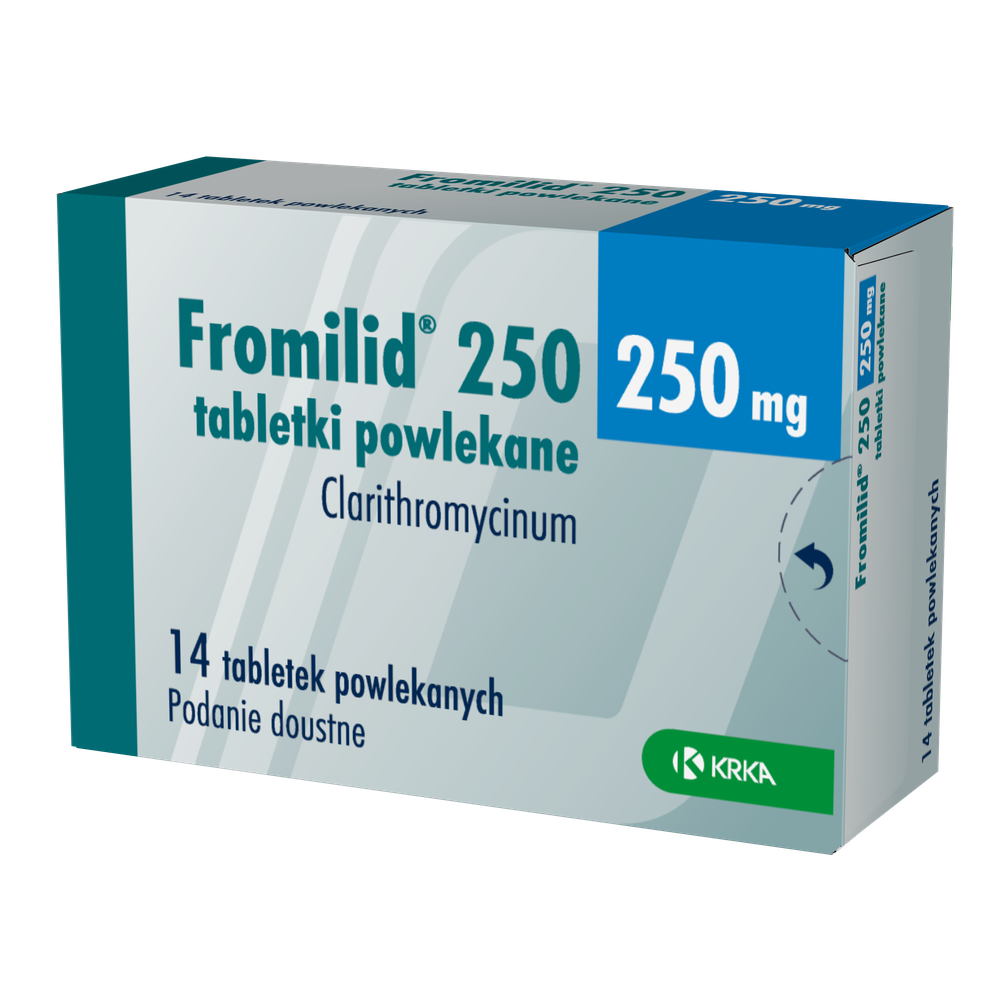
FROMILID 250 mg Tablets

Prescription review online
A doctor will review your case and decide whether a prescription is medically appropriate.

Talk to a doctor about this medicine
Discuss your symptoms and possible next steps in a quick online consultation.



How to use Fromilid 250
Contents of the leaflet
- Leaflet attached to the packaging: patient information
- Fromilid 250, 250 mg, film-coated tablets
- Fromilid 500, 500 mg, film-coated tablets
- What is Fromilid and what is it used for
- Important information before taking Fromilid
- When not to take Fromilid
- Warnings and precautions
- Fromilid and other medicines
- The patient must inform their doctor if they are taking any of the following medicines, as their use with Fromilid is contraindicated:
- The patient should inform their doctor if they are taking any of the following medicines, as special caution is required when using them with Fromilid:
- Fromilid:
- Taking Fromilid with food and drink
- Pregnancy and breastfeeding
- Driving and using machines
- How to take Fromilid
- Possible side effects
- How to store Fromilid
- Contents of the pack and other information
Leaflet attached to the packaging: patient information
Fromilid 250, 250 mg, film-coated tablets

Not sure if this medicine is right for you?
Discuss your symptoms and treatment with a doctor online.
Fromilid 500, 500 mg, film-coated tablets
Clarithromycin
You should carefully read the contents of the leaflet before taking the medicine, as it contains important information for the patient.
- You should keep this leaflet, so that you can read it again if you need to.
- If you have any doubts, you should consult a doctor or pharmacist.
- This medicine has been prescribed specifically for you. Do not pass it on to others. The medicine may harm another person, even if their symptoms are the same as yours.
- If the patient experiences any side effects, including any side effects not listed in this leaflet, they should tell their doctor or pharmacist. See section 4.
Table of contents of the leaflet
- 1. What is Fromilid and what is it used for
- 2. Important information before taking Fromilid
- 3. How to take Fromilid
- 4. Possible side effects
- 5. How to store Fromilid
- 6. Contents of the pack and other information
1. What is Fromilid and what is it used for
Fromilid belongs to a group of antibiotics called macrolides with broad-spectrum antibacterial activity. Clarithromycin, the active substance of Fromilid, is a derivative of erythromycin, and has antibacterial activity against both standard bacterial strains and strains isolated from patients. Clarithromycin is effective against many aerobic and anaerobic Gram-positive and Gram-negative bacteria.
Clarithromycin in tablet form is indicated for the treatment of the following infections caused by clarithromycin-sensitive microorganisms:
- tonsillitis and pharyngitis;
- acute maxillary sinusitis;
- otitis media;
- exacerbation of chronic bronchitis;
- pneumonia;
- uncomplicated skin and soft tissue infections;
- systemic infections caused by mycobacteria.
Fromilid is also used to eradicate (eliminate) Helicobacter pylori bacteria in patients with duodenal or gastric ulcers. In this indication, the doctor will prescribe Fromilid in combination with drugs that inhibit gastric acid secretion and another antibiotic.

Started taking the medicine and have questions?
Discuss your symptoms and treatment with a doctor online.
2. Important information before taking Fromilid
When not to take Fromilid
- if the patient is allergic to clarithromycin, other macrolide antibiotics (such as azithromycin, erythromycin) or any of the other ingredients of this medicine (listed in section 6);
- if the patient is taking ergot alkaloids, such as ergotamine or dihydroergotamine (used in migraine) or midazolam orally (a medicine used in anxiety and insomnia);
- if the patient is taking medicines that may cause severe heart rhythm disturbances;
- if the patient is taking astemizole or terfenadine (medicines used in allergies), cisapride or domperidone (a medicine used in gastrointestinal disorders), pimozide (a medicine used in psychiatric disorders), as concomitant use with Fromilid may cause severe heart rhythm disturbances;
- if the patient is taking ticagrelor (a medicine that inhibits platelet aggregation), ivabradine or ranolazine (medicines used in the treatment of angina pectoris);
- if the patient has low potassium or magnesium levels in the blood (hypokalemia or hypomagnesemia);
- if the patient is taking lovastatin, simvastatin (statins, used to lower blood cholesterol levels);
- if the patient is taking a medicine containing lomitapide;
- if the patient has severe liver failure with concomitant renal failure;
- if the patient or their family members have a history of heart rhythm disturbances (ventricular arrhythmias, including torsades de pointes) or electrocardiogram (ECG) abnormalities known as "long QT syndrome";
- if the patient is taking colchicine (a medicine used in gout).
Warnings and precautions
Before starting treatment with Fromilid, the patient should discuss the following with their doctor:
- if the patient is pregnant or thinks they may be pregnant,
- if the patient has kidney or liver function disorders,
- if the patient has coronary artery disease, severe heart failure, bradycardia,
- if the patient is taking any of the medicines listed in the "Fromilid and other medicines" section.
If the patient experiences any of the following situations while taking Fromilid, they should tell their doctor:
- severe allergic reactions, such as maculopapular rash, urticaria, petechiae, laryngeal edema, bronchospasm - the patient should immediately consult a doctor, who will administer appropriate treatment;
- diarrhea, especially acute or prolonged; the patient should tell their doctor as soon as possible. If necessary, the doctor will prescribe appropriate treatment; the patient should not take anti-diarrheal medicines;
- symptoms of liver function disorders, such as loss of appetite, jaundice, dark urine, itching or abdominal pain; the patient should stop treatment and consult a doctor;
- new infections (superinfections) caused by bacteria insensitive to clarithromycin or fungi, especially during prolonged use of antibiotics - the doctor will prescribe appropriate treatment.
In addition, while taking Fromilid, the following may occur:
- cross-resistance of bacteria (bacteria insensitive to clarithromycin may also be resistant to other macrolide antibiotics and lincosamides and clindamycin),
- antibiotic resistance (e.g., treatment of Helicobacter pylori infection may lead to the selection of resistant microorganisms).
If symptoms of hearing organ or vestibular damage occur (see section 4), it is recommended to perform relevant control tests after the end of treatment.
Fromilid and other medicines
The patient should tell their doctor about all medicines they are currently taking or have recently taken, as well as any medicines they plan to take.
The patient must inform their doctor if they are taking any of the following medicines, as their use with Fromilid is contraindicated:
- ergot alkaloids, such as ergotamine or dihydroergotamine (used in migraine);
- astemizole or terfenadine (medicines used in allergies);
- cisapride or domperidone (medicines used in gastrointestinal disorders);
- pimozide (a medicine used in psychiatric disorders);
- ticagrelor, ivabradine, ranolazine (medicines used in the treatment of angina pectoris or to reduce the risk of myocardial infarction or stroke);
- colchicine (a medicine used in gout);
- statins - lovastatin, simvastatin (medicines used to lower blood cholesterol levels);
- midazolam orally (a medicine used in anxiety and insomnia).
The patient should inform their doctor if they are taking any of the following medicines, as special caution is required when using them with Fromilid:
Fromilid:
- rifampicin, rifapentine, rifabutin (antibiotics used in the treatment of tuberculosis);
- fluconazole, itraconazole (antifungal medicines);
- atazanavir, efavirenz, etravirine, nevirapine, ritonavir, saquinavir, zidovudine (used in the treatment of HIV infection);
- digoxin, quinidine, disopyramide, verapamil, amlodipine, diltiazem (used in the treatment of heart rhythm disorders or hypertension);
- alprazolam, triazolam, midazolam intravenously or orally (medicines used in anxiety and insomnia);
- warfarin or other anticoagulant medicines, e.g., dabigatran, rivaroxaban, apixaban, edoxaban (medicines used to thin the blood);
- quetiapine or other atypical antipsychotic medicines;
- carbamazepine, valproate, phenytoin (antiepileptic medicines);
- methylprednisolone (an anti-inflammatory medicine);
- omeprazole (a medicine that reduces gastric acid secretion);
- cilostazol (a medicine used in intermittent claudication, which is characterized by leg pain during exercise and relieved by rest);
- cyclosporin, tacrolimus, sirolimus (medicines used, among other things, after transplants);
- sildenafil, tadalafil, vardenafil (medicines used in erectile dysfunction);
- ibrutinib or vinblastine (medicines used in cancer chemotherapy);
- theophylline (a medicine used in asthma);
- tolterodine (a medicine used in urinary incontinence);
- phenobarbital (an antiepileptic medicine);
- St. John's Wort (Hypericum perforatum, a herbal medicine used in mild depression);
- sulfonylureas, nateglinide, repaglinide, insulin (medicines used in diabetes);
- ototoxic medicines (damaging hearing), especially aminoglycoside antibiotics used in bacterial infections.
This is also important in the case of medicines with the following names:
- hydroxychloroquine or chloroquine (used in the treatment of, among other things, rheumatoid arthritis, or in the treatment or prevention of malaria). Taking these medicines
concomitantly with clarithromycin may increase the risk of heart rhythm disturbances and other severe adverse effects affecting the heart.
- oral, injectable or inhaled corticosteroids (used to suppress the immune system, which is useful in the treatment of many different diseases)
Taking Fromilid with food and drink
Fromilid can be taken with or without food. The tablets should not be divided. The tablets should be swallowed whole, with a liquid.
Pregnancy and breastfeeding
If the patient is pregnant or breastfeeding, thinks they may be pregnant or plans to have a child, they should consult their doctor or pharmacist before taking this medicine.
The safety of clarithromycin during pregnancy and breastfeeding has not been established. Fromilid can be used in pregnant women only when, in the doctor's opinion, the benefit to the mother outweighs the potential risk to the fetus.
As clarithromycin passes into breast milk, breastfeeding women should exercise special caution when taking Fromilid.
Driving and using machines
Fromilid may cause dizziness, confusion, and disorientation, which may affect the ability to drive vehicles and operate machines. The patient should not drive vehicles or operate machines if these symptoms occur.
3. How to take Fromilid
This medicine should always be taken exactly as prescribed by the doctor. If the patient has any doubts, they should consult their doctor or pharmacist.
The tablets should not be divided. The tablets should be swallowed whole, with a liquid.
The dosage and duration of treatment depend on the type and location of the infection, the patient's age, and their response to treatment.
Recommended dose
Adults and adolescents over 12 years old
The usual recommended dose is 250 mg every 12 hours.
Children under 12 years old
Clinical trials in children aged 6 months to 12 years have been conducted with clarithromycin in the form of a suspension. Therefore, in children, clarithromycin is recommended in the form of an oral suspension.
In the treatment of sinusitis, more severe infections, and when the infection is caused by Haemophilus influenzae, 500 mg is administered every 12 hours.
Treatment usually lasts from 6 to 14 days.
When using clarithromycin to eradicate Helicobacter pylori in patients with gastric or duodenal ulcers, the daily dose is 500-1000 mg. Clarithromycin is usually administered in 2 divided doses for 7-14 days. To eradicate Helicobacter pylori, it is necessary to administer other medicines concomitantly.
Patients with renal impairment
In patients with renal impairment, the dose of clarithromycin should be reduced by half, i.e., 250 mg once a day or, in severe infections, 250 mg twice a day. The medicine should not be administered for more than 14 days.
Taking a higher dose of Fromilid than recommended
In case of taking a higher dose of the medicine than recommended, the patient should immediately contact their doctor or pharmacist.
Overdose of the medicine may cause gastrointestinal disturbances (nausea, vomiting, abdominal pain). In case of overdose, the doctor will administer appropriate symptomatic treatment.
Like other macrolide antibiotics, hemodialysis or peritoneal dialysis does not reduce the concentration of clarithromycin in serum.
Missing a dose of Fromilid
In case of missing a dose of the medicine at the scheduled time, the patient should take it as soon as possible.
However, if it is almost time for the next dose, the patient should skip the missed dose and continue with the usual dosing schedule.
The patient should not take a double dose to make up for the missed dose.
Stopping treatment with Fromilid
The patient should not stop taking the medicine without consulting their doctor. Stopping treatment too early may cause the disease to recur.
If the patient has any further doubts about the use of this medicine, they should consult their doctor or pharmacist.
4. Possible side effects
Like all medicines, this medicine can cause side effects, although not everybody gets them.
If the patient experiences any of the following side effects at any stage of taking the medicine, they should stop taking Fromilid and immediately consult their doctor:
- anaphylactic shock - a life-threatening allergic reaction characterized by, among other things, confusion, pallor, blood pressure drop, sweating, oliguria, tachypnea, weakness, and fainting
- allergic reactions: rash (frequent), itching, urticaria (not very frequent), angioedema of the face, tongue, lips, eyes, and throat, difficulty breathing
- severe skin reactions:
- acute generalized exanthematous pustulosis - a red, scaly rash with papules and blisters under the skin
- Stevens-Johnson syndrome, characterized by sudden onset of fever and blisters, which resolve quickly and spontaneously after discontinuation of the medicine; a severe disease characterized by blisters and erosions on the skin, in the mouth, eyes, and genitals, fever, and joint pain
- toxic epidermal necrolysis - a severe, rapidly progressing disease characterized by large, rupturing subepidermal blisters, extensive erosions on the skin, exfoliation of large skin flakes, and fever
- DRESS syndrome - a severe (life-threatening) drug reaction characterized by an increased number of eosinophils and involvement of internal organs
- severe or prolonged diarrhea, possibly with blood or mucus in the stool (pseudomembranous colitis). Diarrhea may occur even after two months
after the end of treatment with clarithromycin. In this case, the patient should also consult their doctor.
- jaundice, skin irritation, pale stools, dark urine, itching or abdominal pain. These may be symptoms of liver failure, cholestasis (increased levels of bile components in the blood), or hepatitis (not very frequent). These reactions occur with unknown frequency, unless otherwise specified.
Other side effects:
In clinical trials and after the marketing of clarithromycin, the following common
side effects have been reported (may occur in 1 to 10 out of 100 patients):
- insomnia;
- taste disturbances, headache;
- diarrhea, vomiting, nausea, abdominal pain;
- abnormal liver function test results;
- excessive sweating.
Uncommonside effects (may occur in 1 to 10 out of 1,000 patients):
- candidiasis (fungal infection), vaginal infection;
- decreased white blood cell count, decreased neutrophil count, and increased eosinophil count;
- anorexia, decreased appetite;
- restlessness;
- dizziness, drowsiness, tremors;
- balance disorders, hearing impairment, tinnitus;
- palpitations, changes in ECG (QT interval prolongation);
- gastritis, stomatitis, glossitis, abdominal distension, constipation, dry mouth, eructation, flatulence;
- increased liver enzyme activity: alanine aminotransferase, aspartate aminotransferase, gamma-glutamyltransferase;
- malaise, asthenia (weakness, lack of strength), chest pain, chills, fatigue;
- increased activity of enzymes: alkaline phosphatase and lactate dehydrogenase.
The following side effects have been reported with unknown frequency(frequency cannot be estimated from the available data) after the marketing of clarithromycin in tablet and suspension form:
- rosacea;
- agranulocytosis (decreased granulocyte count in the blood), thrombocytopenia (decreased platelet count);
- acne;
- psychotic disorder, confusion, depersonalization, depression, disorientation, hallucinations, unusual dreams, mania;
- seizures, ageusia, parosmia, anosmia, paresthesia (numbness, tingling);
- deafness;
- heart rhythm disturbances of the torsades de pointes type, ventricular tachycardia, atrial fibrillation;
- hemorrhage;
- acute pancreatitis, tooth discoloration, tooth staining;
- liver failure, jaundice;
- myopathy (muscle disease with muscle weakness);
- renal failure, interstitial nephritis;
- changes in laboratory test results (increased international normalized ratio (INR), prolonged prothrombin time, abnormal urine color).
Patients with impaired immune function
In addition to symptoms resulting from the course of the disease, the following side effects have been observed in adult patients with impaired immune function:
- nausea, vomiting, changes in taste, constipation, abdominal pain, diarrhea, flatulence with gas release, dry mouth;
- headache, hearing disturbances;
- rash;
- dyspnea, insomnia;
- abnormal laboratory test results: increased aspartate aminotransferase (AST) and alanine aminotransferase (ALT) activity, increased blood urea nitrogen levels, and decreased platelet and white blood cell counts.
Reporting side effects
If the patient experiences any side effects, including any side effects not listed in this leaflet, they should tell their doctor or pharmacist. Side effects can be reported directly to the Department of Drug Safety Monitoring of the Office for Registration of Medicinal Products, Medical Devices, and Biocidal Products
Al. Jerozolimskie 181C, 02-222 Warsaw
Tel.: +48 22 49 21 301
Fax: +48 22 49 21 309
Website: https://smz.ezdrowie.gov.pl
Side effects can also be reported to the marketing authorization holder.
By reporting side effects, more information can be collected on the safety of the medicine.
5. How to store Fromilid
The medicine should be stored out of sight and reach of children.
There are no special precautions for storing the medicine.
Do not use this medicine after the expiry date stated on the packaging after: EXP.
The expiry date refers to the last day of the month stated.
Medicines should not be disposed of via wastewater or household waste. The patient should ask their pharmacist how to dispose of medicines that are no longer needed. This will help protect the environment.
6. Contents of the pack and other information
What Fromilid contains
- The active substance of Fromilid is clarithromycin. Each film-coated tablet contains 250 mg or 500 mg of clarithromycin.
- The other ingredients are: cornstarch, microcrystalline cellulose, anhydrous colloidal silica, pregelatinized starch, potassium polacrilin, talc, magnesium stearate.
- The coating contains: hypromellose 6 cps, talc, iron oxide, yellow (E 172), propylene glycol, titanium dioxide (E 171).
What Fromilid looks like and contents of the pack
The tablet is oval, slightly convex on both sides, and has a brown-yellow color.
The packaging contains film-coated tablets in PVC/PVDC/Aluminum blisters, in a cardboard box.
Fromilid 250
10 film-coated tablets (1 blister of 10 tablets)
14 film-coated tablets (2 blisters of 7 tablets)
Fromilid 500
14 film-coated tablets (2 blisters of 7 tablets)
28 film-coated tablets (4 blisters of 7 tablets)
Marketing authorization holder and manufacturer
KRKA, d.d., Novo mesto,
Šmarješka cesta 6,
8501 Novo mesto,
Slovenia
To obtain more detailed information about this medicine, the patient should contact the local representative of the marketing authorization holder:
KRKA-Polska Sp. z o.o.
ul. Równoległa 5
02-235 Warsaw
Poland
tel.: (22) 57 37 500
Date of last revision of the leaflet:
- Country of registration
- Dosage formTablets, 250 mg
- ATC codeJ01FA09
- Active substance
- Prescription requiredYes
- Manufacturer
- ImporterKrka, d.d., Novo mesto
- This information is for reference only and does not constitute medical advice. Always consult a doctor before taking any medication. Oladoctor is not responsible for medical decisions based on this content.
- Alternatives to Fromilid 250Dosage form: Powder, 500 mgActive substance: clarithromycinManufacturer: Adamed Pharma S.A. ANFARM HELLAS S.A.Prescription not requiredDosage form: Tablets, 250 mgActive substance: clarithromycinManufacturer: Synoptis Industrial Sp. z o.o.Prescription requiredDosage form: Tablets, 500 mgActive substance: clarithromycinManufacturer: Synoptis Industrial Sp. z o.o.Prescription required
Online doctors for Fromilid 250
Discuss questions about Fromilid 250, including use, safety considerations and prescription review, subject to medical assessment and local regulations.









Get Fromilid 250 Prescription Online
Fill in a 2-min form
Tell us your symptoms, history, and what medicine you're requesting.
Pick a doctor or let us assign
Choose a specialist or we'll match you with the next available doctor.
Doctor reviews your case
Usually within 30 minutes. They may ask follow-up questions via chat.
Collect from any pharmacy
Electronic prescription sent to your email — valid across Spain.
Frequently Asked Questions
Fromilid 250 requires a prescription in Poland. You can check with a doctor online whether this medicine may be appropriate for your situation.
The active ingredient in Fromilid 250 is clarithromycin. This information helps identify medicines with the same composition but different brand names.
Fromilid 250 is manufactured by Krka, d.d., Novo mesto. Pharmacy brands and packaging may differ depending on the distributor.
Doctors such as Family doctors, Psychiatrists, Dermatologists, Cardiologists, Endocrinologists, Gastroenterologists, Pulmonologists, Nephrologists, Rheumatologists, Hematologists, Infectious disease physicians, Allergists, Geriatricians, Paediatricians, Oncologists may assess whether Fromilid 250 is appropriate, depending on your situation and local regulations. You can book an online consultation to discuss your symptoms and possible next steps.
Spain has a well-developed healthcare infrastructure across major cities such as Madrid, Barcelona, Valencia, and Seville. Pharmacies are widely available and operate under strict regulations, ensuring access to prescribed medications.
You can buy Fromilid 250 in Madrid, Barcelona, Seville, or Valencia at any local pharmacy with a valid prescription.
To obtain a prescription, you can use Oladoctor:
Other medicines with the same active substance (clarithromycin) include Clarithromicin Adamed, Clarithromicin Genoptim, Clarithromicin Genoptim. These may have different brand names or formulations but contain the same therapeutic ingredient. Always consult a doctor before switching or starting a new medicine.
