


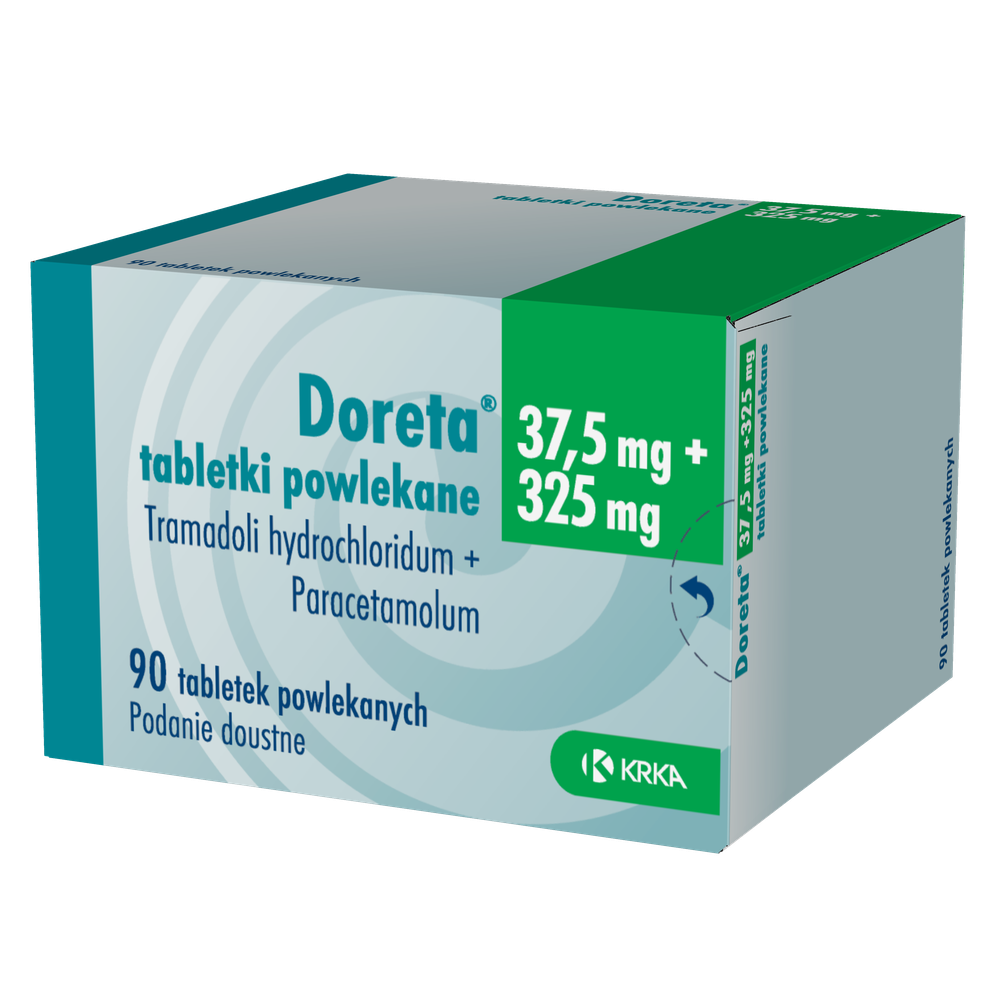
Doreta
Ask a doctor about a prescription for Doreta




How to use Doreta
Leaflet accompanying the packaging: patient information
Doreta, 37.5 mg + 325 mg, coated tablets
Tramadol hydrochloride+ Paracetamol
You should carefully read the contents of the leaflet before taking the medicine, as it contains important information for the patient.
- You should keep this leaflet, so that you can read it again if you need to.
- If you have any doubts, you should consult a doctor or pharmacist.
- This medicine has been prescribed specifically for you. Do not pass it on to others. The medicine may harm another person, even if their symptoms are the same.
- If the patient experiences any side effects, including any side effects not listed in this leaflet, they should tell their doctor or pharmacist. See section 4.
Table of contents of the leaflet
- 1. What is Doreta and what is it used for
- 2. Important information before taking Doreta
- 3. How to take Doreta
- 4. Possible side effects
- 5. How to store Doreta
- 6. Contents of the packaging and other information
1. What is Doreta and what is it used for
Doreta is a combination medicine containing two painkillers: tramadol and paracetamol, which together relieve pain.
The indication for the use of Doreta is moderate to severe pain, if the doctor considers that tramadol in combination with paracetamol is required.
Doreta is intended for use in adults and adolescents over 12 years of age.
2. Important information before taking Doreta
When not to take Doreta
Warnings and precautions
Before starting to take Doreta, the patient should discuss it with their doctor:
Tolerance, dependence and addiction
This medicine contains tramadol, which is an opioid. Repeated use of opioids can cause the medicine to become less effective (the patient gets used to the medicine, which is called tolerance). Repeated use of Doreta can also lead to the development of dependence, abuse and addiction, which can result in life-threatening overdose. The risk of these side effects may increase with the dose and duration of use.
Dependence can make it difficult for the patient to control the dose of the medicine they should take or how often they take it.
The risk of dependence is different for different people. The risk of dependence on Doreta may be higher if:
- the patient or someone in their family has ever abused or been dependent on alcohol, prescription or illegal drugs ("addiction");
- the patient smokes;
- the patient has ever had mood disorders (depression, anxiety or personality disorders) or has been treated by a psychiatrist for other mental illnesses.
If any of the following symptoms occur while taking Doreta, it may indicate dependence:
- the patient needs to take the medicine for longer than the doctor recommended
- the patient needs to take a higher dose than recommended
- the patient uses the medicine for reasons other than recommended, such as "to calm down" or "to help fall asleep"
- the patient has made repeated, unsuccessful attempts to stop or control the use of the medicine
- after stopping the medicine, the patient feels unwell and feels better after taking it again ("withdrawal symptoms").
If any of these symptoms occur, the patient should talk to their doctor to discuss the best course of treatment, including when to stop the medicine and how to do it safely (see section 3 "Stopping Doreta").
Sleep apnea
Doreta contains a substance from the opioid group. Opioids can cause sleep apnea, such as central sleep apnea (shallow/broken breathing during sleep) and sleep-related hypoxemia (low oxygen levels in the blood).
The risk of central sleep apnea depends on the dose of the opioid. The doctor may consider reducing the total dose of opioids if the patient has developed central sleep apnea.
After taking tramadol in combination with certain antidepressants or tramadol alone, there is a small risk of serotonin syndrome. If the patient experiences any symptoms of this syndrome with a severe course, they should immediately consult a doctor (see section 4 "Possible side effects").
Tramadol is converted in the liver by an enzyme. In some people, there is a certain variant of this enzyme, which can have different effects. In some people, pain relief may not be sufficient, and in others, the risk of serious side effects may be higher.
The patient should stop taking the medicine and immediately consult a doctor if they experience any of the following side effects: slow or shallow breathing, confusion, drowsiness, pinpoint pupils, nausea or vomiting, constipation, or loss of appetite.
If any of the above situations have occurred to the patient in the past or have occurred while taking Doreta, they should inform their doctor. The doctor will decide whether to continue taking the medicine.
Children and adolescents
Use in children with respiratory disorders
Tramadol is not recommended for use in children with respiratory disorders, as the symptoms of tramadol toxicity may be more severe in them.
The patient should talk to their doctor if any of the following symptoms occur while taking Doreta: excessive fatigue, loss of appetite, severe abdominal pain, nausea, vomiting or low blood pressure. This may indicate that the patient has adrenal insufficiency (low cortisol levels). If such symptoms occur, the patient should consult a doctor, who will decide whether the patient needs hormone replacement.
Doreta and other medicines
The patient should tell their doctor or pharmacist about all medicines they are currently taking or have recently taken, as well as any medicines they plan to take.
Note: This medicine contains paracetamol and tramadol. The patient should inform their doctor about taking other medicines containing paracetamol or tramadol to avoid exceeding the maximum daily dose.
Taking Doreta with monoamine oxidase inhibitors (MAOIs) is contraindicated(see section "When not to take Doreta").
It is not recommended to take Doreta at the same time as the following medicines:
- carbamazepine (a medicine used to treat epilepsy or certain types of pain, such as severe facial pain called trigeminal neuralgia),
- buprenorphine, nalbuphine or pentazocine (opioid painkillers). The pain-relieving effect may be weakened.
The patient should inform their doctor or pharmacist if they are taking:
- flucloxacillin (an antibiotic), due to the risk of a serious blood and fluid disorder (metabolic acidosis with a large anion gap), which requires emergency treatment and may occur especially in patients with severe kidney disorders, sepsis (a condition where bacteria and their toxins circulate in the blood, leading to organ damage), malnutrition, chronic alcoholism, as well as in patients taking maximum daily doses of paracetamol, especially if the patient is taking maximum daily doses of paracetamol for a long time. Metabolic acidosis with a large anion gap is a serious disease that requires emergency treatment.
The risk of side effects increases if the patient is taking:
- triptans (medicines used to treat migraines) or selective serotonin reuptake inhibitors (SSRIs, medicines used to treat depression). The patient should consult their doctor if they experience disorientation, anxiety, especially agitation, fever, excessive sweating, uncontrolled movements of the limbs or eyeballs, uncontrolled muscle spasms or diarrhea.
The patient should consult their doctor if they experience any of the following symptoms:
- other painkillers, such as morphine and codeine (also used to treat cough), baclofen (a muscle relaxant), antihypertensive drugs or antihistamines. The patient should consult their doctor if they experience drowsiness or fainting. Concurrent use of Doreta and sedatives, such as benzodiazepines or derivatives, increases the risk of drowsiness, breathing difficulties (respiratory depression), coma and can be life-threatening. For this reason, concurrent use of these medicines should only be considered when other treatment options are not possible. If, however, the doctor has prescribed Doreta together with sedatives, the attending doctor should limit the dose and duration of concurrent treatment. The patient should inform their doctor about all sedatives they are taking and strictly follow the doctor's dosage recommendations. It may be helpful to inform friends or relatives to be aware of the possibility of the above-mentioned subjective and objective symptoms. If such symptoms occur, the patient should consult their doctor.
- medicines that can cause seizures (fits), such as some antidepressants or antipsychotics. The risk of seizures may increase if the patient takes Doreta at the same time as these medicines. The doctor will inform the patient whether Doreta is suitable for them.
- certain antidepressants. Doreta may interact with these medicines and cause serotonin syndrome (see section 4 "Possible side effects").
- warfarin or phenprocoumon (medicines used to thin the blood). The effect of these medicines may change, and bleeding may occur. Any prolonged or unexpected bleeding should be reported to the doctor immediately.
- gabapentin or pregabalin for the treatment of epilepsy or nerve pain (neuropathic pain).
The effect of Doreta may change if it is taken at the same time as:
- metoclopramide, domperidone or ondansetron (medicines used to treat nausea and vomiting),
- cholestyramine (a medicine used to lower blood cholesterol levels).
The doctor will decide which medicines can be safely taken at the same time as Doreta.
Doreta with food and alcohol
Doreta may cause drowsiness. Alcohol increases the feeling of drowsiness. The patient should not drink alcohol while taking Doreta.
Pregnancy, breastfeeding and fertility
If the patient is pregnant or breastfeeding, thinks they may be pregnant or is planning to have a baby, they should consult their doctor or pharmacist before taking this medicine.
Since Doreta contains tramadol, the patient should not take this medicine during pregnancy or breastfeeding. If the patient becomes pregnant while taking Doreta, they should consult their doctor before taking any more tablets.
Breastfeeding
Tramadol is excreted into breast milk. For this reason, Doreta should not be taken more than once while breastfeeding, or if Doreta is taken more than once, breastfeeding should be stopped.
Fertility
Based on the use of tramadol in humans, it is suggested that tramadol does not affect fertility in women and men. There is no available data on the effect of combined tramadol and paracetamol treatment on fertility.
The patient should consult their doctor or pharmacist before taking any medicine.
Driving and using machines
Doreta may cause drowsiness, which can affect the ability to drive and use machines.
Doreta contains sodium
This medicinal product contains less than 1 mmol (23 mg) of sodium per dose, which means that the medicine is considered "sodium-free".
3. How to take Doreta
This medicine should always be taken according to the doctor's recommendations. In case of doubts, the patient should consult their doctor or pharmacist.
Before starting treatment and regularly during treatment, the doctor will discuss with the patient what to expect from Doreta, when and for how long to take it, when to consult a doctor and when to stop taking it (see also section 2).
Doreta should be taken for the shortest possible time.
The medicine should not be taken in children under 12 years of age.
The dose should be adjusted according to the severity of the pain and the individual response of the patient to treatment.
The patient should take the smallest effective dose to relieve pain.
If the doctor has not recommended otherwise, the recommended dose of Doreta is 2 tablets for adults and adolescents over 12 years of age.
If necessary, the doctor may recommend taking additional doses. Additional doses should not be taken more frequently than every 6 hours.
The patient should not take more than 8 tablets per day.
The patient should not take Doreta more frequently than recommended by their doctor.
Elderly patients
In patients over 75 years of age, the elimination of tramadol from the body may be delayed. In these patients, the doctor may recommend prolonging the time interval between doses.
Patients with renal or hepatic impairment, or those undergoing dialysis
Doreta should not be taken in case of severe hepatic or renal impairment.
In case of mild or moderate impairment, the doctor may recommend prolonging the time interval between doses.
Method of administration
The tablets should be taken orally.
The tablets should be taken whole, with a liquid. They should not be broken or chewed.
If the patient feels that the effect of Doreta is too strong (i.e. drowsiness or breathing problems occur) or too weak (i.e. insufficient pain relief), they should consult their doctor.
Taking a higher dose of Doreta than recommended
In case of taking a higher dose of Doreta than recommended, even if the patient feels well, they should immediately consult their doctor or pharmacist. There is a risk of liver damage, the symptoms of which may appear later.
Missing a dose of Doreta
In case of missing a dose of Doreta, the pain may return. The patient should not take a double dose to make up for the missed dose, but should continue taking the medicine according to the established schedule.
Stopping Doreta
The patient should not suddenly stop taking this medicine without their doctor's recommendation. If the patient wants to stop taking Doreta, they should discuss it with their doctor, especially if they have been taking the medicine for a long time.
The doctor will advise when and how to stop taking Doreta; this may involve gradually reducing the dose to minimize the risk of side effects (withdrawal symptoms).
If the patient has any further doubts about taking this medicine, they should consult their doctor or pharmacist.
4.
Possible side effects
Like all medicines, Doreta can cause side effects, although not everybody gets them.
Very common (may affect more than 1 in 10 people):
- nausea,
- dizziness, drowsiness.
Common (may affect up to 1 in 10 people):
- vomiting, digestive disorders (constipation, bloating, diarrhea), stomach pain, dry mouth,
- itching, excessive sweating,
- headache, tremors,
- confusion, sleep disorders, mood changes (anxiety, nervousness, abnormal feeling of well-being).
Uncommon (may affect up to 1 in 100 people):
- increased heart rate or blood pressure, disorders of heart rate or rhythm,
- tingling, numbness or a feeling of pins and needles in the limbs, ringing in the ears, involuntary muscle twitching,
- depression, nightmares, hallucinations, memory lapses,
- breathing difficulties,
- difficulty swallowing, blood in the stool (black stools),
- skin reactions (e.g. rash, hives),
- increased liver enzyme values,
- presence of albumin in the urine, difficulty urinating or pain,
- chills, hot flashes, chest pain.
Rare (may affect up to 1 in 1000 people):
- seizures, difficulty coordinating movements, brief loss of consciousness (fainting),
- drug dependence,
- delirium,
- blurred vision, pinpoint pupils,
- speech disorders,
- dilated pupils.
Very rare (may affect up to 1 in 10,000 people):
- drug abuse.
Frequency not known (frequency cannot be estimated from the available data):
- decreased blood sugar levels,
The following side effects have been reported in patients taking medicines containing only tramadol or paracetamol. However, if any of these side effects occur while taking Doreta, the patient should inform their doctor:
- feeling of fainting when standing up from a sitting or lying position, slow heart rate, fainting, changes in appetite, weakness, slow or shallow breathing, changes in mood, changes in activity, changes in perception, worsening of asthma.
- taking paracetamol alone or in combination with the antibiotic flucloxacillin may cause blood and fluid disorders (metabolic acidosis with a large anion gap), which requires emergency treatment and may occur especially in patients with severe kidney disorders, sepsis, malnutrition, chronic alcoholism, as well as in patients taking maximum daily doses of paracetamol, especially if the patient is taking maximum daily doses of paracetamol for a long time.
- taking Doreta with blood-thinning medicines (e.g. phenprocoumon, warfarin) may increase the risk of bleeding. Any prolonged or unexpected bleeding should be reported to the doctor immediately.
- in rare cases, a skin rash indicating an allergic reaction may develop into sudden swelling of the face and neck, breathing difficulties or a drop in blood pressure and fainting; if such symptoms occur, the patient should stop taking the medicine and immediately consult a doctor. The patient should not take the medicine again.
Rarely, patients taking tramadol for a period of time may experience malaise when the medicine is suddenly stopped.
Patients may feel anxious, restless, nervous or agitated, overly active, sleepless or have gastrointestinal disorders. In a very small number of patients, panic attacks, hallucinations, unusual sensations such as itching, tingling, numbness of the skin and ringing in the ears may occur. If any of these symptoms or any other unusual symptoms occur, the patient should consult their doctor or pharmacist as soon as possible.
Frequency not known: hiccups
Serotonin syndrome, the symptoms of which may include changes in mental state (e.g. agitation, hallucinations, coma), as well as other symptoms, such as fever, rapid heart rate, unstable blood pressure, involuntary muscle contractions, muscle stiffness, lack of coordination and (or) symptoms from the gastrointestinal tract (e.g. nausea, vomiting, diarrhea) (see section 2 "Important information before taking Doreta").
In exceptional cases, blood tests may show certain disorders, such as a low platelet count, which can cause nosebleeds or bleeding gums.
Very rarely, cases of severe skin reactions have been reported after taking medicines containing paracetamol.
Rarely, cases of respiratory depression have been reported after taking medicines containing tramadol.
Reporting side effects
If the patient experiences any side effects, including any side effects not listed in this leaflet, they should tell their doctor or pharmacist. Side effects can be reported directly to the Department of Drug Safety Monitoring of the Office for Registration of Medicinal Products, Medical Devices and Biocidal Products:
Al. Jerozolimskie 181C, 02-222 Warsaw
Phone: +48 22 49 21 301
Fax: +48 22 49 21 309
Website: https://smz.ezdrowie.gov.pl
Side effects can also be reported to the marketing authorization holder.
Reporting side effects will help gather more information on the safety of the medicine.
5. How to store Doreta
The medicine should be stored out of sight and reach of children.
The medicine should be stored in a safe place, to which other people do not have access. It can cause serious harm and be fatal for people it has not been prescribed for.
The medicine should not be taken after the expiry date stated on the packaging after "EXP". The expiry date refers to the last day of the month stated.
The batch number is stated on the packaging after "Lot".
There are no special precautions for storage.
Medicines should not be disposed of via wastewater or household waste. The patient should ask their pharmacist how to dispose of medicines that are no longer needed. This will help protect the environment.
6. Contents of the packaging and other information
What Doreta contains
- The active substances of Doreta are tramadol hydrochloride and paracetamol. Each coated tablet contains 37.5 mg of tramadol hydrochloride, which corresponds to 32.94 mg of tramadol, and 325 mg of paracetamol.
- Other ingredients are:
- tablet core:maize starch, sodium carboxymethylcellulose (type A), microcrystalline cellulose (E 460) and magnesium stearate (E 470b)
- tablet coating: hypromellose, titanium dioxide (E 171), macrogol 400, yellow iron oxide (E 172) and polysorbate 80. See section 2 "Doreta contains sodium".
What Doreta looks like and contents of the pack
The coated tablets are yellow-brown, oval and slightly convex on both sides.
Packaging:10, 20, 30, 60 or 90 coated tablets in blisters, in a cardboard box
Not all pack sizes may be marketed.
Marketing authorization holder
KRKA, d.d., Novo mesto, Šmarješka cesta 6, 8501 Novo mesto, Slovenia
Manufacturer
KRKA, d.d., Novo mesto, Šmarješka cesta 6, 8501 Novo mesto, Slovenia
TAD Pharma GmbH, Heinz-Lohmann-Straße 5, 27472 Cuxhaven, Germany
This medicine is authorized in the Member States of the European Economic Area and in the United Kingdom (Northern Ireland) under the following names:
| Bulgaria, Czech Republic, Estonia, Lithuania, Latvia, | Doreta |
Date of last revision of the leaflet: 05.10.2024
| Slovakia, Slovenia, Romania, Hungary, | |
| France | Tramadol/paracetamol Krka |
| Spain | Tramadol/Paracetamol Krka |
| Portugal | Rapat |
| United Kingdom (Northern Ireland) | Tramadol Hydrochloride/Paracetamol |
- Country of registration
- Active substance
- Prescription requiredYes
- Manufacturer
- ImporterKrka, d.d., Novo mesto TAD Pharma GmbH
- This information is for reference only and does not constitute medical advice. Always consult a licensed doctor before taking any medication. Oladoctor is not responsible for medical decisions based on this content.
- Alternatives to DoretaDosage form: Tablets, 75 mg + 650 mgActive substance: tramadol and paracetamolManufacturer: Krka, d.d., Novo mesto TAD Pharma GmbHPrescription requiredDosage form: Tablets, 75 mg + 650 mgActive substance: tramadol and paracetamolPrescription requiredDosage form: Tablets, 75 mg + 650 mgActive substance: tramadol and paracetamolManufacturer: Krka, d.d., Novo mesto TAD Pharma GmbHPrescription required
Alternatives to Doreta in other countries
The best alternatives with the same active ingredient and therapeutic effect.
Alternative to Doreta in Spain
Online doctors for Doreta
Discuss dosage, side effects, interactions, contraindications, and prescription renewal for Doreta – subject to medical assessment and local rules.








Get updates and exclusive offers
Be the first to know about new services, marketplace updates, and subscriber-only promos.

