



DEPRALIN 5 mg Tablets

Prescription review online
A doctor will review your case and decide whether a prescription is medically appropriate.

Talk to a doctor about this medicine
Discuss your symptoms and possible next steps in a quick online consultation.



How to use Depralin Odt
Contents of the leaflet
- Leaflet accompanying the packaging: patient information
- Depralin ODT, 5 mg, orally disintegrating tablets
- Depralin ODT, 10 mg, orally disintegrating tablets
- Depralin ODT, 20 mg, orally disintegrating tablets
- What is Depralin ODT and what is it used for
- Important information before taking Depralin ODT
- When not to take Depralin ODT
- Warnings and precautions
- Caution
- Suicidal thoughts and worsening of depression or anxiety symptoms
- Children and adolescents
- Depralin ODT and other medicines
- Depralin ODT with food, drink, and alcohol
- Pregnancy, breastfeeding, and fertility
- Driving and using machines
- Depralin ODT contains lactose
- Depralin ODT contains sodium
- How to take Depralin ODT
- Possible side effects
- How to store Depralin ODT
- Contents of the packaging and other information
Leaflet accompanying the packaging: patient information
Depralin ODT, 5 mg, orally disintegrating tablets

Not sure if this medicine is right for you?
Discuss your symptoms and treatment with a doctor online.
Depralin ODT, 10 mg, orally disintegrating tablets
Depralin ODT, 20 mg, orally disintegrating tablets
Escitalopram
You should carefully read the contents of this leaflet before taking the medicine, as it contains important information for the patient.
- You should keep this leaflet so that you can read it again if you need to.
- If you have any doubts, you should consult a doctor or pharmacist.
- This medicine has been prescribed specifically for you. Do not pass it on to others. The medicine may harm another person, even if their symptoms are the same as yours.
- If you experience any side effects, including those not listed in this leaflet, you should tell your doctor or pharmacist. See section 4.
Table of contents of the leaflet
- 1. What is Depralin ODT and what is it used for
- 2. Important information before taking Depralin ODT
- 3. How to take Depralin ODT
- 4. Possible side effects
- 5. How to store Depralin ODT
- 6. Contents of the packaging and other information

Started taking the medicine and have questions?
Discuss your symptoms and treatment with a doctor online.
1. What is Depralin ODT and what is it used for
Depralin ODT belongs to a group of antidepressant medicines called selective serotonin reuptake inhibitors (SSRIs). These medicines work on the serotonin system in the brain by increasing the level of serotonin. Disruption of the serotonin system in the brain is thought to be an important factor in the development of depression and related disorders.
Depralin ODT contains escitalopram and is used to treat depression (major depressive episodes) and anxiety disorders (such as panic attacks with or without agoraphobia, social anxiety disorder (social phobia), generalized anxiety disorder, and obsessive-compulsive disorder).
It may take several weeks of treatment before you start to feel better. You should continue to take Depralin ODT even if it takes some time to feel better. If you do not feel better or feel worse, you should consult a doctor.
2. Important information before taking Depralin ODT
When not to take Depralin ODT
Warnings and precautions
You should discuss this with your doctor or pharmacist before starting to take Depralin ODT.
You should tell your doctor if you have any other disorders or diseases, as they may need to be taken into account. In particular, you should inform your doctor if:
- you have epilepsy. You should stop taking Depralin ODT if you have seizures or if the frequency of seizures increases (see also section 4 "Possible side effects");
- you have liver or kidney problems. Your doctor may need to adjust the dose;
- you have diabetes. Treatment with Depralin ODT may disrupt blood sugar control. You may need to adjust the dose of insulin and/or oral antidiabetic medicines;
- you have low sodium levels in the blood;
- you have an increased tendency to bleed or bruise, or if you are pregnant (see "Pregnancy, breastfeeding, and fertility");
- you are being treated with electroconvulsive therapy;
- you have coronary heart disease;
- you have had heart problems or have recently had a heart attack;
- you have low resting heart rate and/or may have electrolyte disturbances due to prolonged, persistent diarrhea and vomiting or the use of diuretics;
- you experience rapid or irregular heartbeat, fainting, collapse, or dizziness when standing, which may indicate abnormal heart function;
- you have had eye problems, such as certain types of glaucoma (increased pressure inside the eyeball);
- you have chronic pain that requires treatment with buprenorphine. Taking this medicine with Depralin ODT may lead to a life-threatening condition called serotonin syndrome (see section "Depralin ODT and other medicines").
Caution
In some patients with bipolar disorder (manic-depressive disorder), a manic phase may occur.
This is characterized by unusual, rapidly changing ideas, unjustified feelings of happiness, and excessive physical activity. If you experience any of these symptoms, you should contact your doctor.
In the first few weeks of treatment, you may experience symptoms such as restlessness or inability to sit or stand still. If such symptoms occur, you should contact your doctor immediately.
Medicines like Depralin ODT (so-called SSRIs or SNRIs) may cause sexual dysfunction (see section 4). In some cases, these symptoms have persisted after stopping treatment.
Suicidal thoughts and worsening of depression or anxiety symptoms
If you have depression and/or anxiety disorders, you may sometimes have thoughts of self-harm or suicide.
These thoughts may increase when you first start taking antidepressant medicines, as these medicines usually start to work after about 2 weeks, and sometimes it takes longer.
The risk of such thoughts is higher if:
- you have had suicidal thoughts or self-harm in the past;
- you are an adult in your young age. Information from clinical trials indicates an increased risk of suicidal behavior in adults under 25 years of age with mental disorders who were treated with antidepressant medicines.
If you experience suicidal thoughts or thoughts of self-harm at any time, you should contact your doctor or go to the hospital immediately.
It may be helpful to tell someone in your family or close friends about your depression or anxiety disorder and ask them to read this leaflet.
You can ask them to tell you if they notice that your depression or anxiety symptoms have worsened or if you have any worrying changes in your behavior.
Children and adolescents
Depralin ODT should not normally be used in children and adolescents under 18 years of age.
Remember that in patients under 18 years of age who are taking medicines of this group, there is a greater risk of side effects, such as attempted suicide and suicidal thoughts, and hostility (especially aggression, rebellious behavior, and manifestations of anger).
However, your doctor may prescribe Depralin ODT to patients in this age group if they consider it necessary.
If your doctor has prescribed Depralin ODT to a patient under 18 years of age and you have any doubts, you should consult your doctor again.
You should contact the doctor who is treating the patient if any of the above symptoms occur or worsen in patients under 18 years of age who are taking Depralin ODT.
The long-term safety of Depralin ODT regarding its impact on growth, maturation, and cognitive and behavioral development has not been established in this age group.
Depralin ODT and other medicines
You should tell your doctor about all medicines you are currently taking or have recently taken, as well as any medicines you plan to take.
You should inform your doctor if you are taking any of the following medicines:
- Non-selective monoamine oxidase inhibitors (MAOIs) containing phenelzine, iproniazid, isocarboxazid, nialamide, or tranylcypromine as the active substance. If you are taking any of these, you should wait 14 days before starting to take Depralin ODT. After stopping Depralin ODT, you should wait 7 days before starting to take any of these medicines.
- Reversible inhibitors of MAO-A, including moclobemide (used to treat depression).
- Irreversible inhibitors of MAO-B, including selegiline (used to treat Parkinson's disease). These medicines increase the risk of side effects.
- The antibiotic linezolid.
- Lithium (used to treat manic-depressive disorder) and tryptophan.
- Imipramine and desipramine (used to treat depression).
- Sumatriptan and similar medicines (used to treat migraine) and tramadol, buprenorphine (opioid medicines used to treat acute or chronic pain). You should not take escitalopram with these medicines without consulting your doctor first. These medicines may interact with Depralin ODT and cause symptoms such as involuntary, rhythmic muscle contractions, including those that affect eye movements, agitation, hallucinations, coma, excessive sweating, tremors, increased reflexes, muscle stiffness, and body temperature above 38°C. If you experience such symptoms, you should contact your doctor.
- Cimetidine, lansoprazole, and omeprazole (used to treat stomach ulcers), fluconazole (an antifungal medicine), fluvoxamine (an antidepressant), and ticlopidine (used to reduce the risk of stroke). These medicines may increase the level of Depralin ODT in the blood.
- St. John's Wort (Hypericum perforatum) - a herbal medicine used to treat depression.
- Acetylsalicylic acid and non-steroidal anti-inflammatory medicines (used to treat pain or to thin the blood, so-called blood-thinning medicines). These medicines may increase the risk of bleeding.
- Warfarin, dipyridamole, and phenprocoumon (medicines used to thin the blood, so-called anticoagulant medicines). Your doctor will probably check your blood clotting time before and after stopping treatment with Depralin ODT to ensure that the dose of anticoagulant medicine is still appropriate.
- Mefloquine (used to treat malaria), bupropion (used to treat depression), and tramadol (used to treat severe pain) due to the risk of lowering the seizure threshold.
- Antipsychotics (used to treat schizophrenia, psychosis) and antidepressants (tricyclic antidepressants and SSRIs) due to the risk of lowering the seizure threshold.
- Flecainide, propafenone, metoprolol (used to treat cardiovascular diseases), desipramine, clomipramine, and nortriptyline (antidepressants), risperidone, thioridazine, and haloperidol (antipsychotic medicines). It may be necessary to adjust the dose of Depralin ODT.
- Medicines that may lower potassium or magnesium levels in the blood, due to the increased risk of life-threatening heart rhythm disorders.
You should not take Depralin ODT if you are taking medicines used to treat heart rhythm disorders or medicines that affect heart rhythm, such as:
class IA and III antiarrhythmic medicines, antipsychotic medicines (e.g., phenothiazine derivatives, pimozide, haloperidol), tricyclic antidepressants, certain antibiotics (e.g., sparfloxacin, moxifloxacin, erythromycin IV, pentamidine, antimalarial medicines - especially halofantrine), and certain antihistamines (astemizole, mizolastine). If you have any further doubts, you should consult your doctor.
Depralin ODT with food, drink, and alcohol
Depralin ODT should not be taken with food (see section 3 "How to take Depralin ODT").
Like many other medicines, it is not recommended to drink alcohol during treatment with Depralin ODT, although no interaction with alcohol is expected.
Pregnancy, breastfeeding, and fertility
If you are pregnant or breastfeeding, think you may be pregnant, or plan to have a child, you should consult your doctor before taking this medicine.
You should not take Depralin ODT if you are pregnant or breastfeeding, unless your doctor has discussed the risks and benefits of taking the medicine with you.
Pregnancy
Taking Depralin ODT at the end of pregnancy may increase the risk of severe bleeding from the vagina, which occurs shortly after delivery, especially if you have a history of bleeding disorders. If you are taking Depralin ODT, you should tell your doctor or midwife so that they can give you appropriate advice.
If you are taking Depralin ODT in the last three months of pregnancy, you should be aware that the following symptoms may occur in the newborn: difficulty breathing, bluish discoloration of the skin, seizures, changes in body temperature, difficulty feeding, vomiting, low blood sugar, stiffness or floppiness of the muscles, increased reflexes, tremors, tremors, lethargy, irritability, constant crying, or sleep disturbances. If any of these symptoms occur in the newborn, you should contact your doctor immediately.
You should make sure that your midwife and/or doctor know that you are taking Depralin ODT.
Taking Depralin ODT during pregnancy, especially in the last three months, may increase the risk of a serious condition in the baby called persistent pulmonary hypertension of the newborn (PPHN). This causes rapid breathing and bluish discoloration of the skin in the newborn. These symptoms usually appear in the first day after delivery. If you notice these symptoms in your baby, you should contact your midwife and/or doctor immediately.
You should not stop taking Depralin ODT during pregnancy unless your doctor tells you to.
Breastfeeding
It is assumed that Depralin ODT passes into breast milk.
Fertility
In animal studies, it has been shown that citalopram, a medicine similar to escitalopram, reduces sperm quality. This may theoretically affect fertility, although no effect on fertility has been observed in humans so far.
Driving and using machines
You should not drive or operate machinery until you are sure how Depralin ODT affects you.
Depralin ODT contains lactose
If you have been diagnosed with intolerance to some sugars, you should contact your doctor before taking Depralin ODT.
Depralin ODT contains sodium
The medicine contains less than 1 mmol (23 mg) of sodium per tablet, which means that the medicine is considered "sodium-free".
3. How to take Depralin ODT
This medicine should always be taken exactly as prescribed by your doctor. If you are unsure, you should consult your doctor or pharmacist.
Depralin ODT, orally disintegrating tablets, should be taken once daily, in one dose. The medicine should not be taken with food.
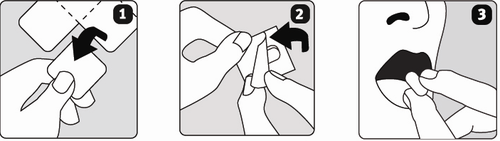
The orally disintegrating tablets are easily broken, so you should handle them carefully. You should not take the tablets with wet hands, as they may break.
- 1. Holding the blister by the edges, separate one tablet from the rest of the strip by gently tearing it off along the perforation.
- 2. Carefully peel off the back foil.
- 3. Place the tablet on your tongue. The tablet will dissolve very quickly and can be swallowed without water.
Adults
Depression
The usual dose is 10 mg once daily. Your doctor may increase the dose to a maximum of 20 mg once daily.
Anxiety disorder with panic attacks
The recommended initial dose of Depralin ODT is 5 mg once daily for the first week, which is then increased to 10 mg once daily. Your doctor may recommend further increasing the dose to a maximum of 20 mg once daily.
Social anxiety disorder
The usual dose of Depralin ODT is 10 mg once daily. Depending on the patient's response to the medicine, your doctor may reduce the dose to 5 mg once daily or increase the dose to a maximum of 20 mg once daily.
Generalized anxiety disorder
The usual dose of Depralin ODT is 10 mg once daily. Your doctor may increase the dose to a maximum of 20 mg once daily.
Obsessive-compulsive disorder
The usual dose of Depralin ODT is 10 mg once daily. Your doctor may increase the dose to a maximum of 20 mg once daily.
Elderly patients (over 65 years of age)
The recommended initial dose of Depralin ODT is 5 mg once daily. Your doctor may increase the dose to 10 mg once daily.
Children and adolescents
Depralin ODT should not normally be used in children and adolescents. For more information, see section 2 "Important information before taking Depralin ODT".
Duration of treatment
It may take several weeks of treatment before you feel better. Therefore, you should continue to take the medicine, even if you do not feel better at first.
You should never change the dose of the medicine without consulting your doctor first.
You should continue to take Depralin ODT for as long as your doctor has prescribed it. If you stop treatment too early, your symptoms may return. It is recommended that treatment be continued for at least 6 months from the time you start to feel better.
Taking a higher dose of Depralin ODT than recommended
If you have taken a higher dose of Depralin ODT than prescribed, you should contact your doctor or go to the hospital immediately. You should do this even if you do not feel any discomfort. Some of the symptoms of overdose are dizziness, tremors, agitation, convulsions, coma, nausea, vomiting, heart rhythm disturbances, low blood pressure, and disturbances in the body's water and electrolyte balance. On a visit to the doctor or hospital, you should take the packaging (box) of Depralin ODT with you.
Missing a dose of Depralin ODT
You should not take a double dose of the medicine to make up for a missed dose. If you have forgotten to take a dose and remember before going to bed, you should take the missed dose immediately. You should take the next dose at the usual time the next day. If you remember that you have missed a dose in the night or the next day, you should skip the missed dose and take the next dose at the usual time.
Stopping treatment with Depralin ODT
You should not stop taking Depralin ODT unless your doctor tells you to.
If you are finishing the prescribed treatment cycle, it is usually recommended to gradually reduce the dose of Depralin ODT over several weeks.
If you stop taking Depralin ODT, especially if you stop suddenly, you may experience withdrawal symptoms. These are commonly observed when escitalopram treatment is discontinued. The risk is higher if the medicine has been taken for a long time or in high doses, or if the dose has been reduced too quickly. In most patients, the symptoms are mild and resolve on their own within two weeks. However, in some patients, they may be severe and last longer (2 to 3 months or longer). If you experience severe withdrawal symptoms, you should contact your doctor. Your doctor may recommend that you start taking the medicine again and then reduce the dose more slowly.
Withdrawal symptoms include dizziness (unsteady gait, balance disturbances), tingling, prickling, and burning sensations, as well as (less commonly) electric shock sensations, also in the head, sleep disturbances (vivid dreams, nightmares, insomnia), anxiety, headaches, nausea, excessive sweating (including night sweats), restlessness or agitation, tremors, confusion or disorientation, mood swings or irritability, diarrhea (loose stools), vision disturbances, and palpitations (heart palpitations).
If you have any further doubts about taking this medicine, you should consult your doctor or pharmacist.
4. Possible side effects
Like all medicines, Depralin ODT can cause side effects, although not everybody gets them.
Side effects usually resolve after a few weeks of treatment. You should be aware that many symptoms may also be symptoms of the underlying disease and will resolve as you feel better.
If you experience any of the following side effects during treatment, you should contact your doctor or go to the hospital immediately:
Uncommon (may affect up to 1 in 100 people):
- Abnormal bleeding, including bleeding from the gastrointestinal tract.
Rare (may affect up to 1 in 1,000 people):
Allergic reactions (such as swelling of the skin, lips, tongue, or throat, or difficulty breathing or swallowing)
High fever, agitation, confusion (disorientation), tremors, and sudden muscle contractions, which may be symptoms of a rare disorder called serotonin syndrome.
Side effects with unknown frequency (frequency cannot be estimated from the available data):
- Difficulty urinating
- Seizures (see also "Warnings and precautions")
- Yellowing of the skin and whites of the eyes, which are symptoms of liver dysfunction and/or hepatitis
- Rapid or irregular heartbeat, fainting, which may be symptoms of a life-threatening condition called Torsades de Pointes
- Suicidal thoughts and behaviors, see also "Warnings and precautions"
- Severe bleeding from the vagina, which occurs shortly after delivery (postpartum hemorrhage), see additional information in subsection "Pregnancy, breastfeeding, and fertility" in section 2.
The following side effects have also been reported:
Very common (may affect more than 1 in 10 people):
- Nausea
- Headache.
Common (may affect up to 1 in 10 people):
- Stuffy or runny nose or sinusitis (sinus infection)
- Increased or decreased appetite
- Anxiety, restlessness, unusual dreams, sleep disturbances, drowsiness, dizziness, yawning, tremors, tingling sensation in the skin
- Diarrhea, constipation, vomiting, dry mouth
- Excessive sweating
- Muscle and joint pain
- Sexual dysfunction (delayed ejaculation, erectile dysfunction, decreased libido, difficulty achieving orgasm in women)
- Feeling tired, fever
- Weight gain.
Uncommon (may affect up to 1 in 100 people):
- Hives, rash, itching
- Grinding of the teeth, restlessness, agitation, panic attacks, confusion
- Sleep disturbances, taste disturbances, fainting
- Dilated pupils, vision disturbances, ringing in the ears
- Hair loss
- Heavy menstrual bleeding
- Irregular menstrual periods
- Weight loss
- Rapid heartbeat
- Swelling of the hands or feet
- Nosebleeds.
Rare (may affect up to 1 in 1,000 people):
- Aggression, depersonalization (feeling of being a stranger to oneself), hallucinations
- Slow heartbeat.
Side effects with unknown frequency (frequency cannot be estimated from the available data)
- Decreased sodium levels in the blood (symptoms may include nausea and malaise with muscle weakness or confusion)
- Dizziness when standing up due to low blood pressure (orthostatic hypotension)
- Abnormal liver function test results (increased liver enzyme activity in the blood)
- Movement disorders (involuntary muscle movements)
- Painful and prolonged erection (priapism)
- Symptoms of increased frequency of bleeding in the skin and mucous membranes (ecchymoses) and decreased platelet count (thrombocytopenia)
- Sudden swelling of the skin and mucous membranes (angioedema)
- Increased urine production (inappropriate secretion of antidiuretic hormone - vasopressin)
- Milk production in men and women who are not breastfeeding
- Mania
- In patients taking medicines of this group, an increased risk of bone fractures has been observed
- Changes in heart rhythm (called "QT interval prolongation", visible on an ECG)
The following side effects are also known to occur with medicines with a similar mechanism of action to escitalopram (the active substance of Depralin ODT):
- Restlessness (akathisia)
- Loss of appetite.
Reporting side effects
If you experience any side effects, including those not listed in this leaflet, you should tell your doctor or pharmacist.
Side effects can be reported directly to the Department of Drug Safety Monitoring of the Office for Registration of Medicinal Products, Medical Devices, and Biocidal Products
Al. Jerozolimskie 181C
02-222 Warsaw
Phone: +48 22 49 21 301
Fax: +48 22 49 21 309
Website: https://smz.ezdrowie.gov.pl
Side effects can also be reported to the marketing authorization holder.
By reporting side effects, you can help provide more information on the safety of this medicine.
5. How to store Depralin ODT
The medicine should be stored out of sight and reach of children.
Do not use this medicine after the expiry date stated on the carton.
The expiry date refers to the last day of the month stated.
The notation on the packaging after the abbreviation EXP means the expiry date, and after the abbreviation Lot means the batch number.
There are no special storage instructions; store in the original packaging to protect from moisture and light.
Medicines should not be disposed of via wastewater or household waste. You should ask your pharmacist how to dispose of medicines that are no longer needed. This will help protect the environment.
6. Contents of the packaging and other information
What Depralin ODT contains
- The active substance of Depralin ODT is escitalopram. Depralin ODT 5 mg: Each tablet contains 5 mg of escitalopram, which corresponds to 6.3875 mg of escitalopram oxalate. Depralin ODT 10 mg: Each tablet contains 10 mg of escitalopram, which corresponds to 12.775 mg of escitalopram oxalate. Depralin ODT 20 mg: Each tablet contains 20 mg of escitalopram, which corresponds to 25.55 mg of escitalopram oxalate.
- The other ingredients are: microcrystalline cellulose, lactose monohydrate, sodium croscarmellose, potassium polacrylate, potassium acesulfame, neohesperidin dihydrochalcone, magnesium stearate; peppermint flavor containing maltodextrin (corn), modified starch, and peppermint oil; concentrated hydrochloric acid.
Depralin ODT 5 mg: white or almost white, flat, beveled-edge tablet, 7 mm in diameter, with "5" embossed on one side.
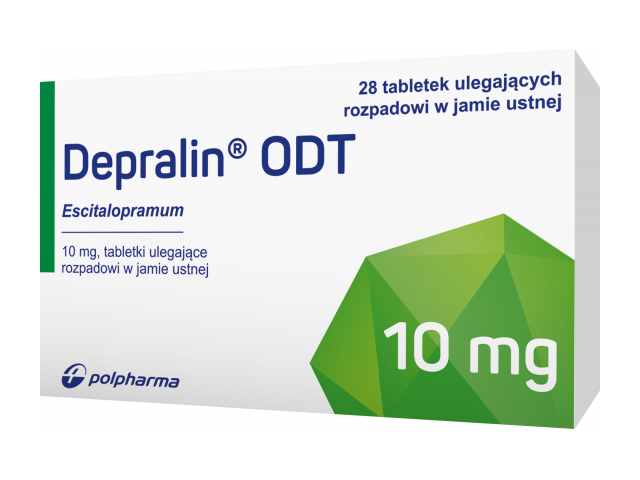
Depralin ODT 10 mg: white or almost white, flat, beveled-edge tablet, 9 mm in diameter, with "10" embossed on one side.
Depralin ODT 20 mg: white or almost white, flat, beveled-edge tablet, 12 mm in diameter, with "20" embossed on one side.
Depralin ODT is available in packs of 7, 28, 30, and 90 orally disintegrating tablets.
Not all pack sizes may be marketed.
Marketing authorization holder
Polpharma S.A.
Pelplińska 19, 83-200 Starogard Gdański
Phone: +48 22 364 61 01
Manufacturer
Genepharm S.A.
18th km Marathonos Ave,
Pallini Attiki, 15351
Greece
PharmaPath S.A.
28is Oktovriou 1,
Agia Varvara, 123 51,
Greece
This medicine is authorized in the Member States of the European Economic Area under the following names:
Netherlands - Escitalopram Polpharma 5 mg orodispergeerbare tabletten
Escitalopram Polpharma 10 mg orodispergeerbare tabletten
Escitalopram Polpharma 15 mg orodispergeerbare tabletten
Escitalopram Polpharma 20 mg orodispergeerbare tabletten
Date of last revision of the leaflet:November 2023
- Country of registration
- Dosage formTablets, 5 mg
- ATC codeN06AB10
- Active substance
- Prescription requiredNo
- Manufacturer
- ImporterGenepharm S.A. PharmaPath S.A.
- This information is for reference only and does not constitute medical advice. Always consult a doctor before taking any medication. Oladoctor is not responsible for medical decisions based on this content.
- Alternatives to Depralin OdtDosage form: Tablets, 10 mgActive substance: escitalopramManufacturer: Biofarm Sp. z o.o.Prescription requiredDosage form: Tablets, 10 mgActive substance: escitalopramPrescription requiredDosage form: Tablets, 20 mgActive substance: escitalopramPrescription required
Online doctors for Depralin Odt
Discuss questions about Depralin Odt, including use, safety considerations and prescription review, subject to medical assessment and local regulations.







Get Depralin Odt Prescription Online
Fill in a 2-min form
Tell us your symptoms, history, and what medicine you're requesting.
Pick a doctor or let us assign
Choose a specialist or we'll match you with the next available doctor.
Doctor reviews your case
Usually within 30 minutes. They may ask follow-up questions via chat.
Collect from any pharmacy
Electronic prescription sent to your email — valid across Spain.
Frequently Asked Questions
Depralin Odt does not require a prescription in Poland. You can check with a doctor online whether this medicine may be appropriate for your situation.
The active ingredient in Depralin Odt is escitalopram. This information helps identify medicines with the same composition but different brand names.
Depralin Odt is manufactured by Genepharm S.A. PharmaPath S.A.. Pharmacy brands and packaging may differ depending on the distributor.
Doctors such as Family doctors, Psychiatrists, Dermatologists, Cardiologists, Endocrinologists, Gastroenterologists, Pulmonologists, Nephrologists, Rheumatologists, Hematologists, Infectious disease physicians, Allergists, Geriatricians, Paediatricians, Oncologists may assess whether Depralin Odt is appropriate, depending on your situation and local regulations. You can book an online consultation to discuss your symptoms and possible next steps.
Spain has a well-developed healthcare infrastructure across major cities such as Madrid, Barcelona, Valencia, and Seville. Pharmacies are widely available and operate under strict regulations, ensuring access to prescribed medications.
You can buy Depralin Odt in Madrid, Barcelona, Seville, or Valencia at any local pharmacy with a valid prescription.
To obtain a prescription, you can use Oladoctor:
Other medicines with the same active substance (escitalopram) include Aciprex, Apoescitaxin Oro, Apoescitaxin Oro. These may have different brand names or formulations but contain the same therapeutic ingredient. Always consult a doctor before switching or starting a new medicine.
