


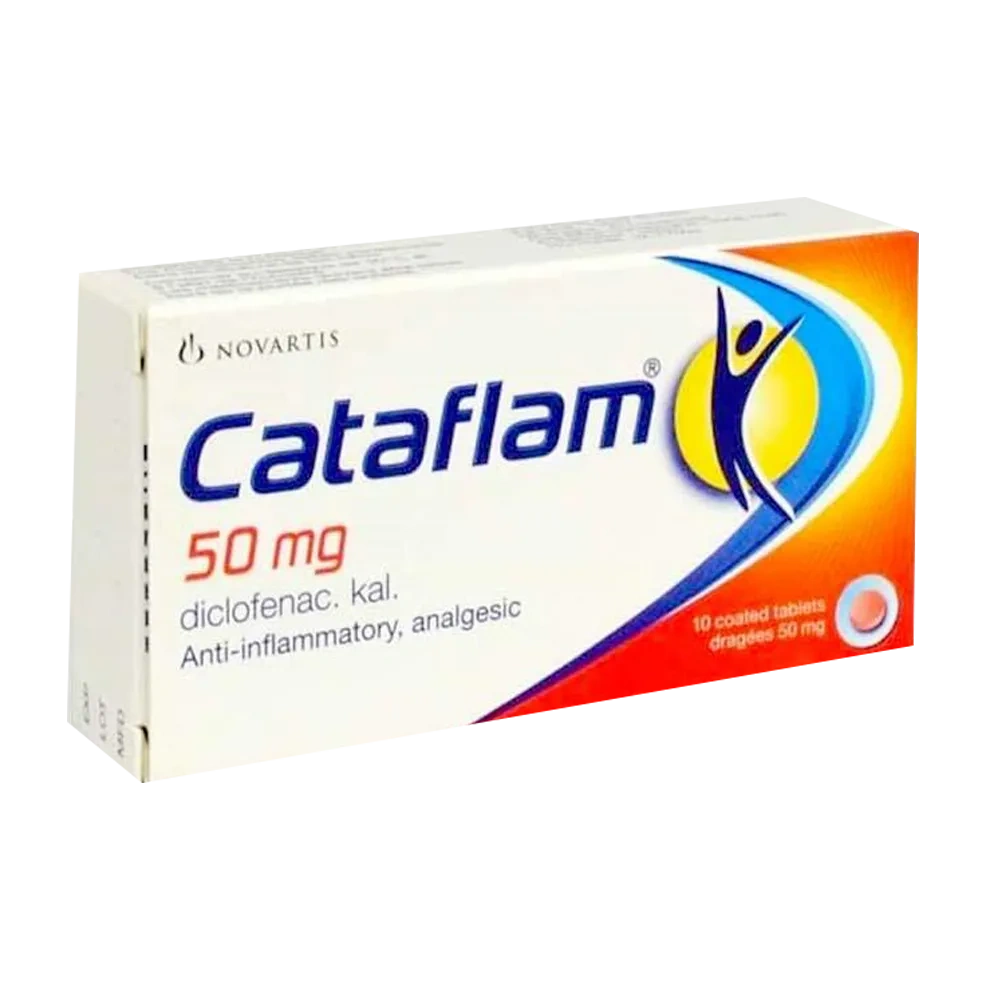
Cataflam 50
Ask a doctor about a prescription for Cataflam 50




How to use Cataflam 50
Leaflet accompanying the packaging: information for the user
Warning! Keep the leaflet! Information on the immediate packaging in a foreign language.
Cataflam 50, 50 mg, effervescent tablets
Diclofenac potassium
You should carefully read the contents of the leaflet before using the medicine, as it contains important information for the patient.
- You should keep this leaflet, so that you can read it again if necessary.
- In case of any doubts, you should consult a doctor or pharmacist.
- This medicine has been prescribed specifically for you. Do not pass it on to others. The medicine may harm another person, even if their symptoms are the same.
- If the patient experiences any side effects, including any side effects not listed in this leaflet, they should tell their doctor or pharmacist. See section 4.
Table of contents of the leaflet:
- 1. What is Cataflam 50 and what is it used for
- 2. Important information before taking Cataflam 50
- 3. How to take Cataflam 50
- 4. Possible side effects
- 5. How to store Cataflam 50
- 6. Contents of the packaging and other information
1. What is Cataflam 50 and what is it used for
Cataflam 50 contains diclofenac potassium, which belongs to the group of non-steroidal anti-inflammatory drugs (NSAIDs), acting anti-rheumatically, anti-inflammatory, analgesic and antipyretic. The mechanism of action of Cataflam 50 involves the inhibition of prostaglandin biosynthesis, which plays a fundamental role in the pathogenesis of inflammation, pain and fever.
Cataflam 50 is used for the short-term treatment of the following acute conditions:
- Pain, inflammation and swelling after injuries, e.g. after spraining a joint.
- Post-operative pain, inflammation and swelling, e.g. after dental and orthopedic procedures.
- Painful and/or inflammatory conditions in gynecology, e.g. primary dysmenorrhea or adnexitis.
- Migraine attacks.
- Back pain syndromes.
- Extra-articular rheumatism.
- As an adjunctive treatment for severe painful infections of the ear, nose or throat, e.g. pharyngitis and tonsillitis, otitis media. In accordance with general therapeutic principles, causal treatment should be applied first. Fever as the only symptom of the disease is not an indication for the administration of the medicine.
Control tests during treatment with Cataflam 50
In patients with diagnosed heart disease or significant risk factors for heart disease, the doctor will periodically assess the patient's need for symptomatic treatment and their response to the medicine, especially if treatment lasts longer than 4 weeks.
During treatment, regular blood tests should be performed in case of any liver function disorders, kidney function disorders, and changes in the blood picture.
Both liver function (transaminase levels), kidney function (creatinine levels), and blood cell count (white and red blood cell count and platelet count) should be monitored. The doctor will take into account the results of blood tests when deciding to discontinue treatment with Cataflam 50 or change the dose of the medicine.
2. Important information before taking Cataflam 50
When not to take Cataflam 50:
- if the patient is hypersensitive to diclofenac or any of the other ingredients of this medicine (listed in section 6);
- if the patient has ever had an allergic reaction after taking anti-inflammatory or analgesic drugs (e.g. acetylsalicylic acid, diclofenac or ibuprofen). Reactions may include asthma, rhinitis, skin rash, facial swelling, lip, tongue, throat and/or limb edema (symptoms of angioedema), difficulty breathing, chest pain or any other allergic reactions. If the patient thinks they may be allergic, they should ask their doctor for advice;
- if the patient has active or a history of stomach or duodenal ulcers, bleeding or perforation; if the patient has previously experienced discomfort in the stomach area or heartburn after taking anti-inflammatory drugs;
- if the patient is in the last trimester of pregnancy;
- if the patient has liver failure;
- if the patient has kidney failure;
- if the patient has heart disease and/or cerebrovascular disease, e.g. after a heart attack, stroke, transient cerebral ischemia (TIA) or vascular occlusion of the heart or brain, or after a surgical procedure to restore patency or bypass occluded vessels;
- if the patient has circulatory disorders (peripheral vascular disease).
Like other non-steroidal anti-inflammatory drugs (NSAIDs), Cataflam 50 should not be used in people who may experience an asthma attack, urticaria or acute rhinitis after taking acetylsalicylic acid or other prostaglandin synthesis inhibitors.
The patient should inform their doctor about the presence of the above-mentioned diseases.
Warnings and precautions
Before taking Cataflam 50, the patient should discuss the following with their doctor:
- if the patient has a diagnosed cardiovascular disease (see above) or significant risk factors such as high blood pressure, elevated lipid levels (cholesterol, triglycerides) or if the patient is a smoker, and the doctor decides to prescribe Cataflam 50, the dose should not be increased above 100 mg per day if treatment lasts longer than 4 weeks;
- if the medicine is used in people with a history of gastrointestinal ulcers or in the elderly. Taking diclofenac may cause gastrointestinal bleeding, ulcers or perforation (with possible fatal outcome). This effect may be particularly dangerous when using high doses of diclofenac. If any unusual abdominal symptoms occur during treatment with Cataflam 50 (especially gastrointestinal bleeding), the medicine should be discontinued immediately and the doctor consulted;
- if the patient has ulcerative colitis or Crohn's disease; diclofenac may exacerbate the disease;
- if the patient has asthma, allergic rhinitis, nasal polyps or chronic obstructive pulmonary disease (COPD) or chronic respiratory infections, they are more likely to experience an allergic reaction to diclofenac (exacerbation of asthma symptoms, angioedema or urticaria). This warning also applies to patients allergic to other substances (e.g. those who experience skin reactions, itching or urticaria). The medicine should be administered with caution (preferably under medical supervision);
if the patient has liver function disorders; diclofenac may worsen the course of the disease. The patient should strictly follow the doctor's recommendations regarding regular liver function tests;
- if the patient has porphyria. Diclofenac may trigger a porphyria attack.
Before taking diclofenac, the patient should inform their doctor:
- if the patient smokes;
- if the patient has diabetes;
- if the patient has angina pectoris, thrombosis, high blood pressure, elevated cholesterol or elevated triglycerides.
The occurrence of side effects can be limited by using the medicine in the smallest effective dose and for no longer than necessary.
The patient should use the smallest dose of Cataflam 50 that provides relief from pain and/or inflammation and use it for the shortest possible time to minimize the risk of side effects.
If at any point during treatment with Cataflam 50 the patient experiences symptoms indicating heart or vascular problems, such as chest pain, shortness of breath, weakness or slurred speech, they should immediately contact their doctor or the hospital emergency department.
Taking diclofenac may temporarily inhibit platelet aggregation.
Before taking Cataflam 50, the patient should tell their doctor if they have recently undergone or are scheduled to undergo stomach or gastrointestinal surgery, as Cataflam 50 may sometimes cause delayed wound healing in the intestines after surgical procedures.
Children and adolescents
The medicine should not be used in children and adolescents under the age of 14. Children and adolescents under the age of 14 are recommended to use diclofenac in the form of suppositories, at a dose of 25 mg per day. Cataflam 50 should not be used in children under 1 year of age.
Elderly patients (65 years and older)
Elderly patients may be more sensitive to the effects of the medicine than other adults. The patient should follow the recommendations in the leaflet, use the smallest effective dose according to the doctor's recommendations, and report all side effects that occur during treatment to their doctor.
Cataflam 50 and other medicines
The patient should tell their doctor about all medicines they are currently taking or have recently taken, as well as any medicines they plan to take.
The patient should especially inform their doctor about taking the following medicines:
- Lithium or antidepressant drugs (selective serotonin reuptake inhibitors).
- Digoxin - a medicine used to treat heart diseases.
- Diuretics - medicines that increase urine production.
- Angiotensin-converting enzyme inhibitors, beta-blockers - a group of medicines used to treat high blood pressure and heart failure.
- Non-steroidal anti-inflammatory drugs (e.g. acetylsalicylic acid or ibuprofen) and corticosteroids (a group of medicines used to alleviate inflammatory conditions in the body).
- Anticoagulant and antiplatelet drugs.
- Antidiabetic drugs, except for insulin.
- Methotrexate - a medicine used to treat certain cancers or arthritis.
- Cyclosporine and tacrolimus - medicines used in organ transplant patients.
- Trimethoprim - a medicine used to prevent and treat urinary tract infections.
- Quinolone antibacterials - medicines used to treat infections.
- Cholestyramine and colestipol - medicines that lower cholesterol levels in the blood.
- Voriconazole - a medicine used to treat fungal infections.
- Phenytoin - a medicine used to treat epileptic seizures.
Taking Cataflam 50 with food and drink
The tablets should be swallowed whole, with a glass of water, preferably before meals.
Pregnancy, breastfeeding and fertility
If the patient is pregnant or breastfeeding, thinks they may be pregnant or plans to have a child, they should consult their doctor before taking this medicine.
Cataflam 50 should not be taken if the patient is in the last 3 months of pregnancy, as it may harm the unborn child or cause complications during delivery. It may cause kidney and heart problems in the unborn child. It may increase the risk of bleeding in the patient and their child and cause delayed or prolonged labor. During the first 6 months of pregnancy, the medicine should not be used unless absolutely necessary and recommended by a doctor. If treatment is necessary during this period or when trying to conceive, the smallest dose should be used for the shortest possible time. From the 20th week of pregnancy, Cataflam 50 may cause kidney problems in the unborn child if taken for more than a few days. This may lead to a decrease in the amount of amniotic fluid surrounding the child (oligohydramnios) or narrowing of the arterial duct (ductus arteriosus) in the child's heart. If treatment is necessary for a longer period, the doctor may recommend additional monitoring.
Cataflam 50 should not be used in breastfeeding women, as it may have a harmful effect on the infant.
The doctor will discuss the potential risks of using Cataflam 50 during pregnancy and breastfeeding with the patient.
Taking Cataflam 50 may make it more difficult to conceive. If the patient plans to conceive or has problems conceiving, they should inform their doctor.
Driving and using machines
The effect of Cataflam 50 on the ability to drive and use machines is unlikely.
Cataflam 50 contains sucrose
Cataflam 50 in the form of effervescent tablets contains sucrose. If the patient has previously been diagnosed with intolerance to some sugars, they should consult their doctor before taking the medicine.
Cataflam 50 contains sodium
The medicine contains less than 1 mmol (23 mg) of sodium per tablet, which means the medicine is considered "sodium-free".
3. How to take Cataflam 50
This medicine should always be taken as directed by the doctor. In case of doubts, the patient should consult their doctor or pharmacist.
The patient should not exceed the recommended dose. When using Cataflam 50 effervescent tablets for more than a few weeks, regular medical check-ups should be performed to rule out any unnoticed side effects.
The general recommendation is to adjust the dose individually and use the smallest effective dose for the shortest possible time.
If the patient feels that the effect of the medicine is too strong or too weak, they should consult their doctor.
Adults
The recommended initial dose is 100 mg per day to 150 mg per day.
In milder cases, a dose of 75 mg to 100 mg per day is considered sufficient.
The tablets are for oral administration. The total daily dose should be divided and taken in 2 to 3 doses, if applicable.
The daily dose should not exceed 150 mg.
In patients with primary dysmenorrhea, the initial dose of the medicine is 50 mg and should be taken when the first symptoms appear, and then continued at a dose of 50 mg, taken up to three times a day for several consecutive days, as needed. If a dose of 150 mg per day does not provide sufficient pain relief for two to three consecutive menstrual cycles, the doctor may recommend an initial dose of 100 mg and up to 200 mg per day, divided into 2 to 3 doses during subsequent menstrual cycles. The dose should not exceed 200 mg per day.
In the treatment of migraine, the initial dose of the medicine is 50 mg and should be taken when the first symptoms of the disease appear. If within 2 hours of taking the first dose, pain relief is not sufficient, an additional dose of 50 mg can be taken. If necessary, additional doses of 50 mg can be taken at 4 to 6 hour intervals. The daily dose should not exceed 200 mg.
Use in children and adolescents
Due to the high dose, Cataflam 50 is not recommended for children and adolescents under the age of 14. Children and adolescents under the age of 14 are recommended to use diclofenac in the form of suppositories, at a dose of 25 mg per day.
In adolescents over 14 years of age, a dose of 75 mg to 100 mg per day, divided into 2 to 3 doses, is usually sufficient. The maximum daily dose should not exceed 150 mg.
Cataflam 50 should not be used in children and adolescents under the age of 18 for the treatment of migraine.
Elderly patients (65 years and older)
The medicine should be used with caution in elderly patients. In elderly patients and those with low body weight, the smallest effective dose is recommended.
Method of administration
The tablets should be swallowed whole, with a glass of water, preferably before meals. The tablets should not be divided or chewed.
How long to take Cataflam 50
Cataflam 50 should always be taken as directed by the doctor.
If the patient is taking Cataflam 50 for a long time, they should regularly consult their doctor to ensure that no side effects have occurred.
In case of doubts about how long to take the medicine, the patient should consult their doctor or pharmacist.
Taking a higher than recommended dose of Cataflam 50
Overdose of Cataflam 50 does not cause characteristic symptoms, but the following may occur: vomiting, gastrointestinal bleeding, diarrhea, dizziness, tinnitus or seizures. In the case of significant poisoning, acute kidney failure and liver damage may occur.
In the event of accidental ingestion of a larger amount of tablets than recommended, the patient should immediately contact their doctor, pharmacist or go to the hospital emergency department.
Missing a dose of Cataflam 50
If the patient misses a dose, they should take it as soon as they remember. However, if more than half of the time between two doses has passed, the missed dose should not be taken, and the next dose should be taken according to the previous dosing schedule. A double dose should not be taken to make up for the missed dose.
4. Possible side effects
Like all medicines, Cataflam 50 can cause side effects, although not everybody gets them.
The frequency of side effects is estimated as follows:
very common (≥1/10); common (≥1/100 to <1>
The following side effects include those reported with Cataflam 50, as well as those observed with other forms of diclofenac, used for short or long periods.
Side effects:
Common
- headache, dizziness,
- nausea, vomiting, diarrhea, indigestion, abdominal pain, bloating, decreased appetite,
- increased transaminase activity,
- rash.
Uncommon
- myocardial infarction, heart failure, palpitations, chest pain.
Rare
- hypersensitivity, anaphylactic and pseudo-anaphylactic reactions (including decreased blood pressure and shock),
- drowsiness,
- asthma (including shortness of breath),
- gastritis, gastrointestinal bleeding, hematemesis, melena,
- peptic ulcer (with or without bleeding and perforation),
- hepatitis, jaundice, liver function disorders,
- urticaria,
- edema.
Very rare
- thrombocytopenia (decreased platelet count), leukopenia (decreased white blood cell count), anemia (including hemolytic and aplastic anemia), agranulocytosis (decreased granulocyte count),
- angioedema (including facial edema),
- disorientation, depression, insomnia, nightmares, irritability, psychotic disorders,
- paresthesia, memory disorders, seizures, anxiety, tremors, aseptic meningitis, taste disorders, stroke,
- visual disturbances, blurred vision, double vision,
- tinnitus, hearing disorders,
- palpitations, chest pain, heart failure, myocardial infarction,
- hypertension, vasculitis,
- pneumonitis,
- ulcerative colitis (including bloody colitis and exacerbation of ulcerative colitis, Crohn's disease), constipation, oral mucositis (including aphthous stomatitis), glossitis, esophageal disorders, intestinal stricture, pancreatitis,
- fulminant hepatitis, liver necrosis, liver failure,
- bullous rash, erythema, erythema multiforme, Stevens-Johnson syndrome, toxic epidermal necrolysis (Lyell's syndrome), exfoliative dermatitis, alopecia, photosensitivity reactions, purpura, Henoch-Schönlein purpura, pruritus,
- acute kidney failure, hematuria, proteinuria, nephrotic syndrome, interstitial nephritis, renal papillary necrosis.
Frequency not known
- concomitant occurrence of chest pain and allergic reactions (Kounis syndrome symptoms).
Taking medicines like Cataflam 50 may be associated with a small increased risk of heart attack (myocardial infarction) or stroke.
In some people, during treatment with Cataflam 50, other side effects may occur.
If any side effect worsens or any side effect not listed in the leaflet occurs, the patient should tell their doctor or pharmacist.
If any of the following side effects occur, the patient should stop taking Cataflam 50 and inform their doctor:
- discomfort in the stomach, heartburn or abdominal pain,
- hematemesis, melena, hematuria,
- skin problems such as rash or itching,
- shortness of breath or difficulty breathing,
- jaundice or yellowing of the whites of the eyes,
- prolonged sore throat or high fever,
- facial swelling, swelling of the feet or ankles,
- severe migraine,
- chest pain accompanied by coughing,
- mild painful abdominal cramps and tenderness, starting soon after taking Cataflam 50, followed by rectal bleeding or bloody diarrhea, usually within 24 hours of abdominal pain onset (frequency not known - cannot be estimated from the available data),
- chest pain, which may be a symptom of a potentially severe allergic reaction called Kounis syndrome.
Some side effects can be serious
These uncommon side effects may occur in 1-10 patients per 1000, especially when using high daily doses (150 mg) for a long time:
- sudden, crushing chest pain (symptoms of myocardial infarction or heart attack),
- shortness of breath, difficulty breathing when lying down, swelling of the feet or ankles (symptoms of heart failure).
If the patient is taking Cataflam 50 for more than a few weeks, they should regularly consult their doctor to ensure that no side effects have occurred.
Reporting side effects
If side effects occur, including any side effects not listed in this leaflet, the patient should tell their doctor or pharmacist. Side effects can be reported directly to the Department of Drug Safety, Urząd Rejestracji Produktów Leczniczych, Wyrobów Medycznych i Produktów Biobójczych, Al. Jerozolimskie 181C, 02-222 Warsaw, tel.: +48 22 49 21 301, fax: +48 22 49 21 309, website: https://smz.ezdrowie.gov.pl.
Reporting side effects will help to gather more information on the safety of the medicine.
5. How to store Cataflam 50
Keep out of the sight and reach of children.
Do not use this medicine after the expiry date stated on the packaging. The expiry date refers to the last day of the month.
Do not store above 30°C. Store in the original packaging.
Translation of some information on the immediate packaging:
LOT– batch number
EXP– expiry date
MFD– production date
Medicines should not be disposed of via wastewater or household waste. The patient should ask their pharmacist how to dispose of medicines that are no longer needed. This will help protect the environment.
6. Contents of the packaging and other information
What Cataflam 50 contains
- The active substance of the medicine is diclofenac potassium. One Cataflam 50 tablet contains 50 mg of diclofenac potassium.
- The other ingredients are: anhydrous colloidal silica, calcium phosphate, magnesium stearate, corn starch, povidone K 30, sodium carboxymethylcellulose (type A). The coating ingredients are: microcrystalline cellulose, macrogol 8000, povidone, sucrose, talc, titanium dioxide (E 171), iron oxide red (E 172).
What Cataflam 50 looks like and contents of the pack
One pack contains 10 effervescent tablets.
For more detailed information, the patient should contact the marketing authorization holder or parallel importer.
Marketing authorization holder in Ireland, the country of export:
Novartis Ireland Limited
Vista Building, Elm Park, Merrion Road
Ballsbridge, Dublin 4, Ireland
Manufacturer:
Novartis Pharma GmbH
Roonstrasse 25 and Obere Turnstrasse 8 – 10
90429 Nuremberg, Germany
Parallel importer:
InPharm Sp. z o.o.
ul. Strumykowa 28/11
03-138 Warsaw
Repackaged by:
Prodlekpol Sp. z o.o.
ul. Chełmżyńska 249
04-458 Warsaw
Pharma Innovations Sp. z o.o.
ul. Jagiellońska 76
03-301 Warsaw
InPharm Sp. z o.o. Services sp. k.
ul. Chełmżyńska 249
04-458 Warsaw
Ireland marketing authorization number:PA0896/004/001
Parallel import authorization number:752/15
Date of leaflet approval: 18.04.2024
[Information about the trademark]
- Country of registration
- Active substance
- Prescription requiredNo
- Marketing authorisation holder (MAH)Novartis Ireland Limited
- This information is for reference only and does not constitute medical advice. Always consult a licensed doctor before taking any medication. Oladoctor is not responsible for medical decisions based on this content.
- Alternatives to Cataflam 50Dosage form: Solution, 25 mg/mlActive substance: diclofenacManufacturer: IBSA Farmaceutici Italia S.r.l.Prescription requiredDosage form: Solution, 50 mg/mlActive substance: diclofenacManufacturer: IBSA Farmaceutici Italia S.r.l.Prescription requiredDosage form: Solution, 75 mg/mlActive substance: diclofenacManufacturer: IBSA Farmaceutici Italia S.r.l.Prescription required
Alternatives to Cataflam 50 in other countries
The best alternatives with the same active ingredient and therapeutic effect.
Alternative to Cataflam 50 in Ukraina
Alternative to Cataflam 50 in Hiszpania
Online doctors for Cataflam 50
Discuss dosage, side effects, interactions, contraindications, and prescription renewal for Cataflam 50 – subject to medical assessment and local rules.

Get updates and exclusive offers
Be the first to know about new services, marketplace updates, and subscriber-only promos.

