


Augmentin Mff
Ask a doctor about a prescription for Augmentin Mff




How to use Augmentin Mff
Leaflet accompanying the packaging: information for the user
Augmentin MFF, (400 mg + 57 mg)/5 ml, powder for oral suspension
Amoxicillin + Clavulanic acid
Please read carefully the contents of the leaflet before starting to use this medicine in a child, as it contains important information for the patient.
- Please keep this leaflet, you may need to read it again.
- If you have any further questions, ask your doctor, pharmacist, or nurse.
- This medicine is usually prescribed for children. Do not give it to others. The medicine may harm another person, even if their symptoms are the same as those of the child.
- If the child experiences any side effects, including any not listed in this leaflet, please tell your doctor, pharmacist, or nurse. See section 4.
Table of contents of the leaflet
- 1. What is Augmentin and what is it used for
- 2. Important information before taking Augmentin
- 3. How to take Augmentin
- 4. Possible side effects
- 5. How to store Augmentin
- 6. Contents of the pack and other information
1. What is Augmentin and what is it used for
Augmentin is an antibiotic that works by killing bacteria that cause infections.
Augmentin contains two different medicines: amoxicillin and clavulanic acid. Amoxicillin belongs
to a group of medicines called “penicillins”, which are sometimes inactivated (deactivated). The second active ingredient (clavulanic acid) counteracts this inactivation.
Augmentin is used in adults and children to treat the following infections:
- middle ear and sinus infections
- respiratory tract infections
- urinary tract infections
- skin and soft tissue infections, including dental infections
- bone and joint infections.
2. Important information before taking Augmentin
When not to give Augmentin to a child
- If the patient is allergic to amoxicillin, clavulanic acid, penicillin, or any of the other ingredients of this medicine (listed in section 6).
- If the patient has ever had a severe allergic reaction to any other antibiotic. These can include a skin rash or swelling of the face or throat.
- If the patient has ever had liver problems or jaundice (yellowing of the skin) associated with the use of an antibiotic.
If any of the above applies to the child being treated, do not give them Augmentin
Augmentin.If in doubt, consult your doctor or pharmacist before starting Augmentin.
Warnings and precautions
Before starting to give Augmentin to a child, consult your doctor, pharmacist, or nurse if:
- the child has infectious mononucleosis
- the child is being treated for liver or kidney disease
- the child has irregular urine output.
If in doubt whether any of the above applies to the child being treated, consult your doctor or pharmacist before starting Augmentin.
In some cases, your doctor may test to see what type of bacteria is causing the infection.
Depending on the results, the child may be given Augmentin in a different dose or a different medicine.
Conditions to watch for
Taking Augmentin can worsen the course of certain diseases or cause severe side effects, including allergic reactions, seizures, and colitis. You should be aware of certain symptoms during Augmentin treatment in the child being treated, to minimize the risk of any problems. See ‘Conditions to watch for
’in section 4.
Blood and urine tests
If the child is to have blood tests (such as red blood cell tests or liver function tests) or urine tests (for glucose), tell the doctor or nurse that the child is taking Augmentin. Augmentin may affect the results of these tests.
Augmentin and other medicines
Tell your doctor or pharmacist about all the medicines the child is taking now or has recently taken, and about any medicines the child is going to take.
If the child is also taking allopurinol (used for gout), it may be more likely that the child will experience skin allergic reactions.
If the child is taking probenecid (used for gout), your doctor may decide to adjust the dose of Augmentin.
If the child is also taking medicines that reduce blood clotting (such as warfarin), additional blood tests may be necessary.
Augmentin may affect the action of methotrexate (a medicine used to treat cancer or rheumatic diseases).
Augmentin may affect the action of mycophenolate mofetil (a medicine used to prevent transplant rejection).
Pregnancy, breastfeeding, and fertility
If you are pregnant or breastfeeding, think you may be pregnant, or are planning to have a baby, ask your doctor or pharmacist for advice before taking this medicine.
Driving and using machines
Augmentin may cause side effects that can affect the ability to drive or use machines.
The patient should not drive or use machines unless they feel well.
Augmentin contains aspartame, benzyl alcohol, and maltodextrin
This medicine contains 2.5 mg of aspartame in 1 ml. Aspartame is a source of phenylalanine. It may be harmful to patients with phenylketonuria (PKU), a rare genetic disorder in which phenylalanine accumulates in the body due to its improper elimination.
Augmentin contains trace amounts of benzyl alcohol. Benzyl alcohol may cause allergic reactions.
Augmentin contains maltodextrin (glucose). If the child being treated has previously been diagnosed with intolerance to some sugars, consult your doctor before taking the medicine.
3. How to take Augmentin
This medicine should always be taken as directed by your doctor or pharmacist. If you are unsure, consult your doctor or pharmacist.
Adults and children weighing 40 kg or more
- This suspension is not usually recommended for adults and children weighing 40 kg or more. Consult your doctor or pharmacist for advice.
Children weighing less than 40 kg
All doses are determined based on the child's weight in kilograms.
- Your doctor will recommend the dose of Augmentin to be given to the child.
- The packaging may come with a plastic measuring spoon or a dosing syringe. Use these to give the child the correct dose. Instructions for using the dosing syringe are at the end of this leaflet.
- Recommended dose - (25 mg + 3.6 mg)/kg body weight/day (0.4 ml suspension/kg body weight/day) to (45 mg + 6.4 mg)/kg body weight/day (0.6 ml suspension/kg body weight/day), given in two divided doses.
- Higher dose - up to (70 mg + 10 mg)/kg body weight/day (1.0 ml suspension/kg body weight/day), given in two divided doses.
Patients with kidney and liver disease
- If the child being treated has kidney problems, the dose of the medicine may be reduced. Your doctor may choose a different dose of Augmentin or a different medicine.
- If the child being treated has liver problems, they may need to have blood tests more frequently to check how their liver is working.
How to give Augmentin
- Always shake the bottle well before giving each dose.
- Give at the start of a meal or just before a meal.
- Give the doses at evenly spaced intervals, at least 4 hours apart. Do not give 2 doses within 1 hour of each other.
- Do not give Augmentin to the child for more than 2 weeks. If the child still does not feel well, consult your doctor again.
Overdose of Augmentin
If the child has been given a higher dose of Augmentin than recommended, they may experience symptoms such as stomach and intestinal upset (nausea, vomiting, or diarrhea) or seizures. Consult your doctor as soon as possible. Bring the medicine bottle with you to show the doctor.
Missing a dose of Augmentin
If a dose of Augmentin is missed, give it as soon as you remember. Do not give the next dose too soon, but wait about 4 hours before giving the next dose. Do not give a double dose to make up for a missed dose.
Stopping Augmentin treatment
Continue to give Augmentin until the end of the treatment, even if the child feels better. All doses of the medicine are needed to fight the infection. If some bacteria survive, they may cause a relapse of the infection.
If you have any further questions about using this medicine, ask your doctor, pharmacist, or nurse.
4. Possible side effects
Like all medicines, Augmentin can cause side effects, although not everybody gets them.
The following are side effects of Augmentin that may occur:
Conditions to watch for
Allergic reactions:
- skin rash
- vasculitis, which can appear as red or purple raised patches on the skin, but can also affect other organs
- fever, joint pain, swelling of the lymph nodes in the neck, armpit, or groin
- swelling, sometimes including the face or throat (angioedema), which can cause difficulty breathing
- fainting
- chest pain associated with an allergic reaction, which can be a sign of an allergy leading to a heart attack (Kounis syndrome).
If the child being treated experiences any of these symptoms, consult your doctor immediately.
Stop taking Augmentin.
Colitis
Colitis, which can cause watery diarrhea, usually with blood and mucus, abdominal pain, and (or) fever.
Drug-induced enterocolitis syndrome (DIES)
Drug-induced enterocolitis occurred mainly in children taking amoxicillin with clavulanic acid. It is a type of allergic reaction, the leading symptom of which is repeated vomiting (1 to 4 hours after taking the medicine). Further symptoms may include abdominal pain, lethargy, diarrhea, and low blood pressure.
Acute pancreatitis
If the patient has severe and persistent stomach pain, it may be a sign of acute pancreatitis.
If the child being treated experiences any of these symptoms, consult your doctor as soon as possible
for advice.
Common side effects
May occur in up to 1 in 10 patients:
- thrush (candidiasis - fungal infections of the vagina, mouth, or skin folds)
- nausea, especially when taking high doses; if they occur, take Augmentin before meals
- vomiting
- diarrhea (in children).
Uncommon side effects
May occur in up to 1 in 100 patients:
- skin rash, itching
- raised, itchy rash (hives)
- indigestion
- dizziness
- headache.
Uncommon side effects that may appear in blood test results:
- increased activity of certain substances (enzymes) produced in the liver.
Rare side effects
May occur in up to 1 in 1,000 patients:
- skin rash, which can occur with blisters and look like small targets (a dark spot in the center surrounded by a lighter ring with a dark ring around the edge - erythema multiforme) if you notice any of these symptoms, consult your doctor urgently.
Rare side effects that may appear in blood test results:
- low number of blood cells involved in blood clotting
- low number of white blood cells.
Side effects with unknown frequency
Frequency cannot be estimated from the available data.
- Allergic reactions (see above).
- Colitis (see above).
- Meningitis (aseptic meningitis).
- Severe skin reactions:
- -widespread skin rash, which can occur with blisters and peeling of the skin, especially around the mouth, nose, eyes, and genitals (Stevens-Johnson syndrome), and a more severe form causing widespread peeling of the skin (more than 30% of the body surface - toxic epidermal necrolysis)
- -widespread red skin rash, which can occur with small pus-filled blisters (bullous exfoliative dermatitis)
- -red scaly rash with thickening of the skin and blisters (acute generalized exanthematous pustulosis)
- -flu-like symptoms with a rash, fever, swollen lymph nodes, and abnormal blood test results (including an increased number of white blood cells (eosinophilia) and increased liver enzyme activity); drug reaction with eosinophilia and systemic symptoms (DRESS)
- -red rash, usually observed on both buttocks, the inner upper thighs, under the arms, and on the neck (symmetrical, flexural, and papular eruption caused by a drug (SDRIFE)).
If the child being treated experiences any of these symptoms, consult your doctor immediately.
- Blisters arranged in a ring shape with scabs in the center or like a string of pearls (linear IgA dermatosis).
- Hepatitis.
- Jaundice, caused by an increase in bilirubin (a substance produced in the liver) in the blood, which can cause yellowing of the skin and the whites of the eyes.
- Tubulointerstitial nephritis.
- Prolonged blood clotting time.
- Hyperactivity.
- Seizures (in people taking high doses of Augmentin or with kidney disease).
- Black hairy tongue.
- Discoloration of teeth (in children), which can usually be removed by brushing.
Side effects that may appear in blood or urine test results:
- markedly decreased number of white blood cells
- low number of red blood cells (hemolytic anemia)
- crystals in the urine, leading to acute kidney damage.
Reporting side effects
If you experience any side effects, including any not listed in this leaflet, please tell your doctor, pharmacist, or nurse. Side effects can be reported directly to the Department of Drug Safety, Office for Registration of Medicinal Products, Medical Devices, and Biocidal Products:
Jerozolimskie Avenue 181C
02-222 Warsaw
Phone: +48 22 49 21 301
Fax: +48 22 49 21 309
Website: https://smz.ezdrowie.gov.pl
Side effects can also be reported to the marketing authorization holder.
Reporting side effects will help to gather more information on the safety of this medicine.
5. How to store Augmentin
Keep the medicine out of the sight and reach of children.
Dry powder
Store in the original packaging to protect from moisture. Do not store above 25°C.
Do not use this medicine after the expiry date stated on the packaging after “EXP”. The expiry date refers to the last day of the month stated.
Reconstituted suspension
The reconstituted suspension (medicine after adding water) should be stored in the refrigerator (between 2°C and 8°C). Do not freeze.
The shelf life of the reconstituted suspension is 7 days.
Medicines should not be disposed of via wastewater or household waste. Ask your pharmacist how to dispose of medicines no longer required. This will help protect the environment.
6. Contents of the pack and other information
What Augmentin contains
- The active substances are amoxicillin and clavulanic acid. Each ml of reconstituted suspension contains 80 mg of amoxicillin as amoxicillin trihydrate and 11.4 mg of clavulanic acid as potassium clavulanate.
- Other ingredients are: aspartame (E 951), xanthan gum, silicon dioxide, colloidal anhydrous silica, succinic acid, hypromellose, orange flavor 1 dry* (contains benzyl alcohol), orange flavor 2 dry*, raspberry flavor dry*, Golden Syrup flavor dry* (*also contains maltodextrin).
- Further information on aspartame, benzyl alcohol, and maltodextrin - see section 2.
What Augmentin looks like and contents of the pack
Augmentin (400 mg + 57 mg)/5 ml powder for oral suspension is a white to off-white powder available in a glass bottle. After adding water, the bottle contains 35 ml, 70 ml, or 140 ml of a white to pale brown mixture called a suspension. Not all pack sizes may be marketed.
Marketing authorization holder and manufacturer
Marketing authorization holder
GlaxoSmithKline Trading Services Limited, 12 Riverwalk, Citywest Business Campus, Dublin 24,
D24 YK11, Ireland
Manufacturer
Glaxo Wellcome Production, ZI de la Peyenniere, 53100 Mayenne Cedex, France
To obtain more detailed information on this medicine, please consult the local representative of the marketing authorization holder:
GSK Services Sp. z o.o.
Rzymowskiego 53
02-697 Warsaw
tel. (22) 576-90-00
This medicine is authorized in the Member States of the European Economic Area and in the United Kingdom (Northern Ireland) under the following names:
Austria – Augmentin 400 mg/57 mg/5 ml Pulver zur Herstellung einer Suspension zum Einnehmen
Multifruchtgeschmack
Bulgaria – Аугментин 400 mg/57 mg/5 ml прах за перорална суспензия
Croatia – Augmentin 400 mg + 57 mg/5 ml prašak za oralnu suspenziju s okusom voća
Cyprus – Augmentin Mixed Fruit
Czech Republic – Augmentin
Estonia – Augmentin Fruit
France – Augmentin 80 mg - 11.4 mg par ml Poudre pour suspension buvable
Greece – Augmentin MF
Germany – Augmentan Kindersaft
Hungary – Augmentin Duo
Ireland – Augmentin Duo Mixed Fruit
Italy – Augmentin
Latvia – Augmentin Fruit 400 mg/57 mg/5 ml pulveris iekšķīgi lietojamas suspensijas pagatavošanai
Lithuania – Augmentin
Malta – Augmentin Duo Mixed Fruit
Norway – Augmentin
Poland – Augmentin
Portugal – Augmentin Duo
Romania – Augmentin FP
Slovakia – Augmentin DUO s príchuťou miešaného ovocia
United Kingdom (Northern Ireland) – Augmentin Duo
Date of last revision of the leaflet: January 2025
Medical education
Antibiotics are used to treat bacterial infections. They are ineffective in treating viral infections.
Sometimes bacterial infections do not respond to antibiotic treatment.
One of the most common reasons for this is that the bacteria are resistant to the antibiotic being used.
This means that the bacteria can survive or multiply despite the use of the antibiotic.
Bacteria can become resistant to antibiotics for many reasons. Careful use of antibiotics can help reduce the possibility of bacteria becoming resistant.
The antibiotic prescribed by your doctor is intended to treat the current illness only. Following the advice below will help prevent the development of resistant bacteria:
- 1. It is very important to take the antibiotic in the correct dose, at the correct time, and for the correct number of days. Read the instructions in the patient information leaflet and if you have any questions, ask your doctor or pharmacist to explain.
- 2. The patient should not take an antibiotic that has not been prescribed for them. They should only take it to treat the infection for which the antibiotic was prescribed.
- 3. The patient should not take an antibiotic prescribed for someone else, even if they have a similar infection.
- 4. Do not give antibiotics prescribed for one patient to another person.
- 5. If there are any leftover antibiotics after completing the treatment as directed by the doctor, return them to the pharmacy, which will dispose of them properly.
---------------------------------------------------------------------------------------------------------------------------
Instructions for preparing the medicine for use
Open the bottle. Before use, check that the protective foil on the bottle has not been broken. Close the bottle cap.
- 1. Shake the medicine bottle to loosen the powder.
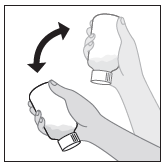
- 2. Open the bottle cap.
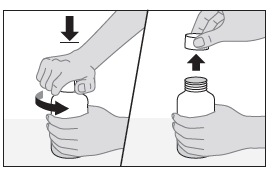
- 3. Tear off the protective foil.
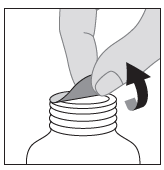
- 4. Add water (volume indicated below). Close the bottle cap, turn the bottle upside down, and shake well.
Alternative method of preparing the suspension: fill the bottle with water to the level just below the mark on the label or on the bottle. Close the bottle cap, turn the bottle upside down, and shake well, then fill with water to the exact level marked. Close the bottle cap, turn the bottle upside down, and shake well again.
| Pack size [ml] | Volume of water to be added to prepare the suspension [ml] |
| 35 | 31 |
| 70 | 62 |
| 140 | 124 |
Instructions for using the dosing syringe
The packaging may come with a dosing syringe. The dosing syringe is intended for oral administration of Augmentin.
The dosing syringe should only be used to administer Augmentin. It should not be used to administer other medicines, as the graduated scale is specific to the Augmentin product.
The dosing syringe comes with a connector that allows it to be attached to the bottle.
The dosing syringe for oral administration has a graduated scale that allows the required dose to be measured in milliliters (ml). Give the child the dose prescribed by the doctor.
Before use, check that the dosing syringe and connector do not contain any contamination. If necessary, rinse them with clean water.
- 1. Always shake the suspension bottle well before each use.
- 2. Remove the connector from the dosing syringe. Holding the bottle firmly, push the connector into the neck of the bottle (leave the connector in the bottle neck, do not remove it).
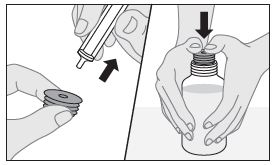
- 3. Push the tip of the dosing syringe into the recess of the connector and ensure it is securely attached.
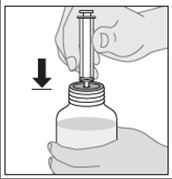
- 4. Turn the bottle upside down while holding the dosing syringe. Pull the plunger down to the dose of Augmentin prescribed by the doctor.
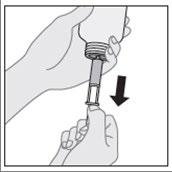
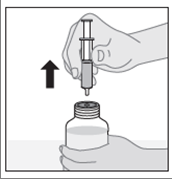
- 5. Turn the bottle right side up (neck up) and remove the dosing syringe from the connector.
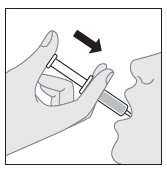
- 6. To give the medicine to the child, carefully place the tip of the dosing syringe in the child's mouth, then slowly push the plunger to give the suspension. (If it is necessary to give more than one dosing syringe to administer the prescribed dose, repeat the steps described in points 3, 4, 5, and 6).
- 7. After use, rinse the dosing syringe with clean water. Leave it to dry completely before the next use.
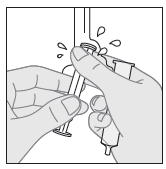
- 8. Close the bottle cap.
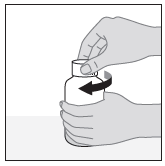
- 9. The reconstituted suspension (medicine after adding water) should be stored in the refrigerator. Shake the bottle before each use. The shelf life of the reconstituted suspension is 7 days.
- Country of registration
- Active substance
- Prescription requiredYes
- ImporterGlaxo Wellcome Production
- This information is for reference only and does not constitute medical advice. Always consult a licensed doctor before taking any medication. Oladoctor is not responsible for medical decisions based on this content.
- Alternatives to Augmentin MffDosage form: Tablets, 875 mg + 125 mgActive substance: amoxicillin and beta-lactamase inhibitorPrescription not requiredDosage form: Powder, (600 mg + 42.9 mg)/5 mlActive substance: amoxicillin and beta-lactamase inhibitorManufacturer: Sandoz GmbHPrescription requiredDosage form: Powder, (600 mg + 42.9 mg)/5 mlActive substance: amoxicillin and beta-lactamase inhibitorPrescription required

Alternatives to Augmentin Mff in other countries
The best alternatives with the same active ingredient and therapeutic effect.
Alternative to Augmentin Mff in Espanha
Alternative to Augmentin Mff in Ukraine
Online doctors for Augmentin Mff
Discuss dosage, side effects, interactions, contraindications, and prescription renewal for Augmentin Mff – subject to medical assessment and local rules.






Get updates and exclusive offers
Be the first to know about new services, marketplace updates, and subscriber-only promos.

