


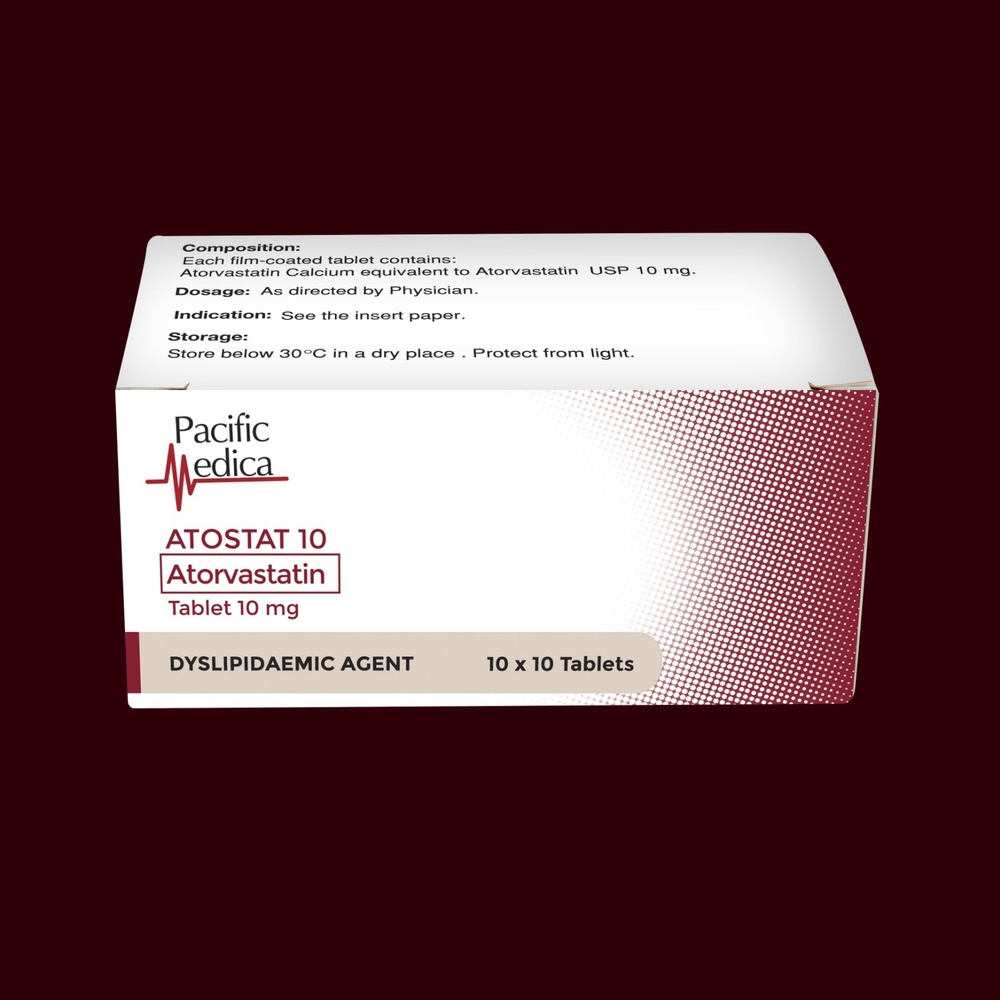
Atostat
Ask a doctor about a prescription for Atostat




How to use Atostat
Leaflet attached to the packaging: information for the user
Atostat, 10 mg, coated tablets
Atostat, 20 mg, coated tablets
Atostat, 40 mg, coated tablets
Atorvastatin
You should carefully read the contents of the leaflet before using the medicine, as it contains important information for the patient.
- You should keep this leaflet, so that you can read it again if necessary.
- In case of any doubts, you should consult a doctor or pharmacist.
- This medicine has been prescribed to you specifically. Do not pass it on to others. The medicine may harm another person, even if the symptoms of their illness are the same.
- If the patient experiences any side effects, including any side effects not listed in this leaflet, they should tell their doctor or pharmacist. See section 4.
Table of contents of the leaflet:
- 1. What is Atostat and what is it used for
- 2. Important information before using Atostat
- 3. How to use Atostat
- 4. Possible side effects
- 5. How to store Atostat
- 6. Contents of the packaging and other information
1. What is Atostat and what is it used for
Atostat belongs to a group of medicines called statins, which regulate lipid metabolism in the body.
Atostat is used to reduce the levels of lipids, such as cholesterol and triglycerides, in the blood when a low-fat diet and changes in lifestyle are not effective.
Atostat may also be used to reduce the risk of heart disease, even if the cholesterol level is normal. During treatment, a standard low-cholesterol diet should be continued.
2. Important information before using Atostat
When not to use Atostat:
- if the patient is allergic to atorvastatin or any other similar medicine used to lower lipid levels in the blood or any of the other ingredients of the medicine listed in section 6,
- if the patient has or has had liver disease,
- if the patient has unexplained, abnormal liver function test results,
- in women of childbearing age who do not use effective methods of contraception,
- in pregnant or breastfeeding women,
- in women who are breastfeeding.
Warnings and precautions
Before using Atostat, you should discuss it with your doctor, pharmacist, or nurse.
- in case of severe respiratory failure
- if the patient is taking or has taken fusidic acid orally or by injection (an antibiotic) in the last 7 days. Concurrent use of fusidic acid and Atostat may lead to serious muscle problems (rhabdomyolysis),
- in case of a stroke with bleeding into the brain or if there is a small amount of fluid in the brain from a previous stroke,
- in case of kidney problems,
- in case of hypothyroidism,
- in case of recurring or unexplained muscle pain or muscle problems in the past or similar problems in relatives,
- in case of muscle problems during previous treatment with other lipid-lowering medicines (e.g., other statins or fibrates),
- in case of regular consumption of large amounts of alcohol,
- in case of liver disease in the past,
- in patients over 70 years old.
In patients who are affected by any of the above situations, the doctor will prescribe a blood test before starting treatment with Atostat and, if possible, during treatment to monitor the risk of side effects related to the muscles. It is known that the risk of side effects related to the muscles, such as rhabdomyolysis, is greater when certain medicines are used concurrently (see section 2 "Other medicines and Atostat").
You should also inform your doctor or pharmacist if you have persistent muscle weakness. Additional tests and medicines may be needed to diagnose and treat muscle weakness.
During the use of this medicine, the patient's health will be closely monitored if they have diabetes or are at risk of developing diabetes. The patient is at risk of developing diabetes if they have high levels of sugars and fats in the blood, are overweight, and have high blood pressure.
Other medicines and Atostat
You should tell your doctor or pharmacist about all medicines you are currently taking or have recently taken, as well as any medicines you plan to take.
If you need to take fusidic acid orally for the treatment of a bacterial infection, you will need to temporarily stop taking Atostat. Your doctor will inform you when it is safe to resume taking Atostat.
Taking Atostat with fusidic acid can rarely lead to muscle weakness, tenderness, or pain (rhabdomyolysis). More information about rhabdomyolysis can be found in section 4.
Some medicines may change the effect of Atostat or the effect of these medicines on the body may be changed by Atostat. This type of interaction can lead to reduced efficacy of one or both medicines. At the same time, it can increase the risk of serious side effects, including severe muscle damage known as rhabdomyolysis, described in section 4:
- medicines that modify the immune system, such as cyclosporine,
- certain antibiotics and antifungal medicines, such as erythromycin, clarithromycin, telithromycin, ketoconazole, itraconazole, voriconazole, fluconazole, posaconazole, rifampicin, fusidic acid,
- other medicines that regulate lipid levels, such as gemfibrozil, other fibrates, cholestyramine,
- certain calcium channel blockers used for angina or high blood pressure, such as amlodipine, diltiazem, and certain medicines that regulate heart rhythm, such as digoxin, verapamil, amiodarone,
- medicines used to treat HIV infection, such as ritonavir, lopinavir, atazanavir, indinavir, darunavir, tipranavir in combination with ritonavir, etc.,
- certain medicines used to treat hepatitis C, such as telaprevir,
- other medicines that are known to interact with Atostat, such as ezetimibe (which lowers cholesterol), warfarin (which reduces blood clotting), oral contraceptives, stiripentol (an antiepileptic medicine), cimetidine (used to treat heartburn and stomach ulcers), fenazon (a pain reliever), colchicine (used to treat gout), antacids (medicines used for indigestion, containing aluminum or magnesium), and boceprevir (used to treat liver diseases such as hepatitis C),
- over-the-counter medicines: St. John's Wort.
Using Atostat with food and drink
Information on the use of Atostat can be found in section 3. However, you should pay attention to the following information:
Grapefruit juice
You should not drink more than one or two small glasses of grapefruit juice per day, as larger amounts of grapefruit juice may change the effect of Atostat.
Alcohol
While taking Atostat, you should avoid consuming excessive amounts of alcohol. More information on this can be found in section 2 "Warnings and precautions".
Pregnancy and breastfeeding
Using Atostat during pregnancy or breastfeeding is contraindicated.
Using Atostat in women of childbearing age is contraindicated if they do not use effective methods of contraception.
Using Atostat during breastfeeding is contraindicated.
The safety of using Atostat during pregnancy and breastfeeding has not been established.
Before using any medicine, you should consult a doctor or pharmacist.
Driving and using machines
Normally, the medicine does not affect the ability to drive or use machines. However, you should not drive if the medicine affects your ability to do so.
You should not use any tools or machines if using the medicine affects your ability to use them.
Atostat contains lactose
Patients who have been informed by their doctor about intolerance to certain sugars should contact their doctor before taking Atostat.
3. How to use Atostat
Atostat should always be used as directed by your doctor. In case of doubts, you should consult your doctor or pharmacist again.
Before starting treatment, your doctor will recommend a low-cholesterol diet; this diet should be continued during treatment with Atostat.
The recommended initial dose of Atostat for adults and children over 10 years old is 10 mg once a day. This dose may be increased by your doctor if necessary, up to a dose suitable for the patient. Your doctor will adjust the dose of Atostat at intervals of 4 weeks or more. The maximum dose of Atostat is 80 mg once a day for adults and 20 mg once a day for children.
Atostat tablets should be swallowed whole, with a glass of water; they can be taken at any time of day, with or without food. However, you should try to take the tablet at the same time every day.
The duration of treatment with Atostat is determined by your doctor.
If you feel that the effect of Atostat is too strong or too weak, you should consult your doctor.
Using a higher dose of Atostat than recommended
In case of accidental ingestion of too many Atostat tablets (more than the typical daily dose), you should contact your doctor or the nearest hospital for advice.
Missing a dose of Atostat
If you forget to take Atostat, you should simply take the next dose at the scheduled time. You should not take a double dose to make up for the missed dose.
Stopping treatment with Atostat
In case of doubts about using Atostat, you should consult your doctor or pharmacist.
4. Possible side effects
Like all medicines, Atostat can cause side effects, although not everybody gets them.
If you experience any of the serious side effects, you should stop taking Atostat and contact your doctor or go to the emergency department of the nearest hospital immediately.
Rare(may affect up to 1 in 1000 people)
- Severe allergic reaction causing swelling of the face, tongue, and throat, which can cause severe breathing difficulties.
- Severe skin disease characterized by peeling and swelling of the skin, blisters, and fever. Rash with pink-red spots, especially on the palms or soles, with possible blisters.
- Muscle weakness, tenderness, or pain. If you also feel unwell or have a high fever, it may be caused by abnormal muscle breakdown. Abnormal muscle breakdown does not always go away, even after stopping atorvastatin, and can be life-threatening and cause kidney problems.
Very rare(may affect up to 1 in 10,000 people)
- If you experience unexpected or unusual bleeding or bruising, it may indicate liver problems. You should consult your doctor as soon as possible.
Other possible side effects of Atostat:
Common(may affect up to 1 in 10 people)
- nasal congestion, sore throat, nosebleeds,
- allergic reactions,
- increased glucose levels in the blood (in patients with diabetes, blood glucose levels should be closely monitored), increased creatine kinase levels in the blood,
- headaches,
- nausea, constipation, bloating, indigestion, diarrhea,
- joint pain, muscle pain, and back pain,
- blood test results indicating abnormal liver function.
Uncommon(may affect up to 1 in 100 people)
- loss of appetite, weight gain, decreased glucose levels in the blood (in patients with diabetes, blood glucose levels should be closely monitored),
- nightmares, insomnia,
- dizziness, numbness or tingling of fingers and toes, decreased sensitivity to pain and touch, changes in taste, memory loss,
- blurred vision,
- ringing in the ears or head,
- vomiting, belching, abdominal pain, pancreatitis (causing abdominal pain),
- hepatitis,
- rash, skin rash, and itching, hives, hair loss,
- neck pain, muscle fatigue,
- fatigue, malaise, weakness, chest pain, swelling, especially of the ankles, elevated temperature,
- presence of white blood cells in the urine.
Rare(may affect up to 1 in 1000 people)
- vision disorders,
- unexpected bleeding or bruising (bruises),
- cholestasis (yellowing of the skin and whites of the eyes),
- tendon rupture.
Very rare(may affect up to 1 in 10,000 people)
- allergic reactions - symptoms may include sudden wheezing and chest pain or tightness, swelling of the eyelids, face, lips, mouth, tongue, or throat, difficulty breathing, collapse,
- hearing loss,
- gynecomastia (excessive growth of breast tissue in men).
Side effects of unknown frequency: persistent muscle weakness.
The following side effects have been reported in patients treated with other statins:
Possible side effects reported during treatment with some statins (medicines of the same type):
- sexual disorders,
- depression,
- breathing problems, including persistent cough and (or) shortness of breath or fever,
- diabetes; the onset of diabetes is more likely if the patient has high levels of sugars and fats in the blood, is overweight, and has high blood pressure. The doctor will monitor the patient's condition while taking this medicine.
Reporting side effects
If you experience any side effects, including any side effects not listed in this leaflet, you should tell your doctor or pharmacist. Side effects can be reported directly to the Department of Adverse Reaction Monitoring of Medicinal Products, Medical Devices, and Biocidal Products, Al. Jerozolimskie 181C, 02-222 Warsaw, tel.: +48 22 49 21 301, fax: +48 22 49 21 309, e-mail: [email protected]
Side effects can also be reported to the marketing authorization holder.
Reporting side effects will help gather more information on the safety of the medicine.
5. How to store Atostat
Store in a place out of sight and reach of children.
Do not use Atostat after the expiry date stated on the carton and blister after "EXP". The expiry date refers to the last day of that month.
Medicines should not be disposed of via wastewater or household waste. You should ask your pharmacist how to dispose of medicines that are no longer needed. This will help protect the environment.
6. Contents of the packaging and other information
What Atostat contains
- The active substance of Atostat is atorvastatin. Each coated tablet contains 10 mg of atorvastatin (in the form of atorvastatin calcium). Each coated tablet contains 20 mg of atorvastatin (in the form of atorvastatin calcium). Each coated tablet contains 40 mg of atorvastatin (in the form of atorvastatin calcium). Each coated tablet contains 80 mg of atorvastatin (in the form of atorvastatin calcium).
- The other ingredients of Atostat are: tablet core: mannitol, sodium lauryl sulfate, colloidal silica, sodium carbonate, butylhydroxyanisole, microcrystalline cellulose, sodium croscarmellose, magnesium stearate. coating: hypromellose 15cP, microcrystalline cellulose, stearic acid.
What Atostat looks like and what the pack contains
10 mg coated tablets
white, oval, biconvex tablets with the inscription "10" on one side and smooth on the other.
20 mg coated tablets
white, oval, biconvex tablets with the inscription "20" on one side and smooth on the other.
40 mg coated tablets
white, oval, biconvex tablets with the inscription "40" on one side and smooth on the other.
Atostat is packaged in a aluminum blister pack with a heat-sealable aluminum foil.
The pack contains 30 coated tablets in a cardboard box.
Marketing authorization holder:
Artespharm Sp. z o.o.
Solec 81 B, lok. A-51,
00-382 Warsaw, Poland
Name and address of the importer who releases the series:
Mako Pharma Sp z o.o.
Wiśniowa 9, 05-092 Kiełpin
Date of the last update of the leaflet:
- Country of registration
- Active substance
- Prescription requiredYes
- ImporterMako Pharma Sp. z o.o.
- This information is for reference only and does not constitute medical advice. Always consult a licensed doctor before taking any medication. Oladoctor is not responsible for medical decisions based on this content.
- Alternatives to AtostatDosage form: Tablets, 10 mgActive substance: atorvastatinManufacturer: APL Swift Services (Malta) Ltd.Prescription requiredDosage form: Tablets, 20 mgActive substance: atorvastatinManufacturer: APL Swift Services (Malta) Ltd.Prescription requiredDosage form: Tablets, 40 mgActive substance: atorvastatinManufacturer: APL Swift Services (Malta) Ltd.Prescription required
Alternatives to Atostat in other countries
The best alternatives with the same active ingredient and therapeutic effect.
Alternative to Atostat in España
Alternative to Atostat in Ucrania
Online doctors for Atostat
Discuss dosage, side effects, interactions, contraindications, and prescription renewal for Atostat – subject to medical assessment and local rules.





Get updates and exclusive offers
Be the first to know about new services, marketplace updates, and subscriber-only promos.

