


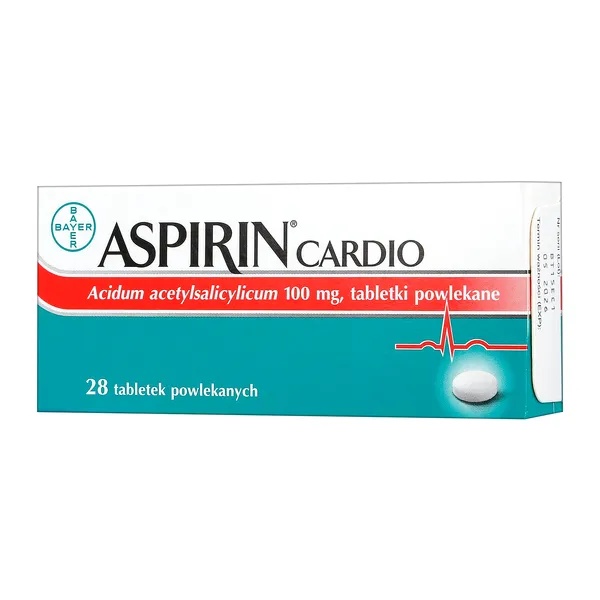
Aspirin Cardio
Ask a doctor about a prescription for Aspirin Cardio




How to use Aspirin Cardio
Leaflet attached to the packaging: patient information
WARNING: Keep the leaflet, information on the immediate packaging in a foreign language.
Aspirin Cardio (Adiro)
100 mg, enteric-coated tablets
Acetylsalicylic acid
Aspirin Cardio Adiroare different trade names for the same medicine.
You should carefully read the contents of the leaflet before taking the medicine, as it contains important information for the patient.
This medicine should always be taken exactly as described in the patient leaflet or as directed by your doctor or pharmacist.
- You should keep this leaflet, so that you can read it again if you need to.
- If you need advice or additional information, you should consult a pharmacist.
- If you experience any side effects, including all possible side effects not listed in the leaflet, you should tell your doctor or pharmacist. See section 4.
Table of contents of the leaflet
- 1. What is Aspirin Cardio and what is it used for
- 2. Important information before taking Aspirin Cardio
- 3. How to take Aspirin Cardio
- 4. Possible side effects
- 5. How to store Aspirin Cardio
- 6. Contents of the packaging and other information
1 What is Aspirin Cardio and what is it used for
Acetylsalicylic acid, the active substance contained in Aspirin Cardio, when administered in small doses, long-term, inhibits platelet aggregation (clumping). This plays an important role in preventing the formation of blood clots.
Aspirin Cardio is indicated for use in adults in the following cardiovascular diseases:
- in unstable angina,
- in recent myocardial infarction or suspected recent myocardial infarction,
- in the prevention of recurrent myocardial infarction,
- in the prevention of thromboembolic complications after surgical or interventional procedures on blood vessels (e.g., percutaneous transluminal coronary angioplasty (PTCA), coronary artery bypass grafting (CABG), carotid endarterectomy, arteriovenous shunt),
- in the prevention of transient ischemic attacks (TIA) and ischemic stroke in patients with TIA,
- in the prevention of first myocardial infarction in patients with multiple risk factors,
- in the prevention of deep vein thrombosis and pulmonary embolism in patients who are immobilized for a long time, e.g., after major surgery, as a supplement to other prophylactic methods.
2. Important information before taking Aspirin Cardio
When not to take Aspirin Cardio
- if you are allergic (hypersensitive) to the active substance - acetylsalicylic acid, other salicylates, or any of the other ingredients of the medicine (listed in section 6),
- if you have a bleeding disorder,
- if you have acute gastric or duodenal ulcer,
- if you have severe renal impairment,
- if you have severe hepatic impairment,
- if you have severe heart failure,
- if you have had asthma attacks in the past, triggered by the administration of salicylates or substances with similar effects, especially non-steroidal anti-inflammatory drugs,
- if you are taking methotrexate at doses of 15 mg per week or higher (see "Aspirin Cardio and other medicines"),
- in the third trimester of pregnancy,
- in children under 12 years of age with viral infections due to the risk of Reye's syndrome - a rare but serious disease that causes liver and brain damage.
Warnings and precautions
Aspirin Cardio should be used with caution:
- in the first and second trimester of pregnancy,
- during breastfeeding,
- in case of hypersensitivity to non-steroidal anti-inflammatory and anti-rheumatic drugs (e.g., ibuprofen, indomethacin) or other allergenic substances,
- when taking anticoagulant medications, such as coumarin derivatives, heparin,
- in patients with impaired renal function or circulatory disorders,
- when taking non-steroidal anti-inflammatory drugs (NSAIDs), such as ibuprofen and naproxen (anti-inflammatory, antipyretic, or analgesic) (see "Aspirin Cardio and other medicines"),
- in patients with impaired liver function,
- in patients who have had gastric or gastrointestinal bleeding in the past,
- in patients with glucose-6-phosphate dehydrogenase deficiency.
Acetylsalicylic acid may cause bronchospasm and trigger asthma attacks or other hypersensitivity reactions. Patients with asthma, chronic respiratory diseases, hay fever, nasal polyps, and those showing allergic reactions (e.g., skin reactions, itching, hives) to other substances are particularly at risk.
Prior to surgical procedures (including minor procedures, e.g., tooth extraction), patients should inform their doctor about taking Aspirin Cardio.
Acetylsalicylic acid, even in small doses, reduces the excretion of uric acid from the body. In patients with a tendency to reduced uric acid excretion, the medicine may cause a gout attack.
Aspirin Cardio and other medicines
You should tell your doctor or pharmacist about all medicines you are taking or have recently taken, as well as any medicines you plan to take.
Acetylsalicylic acid enhances:
- the toxic effect of methotrexate on the bone marrow; acetylsalicylic acid should not be taken simultaneously with methotrexate at doses of 15 mg per week or higher; simultaneous administration of methotrexate at doses less than 15 mg per week requires special caution.
- the effect of anticoagulant medications (e.g., coumarin derivatives, heparin), thrombolytic medications (dissolving blood clots, e.g., streptokinase, urokinase), and platelet aggregation inhibitors (e.g., ticlopidine), which may increase the risk of prolonged bleeding time and bleeding.
- the risk of gastric ulcer and gastrointestinal bleeding when taken simultaneously with corticosteroids, other non-steroidal anti-inflammatory drugs, including other salicylates in high doses, or when alcohol is consumed during treatment; after discontinuation of systemic corticosteroids (except for hydrocortisone used as replacement therapy in Addison's disease), the risk of salicylate overdose increases;
- the effect of digoxin, as it increases its serum concentration;
- the effect of antidiabetic medications, such as insulin, sulfonylurea derivatives;
- the toxic effect of valproic acid, which in turn enhances the anti-aggregatory effect of acetylsalicylic acid.
Acetylsalicylic acid weakens the effect of:
- anti-gout medications used to treat gout, which increase uric acid excretion from the body (e.g., benzbromarone, probenecid), which may worsen gout symptoms;
- diuretics;
- certain antihypertensive medications (from the group of so-called angiotensin-converting enzyme inhibitors, e.g., captopril, enalapril).
Certain non-steroidal anti-inflammatory drugs (NSAIDs), such as ibuprofen and naproxen, may reduce the inhibitory effect of Aspirin Cardio on platelet aggregation (thrombocytes) and thrombus formation, thereby reducing the protective effect of Aspirin Cardio against myocardial infarction and stroke.
Metamizole (a substance with analgesic and antipyretic effects) may reduce the effect of acetylsalicylic acid on platelet aggregation when taken simultaneously. Therefore, caution should be exercised when taking metamizole in patients receiving acetylsalicylic acid.
Concomitant use of selective serotonin reuptake inhibitors (a group of antidepressant medications) increases the risk of gastrointestinal bleeding.
Aspirin Cardio can be taken simultaneously with the above-mentioned medications (except for methotrexate at doses of 15 mg per week or higher, when the use of Aspirin Cardio is contraindicated) only after consulting a doctor.
Systemic corticosteroids (corticosteroids/steroids taken orally or by injection), except for hydrocortisone used as replacement therapy in Addison's disease, taken simultaneously with acetylsalicylic acid: there is a risk of acetylsalicylic acid overdose after discontinuation of corticosteroid treatment, as well as an increased risk of gastric ulcers and gastrointestinal bleeding caused by concomitant use of Aspirin Cardio and systemic corticosteroids.
The treatment effect may be influenced by concomitant administration of Aspirin Cardio with medications used in the following conditions:
- organ rejection after transplants (cyclosporine, tacrolimus);
- pain and inflammatory conditions (e.g., steroids and anti-inflammatory medications).
Alcohol may increase the risk of adverse reactions related to the gastrointestinal tract.
Taking Aspirin Cardio with food and drink
Tablets should be taken orally, preferably at least 30 minutes before a meal, with a large amount of water.
Pregnancy and breastfeeding
If you are pregnant or breastfeeding, think you may be pregnant, or plan to have a child, you should consult your doctor or pharmacist before taking this medicine. Aspirin Cardio is contraindicated in the third trimester of pregnancy, as it may cause complications during the perinatal period, both in the mother and the newborn. In the first and second trimester of pregnancy, Aspirin Cardio should be used only in cases of absolute indications. Women planning pregnancy or who are in the first or second trimester of pregnancy should use Aspirin Cardio in the smallest possible dose and for the shortest possible time.
Acetylsalicylic acid passes into breast milk in small amounts.
Driving and operating machinery
Aspirin Cardio does not affect the ability to drive and operate machinery.
Aspirin Cardio contains sodium
The medicine contains less than 1 mmol (23 mg) of sodium per tablet, which means the medicine is considered "sodium-free".
3. How to take Aspirin Cardio
This medicine should always be taken exactly as described in this patient leaflet or as directed by your doctor or pharmacist. In case of doubts, you should consult a doctor or pharmacist.
The recommended dose is:
- in unstable angina: 1 tablet once a day;
- in recent myocardial infarction or suspected recent myocardial infarction: 2 to 3 tablets once a day, with the tablets chewed to ensure rapid absorption;
- in the prevention of recurrent myocardial infarction: 1 tablet once a day;
- in the prevention of thromboembolic complications after surgical or interventional procedures on blood vessels (e.g., percutaneous transluminal coronary angioplasty (PTCA), coronary artery bypass grafting (CABG), carotid endarterectomy, arteriovenous shunt): 1 tablet once a day;
- in the prevention of transient ischemic attacks (TIA) and ischemic stroke in patients with TIA: 1 tablet once a day;
- in the prevention of first myocardial infarction in patients with multiple risk factors: 1 tablet once a day;
- in the prevention of deep vein thrombosis and pulmonary embolism in patients who are immobilized for a long time, e.g., after major surgery, as a supplement to other prophylactic methods: 1 to 2 tablets once a day. Tablets should be taken orally, whole, preferably at least 30 minutes before a meal, with a large amount of water. During treatment for myocardial infarction, the tablet should be chewed or crushed and swallowed. If you feel that the effect of the medicine is too strong or too weak, you should consult a doctor or pharmacist.
Taking a higher dose of Aspirin Cardio than recommended
Overdose in elderly people and small children (taking higher doses than recommended or accidental poisoning) requires special attention, as it can lead to death in these patient groups.
Symptoms of mild poisoning are: dizziness (including vertigo), tinnitus, hearing loss, excessive sweating, nausea, and vomiting, headache, disorientation.
In cases of severe poisoning, the following may occur: initially, hyperventilation, then shallow breathing and difficulty breathing, up to respiratory failure, fever, ketonuria, respiratory alkalosis, metabolic acidosis, coma, cardiogenic shock, significant decrease in blood glucose levels, presence of blood in urine, seizures, hallucinations, ketonuria (presence of ketone bodies in urine), proteinuria (presence of protein in urine), hypokalemia (decreased potassium levels in the blood).
In case of taking a higher dose of the medicine than recommended, you should immediately consult a doctor or pharmacist, and in case of severe poisoning, the patient should be taken to the hospital immediately. Treatment of poisoning involves gastric lavage, administration of activated charcoal, and alkaline diuresis. In severe poisonings, forced alkaline diuresis, peritoneal dialysis, or hemodialysis may be necessary.
Missing a dose of Aspirin Cardio
In case of missing a dose, you should take the next dose of Aspirin Cardio.
You should not take a double dose to make up for the missed dose.
Stopping treatment with Aspirin Cardio
In case of any further doubts related to the use of this medicine, you should consult a doctor or pharmacist.
4. Possible side effects
Like all medicines, this medicine can cause side effects, although not everybody gets them.
Gastrointestinal disorders, such as symptoms of indigestion (heartburn, nausea, vomiting), abdominal pain, rarely inflammatory conditions in the stomach and intestines; gastric and duodenal ulcers very rarely leading to bleeding and perforation with corresponding laboratory and clinical symptoms. In rare cases, transient liver function disorders with increased aminotransferase activity have been described.
Hypersensitivity reactions, such as skin reactions, hives, rash, itching, respiratory and cardiovascular disorders, asthma attacks, swelling, rhinitis, nasal congestion.
Dizziness and tinnitus, especially in children and the elderly, are usually symptoms of overdose.
Due to the effect of acetylsalicylic acid on platelet aggregation, the risk of bleeding and prolonged bleeding time increases during treatment with Aspirin Cardio, as well as the risk of thrombocytopenia. Bleeding such as postoperative bleeding, hematomas, nosebleeds, bleeding from the urinary and reproductive tracts has been observed. Rarely or very rarely, serious bleeding such as gastrointestinal bleeding, cerebral hemorrhage (especially in patients with uncontrolled hypertension and/or concomitant use of bleeding-inhibiting medications), which in individual cases may be life-threatening, have been reported. Bleeding can lead to acute or chronic anemia and/or iron deficiency anemia (e.g., due to hidden microbleeding) with corresponding laboratory and clinical symptoms, such as asthenia (fatigue), pallor, hypoperfusion (decreased blood flow).
- A symptom of a severe hypersensitivity reaction may be: facial and eyelid edema, tongue and laryngeal edema with narrowing of the airways, difficulty breathing, shortness of breath up to asthma attacks, rapid heartbeat, sudden decrease in blood pressure up to life-threatening shock. In case of any of the above symptoms, you should immediately seek medical attention. The above reactions can occur even after the first administration of the medicine.
- Prolonged use of medications containing acetylsalicylic acid may cause headache, which worsens with each subsequent dose.
- Severe kidney function disorders and kidney failure, renal papillary necrosis, interstitial nephritis have been reported.
- In patients with glucose-6-phosphate dehydrogenase deficiency, hemolysis or hemolytic anemia has been reported.
- Enteropathy associated with intestinal stricture. If any of the side effects worsen or if you experience any side effects not listed in the leaflet, you should tell your doctor or pharmacist.
Reporting side effects
If you experience any side effects, including any side effects not listed in this leaflet, you should tell your doctor or pharmacist. Side effects can be reported directly to the Department of Adverse Reaction Monitoring of Medicinal Products, Medical Devices, and Biocidal Products, Al. Jerozolimskie 181C, 02-222 Warsaw, Tel.: +48 22 49 21 301, Fax: +48 22 49 21 309, website: https://smz.ezdrowie.gov.pl.
By reporting side effects, you can help provide more information on the safety of the medicine.
5. How to store Aspirin Cardio
The medicine should be stored out of sight and reach of children.
Store in the original packaging at a temperature below 25°C.
Store at a temperature below 30°C.
Do not use this medicine after the expiry date stated on the packaging. The expiry date refers to the last day of the month.
Medicines should not be disposed of via wastewater or household waste. You should ask your pharmacist how to dispose of medicines that are no longer needed. This will help protect the environment.
6. Contents of the packaging and other information
What Aspirin Cardio contains
- The active substance of the medicine is acetylsalicylic acid (Acidum acetylsalicylicum).1 enteric-coated tablet contains 100 mg of the active substance.
- The other ingredients are: cellulose, powder, cornstarch, methacrylic acid copolymer (type C), polysorbate 80, sodium lauryl sulfate, talc, triethyl citrate.
What Aspirin Cardio looks like and what the packaging contains
PP/Al or PVC/Al blisters in a cardboard box.
The packaging contains 30 or 60 enteric-coated tablets.
For more detailed information, you should consult the marketing authorization holder or parallel importer.
Marketing authorization holder in Spain, the country of export:
Bayer Hispania, S.L., Av. Baix Llobregat 3-5, 08970 Sant Joan Despí – Barcelona, Spain
Manufacturer:
Bayer Bitterfeld GmbH, OT Greppin, Salegaster Chaussee, 1, 06803- Bitterfeld-Wolfen, Germany
Bayer HealthCare Manufacturing S.r.l., Via delle Groane, 126, 20024 Garbagnate Milanese, Italy
Parallel importer:
PharmaVitae Sp. z o.o. sp. k., ul. E. Orzeszkowej 3/35, 59-820 Leśna
Repackaged by:
CEFEA Sp. z o.o. Sp. komandytowa, ul. Działkowa 56, 02-234 Warsaw
Pharma Innovations Sp. z o.o., ul. Jagiellońska 76, 03-301 Warsaw
Synoptis Industrial Sp. z o.o., ul. Szosa Bydgoska 58, 87-100 Toruń
Chemiczno-Farmaceutyczna Spółdzielnia Pracy „ESPEFA”, ul. Juliusza Lea 208, 30-133 Kraków
LABOR Przedsiębiorstwo Farmaceutyczno-Chemiczne Sp. z o.o., ul. Długosza 49, 51-162 Wrocław
Authorization number in Spain, the country of export:841288.4
- 723798.3 Parallel import authorization number:92/20
Date of leaflet approval: 27.05.2022
[Information about the trademark]
- Country of registration
- Active substance
- Prescription requiredNo
- Marketing authorisation holder (MAH)Bayer Hispania, SL
- This information is for reference only and does not constitute medical advice. Always consult a licensed doctor before taking any medication. Oladoctor is not responsible for medical decisions based on this content.
- Alternatives to Aspirin CardioDosage form: Tablets, 75 mgActive substance: acetylsalicylic acidManufacturer: G.L. Pharma GmbH Krka, d.d., Novo mesto TAD Pharma GmbHPrescription not requiredDosage form: Tablets, 100 mgActive substance: acetylsalicylic acidManufacturer: G.L. Pharma GmbH Krka, d.d., Novo mesto TAD Pharma GmbHPrescription not requiredDosage form: Tablets, 160 mgActive substance: acetylsalicylic acidManufacturer: G.L. Pharma GmbH Krka, d.d., Novo mesto TAD Pharma GmbHPrescription not required
Alternatives to Aspirin Cardio in other countries
The best alternatives with the same active ingredient and therapeutic effect.
Alternative to Aspirin Cardio in Hiszpania
Alternative to Aspirin Cardio in Ukraina
Online doctors for Aspirin Cardio
Discuss dosage, side effects, interactions, contraindications, and prescription renewal for Aspirin Cardio – subject to medical assessment and local rules.



Get updates and exclusive offers
Be the first to know about new services, marketplace updates, and subscriber-only promos.

