


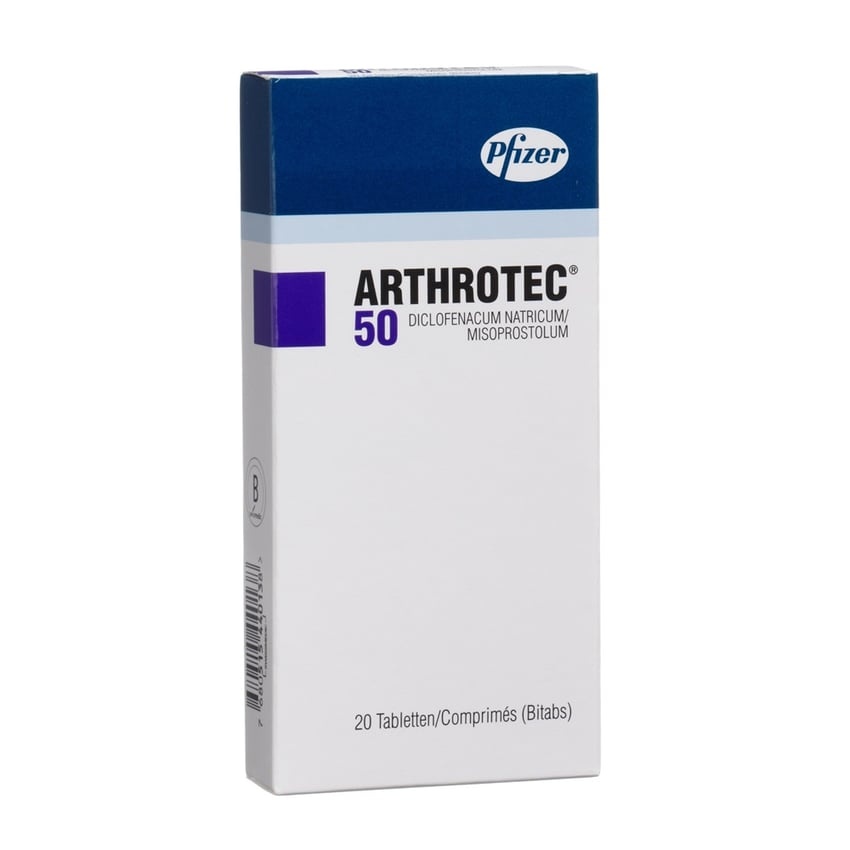
Arthrotec
Ask a doctor about a prescription for Arthrotec




How to use Arthrotec
LEAFLET INCLUDED IN THE PACKAGING: INFORMATION FOR THE USER
Warning! Keep the leaflet, information on the immediate packaging in a foreign language!
Arthrotec
50 mg + 0.2 mg, tablets
Diclofenac sodium + Misoprostol
You should carefully read the contents of the leaflet before using the medicine, as it contains important information for the patient.
- You should keep the leaflet, so that you can read it again if necessary.
- In case of any doubts, you should consult a doctor or pharmacist.
- This medicine has been prescribed specifically for you. Do not pass it on to others. The medicine may harm another person, even if the symptoms of their illness are the same.
- If the patient experiences any side effects, including any side effects not listed in this leaflet, they should tell their doctor or pharmacist. See section 4.
Table of contents of the leaflet
- 1. What is Arthrotec and what is it used for
- 2. Important information before taking Arthrotec
- 3. How to take Arthrotec
- 4. Possible side effects
- 5. How to store Arthrotec
- 6. Contents of the packaging and other information
1. What is Arthrotec and what is it used for
Arthrotec is a non-steroidal anti-inflammatory medicine (NSAID).
Arthrotec is indicated for use in patients who require concurrent use of a non-steroidal anti-inflammatory drug (diclofenac) and misoprostol.
Diclofenac in Arthrotec is indicated for the symptomatic treatment of osteoarthritis and rheumatoid arthritis. Misoprostol is indicated for the prevention of gastric and/or duodenal ulcers in patients who require NSAID therapy.
2. Important information before taking Arthrotec
When not to take Arthrotec
- if the patient is allergic to diclofenac, acetylsalicylic acid, non-steroidal anti-inflammatory drugs (NSAIDs), misoprostol, other prostaglandins, or any of the other ingredients of this medicine (listed in section 6). Hypersensitivity symptoms include, among others, chest pain;
- in case of active gastric and/or duodenal ulcer, perforation, or bleeding;
- in case of other active bleeding, such as cerebral hemorrhage;
- in pregnancy or in women planning to become pregnant;
- if the patient is of childbearing age and does not use effective contraception to prevent pregnancy (for additional information, see "Pregnancy");
- in patients who experience asthma attacks, urticaria, or acute rhinitis when taking NSAIDs;
- for the treatment of post-operative pain in case of coronary artery bypass grafting;
- if the patient has heart disease and/or cerebrovascular disease, such as moderate or severe heart failure, myocardial infarction, stroke, transient ischemic attack (TIA), or cerebral vascular thrombosis or embolism, or after revascularization or bypass surgery;
- if the patient has circulatory disorders (peripheral vascular disease);
- in patients with severe renal or hepatic impairment.
Warnings and precautions
Before starting to take Arthrotec, you should discuss it with your doctor or pharmacist. If the patient:
- is pregnant or planning to become pregnant (see "Pregnancy"); due to the risk to the fetus, taking Arthrotec should be stopped immediately.
- is of childbearing age (see "Pregnancy"); due to the risk to the fetus, it is essential to use effective contraception during treatment with Arthrotec.
Special precautions when taking Arthrotec
- in patients with renal, hepatic, or severe heart disorders, as well as in the elderly. In case of severe hepatic impairment, significant dehydration, Arthrotec should only be used in exceptional cases and under close monitoring of the patient's condition (see "When not to take Arthrotec");
- when taking high doses of diclofenac (150 mg per day) and long-term treatment, as this may be associated with an increased risk of serious thrombotic events affecting the arteries (e.g., myocardial infarction or stroke). The doctor should inform the patient about the symptoms and/or signs of serious cardiovascular toxicity and the actions to be taken in case of such symptoms;
- in patients who have experienced toxic effects on the gastrointestinal tract or gastric and/or duodenal ulcers in the past. In particular, elderly patients should report any unusual abdominal symptoms (especially gastrointestinal bleeding) early in the treatment phase. In case of bleeding or ulcers in the gastrointestinal tract, the doctor will decide whether to discontinue the combined drug containing diclofenac and misoprostol;
- in patients with bleeding disorders or impaired coagulation, as well as in patients with a history of cerebral hemorrhage, as NSAIDs, including Arthrotec, may reduce platelet aggregation and prolong bleeding time;
- in patients taking anticoagulant medications: warfarin and/or coumarin derivatives and new oral anticoagulants (e.g., apixaban, dabigatran, rivaroxaban) due to the increased risk of gastrointestinal bleeding and other bleeding;
- in patients with ulcerative colitis or Crohn's disease, as Arthrotec may exacerbate symptoms of these diseases;
- in patients with asthma or allergic disease - currently or in the past, as NSAIDs may cause bronchospasm in patients with asthma or allergic disease;
- in patients with hypertension and/or mild heart failure, as NSAIDs have been observed to cause fluid retention and edema in this patient population. The doctor will provide the patient with information on monitoring and other special recommendations.
You should avoid taking Arthrotec and other systemically administered NSAIDs, except for acetylsalicylic acid, including selective COX-2 inhibitors (e.g., rofecoxib, celecoxib), due to the increased frequency of ulcers and gastrointestinal bleeding.
Before taking Arthrotec, you should tell your doctor if you have recently undergone or are scheduled to undergo stomach or gastrointestinal surgery, as Arthrotec may sometimes cause impaired wound healing in the intestines after surgery.
Arthrotec may cause serious gastrointestinal side effects, including inflammation, bleeding, ulcers, and perforation of the stomach, small intestine, and large intestine, which can be fatal. In case of bleeding or ulcers in the gastrointestinal tract, you should discontinue the use of the medicine. These events may occur at any time during treatment, with or without warning symptoms, or in patients with a history of serious gastrointestinal side effects.
The group at the highest risk of developing these gastrointestinal complications associated with Arthrotec includes patients receiving high doses of the medicine, elderly patients, patients with cardiovascular disorders, patients taking acetylsalicylic acid, corticosteroids, selective serotonin reuptake inhibitors, patients consuming alcohol, or patients with gastrointestinal diseases, active or in the past, such as ulcers, gastrointestinal bleeding, or inflammation of the gastrointestinal mucosa.
For this reason, Arthrotec should be used with caution in these patients, starting treatment with the lowest effective dose.
Arthrotec should not be used in women of childbearing age, unless the patient uses effective methods of contraception and has been informed about the risks associated with taking the medicine during pregnancy. There is a warning on the packaging: "Do not use in women of childbearing age, unless they use effective methods of contraception".
Taking medicines like Arthrotec may be associated with a small increased risk of heart attack (myocardial infarction) or stroke. This risk increases with long-term use of high doses of the medicine. You should not take higher doses or use the medicine for longer than recommended.
Rarely, serious skin reactions have been observed during treatment with NSAIDs, including Arthrotec. The patient should immediately report any skin changes to their doctor. The doctor may decide to discontinue treatment with Arthrotec in case of the first occurrence of a skin rash, mucosal lesions, or any other symptoms of hypersensitivity.
In patients with systemic lupus erythematosus and connective tissue diseases, Arthrotec may increase the risk of developing aseptic meningitis.
During long-term treatment with high doses of pain and/or anti-inflammatory medication, headache may occur, which should not be treated by administering further doses of the medicine or other NSAIDs.
Arthrotec may mask fever and thus the underlying disease.
The medicine may make it difficult to become pregnant. If the patient plans to become pregnant or is having trouble becoming pregnant, they should inform their doctor.
Arthrotec may cause vision disturbances. In case of vision disturbances, the patient should contact an ophthalmologist.
Before taking the medicine, the patient should inform their doctor:
- if they smoke
- if they have diabetes
- if they have angina pectoris, thrombosis, hypertension, high cholesterol, or high triglycerides.
The occurrence of side effects can be reduced by using the medicine in the lowest effective dose and for no longer than necessary.
Arthrotec and other medicines
The patient should inform their doctor if they are taking any of the following medicines:
- diuretics (diuretic medicines): NSAIDs may reduce the effectiveness of diuretics. When taking diuretics that spare potassium, an increase in potassium levels in the blood may occur;
- cyclosporine (immunosuppressive medicines used, among others, in the treatment of transplant patients): diclofenac may increase the nephrotoxicity of cyclosporine; it is essential to start taking Arthrotec at the lowest dose and closely monitor the patient's condition for signs of toxic effects;
- tacrolimus (immunosuppressive medicine used, among others, in the treatment of atopic dermatitis): when taking NSAIDs with tacrolimus, there is a possible increased risk of nephrotoxic effects;
- lithium preparations, digoxin, ketoconazole: Arthrotec may cause an increase in lithium and digoxin levels in the blood at steady state and decrease ketoconazole levels;
- antidiabetic medicines: NSAIDs may enhance the effect of oral antidiabetic medicines. When taken with antidiabetic medicines, there may be a risk of hypoglycemia or hyperglycemia;
- anticoagulant medicines, such as warfarin, and antiplatelet agents, such as acetylsalicylic acid. It is not recommended to take Arthrotec with acetylsalicylic acid;
- selective serotonin reuptake inhibitors (some medicines used in the treatment of depression): NSAIDs may enhance the effect of these medicines, thus increasing the risk of gastrointestinal bleeding;
- methotrexate: NSAIDs may enhance the toxicity of methotrexate associated with its increased levels in the blood, especially in patients taking high doses of methotrexate;
- other NSAIDs and corticosteroids: concurrent use of these medicines with Arthrotec may increase the frequency of ulcers or gastrointestinal bleeding and other side effects;
- antihypertensive medicines, including diuretics, ACE inhibitors, angiotensin II receptor antagonists, and beta-blockers: NSAIDs may reduce their effectiveness. In patients with impaired renal function (e.g., dehydrated or elderly patients with impaired renal function), concurrent use of an ACE inhibitor or an angiotensin II receptor antagonist with a cyclooxygenase inhibitor may lead to renal impairment, including acute renal failure, which is usually reversible;
- medicines that neutralize stomach acid: these medicines may delay the absorption of diclofenac. Medicines that neutralize stomach acid, containing magnesium, may enhance the diarrhea caused by misoprostol;
- quinolones: in patients taking NSAIDs and quinolones, there may be an increased risk of seizures;
- mifepristone (a non-steroidal anti-progestogen medicine, not available in Poland): NSAIDs may reduce its effect. NSAIDs should be taken after 8 to 12 days from mifepristone administration;
- voriconazole (an antifungal medicine);
- sulfinpyrazone (a medicine used in the treatment of gout).
The patient should tell their doctor or pharmacist about all medicines they are currently taking or have recently taken, as well as any medicines they plan to take.
Arthrotec with food and drink
Tablets should be taken with food.
Pregnancy, breastfeeding, and fertility
Pregnancy
The patient should not take Arthrotec if they are pregnant, think they may be pregnant, or are trying to become pregnant. The patient should inform their doctor about planned pregnancy. Due to the possible risk of fetal damage, before starting to take this medicine, the patient must make sure they are not pregnant. Women of childbearing age, during treatment with this medicine, must use effective contraception.
The doctor must inform the patient about the risks associated with becoming pregnant while taking Arthrotec, as the medicine may cause abortion, premature birth, or fetal malformation (birth defects). If the patient is pregnant, they should never take this medicine, as it may have a serious effect on the child, especially on their heart, lungs, and/or kidneys, up to causing death. If the patient has taken this medicine during pregnancy, they should discuss it with their doctor. If the patient decides to continue the pregnancy, they should be closely monitored by ultrasound, with particular attention to the evaluation of the fetus's limbs and head.
Diclofenac may cause premature closure of the ductus arteriosus.
NSAIDs, used in the second or third trimester of pregnancy, may cause renal dysfunction in the fetus, which may contribute to a decrease in the amount of amniotic fluid or, in severe cases, to oligohydramnios. These effects may occur soon after starting treatment and are usually reversible. The amount of amniotic fluid should be closely monitored in pregnant women taking NSAIDs.
Breastfeeding
If the patient is breastfeeding, they should consult their doctor or pharmacist before taking this medicine. Do not take Arthrotec during breastfeeding. Misoprostol is converted to misoprostolic acid, which passes into breast milk and may cause side effects in breastfed infants, such as diarrhea.
Driving and using machines
Patients who experience dizziness or other central nervous system disorders while taking NSAIDs should not drive vehicles or operate machinery.
Arthrotec contains lactose monohydrate
If the patient has been diagnosed with intolerance to some sugars, they should consult their doctor before taking the medicine.
Arthrotec contains sodium
The medicine contains less than 1 mmol (23 mg) of sodium per tablet, which means the medicine is considered "sodium-free".
Arthrotec contains hydrogenated castor oil
The medicine contains hydrogenated castor oil, which may cause nausea and diarrhea.
3. How to take Arthrotec
This medicine should always be taken exactly as directed by your doctor. If you are unsure, consult your doctor or pharmacist.
Tablets should be swallowed whole, without chewing.
Adults
The recommended dose is one tablet taken with food, one to three times a day.
Use in the elderly
No dose adjustment is necessary; however, patients should be closely monitored.
Use in patients with renal impairment
No dose adjustment is necessary in patients with mild or moderate renal impairment; however, they should be closely monitored.
Use in patients with hepatic impairment
No dose adjustment is necessary in patients with mild or moderate hepatic impairment; however, they should be closely monitored.
Use in children and adolescents
The safety and efficacy of Arthrotec in children and adolescents under 18 years of age have not been established.
Overdose of Arthrotec
In case of overdose, the patient should contact their doctor or pharmacist.
Treatment of acute NSAID overdose is based on supportive and symptomatic therapy. It is recommended to take measures to reduce the absorption of the recently taken medicine, such as inducing vomiting, gastric lavage, or administering activated charcoal.
Clinical symptoms that may indicate misoprostol overdose include: sedation, tremors, seizures, dyspnea, abdominal pain, diarrhea, fever, tachycardia, hypotension, or bradycardia (slow heart rate). Inducing diuresis (urine excretion) may be beneficial, as Arthrotec metabolites are excreted in the urine.
Missed dose of Arthrotec
A double dose should not be taken to make up for a missed dose.
Discontinuation of Arthrotec
The decision to discontinue treatment is made by the doctor. If the patient feels that the effect of the medicine is too strong or too weak, they should contact their doctor.
In case of any further doubts about the use of this medicine, the patient should consult their doctor or pharmacist.
4. Possible side effects
Like all medicines, Arthrotec can cause side effects, although not everybody gets them.
Very common (occurring in more than 1 in 10 patients)
- abdominal pain, diarrhea, nausea, indigestion
Common (occurring in more than 1 in 100 and less than 1 in 10 patients)
- insomnia
- headache, dizziness
- gastric and/or duodenal ulcer*, gastritis, esophagitis, gastrointestinal inflammation*, vomiting, constipation, flatulence, belching
- rash*, itching
- increased alanine aminotransferase activity, decreased hematocrit value, increased alkaline phosphatase activity in the blood
- fetal malformation*
Uncommon (occurring in more than 1 in 1000 and less than 1 in 100 patients)
- vaginitis
- thrombocytopenia* (platelet deficiency)
- stroke*
- blurred vision*
- myocardial infarction*, heart failure*
- hypertension*
- dyspnea*
- gastrointestinal bleeding*, oral mucosal inflammation*
- urticaria*, purpura
- irregular or intermenstrual bleeding, menorrhagia, metrorrhagia (including postmenopausal bleeding), menstrual disorders
- fever*, edema*, chills*
- increased aspartate aminotransferase activity
Rare (occurring in less than 1 in 1000 patients)
- anaphylactic reaction*
- nightmares*
- pancreatitis*
- hepatitis*
- bullous dermatitis*, angioedema*
- chest pain, dysmenorrhea
Frequency not known (cannot be estimated from the available data)
- hemolytic anemia*, agranulocytosis*, platelet aggregation inhibition*
- fluid retention*
- mood changes*
- aseptic meningitis* (characterized by symptoms such as neck stiffness, headache, nausea, vomiting, fever, or altered consciousness)
- vasculitis*
- gastrointestinal perforation*
- liver failure*, jaundice*
- toxic epidermal necrolysis*, Stevens-Johnson syndrome* (blisters on the mucous membranes and genital organs), erythema multiforme*, exfoliative dermatitis*, drug rash with eosinophilia and systemic symptoms (DRESS syndrome)
- renal failure*, renal impairment*, renal papillary necrosis*, nephrotic syndrome*, interstitial nephritis*, membranous nephropathy*, focal segmental glomerulosclerosis*, nephropathy*
- fetal death*, amniotic fluid embolism*, incomplete abortion*, premature birth*, abnormal uterine contractions*, placental retention or fetal membrane rupture*
- uterine bleeding*, uterine contractions, female infertility (reduced fertility)*
- uterine rupture*, uterine perforation*
* Adverse reactions reported after the medicine was placed on the market.
The patient should immediately tell their doctor if they experience chest pain, which may be a symptom of a potentially serious allergic reaction called Kounis syndrome.
Adverse reactions from controlled clinical trials, lasting up to 24 months, mainly concern the gastrointestinal system. Diarrhea and abdominal pain are usually mild or moderate in severity and are transient; these symptoms occur early in the treatment phase and may last for several days. Diarrhea and abdominal pain resolve spontaneously during Arthrotec treatment.
During treatment with NSAIDs, including Arthrotec, very rare cases of exacerbation of infection-related inflammation have been observed.
After the medicine was placed on the market, the most frequently reported adverse reactions were gastrointestinal side effects (about 45% of all reported cases), followed by skin reactions and hypersensitivity, which is consistent with the adverse reaction profile of NSAIDs.
Taking diclofenac, especially in high doses (150 mg per day) and long-term treatment, may be associated with a slightly increased risk of serious arterial thrombotic events (e.g., myocardial infarction or stroke).
Reporting side effects
If you experience any side effects, including any side effects not listed in the leaflet, you should tell your doctor or pharmacist. Side effects can be reported directly to the Department of Monitoring of Adverse Reactions to Medicinal Products, Medical Devices, and Biocidal Products of the Office for Registration of Medicinal Products, Medical Devices, and Biocidal Products
Al. Jerozolimskie 181C
02-222 Warsaw
Phone: +48 22 49 21 301
Fax: +48 22 49 21 309
Website: https://smz.ezdrowie.gov.pl
By reporting side effects, you can help provide more information on the safety of this medicine.
5. How to store Arthrotec
The medicine should be stored out of sight and reach of children.
Do not store above 25°C.
Store in the original packaging to protect from moisture.
Do not use this medicine after the expiry date stated on the carton after EXP. The expiry date refers to the last day of the month stated.
Medicines should not be disposed of via wastewater or household waste. The patient should ask their pharmacist how to dispose of medicines that are no longer required. This will help protect the environment.
6. Contents of the packaging and other information
What Arthrotec contains
- The active substances of Arthrotec are diclofenac sodium and misoprostol.
Each tablet consists of a core resistant to stomach acid, containing 50 mg of diclofenac sodium, coated with an outer layer containing 0.2 mg of misoprostol.
The other ingredients are: lactose monohydrate, microcrystalline cellulose, corn starch, povidone K 30, magnesium stearate, methacrylic acid copolymer (type C), sodium hydroxide (see section 2 "Arthrotec contains sodium"), triethyl citrate, crospovidone, anhydrous colloidal silica, hydrogenated castor oil (see section 2 "Arthrotec contains hydrogenated castor oil"), talc.
What Arthrotec looks like and contents of the pack
White, round, biconvex tablets, marked "A" on one side and "Searle 1411" on the other side.
The packaging contains: 10 tablets (1 blister), 20 tablets (2 blisters of 10 tablets), 30 tablets (3 blisters of 10 tablets), or 60 tablets (6 blisters of 10 tablets). Outer packaging: cardboard box
For more detailed information, the patient should contact the marketing authorization holder or the parallel importer.
Marketing authorization holder in Portugal, the country of export:
Laboratórios Pfizer, Lda.
Lagoas Park
Edifício 10
2740-271 Porto Salvo
Portugal
Manufacturer:
Piramal Pharma Solutions (Dutch) B.V.
Level, 7e verdieping
Bargelaan 200
2333 CW Leiden
Netherlands
Parallel importer:
Medezin Sp. z o.o.
ul. Zbąszyńska 3
91-342 Łódź
Repackaged by:
Medezin Sp. z o.o.
ul. Zbąszyńska 3
91-342 Łódź
Marketing authorization number in Portugal, the country of export: 4632782
8786202
4632881
8786210
Parallel import authorization number: 263/23
Date of leaflet approval: 21.11.2023
[Information about the trademark]
- Country of registration
- Active substance
- Prescription requiredYes
- Marketing authorisation holder (MAH)Laboratórios Pfizer, Lda.
- This information is for reference only and does not constitute medical advice. Always consult a licensed doctor before taking any medication. Oladoctor is not responsible for medical decisions based on this content.
- Alternatives to ArthrotecDosage form: Tablets, 75 mg + 0.2 mgActive substance: diclofenac, combinationsPrescription requiredDosage form: Tablets, 75 mg + 0.2 mgActive substance: diclofenac, combinationsPrescription requiredDosage form: Tablets, 50 mg + 0.2 mgActive substance: diclofenac, combinationsPrescription required
Alternatives to Arthrotec in other countries
The best alternatives with the same active ingredient and therapeutic effect.
Alternative to Arthrotec in Ukraina
Alternative to Arthrotec in Hiszpania
Online doctors for Arthrotec
Discuss dosage, side effects, interactions, contraindications, and prescription renewal for Arthrotec – subject to medical assessment and local rules.

Get updates and exclusive offers
Be the first to know about new services, marketplace updates, and subscriber-only promos.

