


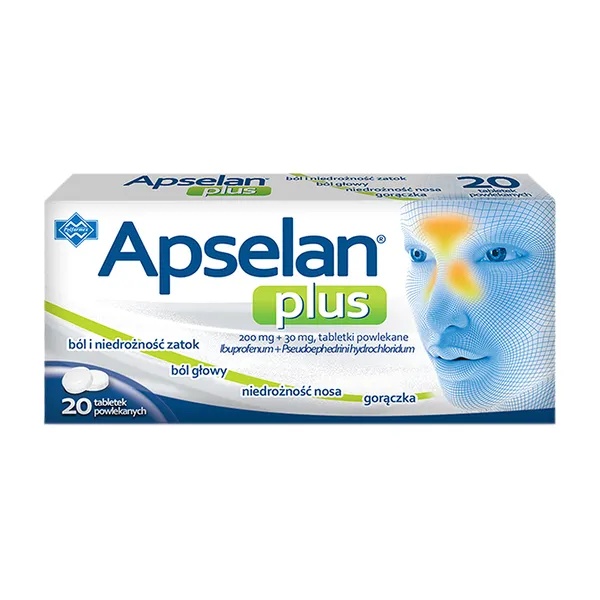
Apselan Plus
Ask a doctor about a prescription for Apselan Plus




How to use Apselan Plus
Leaflet accompanying the packaging: patient information
APSELAN PLUS
200 mg + 30 mg, coated tablets
Ibuprofen + Pseudoephedrine hydrochloride
It is essential to carefully read the contents of the leaflet before taking the medication, as it contains important information for the patient.
This medication should always be taken exactly as described in this patient leaflet or as advised by a doctor or pharmacist.
- The leaflet should be kept in case it needs to be read again.
- If advice or additional information is needed, a pharmacist should be consulted.
- If the patient experiences any side effects, including any possible side effects not listed in this leaflet, they should inform their doctor or pharmacist. See section 4.
- If there is no improvement or the patient feels worse after a few days, they should contact their doctor.
Table of contents of the leaflet
- 1. What is Apselan Plus and what is it used for
- 2. Important information before taking Apselan Plus
- 3. How to take Apselan Plus
- 4. Possible side effects
- 5. How to store Apselan Plus
- 6. Contents of the packaging and other information
1. What is Apselan Plus and what is it used for
Apselan Plus is a coated tablet containing 200 mg of ibuprofen and 30 mg of pseudoephedrine hydrochloride.
The medication has analgesic, anti-inflammatory, and antipyretic effects. It reduces swelling and congestion of the nasal mucosa and the amount of discharge. It clears the nose and paranasal sinuses.
Indications for use
The medication is intended for short-term use to relieve symptoms of nasal congestion and paranasal sinus congestion with accompanying headache, sinus-related pain, and fever in the course of the flu or a cold.
2. Important information before taking Apselan Plus
When not to take Apselan Plus:
- if the patient is allergic to ibuprofen and/or pseudoephedrine, aspirin, or other nonsteroidal anti-inflammatory drugs (NSAIDs) or has experienced skin rashes, hives, itching, difficulty breathing, chest tightness, swelling of the lips, face, or tongue when taking these medications or if the patient is allergic to any of the other ingredients of this medication (listed in section 6);
- in patients with a history of gastrointestinal bleeding or perforation related to previous use of NSAIDs;
- in patients with active or recurrent peptic ulcers, or bleeding (two or more separate episodes of ulcers or bleeding);
- in patients with a bleeding disorder (tendency to bleed);
- in patients with severe liver failure,
- if the patient has severe acute (sudden) or chronic (long-term) kidney disease or kidney failure;
- in patients who have experienced urinary retention;
- in patients with severe heart failure;
- in patients with severe cardiovascular disorders, tachycardia (rapid heart rate), angina pectoris, arrhythmias;
- if the patient has very high blood pressure (severe hypertension) or uncontrolled hypertension;
- in patients with a pheochromocytoma, glaucoma, diabetes, or thyroid disease;
- in patients with hyperthyroidism;
- in patients with narrow-angle glaucoma;
- in patients taking other NSAIDs, including COX-2 inhibitors (increased risk of adverse reactions), painkillers, or nasal decongestants;
- in patients who have taken monoamine oxidase inhibitors (MAOIs) within the last two weeks;
- in patients taking tricyclic antidepressants;
- in patients with a history of hemorrhagic stroke or risk factors that may increase the risk of hemorrhagic stroke, such as taking vasoconstrictor medications or other medications that reduce congestion, taken orally or nasally (see "Apselan Plus and other medications");
- in pregnant women;
- during breastfeeding;
- in children and adolescents under 15 years of age.
Warnings and precautions
Before starting treatment with Apselan Plus, the patient should discuss it with their doctor or pharmacist.
Taking anti-inflammatory/pain-relieving medications, such as ibuprofen, may be associated with a small increased risk of heart attack or stroke, especially when taken in high doses. The recommended dose and duration of treatment should not be exceeded.
Skin reactions
Severe skin reactions, such as exfoliative dermatitis, erythema multiforme, Stevens-Johnson syndrome, toxic epidermal necrolysis, and drug reaction with eosinophilia and systemic symptoms (DRESS), have been reported with ibuprofen use. If the patient experiences any symptoms associated with these severe skin reactions described in section 4, they should immediately stop taking Apselan Plus and seek medical attention.
If the patient experiences any rash, changes in the mucous membranes, blisters, or other signs of an allergic reaction, they should stop taking Apselan Plus and seek medical attention immediately, as these may be the first signs of a severe skin reaction. See section 4.
Infections
Apselan Plus may mask the symptoms of an infection, such as fever and pain. As a result, Apselan Plus may delay the use of appropriate infection treatment and lead to an increased risk of complications. This has been observed in bacterial pneumonia and bacterial skin infections associated with chickenpox. If the patient is taking this medication while an infection is present and the infection symptoms persist or worsen, they should immediately consult their doctor.
During treatment with Apselan Plus, a decrease in blood flow to the optic nerve may occur. If sudden vision loss occurs, the patient should stop taking Apselan Plus and seek medical attention immediately. See section 4.
After taking pseudoephedrine hydrochloride, cases of posterior reversible encephalopathy syndrome (PRES) and reversible cerebral vasoconstriction syndrome (RCVS) have been reported. PRES and RCVS are rare conditions that may be associated with decreased blood flow to the brain.
If the patient experiences symptoms that may be signs of PRES or RCVS, they should immediately stop taking Apselan Plus and seek medical attention (symptoms, see section 4 "Possible side effects").
Before taking Apselan Plus, the patient should discuss their treatment with their doctor or pharmacist if:
- the patient has heart disease, such as heart failure, angina pectoris (chest pain), has had a heart attack, has had a coronary artery bypass graft, has peripheral arterial disease (poor circulation in the legs due to narrowed or blocked arteries), or has had a stroke (including a mini-stroke or transient ischemic attack - TIA).
- the patient has high blood pressure, diabetes, high cholesterol, has a family history of heart disease or stroke, or smokes. Any risk is more likely after high doses and long-term treatment. The recommended dose and duration of treatment should not be exceeded.
- the patient has bleeding disorders.
- the patient has stomach ulcers or inflammatory bowel disease (e.g., ulcerative colitis and Crohn's disease).
- the patient has asthma or allergies. Allergic reactions to ibuprofen, including difficulty breathing, facial and throat swelling (angioedema), and chest pain, have been reported. If the patient experiences any of these symptoms, they should immediately stop taking Apselan Plus and seek medical attention or emergency services.
- the patient has heart, kidney, liver, and/or prostate disease.
- elderly patients are more prone to adverse reactions, such as stomach bleeding and perforation, which can be fatal.
- in the case of systemic lupus erythematosus (SLE), a disease that affects the immune system, causing joint pain, skin changes, and other disorders.
- when trying to conceive.
- in the case of dehydrated patients - adolescents, as there is a risk of kidney disease. If the patient does not drink fluids or loses fluids due to persistent vomiting or diarrhea, they should consult their doctor before taking the medication.
- the patient has an infection - see the section titled "Infections".
Apselan Plus and other medications
The patient should tell their doctor or pharmacist about all medications they are currently taking or have recently taken, as well as any medications they plan to take.
The medication should not be taken if the patient is taking:
- other nonsteroidal anti-inflammatory drugs (NSAIDs);
- nasal decongestants (nasal or oral);
- in the past or within the last two weeks, antidepressant medications known as monoamine oxidase inhibitors (MAOIs);
- tricyclic antidepressants (used to treat depression).
The patient should inform their doctor if they are taking:
- blood-thinning medications (e.g., aspirin/acetylsalicylic acid, warfarin, ticlopidine);
- blood pressure-lowering medications (e.g., ACE inhibitors, such as captopril, beta-blockers, such as atenolol, angiotensin II receptor antagonists, such as losartan) or any diuretic;
- heart glycosides (e.g., digoxin) or quinidine used to treat heart conditions;
- phenytoin (a medication used to treat epilepsy);
- lithium (used to treat mood disorders);
- methotrexate (used to treat arthritis);
- antacids (medications used to treat stomach ulcer symptoms, such as heartburn);
- cyclosporine (used to weaken the immune system, e.g., after a transplant);
- mifepristone (used to terminate pregnancy);
- quinolone antibiotics (used to treat a wide range of infections);
- tacrolimus (a medication used after a transplant);
- medications known as sulfonylureas, such as glibenclamide (used to treat diabetes);
- corticosteroids (a type of anti-inflammatory medication, e.g., hydrocortisone);
- selective serotonin reuptake inhibitors (SSRIs, e.g., fluoxetine) (medications used to treat depression);
- aminoglycosides (e.g., gentamicin or amikacin) (medications used to treat infections);
- the antibacterial medication furazolidone (used to treat infections);
- zidovudine (used to treat HIV infections);
- guanethidine, reserpine, or methyldopa (medications used to treat heart and circulatory disorders);
- sulfinpyrazone and probenecid (medications used to treat gout);
- potassium-sparing diuretics (medications used to treat heart conditions);
- ergot derivatives (medications used to treat migraines);
- dopamine receptor agonists (medications used to treat Parkinson's disease symptoms);
- heparin, Ginkgo biloba (used to treat blood clots).
Taking pseudoephedrine hydrochloride may result in a positive doping test.
Taking Apselan Plus with food and drink
The medication should be taken after meals.
During treatment, the patient should avoid drinking alcohol.
Pregnancy, breastfeeding, and fertility
If the patient is pregnant or breastfeeding, thinks they may be pregnant, or plans to have a baby, they should consult their doctor or pharmacist before taking this medication.
Pregnancy and breastfeeding
Taking Apselan Plus during pregnancy and breastfeeding is contraindicated.
Fertility
Taking Apselan Plus may have a negative effect on female fertility. See the section "Warnings and precautions".
Driving and using machines
While taking Apselan Plus, the patient should be cautious when driving or operating machinery.
Apselan Plus contains lactose monohydrate
If the patient has been diagnosed with an intolerance to some sugars, they should consult their doctor before taking the medication. The medication contains 0.1239 g of lactose (0.06195 g of glucose and 0.06195 g of galactose) per tablet. This should be taken into account in patients with diabetes.
Apselan Plus contains sodium
The medication contains less than 1 mmol (23 mg) of sodium per tablet, which means it is considered "sodium-free".
3. How to take Apselan Plus
The patient should take the smallest effective dose for the shortest duration necessary to relieve symptoms. If the symptoms of an infection (such as fever and pain) persist or worsen, the patient should immediately consult their doctor (see section 2).
The medication should always be taken exactly as described in this patient leaflet or as advised by a doctor or pharmacist. If the patient has any doubts, they should consult their doctor or pharmacist.
The medication is taken orally.
The recommended dose is:
The medication should only be taken orally and for a short period.
Adults and adolescents over 15 years of age
1 to 2 tablets orally every 4-6 hours after meals. The patient should not take more than 6 tablets per day (maximum daily dose of 1200 mg of ibuprofen and 180 mg of pseudoephedrine hydrochloride in divided doses).
Elderly patients
No dose adjustment is required unless there is impaired kidney or liver function.
If there are kidney or liver function impairments, the doctor should determine the dose individually.
Use in children
The medication should not be given to children under 15 years of age.
Kidney or liver impairment
No dose reduction is required in patients with mild to moderate kidney or liver impairment (see section 4.4). The patient should take the smallest effective dose.
Overdose of Apselan Plus
If the patient has taken more than the recommended dose of Apselan Plus or if a child has accidentally taken the medication, they should always consult their doctor or go to the nearest hospital to get an opinion on the possible risk to their health and advice on what to do.
Symptoms of overdose may include nausea, stomach pain, vomiting (which may contain blood), gastrointestinal bleeding (see also section 4 below), diarrhea, headache, ringing in the ears, disorientation, and nystagmus. The patient may also experience excitement, drowsiness, disorientation, or coma. Seizures may occur rarely in patients. After taking a large dose, the patient may experience drowsiness, chest pain, rapid heartbeat, loss of consciousness, seizures (mainly in children), weakness, and dizziness, blood in the urine, low potassium levels in the blood, feeling cold, and difficulty breathing. Additionally, there may be an increase in prothrombin time (INR), likely due to the disruption of circulating clotting factors. Acute kidney failure and liver damage may occur. In patients with asthma, worsening of asthma symptoms may occur. Additionally, low blood pressure and decreased respiratory rate may occur. There is no specific antidote. The doctor will provide symptomatic and supportive treatment. Within one hour of ingestion, the patient should be given activated charcoal (adults: 50 g; children: 1 g/kg body weight). If the above symptoms occur, the patient's electrolyte levels and electrocardiogram should be checked.
Missing a dose of Apselan Plus
The patient should not take a double dose to make up for a missed dose.
If the patient has any further doubts about taking this medication, they should consult their doctor or pharmacist.
4. Possible side effects
Like all medications, Apselan Plus can cause side effects, although not everybody gets them.
The risk of side effects can be reduced by taking the minimum dose.
The patient should immediately stop taking Apselan Plus and seek medical attention if they experience symptoms indicating posterior reversible encephalopathy syndrome (PRES) and reversible cerebral vasoconstriction syndrome (RCVS). These include:
- severe headache with a sudden onset,
- nausea,
- vomiting,
- confusion,
- seizures,
- vision changes.
If the patient experiences any of the following symptoms, they should immediately stop taking ibuprofen and seek medical attention:
- red, non-raised, target-like, or circular patches on the torso, often with blisters in the center, peeling of the skin, ulcers in the mouth, throat, nose, genitals, and eyes. These severe skin reactions may be preceded by fever and flu-like symptoms (exfoliative dermatitis, erythema multiforme, Stevens-Johnson syndrome, toxic epidermal necrolysis).
- widespread rash, high body temperature, and swollen lymph nodes (DRESS syndrome).
- red, peeling rash with bumps under the skin and blisters, with fever. Symptoms usually appear at the beginning of treatment (acute generalized exanthematous pustulosis).
If the patient experiences any of the following side effects, they should stop taking the medication and consult their doctor or pharmacist:
Frequent (may occur in less than 1 in 10 patients)
- stomach bleeding or intestinal bleeding (vomiting blood or black stools)
Infrequent (may occur in less than 1 in 100 patients)
- severe headaches or headaches that are worse than usual
Rare (may occur in less than 1 in 1000 patients)
- heart attack
- rapid heartbeat or palpitations
- allergic reaction to Apselan Plus, including symptoms such as rash, hives, itching, difficulty breathing, chest tightness, swelling of the lips, face, or tongue
- blistering skin or mucous membrane changes, including symptoms such as burning, redness, blisters, and ulcers
Frequency not known (frequency cannot be estimated from the available data)
- severe vascular disorders affecting the brain, known as posterior reversible encephalopathy syndrome (PRES) and reversible cerebral vasoconstriction syndrome (RCVS)
- stroke
- behavioral disorders, such as excitement, agitation, anxiety, irritability, and nervousness
- chest pain, which may be a sign of a potentially severe allergic reaction called Kounis syndrome
In addition to the above side effects, the following may occur during treatment:
Frequent (may occur in less than 1 in 10 patients)
- indigestion, stomach pain, feeling sick (nausea), vomiting, diarrhea, constipation, increased gas
Infrequent (may occur in less than 1 in 100 patients)
- stomach ulcers
- sleep disorders
- feeling drowsy and tired
- dizziness or irritability
- vision disorders
- persistent headaches
- skin rashes (rash, itching)
- inflammation of the stomach or intestines, worsening of existing inflammatory bowel disease
- hypersensitivity, such as wheezing and difficulty breathing in patients with asthma or allergic disease
Rare (may occur in less than 1 in 1000 patients)
- kidney disorders
- hearing disorders (tinnitus)
Very rare (may occur in less than 1 in 10,000 patients)
- depression
- heart failure
- kidney failure
- high blood pressure
- mouth or throat pain or inflammation
- pancreatitis
- intestinal narrowing
- aseptic meningitis, worsening of infectious meningitis
- blood cell disorders - the patient may be more prone to infections or bruising
- liver function disorders, hepatitis, or jaundice (yellowing of the skin and eyes)
Frequency not known (frequency cannot be estimated from the available data)
- chest pain
- dry mouth, thirst
- abnormal contractions, seizures
- feeling of spinning (dizziness)
- reduced hematocrit and reduced hemoglobin levels
- seeing or hearing things that are not there (hallucinations)
- skin rash, red or purple skin discoloration, fluid retention (edema)
- less frequent urination, blood or protein in the urine (visible in tests)
- reduced blood flow to the optic nerve (ischemic optic neuropathy).
Reporting side effects
If the patient experiences any side effects, including any possible side effects not listed in this leaflet, they should inform their doctor or pharmacist. Side effects can be reported directly to the Department of Drug Safety Monitoring of the Office for Registration of Medicinal Products, Medical Devices, and Biocidal Products:
Aleje Jerozolimskie 181C
02-222 Warsaw
Tel.: +48 22 49 21 301
Fax: +48 22 49 21 309
Website: https://smz.ezdrowie.gov.pl
Side effects can also be reported to the marketing authorization holder.
Reporting side effects will help gather more information on the safety of the medication.
5. How to store Apselan Plus
Store at a temperature below 25°C.
Store in the original packaging to protect from moisture and light.
Do not use this medication after the expiration date stated on the carton after "EXP". The expiration date refers to the last day of the month.
Medications should not be disposed of via wastewater or household waste. The patient should ask their pharmacist how to dispose of medications they no longer use. This will help protect the environment.
6. Contents of the packaging and other information
What Apselan Plus contains
- The active substances of the medication are ibuprofen and pseudoephedrine hydrochloride: One tablet contains 200 mg of ibuprofen and 30 mg of pseudoephedrine hydrochloride.
- Other ingredients are: lactose monohydrate, microcrystalline cellulose, sodium croscarmellose, anhydrous colloidal silica, magnesium stearate.
Coating: lactose monohydrate, hypromellose 6cP, titanium dioxide (E 171), macrogol 6000.
What Apselan Plus looks like and contents of the pack
White to light cream-colored, round, coated tablets with beveled edges, with a nominal diameter of 12 mm, without spots or damage.
One pack of the medication contains 10, 12, 20, or 24 coated tablets, in a PVC/PVDC/Aluminum blister pack in a cardboard box.
Not all pack sizes may be marketed.
Marketing authorization holder and manufacturer
Polfarmex S.A.
ul. Józefów 9
99-300 Kutno
Polska (Poland)
Tel.: +48 24 357 44 44
Fax: +48 24 357 45 45
e-mail: [email protected]
Date of last revision of the leaflet:
- Country of registration
- Active substance
- Prescription requiredNo
- Manufacturer
- ImporterPolfarmex S.A.
- This information is for reference only and does not constitute medical advice. Always consult a licensed doctor before taking any medication. Oladoctor is not responsible for medical decisions based on this content.
- Alternatives to Apselan PlusDosage form: Tablets, 200 mg + 6.1 mgActive substance: ibuprofen, combinationsManufacturer: US Pharmacia Sp. z o.o.Prescription not requiredDosage form: Tablets, 200 mg + 30 mgActive substance: ibuprofen, combinationsManufacturer: US Pharmacia Sp. z o.o.Prescription not requiredDosage form: Tablets, 200 mg + 500 mgActive substance: ibuprofen, combinationsPrescription not required
Alternatives to Apselan Plus in other countries
The best alternatives with the same active ingredient and therapeutic effect.
Alternative to Apselan Plus in Hiszpania
Alternative to Apselan Plus in Ukraina
Online doctors for Apselan Plus
Discuss dosage, side effects, interactions, contraindications, and prescription renewal for Apselan Plus – subject to medical assessment and local rules.









Get updates and exclusive offers
Be the first to know about new services, marketplace updates, and subscriber-only promos.

