


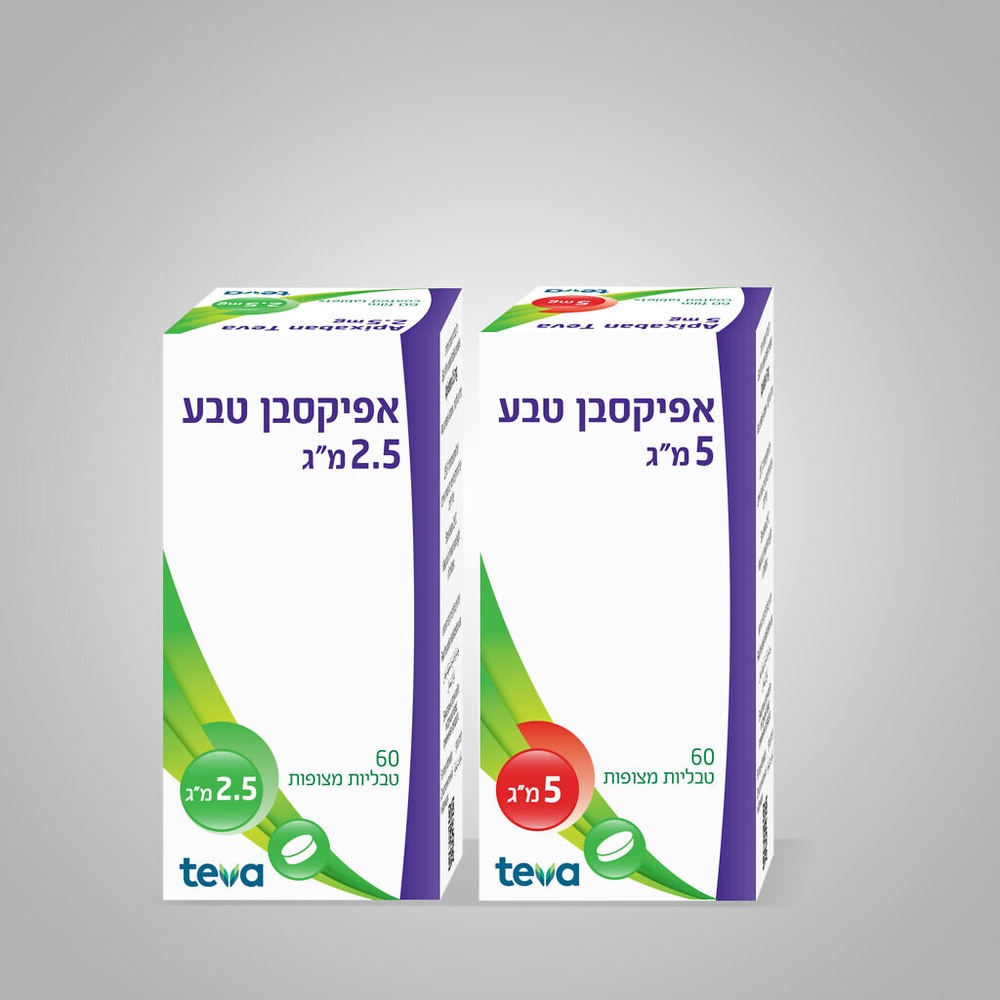
Apixabanum Teva
Ask a doctor about a prescription for Apixabanum Teva




How to use Apixabanum Teva
Leaflet accompanying the packaging: information for the user
Apixabanum Teva, 5 mg, film-coated tablets
Apixabanum
You should read the leaflet carefully before taking the medicine, as it contains important information for the patient.
- You should keep this leaflet, so that you can read it again if you need to.
- If you have any doubts, you should consult a doctor, pharmacist, or nurse.
- This medicine has been prescribed specifically for you. Do not pass it on to others. The medicine may harm another person, even if their symptoms are the same as yours.
- If the patient experiences any side effects, including any side effects not listed in this leaflet, they should tell their doctor, pharmacist, or nurse. See section 4.
Table of contents of the leaflet
- 1. What is Apixabanum Teva and what is it used for
- 2. Important information before taking Apixabanum Teva
- 3. How to take Apixabanum Teva
- 4. Possible side effects
- 5. How to store Apixabanum Teva
- 6. Contents of the packaging and other information
1. What is Apixabanum Teva and what is it used for
Apixabanum Teva contains the active substance apixaban and belongs to a group of so-called anticoagulant medicines. This medicine helps prevent the formation of blood clots by blocking factor Xa, which is an important factor in blood clotting.
Apixabanum Teva is used in adults:
- to prevent the formation of blood clots in the heart in patients with irregular heart rhythm (atrial fibrillation) and at least one additional risk factor. Blood clots can break loose and move to the brain, leading to a stroke, or to other organs, hindering blood flow to these organs (also known as systemic embolism). A stroke can be life-threatening and requires immediate medical attention.
- to treat blood clots in the veins of the lower limbs (deep vein thrombosis) and in the blood vessels of the lungs (pulmonary embolism), as well as to prevent the recurrence of blood clots in the blood vessels of the lower limbs and/or lungs.
Apixabanum Teva is used in children from 28 days of age to less than 18 years of age,
to treat blood clots and prevent the recurrence of blood clots in the veins or in the blood vessels of the lungs.
Information on body weight and recommended dose can be found in section 3.
2. Important information before taking Apixabanum Teva
When not to take Apixabanum Teva if:
- the patient is allergicto apixaban or any of the other ingredients of this medicine (listed in section 6);
- the patient has excessive bleeding;
- the patient has organ diseasethat increases the risk of significant bleeding (such as active or recently diagnosed stomach or intestinal ulcers, recently diagnosed bleeding in the brain);
- the patient has liver diseasethat leads to an increased risk of bleeding (hepatic coagulopathy);
- the patient is taking medicines that prevent blood clotting(e.g., warfarin, rivaroxaban, dabigatran, or heparin), except in cases where the anticoagulant treatment is changed, when the patient has a venous or arterial access line and heparin is administered through this line to maintain its patency or when the patient is undergoing catheter ablation (a catheter is inserted into their vein) due to irregular heart rhythm (arrhythmia).
Warnings and precautions
Before starting treatment, the patient should discuss with their doctor, pharmacist, or nurse if they have any of the following conditions:
- increased risk of bleeding, such as:
- bleeding disorders, including cases that result in reduced platelet activity;
- very high blood pressure, uncontrolled with medication;
- if the patient is over 75 years old;
- if the patient weighs 60 kg or less;
- severe kidney disease or if the patient is on dialysis;
- liver problems or a history of liver problems;
- Apixabanum Teva should be used with caution in patients with signs of liver function changes.
- if the patient has a prosthetic heart valve;
- if the doctor determines that the patient's blood pressure is unstable or plans other treatment or surgery to remove a blood clot from the lungs.
When to be particularly careful when taking Apixabanum Teva
- if the patient has a condition called antiphospholipid syndrome (an immune system disorder that increases the risk of blood clots), the patient should inform their doctor, who will decide whether to change the treatment.
In case of surgery or a procedure that may be associated with bleeding, the doctor may ask the patient to temporarily stop taking this medicine for a short time. If there is any uncertainty as to whether a given procedure may be associated with bleeding, the doctor should be consulted.
Children and adolescents
Apixaban is not recommended for children and adolescents with a body weight below 35 kg.
Apixabanum Teva and other medicines
The patient should tell their doctor, pharmacist, or nurse about all medicines they are taking or have recently taken, as well as any medicines they plan to take.
Some medicines may enhance the effect of apixaban, and some may weaken its effect. The doctor will decide whether the patient should receive apixaban while taking other medicines and how closely they should be monitored.
The following medicines may enhance the effect of apixaban and increase the risk of unwanted bleeding:
- some antifungal medicines(e.g., ketoconazole and others);
- some antiviral medicines used to treat HIV/AIDS(e.g., ritonavir);
- other medicines used to reduce blood clotting(e.g., enoxaparin and others);
- anti-inflammatory or pain-relieving medicines(e.g., acetylsalicylic acid or naproxen). In particular, if the patient is over 75 years old and taking acetylsalicylic acid, they may be at increased risk of unwanted bleeding.
- medicines used for high blood pressure or heart problems(e.g., diltiazem);
- antidepressant medicinescalled selective serotonin reuptake inhibitorsor serotonin and noradrenaline reuptake inhibitors.
The following medicines may reduce apixaban's ability to prevent blood clot formation:
- medicines used to prevent seizures or fits(e.g., phenytoin and others);
- St. John's Wort(a herbal supplement used for depression);
- medicines used to treat tuberculosisor other infections(e.g., rifampicin).
Pregnancy and breastfeeding
If the patient is pregnant or breastfeeding, thinks they may be pregnant, or plans to have a child, they should consult their doctor, pharmacist, or nurse before taking this medicine.
The effect of apixaban on pregnancy and the unborn child is unknown. This medicine should not be taken during pregnancy. If the patient becomes pregnant while taking apixaban, they should immediately
contact their doctor.
It is not known whether apixaban passes into breast milk. Before taking this medicine while breastfeeding, the patient should consult their doctor, pharmacist, or nurse. The patient may be advised to stop breastfeeding or stop/avoid taking apixaban.
Driving and using machines
Apixaban has no or negligible influence on the ability to drive and use machines.
Apixabanum Teva contains lactose (a sugar) and sodium
If the patient has previously been diagnosed with intolerance to some sugars, they should consult their doctor before taking this medicine.
This medicine contains less than 1 mmol (23 mg) of sodium per tablet, which means it is considered "sodium-free".
3. How to take Apixabanum Teva
This medicine should always be taken exactly as prescribed by the doctor or pharmacist. In case of doubts, the patient should consult their doctor, pharmacist, or nurse.
Dose
The tablet should be swallowed with water. Apixabanum Teva can be taken with or without food.
To achieve the best treatment results, it is recommended to take the tablets at the same time every day.
If the patient has difficulty swallowing the tablets whole, they should discuss alternative ways of taking Apixabanum Teva with their doctor. The tablet can be crushed immediately before administration and mixed with water or 5% aqueous glucose solution, juice, or apple puree.
Instructions for crushing tablets:
- Crush the tablet with a pestle in a mortar.
- Carefully transfer the powder to a suitable container and then mix it with a small amount, e.g., 30 mL (2 tablespoons), of water or another liquid mentioned above to prepare a mixture.
- Swallow the mixture.
- Rinse the pestle and mortar used to crush the tablets and the container with a small amount of water or another liquid (e.g., 30 mL) and swallow the rinse liquid.
If necessary, the doctor may administer a crushed Apixabanum Teva tablet mixed with 60 mL of water or 5% aqueous glucose solution through a nasogastric tube.
Apixabanum Teva should be taken as follows:
Prevention of blood clot formation in the heart in patients with irregular heart rhythm (atrial fibrillation) and at least one additional risk factor
The recommended dose is one Apixabanum Teva tablet of 5 mgtwice a day.
The recommended dose is one Apixabanum Teva tablet of 2.5 mgtwice a day if:
- the patient has severe kidney impairment;
- two or more of the following conditions are met:
- the patient's blood test results suggest impaired kidney function (serum creatinine level of 1.5 mg/dL (133 micromoles/L) or higher);
- the patient is 80 years old or older;
- the patient's body weight is 60 kg or less.
The recommended dose is one tablet twice a day, for example, one tablet in the morning and one in the evening. The doctor will decide how long the treatment should be continued.
Treatment of blood clots in the veins of the lower limbs and blood clots in the blood vessels of the lungs
The recommended dose is twoApixabanum Teva tablets of 5 mgtwice a day for the first 7 days, for example, two tablets in the morning and two in the evening.
After 7 days, the recommended dose is oneApixabanum Teva tablet of 5 mgtwice a day, for example, one tablet in the morning and one in the evening.
Prevention of recurrent blood clot formation after completing 6 months of treatment
The recommended dose is one Apixabanum Teva tablet of 2.5 mgtwice a day, for example, one tablet in the morning and one in the evening.
The doctor will decide how long the treatment should be continued.
Use in children and adolescents
Treatment of blood clots and prevention of recurrent blood clot formation in the veins or in the blood vessels of the lungs.
This medicine should always be taken or administered as directed by the pediatrician or pharmacist. In case of doubts, the patient should consult their pediatrician, pharmacist, or nurse.
To achieve the best treatment results, the dose should be taken or administered at the same time every day.
The dose of Apixabanum Teva is based on body weight and will be calculated by the doctor.
The recommended dose for children and adolescents weighing 35 kg or more is twoApixabanum Teva tablets of 5 mg, administered twice a day for the first 7 days, for example, two in the morning and two in the evening. After 7 days, the recommended dose is oneApixabanum Teva tablet of 5 mg, administered twice a day, for example, one in the morning and one in the evening.
For parents and caregivers: the child should be observed to ensure that the full dose is taken.
It is essential to follow the scheduled doctor's appointments, as the dose may need to be adjusted with changes in the patient's body weight.
The doctor may change the anticoagulant treatment as follows:
- Switching from Apixabanum Teva to other anticoagulant medicines The patient should stop taking Apixabanum Teva. Anticoagulant treatment (e.g., heparin) should be started at the time of the scheduled intake of the next Apixabanum Teva tablet.
- Switching from other anticoagulant medicines to Apixabanum Teva The patient should stop taking other anticoagulant medicines. Apixabanum Teva treatment should be started at the time of the scheduled intake of the next dose of the other anticoagulant medicine, and then continued as usual.
- Switching from treatment with a vitamin K antagonist (e.g., warfarin) to Apixabanum Teva The patient should stop taking the vitamin K antagonist. The doctor will perform blood tests and inform the patient when to start taking Apixabanum Teva.
- Switching from Apixabanum Teva to treatment with a vitamin K antagonist (e.g., warfarin) If the doctor informs the patient that they should start taking a vitamin K antagonist, they should continue taking Apixabanum Teva for at least 2 days after taking the first dose of the vitamin K antagonist. The doctor will perform blood tests and inform the patient when to stop taking Apixabanum Teva.
Patients undergoing cardioversion
Patients who require cardioversion to restore a normal heart rhythm should take Apixabanum Teva at the times specified by their doctor to prevent the formation of blood clots in the blood vessels of the brain and other blood vessels in the body.
Taking a higher dose of Apixabanum Teva than recommended
If the patient has taken a higher dose of this medicine than recommended, they should immediately
inform their doctor.
The patient should take the packaging of the medicine with them, even if it is empty.
If the patient has taken a higher dose of Apixabanum Teva than recommended, they may be at increased risk of bleeding. In case of bleeding, surgical treatment, blood transfusion, or other treatment that can reverse the effect of factor Xa inhibition may be necessary.
Missing a dose of Apixabanum Teva
- If the patient misses a morning dose, they should take it as soon as they remember and can take it together with the evening dose.
- A missed evening dose can only be taken on the same evening. The patient should not take two doses the next morning instead; they should continue taking the medicine the next day as directed, twice a day.
In case of doubts about taking the medicine or missing more than
one dose, the patient should consult their doctor, pharmacist, or nurse.
Stopping Apixabanum Teva
The patient should not stop taking this medicine without consulting their doctor, as stopping it prematurely may increase the risk of blood clot formation.
In case of any further doubts about taking this medicine, the patient should consult their doctor, pharmacist, or nurse.
4. Possible side effects
Like all medicines, this medicine can cause side effects, although not everybody gets them.
The most common general side effect of this medicine is bleeding, which can potentially be life-threatening and may require immediate medical attention.
The following side effects may occur when taking apixaban to prevent blood clot formation in the heart in patients with irregular heart rhythm and at least one additional risk factor.
Common side effects (may affect up to 1 in 10 people)
- Bleeding, including:
- in the eye;
- in the stomach or intestine;
- from the rectum;
- blood in the urine;
- from the nose;
- from the gums;
- bruising and swelling;
- Anemia, which can cause fatigue or pallor;
- Low blood pressure, which can lead to fainting or rapid heartbeat;
- Nausea (vomiting);
- Blood test results may indicate:
- increased gamma-glutamyltransferase (GGT) activity.
Uncommon side effects (may affect up to 1 in 100 people)
- Bleeding:
- in the brain or spinal cord;
- in the mouth or coughing up blood;
- in the abdominal cavity or in the space behind the abdominal cavity;
- in the muscles.
Rare side effects (may affect up to 1 in 1000 people)
- Bleeding:
- in the lungs or throat;
- in the abdominal cavity or in the space behind the abdominal cavity;
- in the muscles.
Very rare side effects (may affect up to 1 in 10,000 people)
- A skin rash that may form blisters and resembles small targets (dark spots in the center surrounded by a lighter border, with a dark ring around the edge) (erythema multiforme).
Frequency not known (cannot be estimated from the available data)
- Vasculitis (inflammation of blood vessels), which can cause skin rash or raised, flat, red, round patches under the skin surface or bruising.
- Bleeding in the kidney, sometimes with blood in the urine, leading to kidney dysfunction (nephropathy associated with anticoagulant administration). The following side effects may occur when taking apixaban to treat or prevent recurrent blood clot formation in the veins of the lower limbs and blood clots in the blood vessels of the lungs.
Common side effects (may affect up to 1 in 10 people)
- Bleeding, including:
- from the nose;
- from the gums;
- blood in the urine;
- bruising and swelling;
- in the stomach, intestine, or rectum;
- in the mouth;
- from the vagina;
- Anemia, which can cause fatigue or pallor;
- Decreased platelet count in the blood (which can affect blood clotting);
- Nausea (vomiting);
- Skin rash;
- Blood test results may indicate:
- increased gamma-glutamyltransferase (GGT) or alanine aminotransferase (ALT) activity.
Uncommon side effects (may affect up to 1 in 100 people)
- Low blood pressure, which can lead to fainting or rapid heartbeat;
- Bleeding:
- in the eyes;
- in the mouth or coughing up blood;
- red blood in the stool;
- blood test results indicating blood in the stool or urine;
- bleeding after surgery, including bruising and swelling, bleeding or fluid leakage from the surgical wound or injection site;
- from hemorrhoids;
- in the muscles;
- Itching;
- Hair loss;
- Allergic reactions (hypersensitivity), which can cause: swelling of the face, lips, mouth, tongue, and/or throat, as well as difficulty breathing. If any of these symptoms are observed, the patient should immediately
contact their doctor. - Blood test results may indicate:
- abnormal liver function;
- increased activity of certain liver enzymes;
- increased bilirubin levels - a breakdown product of red blood cells that can cause yellowing of the skin and eyes.
Rare side effects (may affect up to 1 in 1000 people)
- Bleeding:
- in the brain or spinal cord;
- in the lungs.
Frequency not known (cannot be estimated from the available data)
- Bleeding:
- in the abdominal cavity or in the space behind the abdominal cavity;
- A skin rash that may form blisters and resembles small targets (dark spots in the center surrounded by a lighter border, with a dark ring around the edge) (erythema multiforme);
- Vasculitis (inflammation of blood vessels), which can cause skin rash or raised, flat, red, round patches under the skin surface or bruising;
- Bleeding in the kidney, sometimes with blood in the urine, leading to kidney dysfunction (nephropathy associated with anticoagulant administration).
Additional side effects in children and adolescents
If any of the following symptoms are observed, the patient should immediately
inform their pediatrician:
- Allergic reactions (hypersensitivity), which can cause: swelling of the face, lips, mouth, tongue, and/or throat, as well as difficulty breathing. The frequency of these side effects is "common" (may affect up to 1 in 10 people). In general, the side effects observed in children and adolescents taking Apixabanum Teva were similar to those observed in adults and were mostly mild or moderate. The side effects that occurred more frequently in children and adolescents were nosebleeds and abnormal vaginal bleeding.
Very common side effects (may affect more than 1 in 10 people)
- Bleeding, including:
- from the vagina;
- from the nose.
Common side effects (may affect up to 1 in 10 people)
- Bleeding, including:
- from the gums;
- blood in the urine;
- bruising (bruises) and swelling;
- in the intestine or rectum;
- red blood in the stool;
- bleeding after surgery, including bruising and swelling, bleeding or fluid leakage from the surgical wound or injection site;
- Hair loss;
- Anemia, which can cause fatigue or pallor;
- Decreased platelet count in the blood (which can affect blood clotting);
- Nausea (vomiting);
- Skin rash;
- Itching;
- Low blood pressure, which can cause fainting or rapid heartbeat;
- Blood test results may indicate:
- abnormal liver function;
- increased activity of certain liver enzymes;
- increased alanine aminotransferase (ALT) activity.
Frequency not known (cannot be estimated from the available data)
- Bleeding
- in the abdominal cavity or in the space behind the abdominal cavity;
- in the stomach;
- in the eyes;
- in the mouth or coughing up blood;
- from hemorrhoids;
- in the brain or spinal cord;
- in the lungs;
- in the muscles;
- A skin rash that may form blisters and resembles small targets (dark spots in the center surrounded by a lighter border, with a dark ring around the edge) (erythema multiforme);
- Vasculitis (inflammation of blood vessels), which can cause skin rash or raised, flat, red, round patches under the skin surface or bruising;
- Blood test results may indicate:
- increased gamma-glutamyltransferase (GGT) activity;
- blood in the stool or urine.
- Bleeding in the kidney, sometimes with blood in the urine, leading to kidney dysfunction (nephropathy associated with anticoagulant administration).
Reporting side effects
If the patient experiences any side effects, including any side effects not listed in this leaflet, they should tell their doctor, pharmacist, or nurse.
Side effects can be reported directly to the Department of Drug Safety Monitoring of the Office for Registration of Medicinal Products, Medical Devices, and Biocidal Products, Al. Jerozolimskie 181C, 02-222 Warsaw, Tel.: +48 22 49 21 301, Fax: +48 22 49 21 309,
Website: https://smz.ezdrowie.gov.pl;
Side effects can also be reported to the marketing authorization holder.
Reporting side effects will help to gather more information on the safety of this medicine.
5. How to store Apixabanum Teva
The medicine should be stored out of sight and reach of children.
Do not use this medicine after the expiry date stated on the carton, bottle/blister after: EXP. The expiry date refers to the last day of the month.
This medicine does not require any special storage conditions.
Medicines should not be disposed of via wastewater or household waste. The patient should ask their pharmacist how to dispose of medicines that are no longer needed. This will help protect the environment.
6. Contents of the packaging and other information
What Apixabanum Teva contains
- The active substance of the medicine is apixaban. Each tablet contains 5 mg of apixaban.
- Other ingredients are:
- Tablet core: lactose, microcrystalline cellulose, sodium carboxymethylcellulose, sodium lauryl sulfate, magnesium stearate (of vegetable origin).
- Coating: lactose monohydrate, hypromellose 2910 (15mPa), titanium dioxide (E 171), triacetin, iron oxide red (E 172). See section 2 "Apixabanum Teva contains lactose (a sugar) and sodium".
What Apixabanum Teva looks like and contents of the pack
Apixabanum Teva is a pink, oval, biconvex, film-coated tablet, approximately 10 mm long, 5.4 mm wide, and 4 mm thick.
Apixabanum Teva is available in the following pack sizes:
PVC/PVDC/Aluminum blisters in cartons containing 60 film-coated tablets.
Marketing authorization holder and manufacturer
Marketing authorization holder
Teva Pharmaceuticals Polska Sp. z o.o.
ul. Emilii Plater 53
00-113 Warsaw
tel. (22) 345 93 00.
Manufacturer
Combino Pharm (Malta) Limited
60 Qasam Industrijali Hal Far
BBG 3000 Hal Far, Birzebbuga
Malta
This medicine is authorized in the Member States of the European Economic Area under the following names:
Member State
Marketing authorization holder
Malta
Apixaban Combino Pharm 5 mg film-coated tablets
Germany
Apixaban-ratiopharm 5 mg Filmtabletten
Austria
Apixaban ratiopharm GmbH 5 mg Filmtabletten
Belgium
Apixaban Teva 5 mg filmomhulde tabletten/comprimés pelliculés/Filmtabletten
Bulgaria
Апиксабан Тева Фарма 5 mg филмирани таблетки
Apixaban Teva Pharma 5 mg film-coated tablets
Czech Republic
Apixaban Teva CR
Denmark
Apixaban Teva GmbH
Estonia
Apixaban Teva Pharma
Spain
APIXABAN TEVAGEN 5 MG COMPRIMIDOS RECUBIERTOS CON PELICULA EFG
Finland
Apixaban ratiopharm GmbH 5 mg tabletti, kalvopäällysteinen
France
APIXABAN TEVA SANTE 5 mg, comprimé pelliculé
Croatia
Apiksaban Teva 5 mg filmom obložene tablete
Hungary
Apixaban ratiopharm 5 mg filmtabletta
Ireland
Apixaban Teva 2.5 mg and 5 mg Film-coated Tablet s
Iceland
Apixaban Teva GmbH
Italy
APIXABAN TEVA ITALIA
Lithuania
Apixaban TevaPharm 5 mg plėvele dengtos tabletės
Germany
Apixaban Teva GmbH 5 mg plėvele dengtos tabletės
Luxembourg
Apixaban-ratiopharm 5 mg Filmtabletten
Latvia
Apixaban TevaPharm 5 mg apvalkotās tablets
Netherlands
Apixaban Teva 5 mg, filmomhulde tabletten
Norway
Apixaban Teva GmbH
Poland
Apixabanum Teva
Portugal
Apixabano Teva
Romania
Apixaban Teva 5 mg comprimate filmate
Sweden
Apixaban Teva GmbH
Slovenia
Apiksaban Teva GmbH 5 mg filmsko obložene tablete
Slovakia
Apixaban Teva Slovakia 5 mg
Date of last revision of the leaflet:May 2025
- Country of registration
- Active substance
- Prescription requiredYes
- ImporterCombino Pharm (Malta) Ltd.
- This information is for reference only and does not constitute medical advice. Always consult a licensed doctor before taking any medication. Oladoctor is not responsible for medical decisions based on this content.
- Alternatives to Apixabanum Teva
Alternatives to Apixabanum Teva in other countries
The best alternatives with the same active ingredient and therapeutic effect.
Alternative to Apixabanum Teva in Spain
Alternative to Apixabanum Teva in Ukraine
Online doctors for Apixabanum Teva
Discuss dosage, side effects, interactions, contraindications, and prescription renewal for Apixabanum Teva – subject to medical assessment and local rules.



Get updates and exclusive offers
Be the first to know about new services, marketplace updates, and subscriber-only promos.

